Category: business advice

  • Don’t follow the normal route

    Don’t follow the normal route

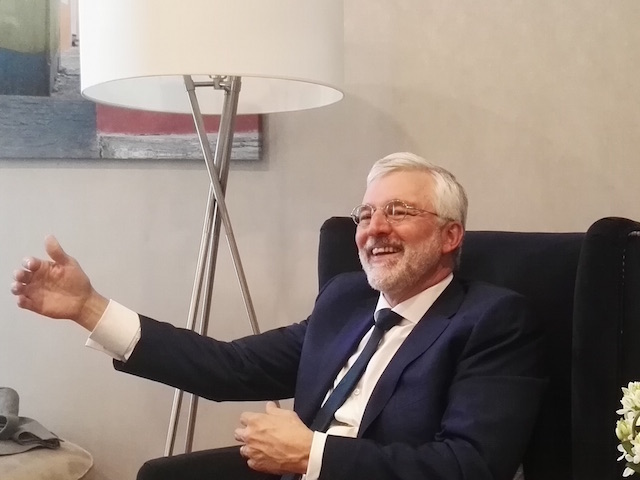
    Two years ago I interviewed Technology One founder and CEO Adrian DiMarco about his company’s pivot to the cloud and the gold rush among consultants and services providers looking at making money out of cloud computing services.

    DiMarco’s founded Technology One in 1987 to compete in the enterprise software space with the likes of SAS and Oracle. At the peak of the dot com boom in 1999, DiMarco listed the company on the Australian stock exchange where it is one of the few genuine tech stocks on the nation’s finance and mining dominated bourse.

    Given the focus on listed companies at the moment, DiMarco’s views are worth noting. “if I were to do it again, I’d don’t think I’d go that path,” he says about listing the business. “I have a real issue with how public companies run in Australia.”

    DiMarco’s view is at odds with Netsuite’s Zach Nelson who told Decoding the New Economy last month how being on the stock exchange forces management to focus. “Managing a public company is a great discipline and in some ways gives us an advantage over non-public company who don’t have to have discipline and make good investments,” Nelson said.

    In DiMarco’s opinion, the regulatory and ‘box ticketing’ requirements of a listed company don’t reflect the true performance of a corporation’s management. “There are mediocre CEOs walking away with millions,” he says.

    While listing made sense for Technology One in 1999 those looking at starting a business today shouldn’t necessarily follow his path warns DiMarco, “tor startups these days, don’t follow up normal route.,” he says.

    “I think the world’s your oyster to do want you want. Don’t let anyone talk you out of anything,” DiMarco says. “When we started out we were told ‘don’t build enterprise software’. We did and we succeeded.”

    “Don’t be scared,” he advices. “It really is a great time to startup a business. The technology is redefining business. It’s a good time.”

    Similar posts:

  • Fearlessness and starting a business

    Fearlessness and starting a business

    “Just do it!” Almost every startup founder I interviewed for The Australian’s series on expat entrepreneurs had the same advice for budding entrepreneurs wanting to go global – don’t wait, just do it.

    Peter Grant of Brisbane founded Safesite did though inject a slightly different view when he pointed out that it may not make sense for a company with a good domestic business to make the move, “If it’s going to be too complex or you already have a profitable business in Australia you may not need to come to the US, you have to be realistic about it. It might make sense to find a local partner.”

    In Peter’s case though that move made sense. “We have a year on our competitors,” he notes.

    Not being scared of making the move was part of a discussion I had with TechnologyOne founder Adrian DiMarco today, I’d previously interviewed Adrian for Business Spectator a few years back and it was good to hear his views on the current startup mania and the Australian innovation push.

    One of the points DiMarco made was about not being scared when launching a venture, whether it’s the competition, the marketplace or the overall daunting task of running a business, being fearless is a key attribute to making the first steps, not just success.

    That fearlessness is something that should be acknowledged about business founders, whether it’s a tech startup, dog walking service or donut franchise. Every single proprietor is taking a great leap.

    Similar posts:

  • The benefits of being public

    The benefits of being public

    Both the public cloud and a publicly listed company are good things for a business says Netsuite’s Zac Nelson.

    “Managing a public company is a great discipline and in some ways gives us an advantage over non-public company who don’t have to have discipline and make good investments,” says Zac Nelson, the CEO of Netsuite.

    Nelson was talking to Decoding the New Economy yesterday at the annual Suiteworld conference, Netsuite’s annual gathering in San Jose.

    The CEO’s comments are in contrast to a common view that being publicly listed company distracts a company’s management from focusing on long term objectives, a sentiment Nelson rejects.

    “In terms of managing a public company I think it’s an important discipline, I think a lot of people are opposed to these SOX (Sarbanes-Oxley) rules but when I look at these rules I think they are just common sense. Are you managing your business right? You want to have control of your business so you aren’t blindsided.”

    Probably the biggest advocate of taking companies private is Michael Dell who took his eponymous business off the markets three years ago and is now looking at doing the same thing with EMC in what will be the biggest IT merger in history.

    Dell going private

    Nelson doesn’t think Dell going private was a mistake though, “I saw Larry Ellison say it was one of the greatest business moves in the history of man, I’ll agree with Larry – he’s usually right on that stuff,” he laughed.

    “The thing I see Dell doing that I understand is they are giving their smaller division more autonomy. Dell Boomi is going back to being just Boomi and Secureworks just went public. Certainly from a structural standpoint and business model innovation that makes sense and it’s what I understand.”

    As a public company, Netsuite does come under scrutiny and one of the criticisms is that it continues to post losses, something that Nelson puts down to the treatment of stock options. In the last earnings report, the company claimed capitalising stock options added $30 million in costs and not including them would see the company reporting an eight million dollar profit last quarter.

    “We’re cash flow positive, we generate over $140 million in cash,” Nelson says. “People are happy with it, we’re still investing. What we’re investing in this year is different to the past, we’re investing in services to enable our customers to invest in product.”

    Integrating the stack

    One of the advantages Nelson sees that cloud based companies like his have are integrated systems, “the client server world created this perspective that dis-integrated systems actually work – you have Windows, you have third-party apps – but what really works well are integrated systems.” he says. “Look at the most common system you guys use, called Apple, it’s an integrated end-to-end system. Same with Amazon, that’s what we’ve built.”

    “The detour we took in the client-server world is still being taken in the software world, a lot of software people believe you can compile this stuff and it will magically work. No, it doesn’t. Integrated systems work better.”

    Securing the cloud

    One area he specifically sees where cloud services have an advantage in being integrated is with security, “a problem that large enterprises have that we to some degree don’t have is we have one system, we have five data centers. You look at some of these large enterprises and some of them don’t even know where some of their data centres are. How on earth do you secure that environment? It’s not a product problem, it’s a process and IT management problem.”

    Nelson’s comments on security are a swipe at competitors like SAP and Oracle who are often criticised for having disparate systems.

    With Suiteworld moving to Las Vegas next year, it will be interesting to see who’s taking bets against cloud services like Netsuite. Certainly with salesmen like Zac Nelson, they’re able to tell a good story. The key though is to show some profits in the longer run.

    Paul travelled to Suiteworld in San Jose as a guest of Netsuite.


    Similar posts:
  • Confidence and open communications

    Confidence and open communications

    One of the big technology industry stories currently is the merger of Dell and data storage giant EMC, which at seventy billion dollars will be the biggest merger in the tech industry’s history.

    With fifty thousand employees managing such a change presents a challenge for EMC’s managers and something noticeable attending the company’s EMC World conference in Las Vegas this week is how upbeat almost all the staffers about the impending merger.

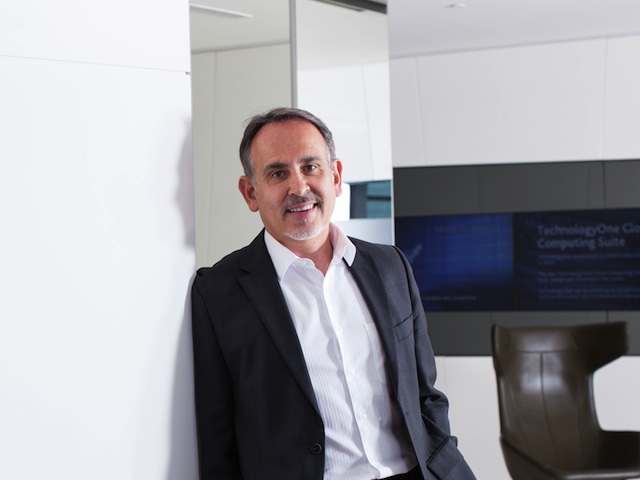
    In an interview with David Goulden, the CEO of EMC’s Infrastructure division, which is the company’s core business, I asked him how they were keeping staff morale up in the face of changes that will almost certainly cost jobs.

    “Change creates uncertainty,” says Goulden. “One thing I’ve learned from this is you cannot over-communicate and that’s true internally and it’s true with our customers. We’ve put an incredible amount of effort in communications so our teams are engaged to go and speak to their customers.”

    As change is now a constant in all industries Goulden’s lesson should be noted by all managers and business leaders – clear, honest and open communications with employees and customers is essential in keeping the trust of the markets and workforce.

    The old model of restricting information and hoping no-one finds out is increasingly harder to sustain and from a business point of view unprofitable in the medium term as well.

    Paul travelled to Las Vegas as a guest of EMC and Netsuite.

    Similar posts:

  • Google bets on artificial intelligence

    Google bets on artificial intelligence

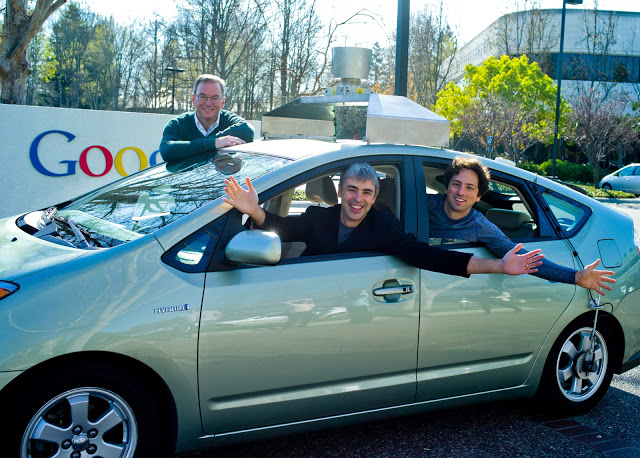
    Breaking with the company’s tradition of the Sergi, Google’s CEO Sundar Pichai writes this year’s founders letter laying out how the search engine giant is focusing of artificial intelligence and the machine learning.

    Pichai’s view of the world seems to tie in very closely with founders Larry Page and Sergei Brin with him laying out a vision of making the internet and computers accessible to all.

    The challenge for Google is the shift away from personal computers, something that the company is struggling with and a factor that Pichai acknowledges.

    Today’s proliferation of “screens” goes well beyond phones, desktops, and tablets. Already, there are exciting developments as screens extend to your car, like Android Auto, or your wrist, like Android Wear. Virtual reality is also showing incredible promise—Google Cardboard has introduced more than 5 million people to the incredible, immersive and educational possibilities of VR.

    Whether Google can execute on that vision and manages to diversify its revenues away from depending almost exclusively upon web advertising will be what defines Pichai’s time as the company’s CEO. He has a challenging task ahead.

    Similar posts:

    • No Related Posts