Category: China

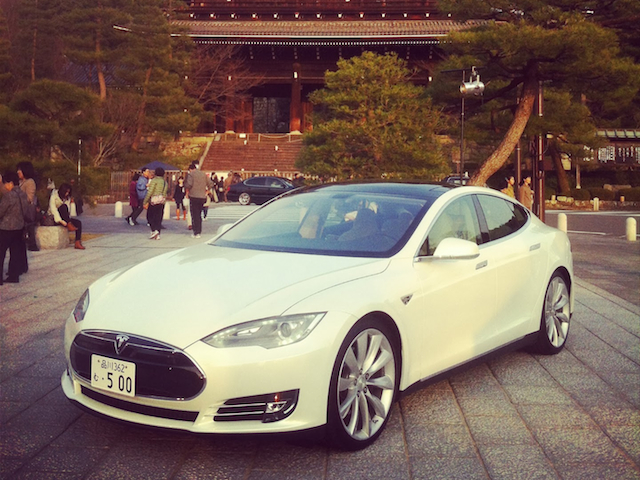
  • Links of the day – Tesla in Australia

    Links of the day – Tesla in Australia

    Chinese tourism and Mao’s influence on the US Marines are today’s links along with Tesla’s slow start in Australia.

    Tesla rolls out in Australia

    As part of Tesla’s Australian launch of its electric vehicles, the company has announced a chain of charging stations along the country’s East Coast, unfortunately not everyone is pleased to see them.

    Chinese tourists look to Japan and the US

    Japan and the US are the most sought after destinations for Chinese tourists reports the Wall Street Journal. Both countries have relaxed travel restrictions for China nationals in the last year and now they are reaping the benefits, particularly Japan which is only a few hours flight from Shanghai and Beijing.

    Interestingly, New Zealand and Australia are also big improvers on the list with them coming in third and fourth on the list.

    The US Marines’ Maoist connection

    A curious article on Medium describes the origin of the term ‘gung-ho’ and how it was introduced to the US Marines through a Mao sympathising American General. “He may be red, but he’s not yellow” is how his contemporaries described Brigadier General Evans Carlson.

    Similar posts:

  • Daily links – Chinese property developers go onto internet

    Daily links – Chinese property developers go onto internet

    Today’s links have a distinctly Chinese flavour around them with a look at how the country’s smartphone manufacturers are coming to dominate their market, Tencent’s plans for global domination and how property developers are looking to the internet to save their falling sales.

    Uber and Microsoft make their regular appearances to round out the links in their changes to billing and security.

    Chinese property developers turn to the web

    Faced with declining sales, Chinese property developers embrace – the Internet!

    How Chinese smartphone makers are beginning to dominate the market

    The rise of China’s smartphone makers: 10 of the top 17 smartphone manufacturers now come from China.

    An interview with Tencent

    Business Insider has an intriguing interview with one of the VPs of Chinese internet giant Tencent.

    In his Q&A, S. Y. Lau discusses how Chinese communities are seeing their incomes rise due to the internet. One of the famous case studies of connectivity are India’s Kerala fishermen who used SMS to arbitrage their market. We may be seeing a similar story with Chinese tea farmers.

    Microsoft restrict warning of patches to paying customers

    In a short term money grabbing exercise, Microsoft have unveiled a plan to only inform enterprise customers of upcoming security patches. My prediction is this won’t last.

    Uber cuts prices

    Car hiring service Uber has cut its fares in thirty US cities while guaranteeing drivers their incomes. This is probably a move to keep competitors like Lyft at bay.

    Similar posts:

    • No Related Posts
  • Links of the day – Terrorism, deflation and London’s rebirth

    Links of the day – Terrorism, deflation and London’s rebirth

    Today’s links kick off with the worldwide reaction to the terrorist atrocity in Paris. The other links, which pale in contrast, include why we should really fear deflation, the decline and rise of China and how to understand a food critic.

    Cartoonists unite over French terrorist murders

    After the terrorist atrocity that saw twelve people murdered in an attack on a magazine office in Paris, cartoonists around the world have shown their reaction.

    Why Europeans should fear deflation

    Yesterday the main economic news was the Eurozone had re-entered a deflationary period. Irish economist David McWilliams explains why deflation scares governments and banks with some lessons from the Great Depression.

    The decline and rise of London

    In 1939 London reached its peak population of 8.3 million then saw declines for the next fifty years as war, government policies and economic restructuring saw the city’s attractions wane.

    Sometime this week London will pass its 1939 peak and Citymetric magazine looks at the reasons for the decline and why the recovery began.

    China’s incredible disappearing former leader

    In November 2012 Chinese leader Hu Jintao stepped down from his post. Since then he’s effectively disappeared from public view Foreign Policy magazine reports.

    At the same time many of his allies and supporters have been purged from their party positions as part of a major change in direction for the Chinese government. What this means for the parties’ cronies who’ve been propping up property prices across the Pacific and Macau’s lucrative casino business remains to be seen.

    What restaurants should know about food critics

    First impressions matter warns former restaurant critic for the New York Times and Los Angeles Times, Ruth Reichl, in a terrific interview with Open For Business.

    Reichl’s advice is good for pretty well any business; make sure your first impressions are good, don’t rip off your customers or be too pushy with upselling and train your staff. It’s an entertaining insight into a field dominated by egos that’s largely becoming extinct.

    Similar posts:

  • Links of the day – redesigning the car and South China Mall.

    Links of the day – redesigning the car and South China Mall.

    The CES extravaganza continues in Las Vegas with a wave of announcement, most of which I’m ignoring, however the motor industry continues to show off new developments with Mercedes displaying their vision of how a driverless car will look.

    Other interesting links today include an analysis of the ill fated South China Mall’s flaws and how Amazon is reorganising its R&D efforts after the failure of the Amazon Fire.

    Mercedes redesigns the car

    A little while back I suggested that we could do better in redesigning the driverless carMercedes have gone ahead and done it.

    Mercedes’ redesign of the driverless car indicates just what can be done when we rethink what passengers will need in the vehicles of the future.

    Ford recalls a vehicle for a UI upgrade

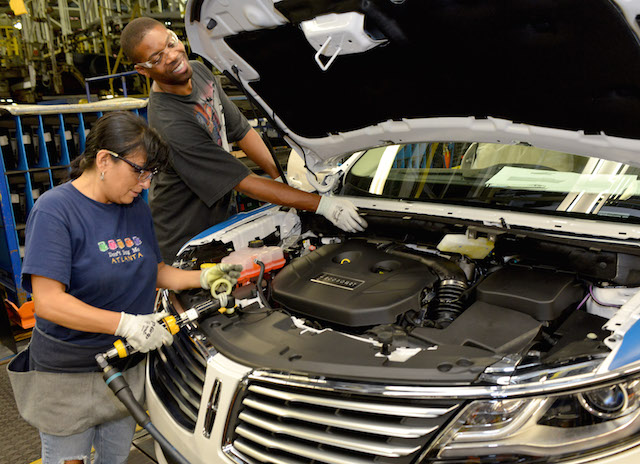
    Ford has recalled its Lincoln MKC SUV models for a software upgrade after discovering drivers were shutting down the cars by accident.

    What’s notable with this story is how software changes are now one of the main reasons for recalling vehicles and how design flaws in an automobile’s computer programs are relatively quickly discovered and resolved.

    We will probably find in the near future car manufacturers will carry out the upgrades remotely rather than ask owners to bring their vehicles into dealerships.

    A long running security flaw is exposed

    In August 2013 a security researcher warned UK online greeting card vendor Moonpig that its system exposed up to six million users’ account and financial details. Until Monday the company had ignored him. This is a tale of classic management disregard for customer security and one area where business culture needs to dramatically change.

    Rumours of an AOL – Verizon merger

    It’s a speculative story but if a merger between US telco Verizon and former internet giant AOL goes ahead it may mark another wave of telcos moving into content services, although it’s hard not to think that Verizon could spend its money more wisely.

    After a flop, Amazon restructures its R&D

    The Amazon Fire was by all measures a miserable flop as a smartphone however it seems the company learned some important lessons from the device’s market failures. Instead of abandoning its research efforts, the online behemoth is increasing it’s R&D budget and reorganising its development division.

    Design fails of the South China Mall

    South China Mall just south of Guangzhou has been the poster child of Chinese malinvestment during the nation’s current boom. In a blog post from 2011, a shopping mall expert visits the development and points out the major design faults in the complex which may well have doomed the project from the beginning.

    Similar posts:

    • No Related Posts
  • Painting a target on the competition

    Painting a target on the competition

    “We’re coming for our competitors” is the warning BlackBerry’s President of Global Enterprise Services, John Sims has for the marketplace in an interview last month.

    Sims laid out how BlackBerry’s future lies in managing big data, providing collaboration tools and securing the internet of things. In the short term however, the company needs emerging markets to keep its mobile handset market going.

    In an interview last month on Australia’s Gold Coast at the Gartner Symposium, Sims laid out some of BlackBerry’s vision of the company’s future.

    Securing the endpoints

    The key product is the BlackBerry Enterprise Services which Sims sees as providing the endpoint security for corporate mobile devices and for the internet of things, something that ties into the company’s QNX investment.

    For the moment though its handsets are a key part of the company’s immediate future and Sims sees the latent demand from lapsed BlackBerry as essential to success, “there are tens of millions of BlackBerry users who are still sitting on their old handsets.”

    “The classic, when it comes along is targeted at that market. We know people are waiting.”

    “When we went from the Gold to the Q10, too much changed. You had to go from the BBOS to the BlackBerry 10 and that’s a big change, we changed the keyboard, we took away shortcuts and we changed too much at the same time. With the Classic we’re almost doing a retrofit.”

    With the recently released Passport smartphone, Sims says the company is struggling to keep up with demand,  “The Passport has done well,” he said. “The problem with it is us, not demand. It’s a supply issue not a demand issue.”

    A week after that interview, BlackBerry announced the company would give Canadian buyers of the Passport subsidies of $600. How that ties into the narrative of a popular device isn’t quite clear.

    Sims hopes the release of the Classic won’t suffer from supply problems, “we think is going to be more popular so we can be sure when it comes out we’ll be able to get that into the market in sufficient quantities to meet demand.

    Discovering emerging markets

    The other hope for BlackBerry’s handset business lies in developing markets, “Latin America is very important,” Sims says. “India’s very important and then there are number of important South East Asian markets.”

    Part of that emerging market strategy is tied into selling mid priced smartphones into the market, Sims says. “People will say ‘the Z3 is a low end device’, if you go visit Indonesia the Z3 is not a low end device. It’s a middle market device.”

    “Xiaomi is doing the low end devices at less than a hundred bucks and we’re doing a device at around $170. So we’re focused on the middle market, people who are professionals or aspiring professionals.”

    “With those people in those markets we want to establish the BlackBerry brand as something they are comfortable with,” says Sims in outlining how he sees getting the handsets into business people as being the driver for the company’s other services and products.

    Struggling with China

    China remains an enigma for BlackBerry however, “in the last couple of years we haven’t focused on China, it’s a huge market and it’s hard for external parties to be successful on their own. Local partnerships are important.”

    “John Chen (BlackBerry’s CEO) was recently in China and met with some of the local partners to talk about the possibilities of the future. It’s very preliminary and there’s nothing of any substance there yet but it is on our horizon that we’ve got to have something in the China Market.”

    We’re coming for you

    Despite the struggles BlackBerry has with its handset business, Sims is defiant about the company’s position in the endpoint security market.

    “Ultimately it becomes a question of scale, we’ve got scale because we have a global network. None of the other EMM vendors – Good, Mobile Iron or Airwatch – none of them have the Big Data requirements that we have.”

    “A year ago BlackBerry was defensive. We’re not defensive any more. People like Airwatch, Mobile Iron or Good should thank us that we were asleep at the wheel a few years ago and that allowed them to build their companies. That party’s over.”

    “We’re coming after them. We have targets painted on each of those companies and as we execute our enterprise strategy we’re coming after them. If I was them I’d be feeling the breathing on the back of the neck.”

    For BlackBerry the future lies in security services and the internet of things, though for the short term the company’s cash flow and market position depends upon sales of its handsets.

    As the interview with John Sims shows, the company’s success depends upon a few key assumptions coming true; that’s a high risk market.

    Paul travelled to the 2014 Australian Gartner Symposium on the Gold Coast as a guest of BlackBerry.

    Similar posts: