Category: cloud computing

  • Seeing the full picture

    Seeing the full picture

    Being able to make sense of data is one of the challenges of modern business.

    In the case of data visualization service Encompass, the business was founded after its founders were caught out by not knowing all the information behind business deal.

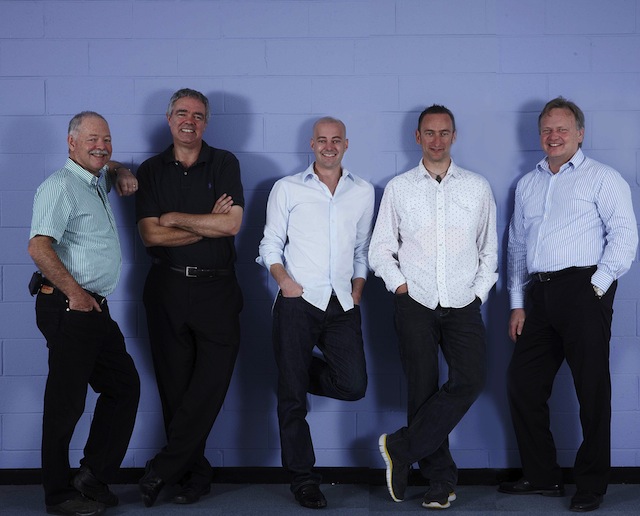
    The latest Decoding The New Economy video is an interview with Roger Carson and Wayne Johnson, the co-founders of Encompass, a cloud based data visualisation company.

    Encompass takes corporate information such as credit information and business registration details and renders it into a form that’s easy to read for salespeople, bankers or anyone doing due diligence on an organisation or individual.

    “A lot of it is about bringing the information together and making it usuable and simple to use,” says Wayne. “If you can’t get that information easily and it takes relationships with lawyers to put it all together or your own legal advisor takes a long time to get this together, it’s costly and you may miss things.

    Wayne and Roger’s path to starting Encompass came from being caught out in a property deal where it turned out some of the business partners wouldn’t have passed close examination.

    “The property venture we went into was not a success,” Roger explains. “If we had known about the people and the properties and the companies involved on the other side of that transaction we probably would not have got involved in it.

    “The genesis of this product really came about because we were involved in a transaction where we didn’t have the full picture, we couldn’t get the full information quickly and we therefore realised there had to be a better way for people to look at commercial transactions and get the full picture.”

    It’s often said that information is power, but the real power lies in being able to understand the data we’re being flooded with. Encompass are a good example of the new breed of business that’s helping others deal with the masses of information we’re all being inundated with.

    Similar posts:

    • No Related Posts
  • Passion and LinkedIn – how Connect2field went global

    Passion and LinkedIn – how Connect2field went global

    Passion is the key to building a successful startup business believes Connect2Field‘s Steve Oronstein.

    Running an IT support service is a tough game and it was the lessons Steve learned in running a PC service business during his teens gave him the passion to solve some of the industry’s problems and the idea to launch what’s become part of a global business.

    “My very first business when I was nineteen was an IT support business,” Steve says. “During that business I saw it was an absolute nightmare being able to manage all those field workers, managing job sheets and invoicing customers.

    “I did that for four or five years and then decided I didn’t want to do that all,” remembers Steve. “I started seeing some opportunities to do some work in job management. From the knowledge I had from the problems in the previous business, I could see there was an opportunity for a product.”

    Finding international investors

    Steve quickly realised there was an international market for that business and Connect To Field quickly caught the attention of global investors, “I would constantly receive emails from VCs about investing the business.”

    One day Steve received a LinkedIn connection and the path to being acquired by a larger company started.

    “At the time Fleetmatics came along there were two businesses that were looking to acquire the business. That happened through a LinkedIn connection.”

    “A request one morning from someone from Fleetmatics wanting to connect with me and wanting to talk about a partnership. That happened very quickly and we were acquired.”

    The importance of smart investors

    Steve thinks investors have been a critical part of the business’ growth and not just for the capital they bring in, but also for their expertise.

    “The key thing in the very beginning was to raise investment from people who could also be mentors,” says Steve.

    “I formed a board with five of people with skills in different parts of the business – legal, marketing, sales, technology”

    “When we went through the acquisition space it was invaluable having a board we could bounce ideas off and strategise with.”

    For Steve, his advice to other entrepreneurs is to be find a problem and be passionate about solving it.

    “I was very passionate about being able to provide a solution for my customers and I knew that what we were delivering would add real value to those business.”

    “Finding something that you’re passionate is the number one thing and the rest of it will follow,” says Steve.

    Similar posts:

    • No Related Posts
  • Where will the jobs come from in the internet of things?

    Where will the jobs come from in the internet of things?

    One of the common worries about the internet of things and the automation of business processes is that many jobs are going to be lost as a consequence.

    This is a fair concern however we need to keep in perspective just how radically employment has changed in the last century.

    Concerns about technology displacing occupations is nothing new; in the eighteenth century the Luddite movement was a reaction to skilled workers being displaced by new innovations.

    In an interview with GE’s Chief Economist Marco Annunziata, published in Business Spectator, we covered this topic and Marco had a valid point that the bulk of the Western world’s workforce was employed in agriculture a hundred years ago.

    Today it’s less than two percent in most developed country as agriculture became heavily automated, yet most of those workers who would once have worked in the fields have productive jobs. “As an economist I look at this over a long term perspective and I’ve heard this concern about technology displacing jobs over and over again.”

    Annunziata sees new roles being created, among them what he calls ‘mechanical-digital engineers’ who understand both how the actual machines work as well as the data and the software used to run and monitor them.

    This isn’t to say there won’t be massive disruption – John Steinbeck’s Grapes of Wrath described the massive dislocation that happened in the United States with the first wave of agricultural mechanisation in the 1920s and the decline in rural communities is due directly to modern farms not needing the large workforces that sustained many country towns.

    We can’t see where the jobs of the future will be and just roles like as Search Engine Optimisation and ecommerce experts where unheard of twenty years ago, our kids will be working in occupations we haven’t contemplated.

    It’s up to us to give our kids the skills and flexibility of thinking that will let them find opportunities in a very different workplace.

    Similar posts:

  • Delighting the customer – the new business normal

    Delighting the customer – the new business normal

    Salesforce’s Executive Vice President of Strategic Reserach, Peter Coffee joined the Decoding The New Economy channel at last week’s Dreamforce conference to discuss the new normal — delighting the customer.

    Coffee’s role at Salesforce is to help the company’s potential clients understand the new normals of business life. “It’s a lot of listening,” he says.

    In describing the new normal, Coffee is in tune with Salesforce’s CEO Marc Benioff in seeing mobile services as being one of the key parts of how business will look in the near future.

    “The fundamental statement is your mobile device is no longer an accessory,” says Coffee. “It’s the first thing you reach for in the morning and it’s the last thing you touch at night.”

    “Fundamentally people are mobile centric so we need to rethink our operations.”

    Continuing the social journey

    It’s not just mobile services that are changing the way we do, social media continues to be companies’ weak points in Coffee’s opinion.

    “There’s research that’s come out of places like MIT that shows traditional print and broadcast media are still valuable for creating awareness of your brand but the final step of turning someone from knowing who you are into deciding to do business with you is now made today only when a trusted network confirms it.”

    “People don’t make that final step of buying from you until they’ve consulted their trusted advisors.”

    “Another fundamental change that’s happened is that the connectivity of the customer is such that if you have a customer that’s unhappy with you for even five or ten minutes there’s a tweet or a Facebook post or a LinkedIn update just begging to leak out and damage your brand,” says Coffee.

    “The closer you can get to instantaneous resolution to the issue, the better.”

    Internet of machines

    With the internet of machines, the ability to resolve customers’ problems instantaneously becomes more more achievable in Coffee’s opinion.

    “Connecting devices is an extraordinary thing,” says Coffee. “It takes things that we used to think we understood and turns them inside out.”

    “If you are working with connected products you can identify behaviours across the entire population of those productslong before they become gross enough to bother the customer.”

    “You can proactively reach out to a customer and say ‘you probably haven’t noticed anything but we’d like to come around and do a little calibration on your device any time in the next three days at your convenience.’”

    “Wow! That’s not service, that’s customer care. That’s positive brand equity creation.”

    Delighting the customers

    All of these mobile, social and internet of things technologies will give businesses the tools to delight their customers and Coffee sees that as the great challenge in the new business normal.

    While many businesses will meet the challenges presented by mobile customers and their connected machines Coffee warns those who don’t are in for a painful time.

    “If you do not have delighted customers you have no market.” States Coffee, “the way that you delight customers is by making sure every interaction with you leaves them happier than they were before.”

    “Traditional silos of sales, service, support and marketing must be dissolved into one new entity which is proactive customer connection.”

    “Companies that neglect to adopt it will discover they have customers who are sensitive to nothing but price,” warns Coffee.

    Paul travelled to Dreamforce in San Francisco as a guest of Salesforce.

    Similar posts:

    • No Related Posts
  • Building smart cities

    Building smart cities

    What will the connected cities of the 21st Century look like and how will they provide service for even their most disadvantaged residents?

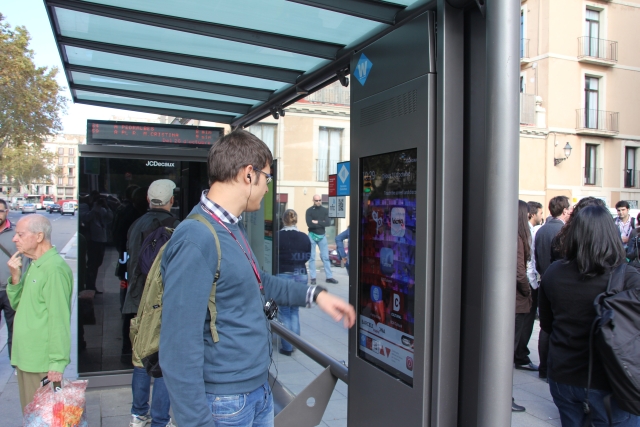
    The latest Decoding the New Economy Video features an interview with Antoni Vives, Deputy Mayor of Barcelona, about his community’s journey to become a smart city.

    What’s striking about talking with Antoni is how passionate he is about Barcelona’s future and the importance of the city building new industries around the digital economy.

    Particularly notable is the administration’s vision for the city which combines Barcelona’s traditional industries, such as the port, with future technologies.

    “Barcelona has to become a city of culture, creativity, knowledge but mainly fairness and well being,” says Antoni when asked on where he sees his city as being in ten years time. “I would love to see my city as a place where people live near where they work, I would love to see the city self sufficient in energy and it should be zero emission city.”

    “Rather than having a pattern of PITO –  ‘Product In, Trash Out’ we should move to what we call the DIDO model – ‘Data In Data Out’.”

    It’s a broad view for the future which many other city and state governments will be watching closely.

    Similar posts:

    • No Related Posts