Category: cloud computing

  • IT becomes the plumbing

    IT becomes the plumbing

    One of the things that jumped out of last week’s smart city tour in Barcelona is that Nicholas Carr’s IT Doesn’t Matter is coming true — IT is now the plumbing.

    That’s not to depreciate IT, it means the technology is now becoming so embedded in society and business that people no longer notice.

    Like roads, electricity and water people assume it will be available but don’t notice the massive effort or investment required to make sure these services work.

    With cloud computing, pervasive internet and connected devices, most business never need to see an IT worker.

    For telco executives, IT managers and tech support people this is a blow to their egos as they always wanted their industries to be more than utilities.

    In one way being a utility legitimises IT as it makes the industry more important than just a bunch of geeks playing with computers.

    That also means that things have to work, ‘best effort’ services no longer cut it when you’re a utility and things have to work 99.99% of the time. Just like in plumbing.

    Becoming the plumbing could be the best thing that happened to the IT industry.

    Similar posts:

    • No Related Posts
  • In business, be careful what you wish for

    In business, be careful what you wish for

    Yesterday’s blog post looked at MYOB’s journey into cloud computing, in some ways this is a good example of being careful what you wish for.

    Like all box software suppliers, MYOB and Microsoft desperately wanted to move customers to a subscription model through the 1990s and early 2000s, the theory being a steady cashflow would be better than the ‘lumpy’ sales of box product every time a customer upgraded their system.

    Eventually, the box software suppliers got their wish when cloud computing took off after many false starts.

    Unfortunately for the box software suppliers,it turned out their products had to be completely redesigned to run as a cloud service.

    Worse, the new business model also lowered the barriers for entry into their industries which meant the incumbents had to compete dozens of hungry new competitors who weren’t lumbered with legacy code and customers.

    The box software companies got the subscription model they wished for, but turned out not to be the bonanza they hoped.

    Wishing well image courtesy of Deboer through SXC.HU

    Similar posts:

    • No Related Posts
  • MYOB’s journey into the cloud

    MYOB’s journey into the cloud

    The big winners of the Personal Computer era were the software companies. During that time firms like Microsoft, Oracle and Adobe became some of the most profitable companies on the planet.

    With the arrival of cloud computing those profits started to dry up and those software companies that did so well out of the PC era are now scrambling to develop new products to meet a very different market.

    Accounting software provider MYOB is a good example of this changing industry – a business that dominated the Australian small business market and supported an army of certified consultants now finds cloud based competitors like Xero nibbling away at their industry position.

    MYOB Chief Technology Officer Simon Raik-Allen describes his company’s journey to the cloud in the latest Decoding the New Economy video clip.

    “The cloud has amazing benefits for small business,” says Simon. “For twenty-two years we’ve had desktop products and for the last three or four years we’ve had cloud based services.”

    “It’s been a really interesting journey, we’ve been on it for three or four years now where we’re converting the company to a cloud company.”

    “But it’s also a cultural journey,” Simon observes. “I love seeing how people start to think differently when stuff is in the cloud.”

    “Having things in the cloud opens the opportunity for employees to start slicing and dicing data in different ways.”

    “It opens up the innovation curve to what’s possible.”

    Bringing partners on the journey

    Like Microsoft, one of MYOB’s strengths is its partner community – in particularly the company’s twenty thousand strong Certified Consultant program.

    Those consultants, like Microsoft’s partners, are seeing their traditional revenue streams challenged as their business models change, a topic discussed with Growthwise’s Steph Hinds in a previous video interview.

    “Everybody takes the cloud journey at their own place,” says Simon. “For bookkeepers in particular this is an opportunity to change their business in a positive way.”

    “Normally a bookkeeper would drive around and visit two, three or four customers a day and help then with their books. Now they can help twenty customers in a single day.”

    Looking beyond the cloud

    Simon sees more than cloud computing changing accounting software with connected devices like the Pebble Watch, voice and gesture recognition along with Near Field Communications technology all being built into MYOB and computers in the near future.

    “NFC is a very powerful technology,” Simon states. “Imagine in the accounting world where you are doing your books by moving your phone.”

    “In retail NFC is going to be big where you can walk up to a product, wave your phone in front of it and it will tell you about the product.”

    “We are very much driven by what our clients want,” says Simon. “It comes down to the use case of will it add to our customers’ business.”

    An enthusiastic advocate

    One of the things that’s impressive about talking with Simon Raik-Allen is his enthusiasm for technology, whether it’s Pebble Watches, NFC enabled robots or gesture controlled accounting software.

    MYOB needs that enthusiasm in its move away from the once immensely profitable box software business onto the cloud where margins are thinner, the advantages of incumbency aren’t great and the competition from well funded competitors like Xero is immense.

    As with many other ventures, MYOB is dealing with a huge disruption to their core business and the challenges are immense.

    Image courtesy of Morrhigan through sxc.hu

    Similar posts:

    • No Related Posts
  • Intel’s challenge to find a new message and market

    Intel’s challenge to find a new message and market

    Twenty years ago people cared about the specifications of their computers and chip maker Intel led the industry with its marketing of 486, Pentiums, Pentium Duos and Pentium IIs.

    As we come to the end of the PC era, the consumerisation of technology and the rise of cloud computing mean customers no longer care about what’s inside their systems and Intel is struggling to find a new message.

    Over the last few months Intel have been showing off their latest range of Central Processing Units (CPUs) to enterprise and small to medium business (SMB) groups. Last week the company hosted an SMB event in Sydney that illustrated how Intel is struggling to cut through the market.

    Speaking at the event was Steph Hinds – an evangelist for cloud computing – who told the story of how her Growthwise accounting practice was flooding out during storms.

    Because her systems were on the cloud Steph and her staff were able to work from home and local cafes while the landlord fixed her offices. Had Growthwise been using a server based system the business would have been crippled while her IT people implemented a disaster recovery plan.

    Steph’s story in itself illustrated the Clean, Well Lighted Place argument for cloud computing and also showed how Intel is struggling to sell its PC and server upgrade cycle message in an era where that business model is dead.

    This didn’t stop some of the other speakers at the small business event trying to sell the idea that upgrading computer systems and retaining an IT support company were essential to small business success but it’s a message that was valid a decade ago.

    For Intel the challenge is to find a new message – it may well be that the company’s future lies in supplying the powerful CPUs that run data centres, or maybe the low energy and maintenance chips required to control the billions of intelligent devices that will run the internet of everything.

    The company’s launch of their Galileo board – a tiny computer designed to compete in the intelligent devices market with the likes of the Raspberry Pi – is a step in the latter direction and shows Intel is exploring the possibilities.

    Wherever Intel’s future lies, it doesn’t lie in trying to sell a business model that is quickly going the way of the Brontosaurus.

    During most of the PC era, it was the Wintel partnership that dominated the computer industry, now Microsoft have realised this fundamental market change and started their journey to become a devices and services company.

    The challenge now lies with Intel to decide where their journey will take them in a post PC world.

    Similar posts:

    • No Related Posts
  • A clean, well lighted place

    A clean, well lighted place

    A clean well lighted place was all a waiter wanted in Hemmingway’s famous short story.

    It’s all a computer wants too.

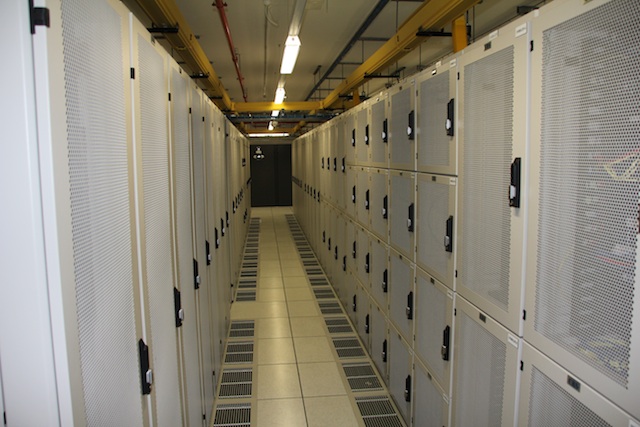
    At a media tour of PacNet’s Sydney city data centre earlier today Atul Thapar, Managing Director of integrator E-Bit Systems, gave a brief talk on the pros and cons of cloud computing.

    Much of Atul’s presentation covered the same territory as the Business in the Cloud presentation in making the argument for why businesses should use cloud computing services.

    A stand out point in Atul’s presentation was that computers like clean, well lit places.

    “Dust-prone unstable environments will age hardware,” said Atul. “And the result is system failures and downtime.”

    This is a good point – most businesses treat their servers terribly and at best they are kept in a stuffy, dusty closet where they get clogged up and neglected.

    While running PC Rescue I encountered one cat loving real estate agent who kept her office server in an operational kitty litter tray. Needless to say she wasn’t a client ten minutes after I discovered that.

    Just the fact that data centre operators look after their computers is a compelling argument for businesses moving onto the cloud, or at least putting their servers in a colocation facilities where professionals can look after the environment.

    Like us, computers work best when they’re comfortable. If you can’t look after them, then it’s time to consider giving the work to someone who can.

    Similar posts:

    • No Related Posts