Category: cloud computing

  • Facebook’s challenge in executing for the enterprise

    Facebook’s challenge in executing for the enterprise

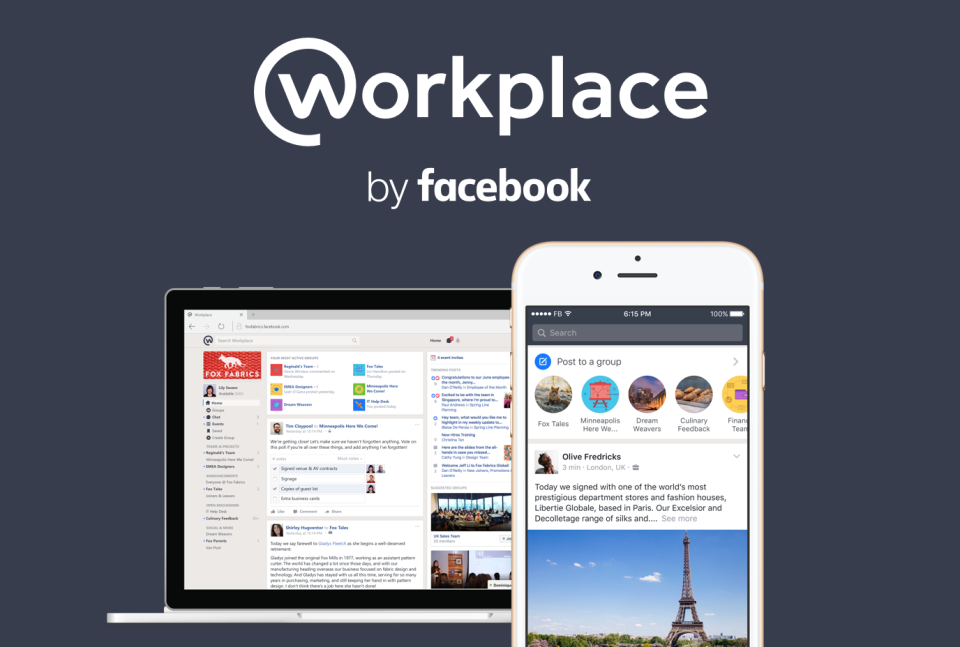
    Workplaces by Facebook was is the social media giant’s enterprise collaboration service it hopes will put the company into the enterprise space.

    Like many similar products, the service is aimed at improving collaboration in the workplace. As the media release gushes, “the new global and mobile workplace isn’t about closed-door meetings or keeping people separated by title, department or geography. Organizations are stronger and more productive when everyone comes together.”

    On first impressions, Facebook should score some successes with the service however it’s success is far from guaranteed. As we’ve seen with other major company’s attempts to open new products, being the deepest pocketed player doesn’t automatically ensure a successful product.

    The Google example

    A common assumption when a behemoth enters a martketplace is will simply smother smaller competitors by virtue of its size.

    History shows this not always the case, Facebook itself thrived despite the huge threat posed by Google+, indeed Google is probably the best example of a large corporation that struggles outside its core business.

    Part of the reason for the idea of big companies easily squashing the little folk being a fallacy is that the smaller companies are more focused on their problem – for a corporation the division is one part of a broader operation run by managers, not owners.

    In such a marketplace, execution and management focus matter so Facebook’s success will depend as much on executive buy-in as the resources thrown at the product.

    Cost and complexity

    A notable thing about Workplaces by Facebook is its partner network, led by Deloitte. This is not a good sign.

    The need to have consulting partners – particularly huge and expensive companies like Deloitte – is not an encouraging sign for the nascent service and may be a barrier towards adoption.

    A separate issue in Deloitte’s involvement is how cloud services, which we include Workplaces by Facebook, are buddying up with the major consulting firms with everyone from Huawei to Oracle entering arrangements. While this might help partners squeeze a few more pennies out of their hapless clients, it’s doesn’t seem to be in the vendors’ or customers’ interests.

    Trust

    What happens to users’ data is a perennial problem for Facebook and it’s notable this issue isn’t mentioned in the announcement.

    Facebook’s success shows consumers are relaxed about how the company uses data but that attitude may not be shared by managers and business owners.

    The proprietor of one reasonable sized startup said, “I have a slight concern about giving Facebook any access to my company information. Whilst it has been fine from a personal perspective I feel the trust level is not strong enough to warrant handing over access to, effectively, everything.”

    Overcoming that objection may be one of the biggest challenges for Facebook being accepted as an enterprise tool.

    Becoming an enterprise service

    Facebook’s push into the enterprise isn’t surprising and indicates that as the company matures, something more than the advertising funded consumer market is needed to drive its growth.

    That consumer background is a strength for Facebook as the consumerization of enterprise software is an established trend. Having an interface and tools that are familiar to most staff is very attractive to managers looking at introducing new platforms with the shallowest possible learning curves.

    However the ultimate question is what need does Workplaces by Facebook address? There’s no shortage of collaboration platforms that offer most of the futures offered by the platform.

    If Workplaces by Facebook does address a genuine need in enterprise workplaces and the company’s management can maintain its focus on the product then the service may be a success. That isn’t a given though.


    Similar posts:

    • No Related Posts
  • Seeking salvation in the cloud

    Seeking salvation in the cloud

    Oracle CEO Mark Hurd’s keynote at the company’s Open World conference in San Francisco yesterday illustrated a problem facing businesses around the world and its effects on enterprise software vendors like the one he heads.

    “Standard and Poor’s top five hundred companies’ revenue growth is at one percent, their earnings growth is five percent.” “It means what? Expenses are going down.”

    “This is the problem that the CEO has,” he says. “Why is it hard to grow revenue. All your investors want you to grow earnings and deliver growth. They have little patience for any long story about why it’s so hard.”

    “They don’t care about any issues you may have. Grow earnings, grow cash flow, grow stock price. That’s it.”

    Growing in a slow market

    As a result of that the easiest way to grow earnings is to grow revenues but when global GDP and markets are flat, the only way to grow is to gain market share, Hurd says. “We have to know the customer better, we have to do a better job of marketing and we have to do a better job of aligning our goods and services to what our customers want. We have to improve our products and processes.”

    That imperative for companies to cut their operating costs has had a brutal effect on enterprise IT budgets, “over the past five years, the growth in enterprise IT has been flat.” Hurd says, “the growth in spending has been basically zero.”

    Customers drive the market

    Like many things in the tech industry, the sector’s growth focus has shifted to consumers, “consumer spending on IT has almost quadrupled in the past decade. So while companies are sort of flat, consumers have been spending like crazy.” Hurd observes, “consumers are more sophisticated, more capable, more knowledgeable and expect better services than ever before.”

    “Your customer experience is not being defined by your competitors but by technology fuelled consumers. For instance, AirBnB may be defining customer experience for the hospitality industry.”

    “People are using a lot of social technologies in their personal lives,” “we expect ease of use, simplicity, clean interfaces are now things we expect in the enterprise side.”

    Crimping innovation

    In the enterprise IT sector, Hurd believes the flat market means many companies catering to the corporate market are skimping on Research and Development which in turn is crimping innovation, a factor compounded by cloud providers taking an increasingly larger share of the market.

    This is underscored by cloud leader Amazon Web Services spending over ten billion dollars a year on R&D. Hurd’s boast that Oracle is spending half of that shows how the legacy players are struggling.

    What stands out in Hurd’s keynote is how legacy providers see cloud computing as their salvation. However Amazon’s dominance in that space is a major obstacle for them.

    For consumers, big and small, the shift to the cloud has been a good thing in shaking up the existing industry and making new technologies more accessible to smaller customers. For existing businesses like Oracle, there’s a challenge in adapting to a lower margin, commoditized and quickly changing market.

    A bigger question though facing all large corporations, not just software companies, is this new normal of low economic growth. Succeeding in that environment is going require a completely different management and investor mind set to that of the last seventy years.

    Similar posts:

    • No Related Posts
  • Oracle and the cloud shift

    Oracle and the cloud shift

    Ahead of next week’s Oracle Open World, which I’m attending, the software giant has announced its quarterly results which illustrate how software has shifted to the cloud.

    The company’s cloud revenues jumped 77% on the previous year which is impressive but represents less than a tenth of the company’s sales.

    What would concern Oracle’s shareholders is the stagnation of sales in their main product lines – on premise software makes up 69% of the firm’s revenue but it didn’t grow for the quarter and new license sales dropped eleven percent, which doesn’t bode well for the future.

    Oracle’s big announcement in the last quarter though was the acquisition of cloud ERP provider Netsuite for $9.3 billion.

    That acquisition will test how Oracle pivots into the cloud, it may well be the Netsuite management teach the parent company some tricks.


    Similar posts:

    • No Related Posts
  • Microsoft quietly buries its smartphone ambitions

    Microsoft quietly buries its smartphone ambitions

    Last week Microsoft quietly buried its smartphone ambitions with the announcement they would shed 1,850 jobs largely from the remains of the Nokia business they acquired four years ago.

    Microsoft’s Lumia exercise was expensive for the company but even more costly in terms of missed opportunities.

    Those opportunities are now in cloud computing and artificial intelligence services. Shareholders will be hoping the current CEO Satya Nadell executes a lot better on them than his predecessor did with smartphones.

    Similar posts:

    • No Related Posts
  • Microsoft imagines its future markets

    Microsoft imagines its future markets

    Currently Microsoft are running their Imagine Cup, the company’s annual student developer competition at their Seattle head office.

    A regular fixture for the last 14 years, the Imagine Cup is Microsoft’s opportunity to show how emerging applications can be based upon their technologies. It tells us as much about the company’s successes as it’s missed opportunities.

    With Artificial Intelligence and machine learning being the upcoming battlegrounds for the software giants, it’s not surprising many of this year’s competitors are focused on applying those technologies.

    A good example of this is the Ani platform of Australia’s entrant, Black.ai, which analyses spatial movement and biometric information. In many ways this adds intelligence to smarthomes and has immediate applications in fields like aged patient care.

    Black.ai’s timing is very good as patient monitoring has become an issue in their home country and veteran tech investor Mark Suster predicts tracking the flow of people is going to be a huge market.

    The patient care angle of Black.ai’s  is particularly pertinent to the Imagine Cup competition as health services have been a focus in the past. Two years ago the winners were another Australian medical services platform, Eyenaemia that used a smartphone app to detect anemia.

    While the Imagine Cup is a good showcase for Microsoft, the competition also shows how the market has evolved around the company. Most of the contests have a smartphone component and the cloud features heavily in all the applications, both are fields where Microsoft has either struggled or is playing catch up.

    The focus on cognitive computing and artificial intelligence in this year’s event shows the company is keen to show off its prowess in the emerging battle with Amazon, Google, Apple and no doubt other companies. Microsoft will be hoping they won’t be left behind in the next wave of computing.

    Similar posts:

    • No Related Posts