Category: cloud computing

  • Mapping new industries

    Mapping new industries

    As smartphones become ubuiquitious in business, more applications are appearing that take advantage of the devices’ inbuilt features like GPS and cameras.

    To date, many of these have services have been in consumer based, social media style applications but as the market matures, more business orientated services are appearing.

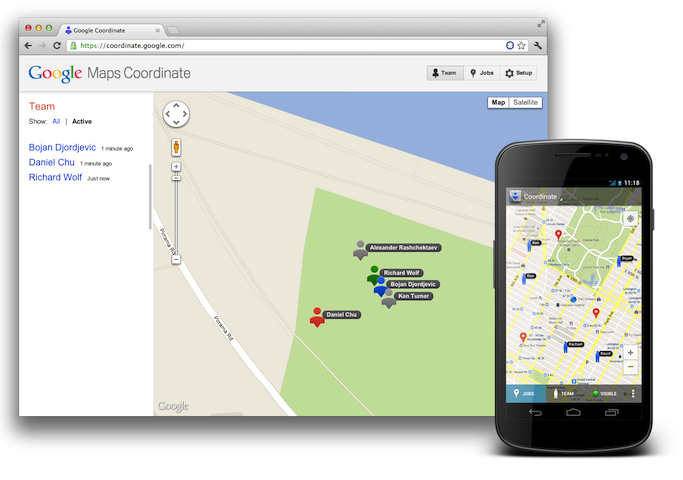
    Google Maps Coordinate, the latest service from the search engine giant, uses a smartphone’s built in location services to track field staff and allocate jobs through an Android smartphone app.

    On top of that, Google have added a Maps-style interface for businesses to schedule appointments and for staff to accept assignments.

    It’s a nice but basic product that doesn’t really address any gaps in the marketplace with job scheduling technology being available for over a decade in the logistics and field service industries.

    Connect2Field’s chief executive Steve Orenstein compared Google Maps Coordinate to his own product and while Steve is talking up his own company, the comparison does show this is a market that’s well catered for.

    Given the market already has plenty of participants, it would make sense for Google to make the API available to existing players and profit from the rich data they can provide, that move might even give the edge to Android devices in an enterprise market that will become a two horse race if Microsoft fail to execute on Windows 8 and their tablet devices.

    Unfortunately Google has chosen not to include these services into their enterprise API packages, leaving them competing against existing players rather than working with them.

    At the moment Google Maps isn’t on a roll, having dropped their developer rates by 88% to deal with threat from Apple’s new mapping service.

    Probably the biggest drawback to Google Maps Coordinate is its lack of integration with Google Docs, the increased siloing of Google’s operations makes the company start to resemble Microsoft and this is an issue Sergei Brin and Larry Page are going to have address lest the company find itself locked into the same inward looking stagnation.

    While its difficult to see Google Maps Coordinate surviving in its current form given the nature of the marketplace, the trend in business orientated geolocation services is changing how companies work.

    As smartphones take over the market and location based services become accepted, we’ll see more tools taking advantage of the business opportunities. For Google, this sector has huge potential and it will be interesting to see how they succeed in capitalising on their market dominance.

    Similar posts:

  • Managing your digital estate

    Managing your digital estate

    Everyone who goes online leaves “digital footprints“, a trail of the things we’ve done on the web. When you pass away, what happens to those status updates, comments and documents you’ve left on the Internet?

    Dealing with the passing of a loved one is always difficult but today we have an added complexity of dealing with the online problems of social media sites suggesting people still “like” the deceased or valuable documents locked into cloud computing services.

    With more of us storing information into cloud computing services, having important data locked away becomes a real risk and how online storage or software companies deal with deceased estates becomes important.

    Online services don’t have a standard way of dealing with the data of someone who has passed away, here’s a quick sampler of some of the different policies.

    Facebook

    The social media giant has the easiest way to manage a deceased’s profile, simply fill in a form and swear you’re telling the truth. Facebook will then “memorialize” the account.

    “Memorializing” is an interesting way of dealing with user’s passing. Rather than deleting the account, Facebook will lock out everyone but friends who are still able to post to the deceased’s wall. In some aspects, this is quite an elegant solution.

    LinkedIn

    One of the features of LinkedIn is that it gives upfront suggestions of who should be in your network. If you’re a heavy user of the service, you’ve almost certainly encountered a suggested contact that is either inappropriate or distressing so the stakes for LinkedIn in keeping their contacts up to date is high.

    LinkedIn’s process of dealing with a deceased’s passing is an email to customerservice@linkedin.com with the word “deceased” in the subject line. You need to give some details on the user’s passing and their account.

    Google

    With Google offering both social and cloud computing services, they are probably the most important service of all. Google’s requirements for handing over account details are rightly stringent.

    Google’s procedure for deceased accounts involves the person first reporting the user’s passing to identify themselves first. Interestingly this has to be done by post.

    Twitter

    Like Google, Twitter requires anyone reporting a user’s death to mail proof of identity along with a death certificate. Once they are satisfied the user has passed away, they will deactivate the account.

    PayPal

    “When contacted in regards to a deceased estate we move quickly and with respect to close the customer account.  Our policy and process is similar to many large financial institutions including banks  When PayPal is notified that an account holder is deceased immediate steps are taken to suspend the account to prevent any unauthorised transfers from the account. 

    To close the account of someone who has died, PayPal needs to be sent paperwork including; details of the Executor of the Estate and a copy of the death certificate for the account holder. The documentation is reviewed and, once authenticated, the account is closed. If there are funds in the PayPal account, then these will be issued to the Executor of the Estate. 

    With bankrupt estates we refer this directly to our legal team who deal with them on a case-by-case basis and take action according to the instruction provided by the person or company handling the bankruptcy.

    Apple

    No specific policy, the company recommends “customers needing guidance in relation to a deceased estate contact iTunes support at http://www.apple.com/support/itunes/contact/“.

    Amazon

    No clear policy. The company has been approached for comment.

    Digital estate management services

    There’s a number of services which help manage digital identities after someone passes away. Mashable reviews a number of these.

    Sharing passwords

    One simple solution is to share passwords with your next of kin, but that is a horrible security risk which isn’t recommended.

    A slightly different solution is to split passwords in two and give half to different people, that still has risks and can get complex.

    Probably the biggest problem with passwords is they change. Even if you write the password in your will or share it with trusted loved ones there’s a good chance it may have changed in the meantime.

    Central email accounts

    Probably the easiest, albeit still risky solution, is to have all online services pointing to one email address. almost every service has a “recover my password” feature which an executor or loved one with access to the central address will be able to recover most account login details.

    Should everything else fail there are the courts and every major online service will obey a properly executed legal order although anything involving lawyers invariably ends up messy, difficult and expensive so that course should be the last resort.

    As with everything online, balancing security, convenience and privacy is a difficult task for both individuals and companies. It’s not made better by the distress and grief when someone passes away.

    Ideally we’d all plan these things and it would be easy on our loved ones although things often don’t turn out that way. It’s as true online as in any other aspect of life.

    Similar posts:
  • Using cloud computing to grow your business

    Using cloud computing to grow your business

    Computers have changed business over the last thirty years and now cloud computing is changing the ways we use computers.

    Smartphones, tablet computers, laptops and PCs are all becoming more productive and efficient as cloud services make it easier for business grow and become profitable.

    Join Paul Wallbank and the Bondi Business Enterprise Centre for a two hour session on how you can use cloud computing services in your business.

    Tickets are only $35 and the session will be held from 5.30pm on Wednesday, June 20  at Bondi Library, Denison Street Bondi Junction, NSW. You can book through the BEC website.

    You’re probably using cloud computing services and don’t even know it, find out how to use them better.

    Similar posts:

  • Using Cloud Computing to grow your business

    Using Cloud Computing to grow your business

    Cloud computing tools can help your business grow, improve flexibility and build profits.

    ABC radio commentator and author of eBusiness, Paul Wallbank, looks at how you can use these services to improve your business’ profitability, be more flexible and overcome the problems often found by growing businesses.

    This two hour evening workshop is part of the Bondi Business Enerprise Centre’s social media progam. Seats are $35 and bookings are essentials. Contact the Enterprise Centre to secure your place.

    Address:
    Denison Street
    Bondi Junction, NSW
    2150
    Australia
    Map and Directions

    Date: 20/06/2012

    Start Time: 5:30 PM
    End Time: 7:30 PM

    Price: A $35.00

    Similar posts:

  • Towards the Zettabyte enterprise

    Towards the Zettabyte enterprise

    Toward the Zettabyte Enterprise originally appeared in Smart Company on May 31, 2012

    Two hundred years ago, the idea of equivalent power of hundreds of horses in a single machine was unthinkable; then steam engine arrived with what seemed unlimited power and that, followed by electricity and the motor car, changed our society and the way we do business.

    Back then it was inconceivable that the average person would have the equivalent of several hundred horses of power in their household, today most of us have that sitting in our driveway.

    The same thing is happening with the explosion in data, it’s changing how we work in ways as profound as the steam engine, electricity or the motor car.

    A couple of surveys released this week illustrate the how business is changing. The Yellow Social Media Report 2012 and the Cisco VisualNetworking Index both show how business and our customers are adapting to having high speed internet at their fingertips.

    The Cisco index illustrates the explosive growth of data across the Internet as more people in Asia and Africa connect to the net while users in developed countries like Australia increase their already heavy usage.

    In Australia, Cisco see a sixfold growth in traffic between now and 2016. As the National Broadband Network is rolled out, they see speeds increasing substantially as well, with Australia moving from the back of global speed tables up to the front.

    Many people are still struggling with the Megabyte or Gigabyte, but very soon we’re going to have to deal with the Zettabyte – a trillion Gigabytes.

    For businesses, this means we’re going to have to deal with even more data, it’s clear our hardware and office equipment aren’t going to deal with the massive traffic increases we’re going to see in the next few years.

    Even if we have that equipment, it’s another question whether we have the systems, or intellectual capacity to use it effectively.

    The Sensis social media report shows consumers are expecting not just rich data but also 24/7 online services.

    A worrying part of the Sensis survey is that businesses aren’t keeping up with these demands; something that jumps out with the survey is that while 79% of big businesses have a social media presence, only 27% of small businesses have bothered setting one up.

    Australian small businesses have basically given the turf away to the big end of town.

    The real worry with these statistics is that small business just isn’t taking advantage of the tools available to them — not only are they leaving the field open to bigger competitors, but there’s a whole new generation of lean new startups about to grab markets off slow incumbents.

    While the big companies are vulnerable, it’s the smaller businesses who are the low hanging, easy to pick fruit. If you’re in a profitable niche segment this is something you’ll need to keep in mind.

    In the near future we’ll be dealing with inconceivable amounts of data, the businesses that understand this will thrive while those who don’t probably won’t even understand what has hit them.

    Similar posts: