Category: cloud computing

  • IBM and the era of cognitive computing

    IBM and the era of cognitive computing

    “If you’re digital now, you’ll be cognitive tomorrow” says Ginni Rometti, the head of IBM.

    Rometti was talking at the Sydney IBM Think forum today where she laid out the vision of IBM’s role in the data rich organisation of the future,

    IBM’s pitch is that services like their Watson artificial intelligence platform is a key part of business as companies try to differentiate themselves in the new economy.

    While Rometti’s view is correct, the question is whether IBM are the company to do this. The audience in Sydney were largely incumbent corporations and government agencies, it was almost sad that some of the panelists citing their digital smarts were from Australian businesses that have been tragically leaden in responding to changes to their markets over the last two decades.

    In the first panel Rometti was joined by Andrew Thorburn and Richard Umbers the respective CEOs of the National Australia Bank and the Myer department store chain.

    Thornburn’s comments about NAB being an agile fintech company were somewhat at odds with the reality of Australia’s housing addicted banking sector but Umbers’ view that Myer is leading the way in customer experience is almost laughable given how his company has missed almost every development in retail over the past twenty years.

    Leaden corporations are Rometti’s core customers however – it still remains true that no-one at companies like Myer and NAB gets sacked for buying IBM.

    “We’ve been part of your past, and I hope we can be part of your future” was Rometti’s conclusion of her keynote. It remains to be seen whether her customers are part of the future.

    Similar posts:

  • The smell of social media defeat

    The smell of social media defeat

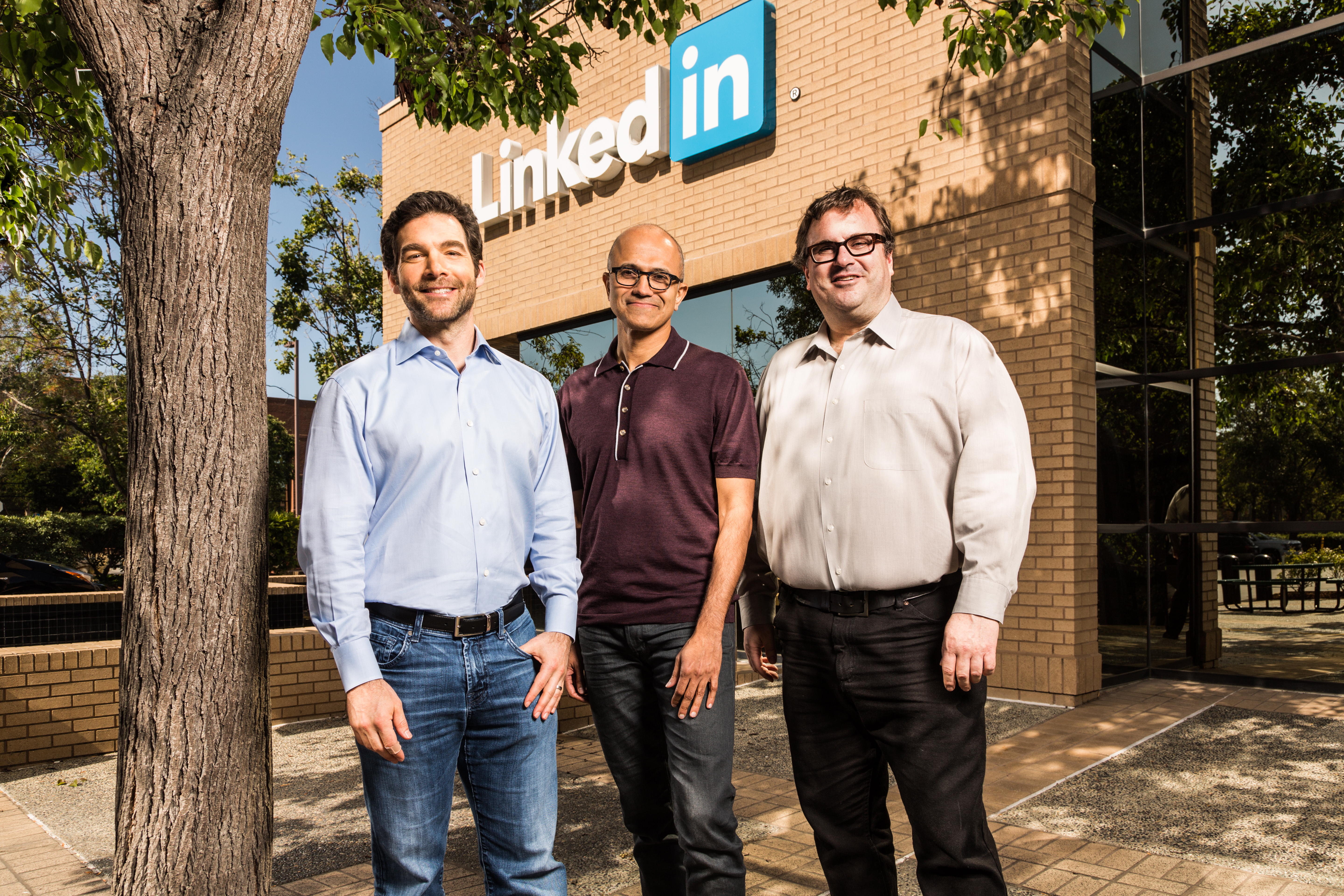
    “There’s a shared sense of alignment,” says LinkedIn CEO Jeff Weiner during his video with Microsoft’s Satya Nadella to announce Microsoft’s $26 billion dollar acquisition of LinkedIn.

    Weiner has been trying to reinvent LinkedIn’s business model for three years and Microsoft’s acquisition is an admission of defeat with the company’s market capitalisation half of what it was a year ago and profits proving hard to find.

    The fact revenues were slowing in the face of anemic returns is probably the reason why LinkedIn’s board was happy to accept Microsoft’s deal that’s 46% more than the social media site’s $17.5bn market capitalisation on Friday.

    LinkedIn’s capitulation shows what a graveyard social media sites have been for investors. With the exception of Facebook, almost all have failed to deliver the profits or promise hoped for by those making big bets on the platforms.

    Both LinkedIn’s and Twitter’s managements have been distracted by the search for revenue streams to justify their huge stockmarket valuations which in turn has alienated core users. LinkedIn’s surrender means Twitter’s acquisition is only a matter of time.

    Microsoft now has to show how it is going to derive twenty-six billion dollars worth of value out of LinkedIn. The company’s track record of acquisitions is execrable as we’ve seen with Nokia, Yammer and Skype and there’s little to indicate this deal will fare any better.

    Commentary that LinkedIn as a ‘cloud company’ will help Microsoft Azure against an already rampant AWS is downright silly, Nadella himself in a Bloomberg interview with LinkedIn’s Weiner was at pains to point out the networking service’s fit with the Dynamics product.

    Plugging LinkedIn’s ‘social graph’ with Microsoft Dynamics might give the Nadella’s team better tools to compete with Salesforce in the CRM market, it seems a high price to pay and almost justifies Salesforce’s Marc Benioff rejecting Microsoft’s overtures last year.

    LinkedIn’s capitulation marks the end of social media’s growth phase. Now, as Facebook becomes the platform that rules all, the others have to find their niches in a market dominated by one services. For Twitter the race is now on to find a buyer.

    Similar posts:

  • Hubris and the cloud

    Hubris and the cloud

    A few months back I spoke to Amazon Web Services’ Chief Information Security Officer Stephen Schmidt about how his company was expanding in Australia and East Asia.

    One of the questions I asked was about the Australian footprint where all of AWS’s services are based in Sydney. Many of the company’s customers have questioned the suitability of that setup.

    Schmidt was dismissive of the need for data centres outside of Sydney to serve the Australian market saying, “the Australian footprint is largely based on what the customers tell us. Right now they are happy with the way things work in Sydney, we have POP locations in other areas for edge access.”

    “What we hear from customers is the network connectivity between Melbourne and Sydney is very good,” he added, “it’s really irrelevant whether you’re based in either city.”

    During the storms that hit Sydney last week those words came back to haunt AWS as their data centers were knocked out of action.

    Not a good look and now one suspects a Melbourne based data center, or at least some redundancy down under, is now higher on AWS’s to-do list.

    Similar posts:

  • The benefits of being public

    The benefits of being public

    Both the public cloud and a publicly listed company are good things for a business says Netsuite’s Zac Nelson.

    “Managing a public company is a great discipline and in some ways gives us an advantage over non-public company who don’t have to have discipline and make good investments,” says Zac Nelson, the CEO of Netsuite.

    Nelson was talking to Decoding the New Economy yesterday at the annual Suiteworld conference, Netsuite’s annual gathering in San Jose.

    The CEO’s comments are in contrast to a common view that being publicly listed company distracts a company’s management from focusing on long term objectives, a sentiment Nelson rejects.

    “In terms of managing a public company I think it’s an important discipline, I think a lot of people are opposed to these SOX (Sarbanes-Oxley) rules but when I look at these rules I think they are just common sense. Are you managing your business right? You want to have control of your business so you aren’t blindsided.”

    Probably the biggest advocate of taking companies private is Michael Dell who took his eponymous business off the markets three years ago and is now looking at doing the same thing with EMC in what will be the biggest IT merger in history.

    Dell going private

    Nelson doesn’t think Dell going private was a mistake though, “I saw Larry Ellison say it was one of the greatest business moves in the history of man, I’ll agree with Larry – he’s usually right on that stuff,” he laughed.

    “The thing I see Dell doing that I understand is they are giving their smaller division more autonomy. Dell Boomi is going back to being just Boomi and Secureworks just went public. Certainly from a structural standpoint and business model innovation that makes sense and it’s what I understand.”

    As a public company, Netsuite does come under scrutiny and one of the criticisms is that it continues to post losses, something that Nelson puts down to the treatment of stock options. In the last earnings report, the company claimed capitalising stock options added $30 million in costs and not including them would see the company reporting an eight million dollar profit last quarter.

    “We’re cash flow positive, we generate over $140 million in cash,” Nelson says. “People are happy with it, we’re still investing. What we’re investing in this year is different to the past, we’re investing in services to enable our customers to invest in product.”

    Integrating the stack

    One of the advantages Nelson sees that cloud based companies like his have are integrated systems, “the client server world created this perspective that dis-integrated systems actually work – you have Windows, you have third-party apps – but what really works well are integrated systems.” he says. “Look at the most common system you guys use, called Apple, it’s an integrated end-to-end system. Same with Amazon, that’s what we’ve built.”

    “The detour we took in the client-server world is still being taken in the software world, a lot of software people believe you can compile this stuff and it will magically work. No, it doesn’t. Integrated systems work better.”

    Securing the cloud

    One area he specifically sees where cloud services have an advantage in being integrated is with security, “a problem that large enterprises have that we to some degree don’t have is we have one system, we have five data centers. You look at some of these large enterprises and some of them don’t even know where some of their data centres are. How on earth do you secure that environment? It’s not a product problem, it’s a process and IT management problem.”

    Nelson’s comments on security are a swipe at competitors like SAP and Oracle who are often criticised for having disparate systems.

    With Suiteworld moving to Las Vegas next year, it will be interesting to see who’s taking bets against cloud services like Netsuite. Certainly with salesmen like Zac Nelson, they’re able to tell a good story. The key though is to show some profits in the longer run.

    Paul travelled to Suiteworld in San Jose as a guest of Netsuite.


    Similar posts:

  • How cloud computing is making innovation a commodity

    How cloud computing is making innovation a commodity

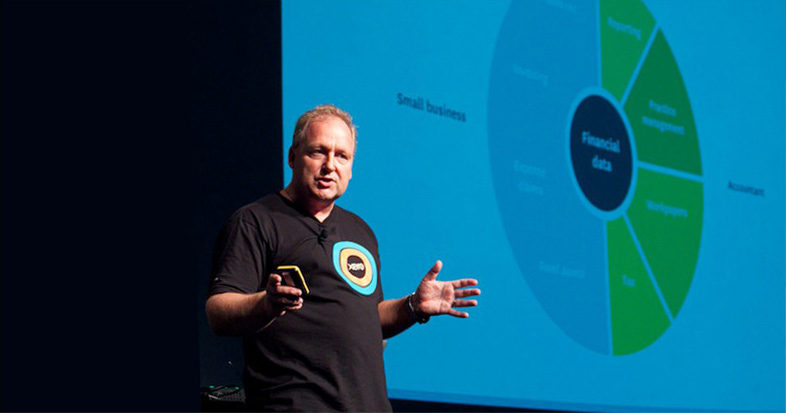
    Being on the public cloud is a competitive advantage believes Xero CEO Rod Drury.

    Over the past few weeks I’ve been writing a lot about cloud computing. One of the themes being pushed by many incumbent IT companies – such as Dell and EMC recently at their Las Vegas conference – is that a hybrid model of computing is developing where certain functions are given to public cloud providers while others are bought back in house.

    Rod Drury, the CEO and founder of Xero, has been one of the greatest critics of this ‘hybrid’ model of computing and during an interview with him yesterday I asked him about this view that companies are bring IT services back in house.

    “I completely disagree with that,” says Drury. “We’ve been on a two year journey moving from our own hosted environment to AWS. The reason for that is important.”

    “We have a trillion dollars worth of transactions for the last twelve months sitting on our servers, the next stage is to apply some of  the Big Data, machine learning and artificial intelligence type services. If you’re sitting there with your own private cloud, you have to invest in those technologies.”

    “The benefit of being on the Amazon cloud – and this is part of the big battle between Amazon, Microsoft and Google – is you really have to be on that platform to take advantage of the commodity innovation that is in those platforms.”

    “Our understanding is our incumbent competitors are still working on migrating their desktop platforms and their own data centres to cloud and haven’t made that investment where they get access to the next generation of technology.”

    “So we think we’ve built a sustainable competitive advantage by being on AWS, we see Salesforce have announced they are getting on AWS, and you really have get in there because of what’s happening.”

    That’s a clear view from Rod Drury and one that most ‘cloud native’ businesses will endorse. Despite the risks of vendor lock-in, companies like Xero are choosing the cloud vendors because of the access to tools and services.

    For Amazon’s competitors, from the small services to the major providers such as Microsoft Azure and Google, the challenge is going to be developing and offering services that can compete with AWS.

    In many respects the cloud computing world is beginning to resemble the desktop marketplace 25 years ago where Microsoft dominated and controlled the sector. Whether Amazon dominating today is in the interests of today’s cloud native companies remains to be seen, certainly though Xero’s Rod Drury seems to be happy about it.

    Drury’s point though about innovation as a commodity is important though and key for businesses like his that have to adapt to changing markets quickly. Maybe that increased flexibility is the key tradeoff when dealing with the AWS juggernaut.

    Similar posts:

    • No Related Posts