Category: cloud computing

  • Why do we still use fax machines?

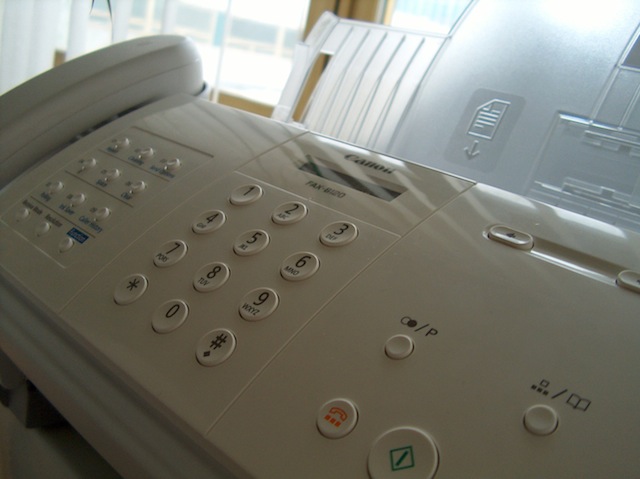
    Why do we still use fax machines?

    If you’re in the ABC Canberra area at 4.05pm, I’ll be talking about this with Adam Shirley. Listen live here.

    One of the most frustrating statements in modern business is “you’ll have to send a fax.”

    Facsimile machines, once the pinnacle of 1980s business communications although they were first invented in 1843, started to die once the internet became common and email became the dominant messaging system.

    Once dial up modems started becoming standard on computers, receiving faxes electronically became feasible and for while businesses struggled with the notoriously unreliable software to receive facsimile messages without the hassle of paper.

    Eventually however they passed away as most business found there was no need for faxes and anything requiring a signature could be electronically signed or a scan of the original document sent.

    Some industries and sectors – particularly the legal world and some government agencies – still hold out the need to send an ‘original’ by fax, party under the fallacy a facsimile copy is more secure, reliable and legally more valid than an email or electronically lodged document.

    During the ABC Canberra program one listener pointed out the medical industry is dependent upon the older technologies, “we couldn’t operate without them” she told the producers. In a time of connected medical equipment and electronic data interchange, the medical industry has little justification in using outdated manual methods but habits die hard in a very conservative industry.

    None of the myths around the reliability of fax are true and the reality is details sent by fax are just as easily intercepted by nefarious employees or third parties as emails. In many respects a fax is less secure than electronically interchanged data.

    If you do have the need to send or receive a fax though all is not lost, services like eFax will still send or receive messages and then, ironically, email them onto you.

    However there is a downside with these services, as one harried PA whose organisation still receives faxes due to its dealings with the legal profession described, the vast bulk of messages they receive are junk messages mainly offering cheap deals on office supplies.

    The fax machine is another example of a transition effect where a stop gap product was effective for a short period as businesses adapted to new technologies, the SMS is going through a similar process now. Neither will be the last example of this.

    Similar posts:

    • No Related Posts
  • Learning the tools of online business

    Learning the tools of online business

    The accounting and professional services industries are uniquely positioned as the economy goes digital, while their own sectors are undergoing radical change so too are their clients.

    Given the changes facing the accounting industry, the invitation to host last week’s CPA Australia Technology Accounting Forum‘s second day in Sydney was a good opportunity to see how the profession and its clients are dealing with major shifts in their industry.

    The accounting profession has been one of the big winners of the Twentieth Century’s shift to a services economy. Last week’s story on how the workforce has been changing illustrates this with a chart showing how the occupation has grown over the past 140 years.

    accountants-employed-the-uk

    In many respects accountants should be well placed to benefit in a data driven economy given the training and skills they posses. The big challenge for existing practitioners is to shift with the times.

    The transition from what’s been lucrative work in the past will be a challenge for some in the profession. Many of the manual tasks accountants previously did are now being automated with direct data links increasingly seeing operations like reconciliations and filing financial returns being done in real time without the need for any human intervention.

    In private practice, the shift to cloud computing and direct APIs has stripped out more revenues with useful earners like selling boxed software petering away as services like Xero and Saasu arrived and established players like Intuit, Sage and MYOB moved to online models.

    Shifting to the cloud

    That shift has already happened with the presenter in one breakout session asking the audience how many practitioners used exclusively desktop software, purely cloud service or a hybrid of the two. Of the twenty in the room, the vast majority were using a combination with three being purely online and one sole operator still stuck with a desktop system.

    For accountants the message from all of the sessions was clear; the future is online and businesses based around paper based models are doomed. The question though for them is how will they make the transition to being professional advisers.

    Strangely, the big challenge for accountants in private practice may be their clients. A number of panel participants pointed out small business owners are slow to adopt new technologies and this holds both them and their service providers back. Divorcing tardy customers may be one of the more difficult tasks facing professional advisors.

    The Technology, Accounting and Finance Forum showed the potential for accountants and professional services providers to be the trusted advisors in an online world, the task now is for practitioners and their clients to learn and understand those tools.

    Similar posts:

  • Saying goodbye to the boxes of gold

    Saying goodbye to the boxes of gold

    “No-one is making money from cloud software, in the early days everyone made money from software,” bemoaned one of the panellists at last week’s CPA Technology, Accounting and Finance Forum.

    A good example of this is the US accounting software giant Intuit putting the 32 year old Quickbooks on to the market.

    Intuit was built on the back of Quickbooks but today the product today makes less than 6% of the company’s revenues and under 2% of the profits. Making matters worse is the old code base is clunky, proprietary and expensive to maintain.

    Apart from getting a captive – and almost certainly dwindling – client base, there doesn’t seem to be a lot to attract buyers for Quickbooks as a desktop based product in a market shifting to the cloud.

    The shifting business model hurts more than Intuit; the accountants, resellers and other service providers who were making a decent income from selling or supporting the box products have seen their margins evaporate.

    For users, both Intuit and the services providers moving away from the product risks leaving them and their data stranded, something every business should understand about the risks of proprietary formats.

    The shift though by Intuit should be a warning to small businesses that the days of box and inhouse software are numbered and running packages on servers and desktops will soon be for large organisations or niche applications.

    Almost every business is going to have to plan its move to the cloud, those who don’t are increasingly going to be left behind in a shifting market.

    Similar posts:

  • Are small businesses too old and slow?

    Are small businesses too old and slow?

    Yesterday I hosted the second day of the CPA Australia Technology, Accounting and Finance Forum that looked at how the accounting profession is being affected by the changing technology landscape.

    There’s plenty to write about from the day and how the accounting profession is facing technological change which I’ll write up shortly but one theme from the day was striking – that older small businesses owners are struggling to deal with adopting new tech.

    Gavan Ord, the CPA’s policy advisor warns older practitioners are opening themselves to disruption and  the Australian business community is in general is at risk as older proprietors aren’t investing or embracing technology at a rate comparable to their overseas competitors.

    Older small business owners

    That older skew in small business operators is clear, in 2012 The Australian Bureau of Statistics found 57% of the nation’s proprietors are aged over 45 as opposed to 35% of the general population.

    Even more concerning is many of those small business owners expect to retire with a 2009 survey finding 81% were intending to retire within ten years – it would be interesting to see how those ambitions changed as the global financial crisis evolved.

    A risk to the broader economy

    This blog has flagged the risks of an aging small businesses community previously, but Gavan Ord’s point flags another risk – that older proprietors being reluctant to invest in new technology means a key segment of the Australian economy is unprepared for today’s wave of technological change.

    A key message from the CPA forum was that the shift to cloud computing is radically changing the business world as sophisticated data management, analytic and automation tools become easily available. Companies, and nations, that don’t take advantage of modern business tools risk being left behind in the 21st Century.

    Similar posts:

  • Life at the data frontline

    Life at the data frontline

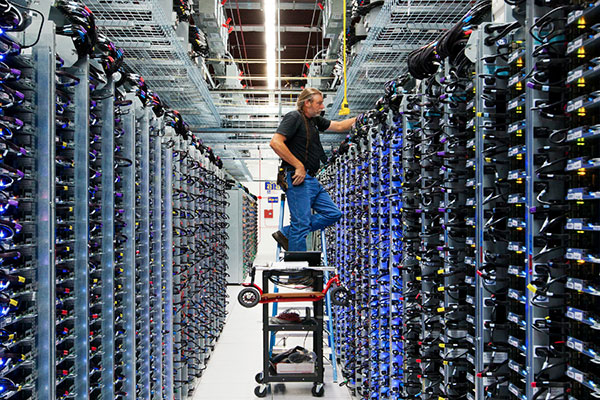
    One of the defining features of the next decade’s successful businesses is how they manage data. No company has a greater challenge in dealing with information than Google.

    In a feature tracking Google’s evolving data centres, Techcrunch describes how the company has dealt with the challenge of being the web’s repository.

    The challenge has been huge, Google’s current Jupiter network delivers a petabit each second, a hundred times more capacity than its first-generation network and in 2005.

    Google boasts 10,000 of their servers are capable of reading all of the scanned data in the Library of Congress in less than a tenth of a second.

    While most businesses won’t need that sort of capacity in the near future, the exponential growth Google has dealt with is the same issue facing most managers and business owners as more devices, staff and customers become connected.

    For most organisations, dealing with that dramatic growth is almost impossible and this is why automated services running on the cloud will become even more a part of daily working life. Those services will be running on the technology Google is developing today.


    Similar posts:

    • No Related Posts