Category: collaboration

  • ABC Nightlife – building the businesses of the future

    ABC Nightlife – building the businesses of the future

    This Thursday night join Dom Knight and myself on ABC Nightlife to discuss what tools you can use to start or improve your business and how can we encourage more people to have a go.

    Last week the last Australian car making jobs finished and a survey of the Geelong Ford workers found only one percent were interested in starting a new business.

    If you missed the spot, you can listen to the podcast through the Nightlife website.

    Despite the reluctance to start new businesses it’s never been easier to do so with a range of tools making it simpler to run one. Tonight on the Nightlife we look at some of those tools and what we can do to encourage more people to have a go at running their own companies.

    For the program, I’ve a compiled a list of tools businesses should be using. It certainly isn’t exhaustive or definitive and if you have any suggestions on better or newer tools, I’ll be happy to add them.

    Some of the questions we cover on the program include;

    • who ran the survey of motor industry workers?
    • what were most of them going to do?
    • so what sort of businesses can these workers go into?
    • what programs are being offered to these workers?
    • how has starting a business changed over the past twenty years?
    • is the focus on tech startups intimidating people who might want to start a business?
    • what are the basic tools every business should have?
    • a few years ago social media was all the rage, does it matter any more?
    • what’s the number one advice for anyone thinking of starting a business?

    Join us

    Tune in on your local ABC radio station from 10pm Australian Eastern Summer time or listen online at www.abc.net.au/nightlife.

    We’d love to hear your views so join the conversation with your on-air questions, ideas or comments; phone in on 1300 800 222 within Australia or +61 2 8333 1000 from outside Australia.

    You can SMS Nightlife’s talkback on 19922702, or through twitter to @paulwallbank using the #abcnightlife hashtag or visit the Nightlife Facebook page.

    Similar posts:

  • Facebook’s challenge in executing for the enterprise

    Facebook’s challenge in executing for the enterprise

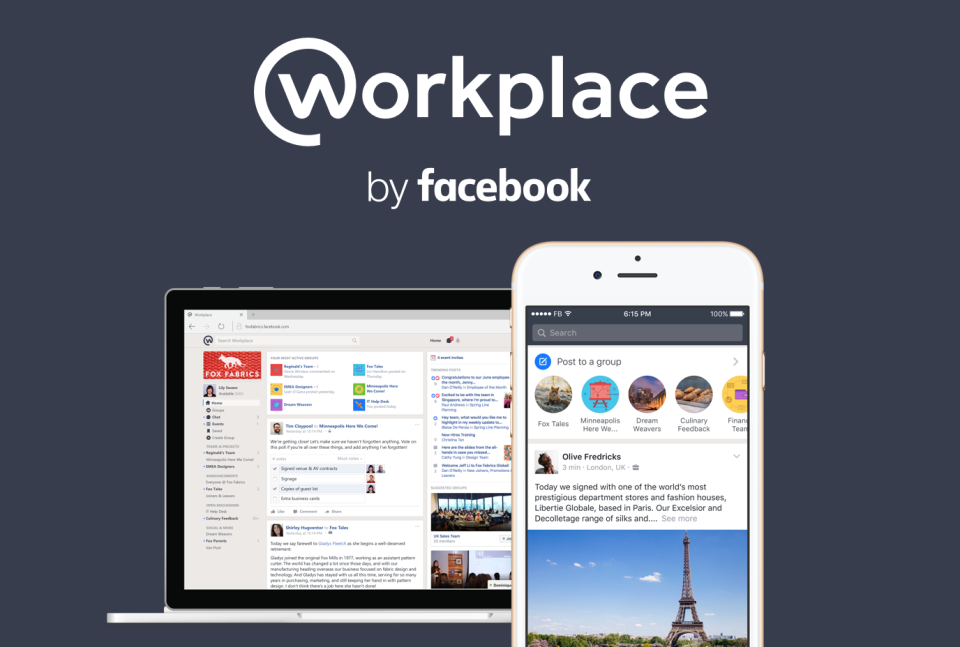
    Workplaces by Facebook was is the social media giant’s enterprise collaboration service it hopes will put the company into the enterprise space.

    Like many similar products, the service is aimed at improving collaboration in the workplace. As the media release gushes, “the new global and mobile workplace isn’t about closed-door meetings or keeping people separated by title, department or geography. Organizations are stronger and more productive when everyone comes together.”

    On first impressions, Facebook should score some successes with the service however it’s success is far from guaranteed. As we’ve seen with other major company’s attempts to open new products, being the deepest pocketed player doesn’t automatically ensure a successful product.

    The Google example

    A common assumption when a behemoth enters a martketplace is will simply smother smaller competitors by virtue of its size.

    History shows this not always the case, Facebook itself thrived despite the huge threat posed by Google+, indeed Google is probably the best example of a large corporation that struggles outside its core business.

    Part of the reason for the idea of big companies easily squashing the little folk being a fallacy is that the smaller companies are more focused on their problem – for a corporation the division is one part of a broader operation run by managers, not owners.

    In such a marketplace, execution and management focus matter so Facebook’s success will depend as much on executive buy-in as the resources thrown at the product.

    Cost and complexity

    A notable thing about Workplaces by Facebook is its partner network, led by Deloitte. This is not a good sign.

    The need to have consulting partners – particularly huge and expensive companies like Deloitte – is not an encouraging sign for the nascent service and may be a barrier towards adoption.

    A separate issue in Deloitte’s involvement is how cloud services, which we include Workplaces by Facebook, are buddying up with the major consulting firms with everyone from Huawei to Oracle entering arrangements. While this might help partners squeeze a few more pennies out of their hapless clients, it’s doesn’t seem to be in the vendors’ or customers’ interests.

    Trust

    What happens to users’ data is a perennial problem for Facebook and it’s notable this issue isn’t mentioned in the announcement.

    Facebook’s success shows consumers are relaxed about how the company uses data but that attitude may not be shared by managers and business owners.

    The proprietor of one reasonable sized startup said, “I have a slight concern about giving Facebook any access to my company information. Whilst it has been fine from a personal perspective I feel the trust level is not strong enough to warrant handing over access to, effectively, everything.”

    Overcoming that objection may be one of the biggest challenges for Facebook being accepted as an enterprise tool.

    Becoming an enterprise service

    Facebook’s push into the enterprise isn’t surprising and indicates that as the company matures, something more than the advertising funded consumer market is needed to drive its growth.

    That consumer background is a strength for Facebook as the consumerization of enterprise software is an established trend. Having an interface and tools that are familiar to most staff is very attractive to managers looking at introducing new platforms with the shallowest possible learning curves.

    However the ultimate question is what need does Workplaces by Facebook address? There’s no shortage of collaboration platforms that offer most of the futures offered by the platform.

    If Workplaces by Facebook does address a genuine need in enterprise workplaces and the company’s management can maintain its focus on the product then the service may be a success. That isn’t a given though.

    Similar posts:

    • No Related Posts
  • A goldmine in your back yard

    A goldmine in your back yard

    This is the first of four stories I did for The Australian on why entrepreneurs are making their way to the United States’ Bay Area. 

    A combination of accessible capital, a huge market and a collaborative culture are why startup founders are making their way across the Pacific to Silicon Valley and San Francisco.

    Despite their government’s ideas boom and an easier funding climate, Australia’s startups still see San Francisco and Silicon Valley as being the promised land. In this four part series we spoke to Aussie entrepreneurs about why they’ve made the move across the Pacific Ocean.

    In a noisy coffee shop just off San Francisco’s Market Street, PixC founder Holly Cardew explains why she moved to the city. “It’s a place you fall in love with straight away – it’s the people and the attitude,” says Cardew. “You can do anything, people don’t look at you as if you’re crazy if you want to do something big.”

    Wider horizons

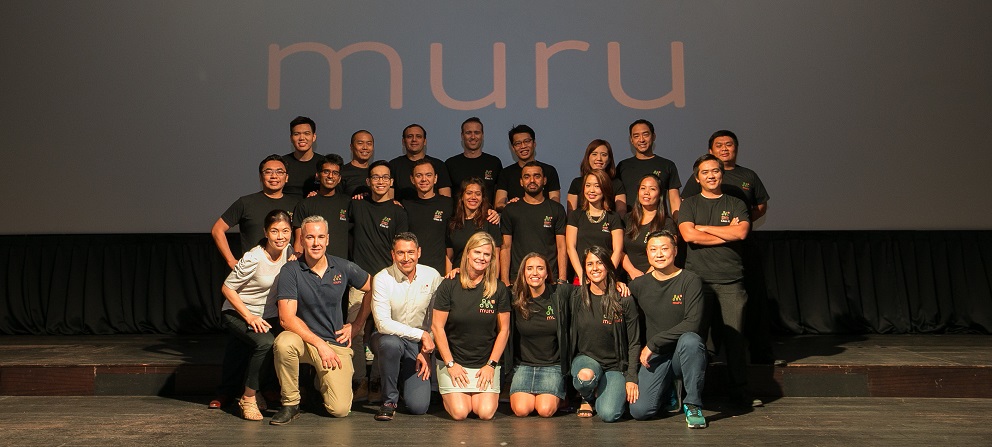
    Cardew made the relocation to San Francisco to find funding for Pixc, a photo editing service that in 2014 was one of the first group of startups accepted into Telstra’s Muru-D accelerator program. In moving to the US she found American investors have far wider horizons than Sydney’s business community.

    “Investors ask ‘what’s next?’” Cardew enthused, “in Australia, you don’t even think about that. Americans tend to think a lot bigger. Australians aren’t trained to think about it.” Another aspect Cardew highlights about the Bay Area business culture is how individuals are always happy to help out, “people always ask ‘how can I help’ she says.

    One of those credited by Cardew and by many of the people interviewed for this is Temando founder Carl Hartmann. In an archetypal open plan shared office in San Francisco’s Financial District Harmann explains why he’s quick to help, “I’m here today because people who were kind enough to pay it forward.”

    Being there

    Temando, a logistics service founded in Brisbane, was started to address the difficulties retailers had in fulfilling customers orders across Australia. Hartmann moved to the United States at the beginning of 2015 to access North American customers and to tap local capital markets. “When you talk to the SV funds it’s very hard to raise money if you aren’t here,” he says. “In Silicon Valley it’s where the action is. If you’re not here you are out of sight and out of mind.”

    “It’s difficult to build those sort of relationships from the other side of the world. When you’re here, things can move along quickly because it’s easy to collaborate on things. It’s easier to work face to face. For us it makes sense to be here,” Hartmann says. “There’s a unique energy where everyone has come from all over the world.”

    Jack Gonzales of location mapping service MapJam is an example of how fast things can move for companies in the Bay Area. “Last year we were approached by some of the big players who asked if we had our own map tiles,” he recalls. “We realised we had an opportunity.”

    Gonzales was speaking at the somewhat chaotic San Francisco campus of 500 Startups across from the city’s Moscone Convention Center. Mapjam was accepted onto the prestigious startup investment and acceleration program last year.

    A goldmine in your backyard

    “You have a goldmine in your local backyard and you have to capitalise on that. Sometimes it’s really spontaneous, ‘hey can you guys come in on Friday?’ You can’t do that when you’re overseas,” Gonzales says. “Our main customers are here and I really want to conquer the backyard before I conquer the globe, just within walking distance from here there are thirty major players.”

    Australia does have some advantages for startups, particularly in labor costs for skilled developers. “It’s three times more expensive to employ staff in the Bay Area,” says Affinity Live’s Geoff McQueen in explaining why he’s kept the company’s technical team in the firm’s home town of Wollongong

    McQueen, who moved to San Francisco in 2011 to seek funding for his venture believes “Australia is a good place to do a minimum viable product or proof of concept” and warns budding entrepreneurs to have more “than just just a PowerPoint pitch” when they decide to make a permanent move.

    In McQueen’s view it’s important to at least visit the Bay Area early in the process of developing a business. “Come over as soon as you can – even if you only have a light idea,” he says. “Anchor your visit around a conference, whatever is relevant to your target industry.”

    Achieving your aims

    Despite not finding gold on San Francisco’s grubby streets, most of the entrepreneurs The Australian interviewed were all happy they’d achieved their aims in moving to the US which vary from easier funding availability, access to bigger markets and a more vibrant ecosystem than those in Sydney, Melbourne or the smaller centres.

    Ultimately though everyone mentions the supportive nature of the Bay Area’s startup culture, “people ask what can I help you with,” says Pixc’s Cardew. “You can do anything, people don’t look at you as if you’re crazy if you want to do something big.”

    Similar posts:

  • Google’s locksmith problem and the perils of crowdsourcing

    Google’s locksmith problem and the perils of crowdsourcing

    An ongoing frustrations of this blog is Google’s failure to execute in local business search despite the massive advantage it has in that field.

    One notable aspect of Google’s failure is the locksmith problem where thousands of fake businesses have slipped into the company’s database. The result is thousands of consumers being ripped off and honest local businesses being overlooked in search results.

    Spam in Google’s local business search is not a new problem, Search Engine Land reported it as being an ongoing issue in 2009 and the New York Times ran a feature on it two years later highlighting how genuine local businesses and consumers suffer.

    Now, five years on, the New York Times has revisited the problem of Google business listings and finds the problem hasn’t changed a great deal with locksmiths and other local search engine results being hijacked by scammers filing false listings.

    It’s hard not to conclude that the local listing service isn’t really a high priority to Google’s attention deficient managers and it isn’t surprising given maintaining databases is nowhere near as sexy as being involved in moonshots or as lucrative as the company’s core adwords business.

    Google’s bureaucrats think so little of the service that they give the task of maintaining its integrity to an army of unpaid volunteers. The New York Times tells the tale of one of these ‘Mappers’, an unemployed truck driver named Dan Austin, who proved so good at the role he was ‘promoted’ – still unpaid of course – and then ‘sacked’ when he demonstrated how easy it was to plant a false listing.

    That weakness in Google’s system shows how crowdsourced services can be subject to abuse and how volunteers themselves are abused by companies taking advantage of ‘free’ labour.

    Another weakness illustrated in the Locksmith story is the collateral damage of the ‘fail-fast’ mentality where features are released without the developers really understanding the consequences. The cost of failure may be felt by innocent parties more than the company that’s ‘failed’, as Search Engine Land flagged in its 2009 article.

    Google has continued to release features into local that are open to abuse. Google has used its release early and iterate tactic to gain market share at the expense of more circumspect competitors and on the fragile incomes of small businesses.

    The continued failure of Google’s local business service remains frustrating for small businesses, having destroyed the Yellow Pages and local newspaper advertising models most neighbourhood services have few places to advertise. While Google and the other internet giants remain focused on other matters, local business search remains a great opportunity for a smart entrepreneur.

    Similar posts:

    • No Related Posts
  • Mimecast and the future of email

    Mimecast and the future of email

    Email remains the biggest business app in the world says Peter Bauer, the CEO and co-founder of mail management service Mimecast.

    Boston based, South African born Bauer founded his company to “make email safer for business” and after launching in his home country and attracting 14,000 customers and spoke in Sydney about his company and how email is changing in the world of the cloud.

    In many respects email is one of those applications – like SMS – that happened by accident. In it’s early days no-one intended or expected those messaging systems to become key communications services.

    “I started my IT career in the mid-1990s as an e-mail systems engineer and if you think back to the mid 90s no business cared much about email at all,” says Bauer who believes the experience gave him a unique perspective to how the service evolved into a key business application.

    Over the next ten years Bauer saw how email became the personal filing systems for most workers and put systems under pressure as companies had to manage large file stores with the associated compliance and discovery risks.

    The security risks too were huge as email became the preferred malware delivery system as virus and spyware writers used infected messages to get onto users’ systems, a problem that has become worse as ransomware and phishing attacks have become common.

    “Because business operations and process became dependent upon email, it became necessary to make the service highly available,” says Bauer in emphasising how important it has become to most large and small enterprises.

    Even with the shift to the cloud, most companies have remained with email with companies moving to Microsoft’s Office365 – Bauer claims the take up has doubled in the last twelve months. Google’s Apps are gaining traction in the small end of the industry but the enterprises are really wedded to the Microsoft platform.

    Bauer sees that shift to cloud based services as changing the risk profile for businesses and this is another opportunity for his business.

    Email faces a number of challenges as social media and instant messaging apps become preferred communications tools for younger groups while some businesses are banning email.

    For the moment though, it looks like the service is safe as companies remain wedded to email as the preferred form of business communication.

    Similar posts:

    • No Related Posts