Category: computers

  • Fading giants move to support each other

    Fading giants move to support each other

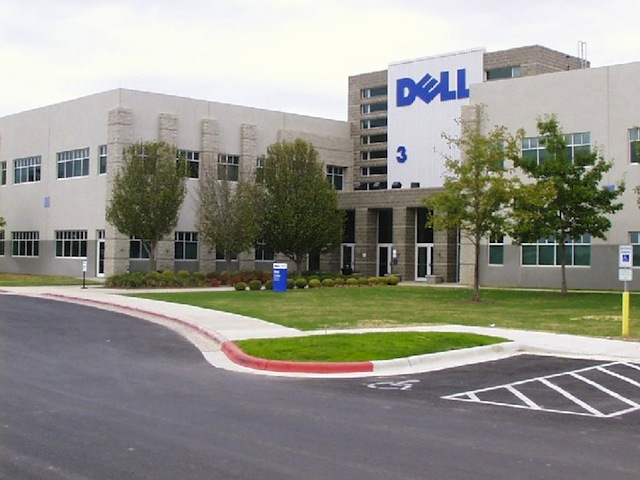
    Two struggling tech giants are reportedly set to merge with persistent rumours that Dell is about make an offer for storage provider EMC.

    Both companies have been hit by shifts in the computing industry with cloud computing undermining both businesses, Dell was also hit by the collapse of the Windows upgrade cycle which changed the buying patterns of computer purchasers.

    A combined company offers some theoretical advantages in bringing together one of world’s biggest server companies with a storage business, however it’s difficult to see how the two businesses combined would slow the decline of the segments both are strong in.

    Mergers can slow the decline of companies like EMC and Dell, but without innovating and finding new opportunities to exploit it’s unlikely they can recover lost ground.


    Similar posts:

    • No Related Posts
  • Reinventing Microsoft in the age of cloud computing

    Reinventing Microsoft in the age of cloud computing

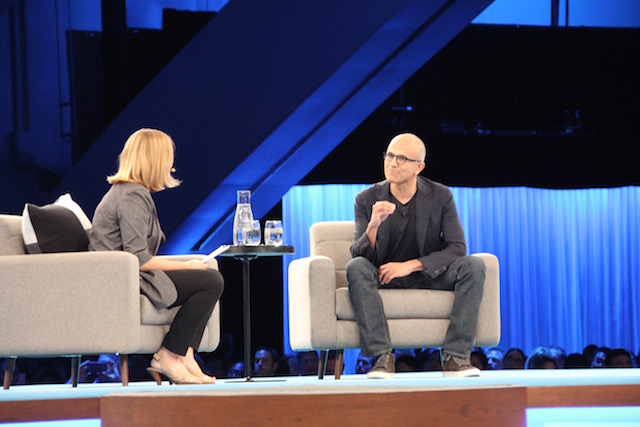
    “Why does Microsoft exist?” Asked the company’s founder Satya Nadella at the Dreamforce 2015 conference.

    Nadella has asked this question before and his answer at the San Francisco event was that Microsoft exists to empower people through technology, something that Bill Gates and Paul Allen envisaged in the mid 1970s when they founded new startup.

    To show how he sees Microsoft’s position in the modern workplace, Nadella gave a not completely flawless demonstration of Microsoft’s integration with Salesforce.

    The products Nadella pushed were Windows Phone and Windows 10, which he claims to be part of a major change in businesses with data transforming the way we work.

    Interestingly, he framed the Windows 10 IoT strategy around endpoint security. While there are millions of vulnerable devices, it’s not clear shipping them with Microsoft’s firmware will resolve the problem.

    “What’s the big technology shift? It’s how we use the data.” Nadella proclaimed in laying out how he sees a data culture transforming the places we work.

    A Grand Pivot

    Microsoft itself is dealing with a cultural transformation with the company shifting across to cloud based subscription services. “The thing that it’s done for us is it’s not a one-for-one move. It’s not like we’re just moving Exchange on premise to Exchange as a Service, it changes the value proposition for the customers.”

    Nadella sees those cloud services as an opportunity to sell more products – and add more value – to customers, particularly small businesses.

    The CEO’s role

    A business’ success relies upon its culture and Nadella sees the role of the CEO as being about curating that culture, “I always ask what it is that defines us.”

    Part of that culture is about becoming customer focused which involves thinking outside of one company’s products or silos, “how is our industry going to succeed? It’s going to succeed if we can add value our customers. Our customers are going to make choices that aren’t homogenous.”

    Those varied choices are what’s driving Microsoft’s current push into alliances.  “If we are going to realise the power of technology, then these partnerships will amplify that,” says Nadella.

    While there were nuggets of truth in Nadella’s presentation, there was also a lot of truisms and somewhat meaningless slogans. While Microsoft’s push onto the cloud and into alliances that were once considered unholy might be genuine, it’s hard not to think there’s still a lot of marketing speak wrapped around it.

    Similar posts:

    • No Related Posts
  • Businesses and the Windows 10 upgrade

    Businesses and the Windows 10 upgrade

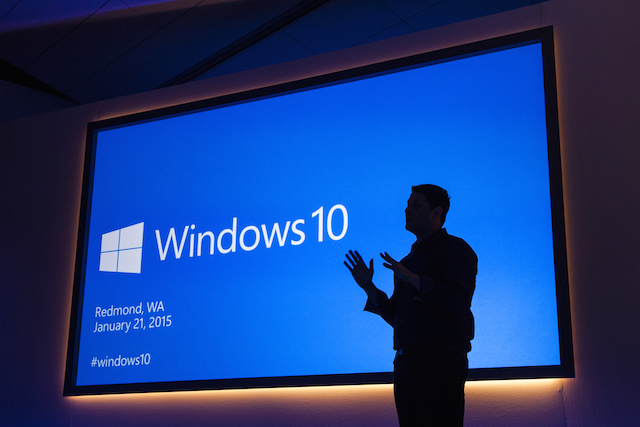
    Last night Microsoft formally launched Windows 10, the company’s latest desktop operating system.

    A decade ago a new Microsoft operating system would have had people queuing at computer shops all night but today, in a world of cloud computing, what software runs on a computer has become less important to users.

    To entice users onto the new operating system, Microsoft are making the upgrade to Windows 10 free for the next year to those using the earlier versions 8 and 7 and many will have noticed the messages appearing on their computers over the past few weeks.

    Windows 10 is a good system, Microsoft has learned from the user unfriendly missteps of Windows 8 and added features that make the system smoother and takes advantage of the desktop computers’ power.

    Microsoft have also continued with their philosophy of providing a system that works on all sizes of devices from smartphones to large monitor PCs and Windows 10 adapts to the needs and use patterns of the different screens.

    That Windows 10 works on smartphones is less of a pressing matter given Microsoft’s attempts to crack the mobile market have been unsuccessfully and Windows phones languish with a tiny market share.

    For business users, the question is whether to take advantage of the upgrade. The short answer is maybe if use cloud based services in your company and wait if you have desktop applications that rely on Windows.

    Should you have applications that run on desktops and servers in your office then it’s essential to wait and see if your software runs properly on Windows 10. You’ll need to talk to the program’s supplier and your IT support person. Generally the advice is to wait a few months to iron out any bugs.

    If you’re using cloud services then the operating system running on your computer is largely irrelevant as long as you have a modern web browser. Microsoft’s new Edge web browser that’s built into Windows 10 so far appears to be a fast and capable piece of software that’s an improvement on the much maligned Internet Explorer that still lurks on the system for backwards compatibly reasons.

    Upgrading though isn’t without its risks, sometimes things go wrong and even the best planned transition doesn’t always work out and generally most cautious IT advisors will take the attitude “if it ain’t broke, don’t fix it.”

    One other potential trap is in hardware. It may be that some printers, cameras and other hardware doesn’t have the right drivers for the new system so while the software upgrade is free, you may end up having to stump up a few hundred dollars for new peripherals.

    For businesses users, if things ain’t broke and the existing computers are working well then the upgrade to Windows 10 is adding unnecessary complexity to the office and it’s probably best to hold off the transition until new computers are needed.

    Similar posts:
  • How long can Intel continue to beat the street?

    How long can Intel continue to beat the street?

    Earlier today chip maker Intel beat analysts’ estimates with an earnings report showing  the company’s income hadn’t fallen as much as expected in the previous quarter.

    As Business Insider explained before the earnings call, Intel’s numbers aren’t look good ahead of the rollout of Windows 10.

    In the past, a new version of Windows has been the time many customers upgraded their PCs with Intel and other computer component makers being the beneficiaries.

    With this version of Windows Microsoft are giving it away free to users of Windows 7 and 8 which means the rush of upgrading customers is going to be subdued compared to previous occasions.

    For Intel, the Internet of Things should be the big opportunity in the post PC world but smart devices require low powered chips rather than the more power hungry chips the company excelled in supplying for desktop computers.

    At the moment Intel seems to be focusing on the data centre market that may well be a suitable market for power hungry CPUs but is still very much leaving the company isolated from the bulk of the industry which will increasingly demand ultra low powered chips.

    For Intel, like Microsoft, the struggle for now is to keep relevant in a dramatically shifted marketplace.

    Similar posts:

  • Pain for the PC industry continues

    Pain for the PC industry continues

    After good relatively results last quarter, the numbers have turned ugly again for the personal computer industry with both IDC and Gartner estimating the sector’s sales have collapsed by 11% and 9.5% respectively.

    Of the PC manufacturers Taiwan’s Acer is the hardest hit with Gartner forecasting a 20% drop and IDC a whopping one-quarter compared to last year.

    Apple were the only bright spot with Gartner expecting the company to sell 16% more PCs than the previous year.

    Lenovo remain the biggest global supplier of personal computers but the company suffered a six percent drop.

    While it appears the end of Windows XP support gave the sector a reprieve last year, the end of the PC era is well and truly here. The key aim now for vendors is to find a way to shore up their margins as the market shrinks – it’s a bad time to be commodity player.

    Similar posts:

    • No Related Posts