Category: computers

  • Microsoft’s cloudy future

    Microsoft’s cloudy future

    This morning Microsoft announced its quarterly results and, once again, they confirmed the company’s move into the cloud, a transition that means the company has to deal with reduced margins in once immensely profitable markets.

    While Microsoft’s earnings beat analyst estimates, the stock still dropped on out of hours trading on the US markets. The reason being margins showed a slight decline and the impending release of Windows 10, which will be free for customers upgrading, portends a further fall in income.

    The fading of Windows is best shown in the results for the company’s Devices and Consumer licensing division which covers licensing of the operating system and is the second biggest contributor to Microsoft’s revenues and profits. The segment’s takings are slowly declining although surprisingly the division’s margins are standing up.

    Microsoft division performance 2014-15
    Microsoft division performance 2014-15

    Windows’ decline shows the post XP recovery Microsoft was hoping for the division has failed to materialise beyond a bump last quarter, as the company explained in its media release;

    Windows OEM Pro revenue declined 13%; revenue was impacted by the business PC market and Pro mix returning to pre-Windows XP end of support levels and by new lower-priced licenses for devices sold to academic customers

    With company making various versions of Windows 8 and 10 free, it’s hard to see the division doing anything but accelerating its decline as fewer people actually pay for the operating system.

    Fading margins

    Also illustrating Windows’ falling fortunes is how the Computer and Gaming Hardware division’s revenue threatens to overtake the Devices and Consumer Licensing group’s contribution. The problem for Microsoft with this that the manufacture of Xboxes and Surface tablets only boasts a profit margin of 12% against consumer licensing’s 93%.

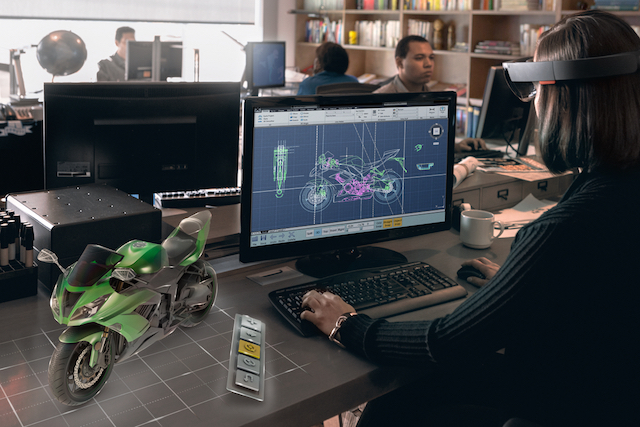
    Last week at its preview of Windows 10 Microsoft showcased its HoloLens virtual reality technology, while impressive it’s unlikely to boast margins any better than Xbox consoles or Surface tablets. At best it will be a trivial contribution to the company’s bottom line.

    Microsoft Margins by operating segment

    Percentage margins Q1-14 Q2-14 Q3-14 Q4-14 Q1-15 Q2-15
    Devices and Consumer Licensing 87% 90% 87% 92% 93% 93%
    Computing and Gaming Hardware 15% 9% 14% 1% 20% 12%
    Phone Hardware n/a n/a n/a 3% 18% 14%
    Devices and Consumer Other 21% 21% 21% 17% 17% 23%
    Commercial Licensing 92% 92% 91% 92% 92% 93%
    Commercial Other 17% 23% 25% 31% 33% 35%

    Dwarfing both divisions in both revenue and profit is the Commercial Licensing segment which also boasts fat margins of 93% and accounts for nearly half the money coming into the organisation. Commercial Licensing remains static and provides the bedrock for the company’s cashflow.

    The big growth area remains the cloud with the Other Commercial division, which includes most of the online and professional services growing steadily. While showing growth, this part of the business boasts a relatively low margin of 33% so any market moves from Enterprise licensing to the cloud will have a sharp effect on the company’s bottom line.

    Mobile black holes

    Of all Microsoft’s divisions, the problem remains the Phone Hardware segment with low margins, declining sales and a shrinking market share. Reports released overnight indicate that over a third of Lumia devices sold are not being activated which may indicate distribution channels are having to deal with unsold stock.

    Compounding Microsoft’s poor position in the phone marketplace is the resurgence of Apple’s iPhone, particularly in the Chinese market where Microsoft is failing dismally. Global market share figures are indicating Apple may soon overtake Samsung as the world’s largest smartphone vendor while Android systems are coming to dominate the global marketplace.

    Tomorrow Apple will announce their results and we’ll see how the two companies are travelling, the contrasts will almost certainly be striking. For Microsoft, even if they do manage a shift to mobility and the cloud, they are unlikely to repeat Apple’s success in reinventing themselves.
    Similar posts:

  • The mobile payments industry has a USB moment

    The mobile payments industry has a USB moment

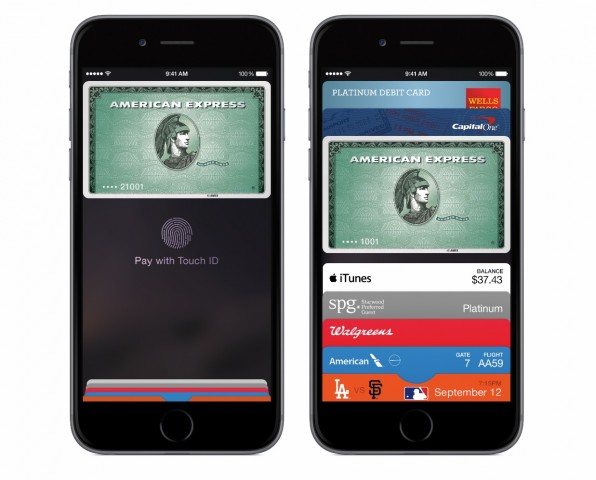
    Has Apple Pay legitimised mobile payments? It appears so, reports the New York Times. Since the launch of Apple’s payments service, Google and other mobile payment providers are claiming usage has doubled with customers exploring the systems.

    If this is true, it’s similar to how Apple legitimised the USB port in 1998 with the release of the iMac.

    Prior to the iMac the USB port was a bit of an oddity, on most PCs the sockets sat unused and the few devices available on Windows computers worked reliably, as Bill Gates himself found out during a live demonstration at the 1998 Comdex show.

    Unlike Apple Pay, the move to USB on Macs wasn’t welcome and it was a high stakes decision by Steve Jobs given that Apple’s existence was still precarious and its user base was still made up of largely of true believers who had been through years in the wilderness with the company.

    Those users also had many thousands of dollars invested in Apple Device Bus (ADB) devices, all of which became redundant with the move to USB. Many customers at the time swore this was the last straw and they would move to Windows PCs.

    Apple’s users didn’t carry out their threats and stayed with the company whose move to USB turned out to be a winner for the entire computer industry.

    For Apple USB’s success meant their customers were no longer locked into a proprietary technology, for manufacturers they were able to start moving off archaic serial and parallel ports while for Microsoft the shift meant a better range of more reliable devices — although their operating systems struggled with USB until the release of the far more stable Windows XP.

    It appears in this respect Apple Pay is repeating history in giving a boost to a technology that has been struggling to find traction in the market place.

    The difference this time is that the payments industry is a far bigger market with far more implications for the broader economy than the computer peripherals segment.

    If Apple raise the boat on payment systems, there are some incumbent businesses who are going to find themselves in a very different marketplace in five years time.

    Similar posts:

    • No Related Posts
  • Revitalising the tablet market

    Revitalising the tablet market

    Ahead of tomorrow’s announcements by Apple, the strategic leaks are happening fast on both the next version of the iPad and Google’s Nexus appearing in the media today.

    The problem for tablet manufacturers is that sales have stagnated in recent times with the products no longer flying off the shelves.

    Part of the reason for this is customers are happy with their existing products; a three year old tablet will do most of things a brand new one will do so there’s little reason for upgrading.

    For vendors like Apple and Google it’s further proof that the PC industry model of three year upgrades is firmly dead, the sector will need something more than planned obsolescence to drive growth.

    Similar posts:

    • No Related Posts
  • Could Windows 10 be Microsoft’s last desktop operating system?

    Could Windows 10 be Microsoft’s last desktop operating system?

    On Tuesday Microsoft are expected to announce their new Windows 10 operating system at a media event in San Francisco.

    If the rumours are true, then the new system will be launched almost exactly two years after Windows 8 was released amid hopes that it would stem the PC industry’s decline.

    Windows 8 didn’t deliver with most people being frustrated with the system’s inconsistent interface that tried to be unified desktop, laptop and tablet operating system which managed to be unsatisfactory on all of them.

    As a consequence, users avoided Windows 8 like the plague with industry analysts Netmarketshare claiming most of Microsoft’s customers are buying systems kitted out with Windows 7 or just sticking with decade old Windows XP systems.

    Courtesy of Netmarketshare http://www.netmarketshare.com
    Courtesy of Netmarketshare http://www.netmarketshare.com

    Making matters worse for Microsoft is the decline in personal computer sales in general with IDC estimating global shipments of both portable and desktop system will drop 3.8% in 2014.

    These declines are already well established in the trends being seen in Microsoft’s business with the company’s Windows division showing an accelerating decline in profit margins.

    Microsoft Windows division financial performance
    Microsoft Windows division financial performance ($ million)

    Should that decline continue with Windows 10, it may well be that Microsoft will have to consider the future of product.

    As it is, the market may be deciding for them as users increasingly switch to tablets and smartphones. We may also see a wave of cheap Chinese made laptops running versions of Google Chrome or other Linux based systems also threatening the existing PC sales base.

    Either way, a lot rides on what Microsoft announces in San Francisco this week. It could be the end of an era that defined the mass adoption of computers.

    Similar posts:

    • No Related Posts
  • Lenovo Yoga

    Lenovo Yoga

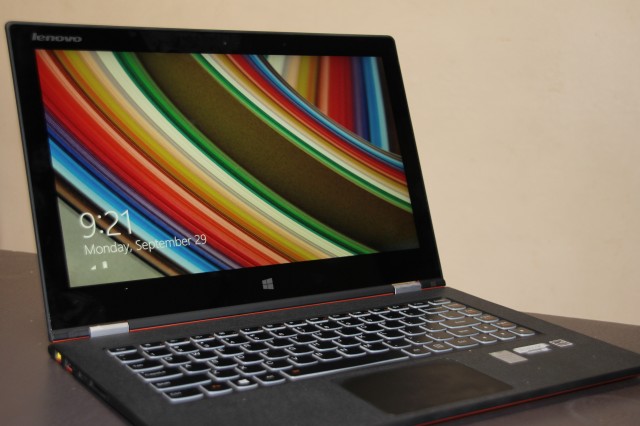
    Can a laptop be a tablet computer? The Lenovo Yoga Pro 2 tries to balance the needs of both in a package designed for home and small business users.

    The laptop computer market is in a difficult place at the moment as both consumers and businesses move to tablets and smartphones so it’s interesting to get hold of the Lenovo Yoga Pro 2 to see how one of the leading portable manufacturers is responding to the changing industry.

    One of the best ways of testing a portable device is to take it on a long trip, so a couple of 14 hour transpacific flights and trips around San Francisco, the Napa Valley and Silicon Valley proved a good workout for the Yoga Pro.

    As a laptop

    From a hardware perspective the Yoga is an impressive device with 8Gb of RAM, 256Gb solid state hard drive and a 1.8GHz i7 chip. The screen is a very nice 13.3″ 3200 x 1800 high-resolution display.

    Rounding out the hardware specs are two USB ports — one 3.0 and the other 2.0 — along with a Micro HDMI output, webcam, inbuilt mic, headphone jack and an SD Card reader. All the basics expected in a mid range ultrabook that weighs in at a respectable 1.4kg.

    lenovo-yoga-2-pro-in-laptop-mode-on-desktop

    In using the Yoga as a laptop, the device works well with the keys being crisp and responsive although the position of the glidepad and the backspace key being alongside the home key caused problems for this clumsy touch typist.

    One of the problems with the larger form of ultrabooks is their usability when travelling economy on a plane; if the passenger in front of you reclines then it becomes difficult to use the device. This isn’t a problem specific to the Lenovo Yoga, but it is a drawback that the industry seems not to have considered in its move to the larger screens.

    In the office

    If you’re not travelling on planes, the weight and form factor works well and makes the Yoga 2 Pro a nice device to use while on the move. In an office environment it’s a standard mid to upper range laptop with good fast specifications.

    For battery life, Lenovo claim “up to nine hours” for the Yoga Pro but in practice standard office use sees about five hours worth of juice with a full recharge taking under an hour. It’s lucky most transpacific flights now have power sockets.

    Flipping to a tablet

    While 1.4kg is good for a laptop it’s lousy for a tablet computer with the Yoga Pro 2 weighing in a kilo heavier than the iPad and 500g (one pound) heavier than the Microsoft Surface Pro. This makes it awkward to use over extended periods and the keyboard doesn’t feel right as the backing to a tablet.

    lenovo-yoga-2-pro-in-tablet-mode

    The Yoga’s weight problem illustrates the core conflict for a device that wants to be a laptop and a tablet as the different demands for each type of device make if difficult for designers to meet both markets.

    In the Yoga 2 Pro’s design, it’s clear the engineers had to make a choice between compromising either on the tablet or laptop functionality. As it turns out the designers decided to go with releasing a good Ultrabook laptop with compromised tablet functions — this was the correct choice for the Yoga.

    Windows 8 limitations

    Probably the greatest problem though for the Yoga Pro 2 in tablet mode lies in software with Windows 8 being far from adequate as a tablet operating system with a confused interface, an inconsistent user experience and unpredictable responses to touch screen commands.

    For companies like Lenovo who are persisting with Windows as their operating system, it’s becoming critical that they start demanding better design from Microsoft before they find their market being overwhelmed by Android and iOS devices offering a superior user interface.

    lenovo-yoga-2-pro-closed-mode-on-desktop

    While the Windows 8 irritations aren’t a deal breaker for the Yoga, it does limit the device as a tablet computer and its something anyone considering it instead of an iPad or Android tablet should keep in mind.

    A good general duty small business laptop

    Overall, the Lenovo Yoga Pro 2 is good Windows Ultrabook for home and small business use offering the benefits of an ultrabook with the flexibility of being able to flip into a tablet for specific uses.

    The device isn’t cheap, but the range of features and good hardware specs make it a decent purchase for small businesses, sole proprietors or workers operating from home who need a versatile Windows computer.

    Similar posts:

    • No Related Posts