Category: design

  • Crowdsourcing jet engines

    Crowdsourcing jet engines

    Crowdsourcing, harnessing the wisdom of crowds, has been a buzzword for probably the last five years.

    It’s often cited as a way for companies and entrepreneurs to access skills that have been largely unattainable in the past.

    Much of the talk about crowdsourcing has revolved around consumer or marketing projects, say designing logos, and all too often the conversation revolves around getting people to do creative projects for free – the real opportunity though may well lie in the industrial sector tapping into that group wisdom.

    Open innovation and jet engines

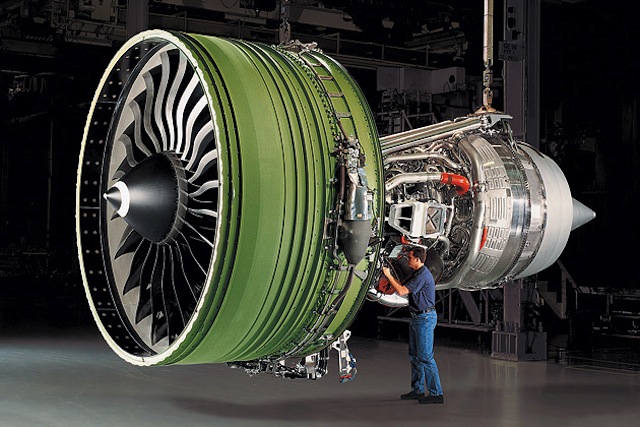
    An example of how the industrial sector is using crowdsourcing is GE’s Open Innovation project where the company is offering prizes for the best ideas in developing jet engine parts and advanced 3D printing techniques.

    Like the Kaggle data analysis platform, GE’s project shows that crowdsourcing isn’t just about getting a cheap logo or comparing shoe designs, it can be used to develop high tech equipment.

    Another example of high level crowdsourcing is the DARPA Robotics Challenge where the US military research agency found that enthusiastic amateurs, motivated students and wily entrepreneurs were able to get results that decades of consulting from major defense contractors could achieve as a New Yorker story on Google’s robotic cars describes;

    In one year, they’d made more progress than DARPA’s contractors had in twenty. “You had these crazy people who didn’t know how hard it was,” Thrun told me. “They said, ‘Look, I have a car, I have a computer, and I need a million bucks.’ So they were doing things in their home shops, putting something together that had never been done in robotics before, and some were insanely impressive.” A team of students from Palos Verdes High School in California, led by a seventeen-year-old named Chris Seide, built a self-driving “Doom Buggy” that, Thrun recalls, could change lanes and stop at stop signs. A Ford S.U.V. programmed by some insurance-company employees from Louisiana finished just thirty-seven minutes behind Stanley. Their lead programmer had lifted his preliminary algorithms from textbooks on video-game design.

    The maturing of various technologies like 3D printing, big data and collaboration software are making it easier to democratise and open the innovation process, as DARPA found this can also save costs and accelerate development cycles.

    Balancing crowdsourcing

    GE’s Chief Economist Marco Marco Annunziata sees engineering crowdsourcing as an opportunity to move faster and harness skills even companies as big as his struggle to find, “how much of the innovation process do you keep in house?” He asks.

    That’s a balance many managers are going to consider as they find their markets evolving faster than the capabilities of their own designers and development processes. It may well be that many will find their future innovations come from outside their organisations.
    Similar posts:

    • No Related Posts
  • Fashion’s move to digital commerce

    Fashion’s move to digital commerce

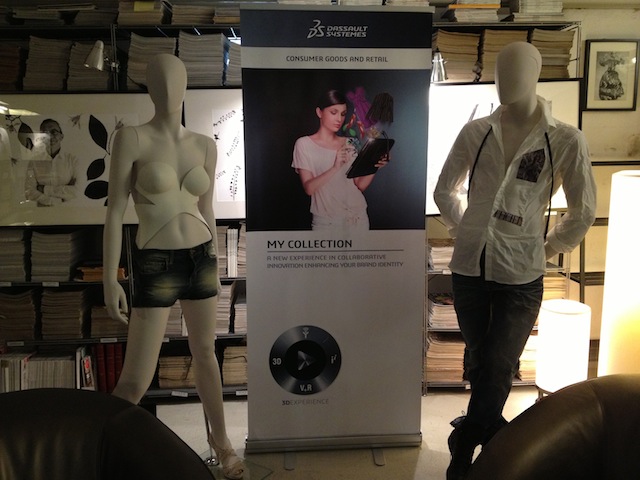
    How does 3D design change the fashion industry? Susan Olivier of Dassault Systemes sees ‘digital commerce’ driving fundamental changes to fashion and retail businesses.

    For slower retailers and fashion houses, this move to digital commerce threatens their very existence.

    ‘Digital commerce’ is more than just e-commerce in the view of Olivier, Vice President of Consumer Goods and Retail of the French 3D design software house, it’s a bringing together of technologies that alter the relationship between customers, retailers and designers along with the manufacturing and logistics companies that bring the products to market.

    Retail’s two big challenges

    Olivier sees the two biggest challenges to the retail industry as being the 2009 downturn of the global economy and the rise of the connected consumer.

    The downturn forced manufacturers and retailers to examine their supply chains, product design and manufacturing to squeeze out inefficiencies along with understanding consumer sentiment better.

    Designing for inner beauty

    “They found they could work differently with suppliers, how do I design for cost?” Asks Olivier, “how do I work on designing for what we call for ‘inner beauty’ and maybe change the inner design to take out costs without hurting performance or visual performance?” Olivier asked.

    “Those brands who survived are those who learned to do both things very well – work better with consumers and work better with their supplier base.”

    Who has the power?

    “Consumers on the other hand found ‘we have the power’ coming out of the down global economy,” says Olivier. “When consumers buy on price then brand loyalty gets strained.”

    The connected consumer also adds further risks for retailers as customers are now better informed than ever before.

    “If retailers aren’t careful, she knows more about the product than the poor staff on the floor does and she knows which stores have it in inventory than the poor staff on the floor does.”

    Bringing together the digital continuum

    One of Olivier’s areas of expertise is in Product Lifecycle Management (PLM) – planning the design, manufacturing, marketing and retirement of various products.

    A notable feature of modern the modern consumer goods industry is the compressed life cycle of products, “it used to be a life cycle was 18 months,” says Olivier. “The goal was to get it below 12 months, for many brands it’s now 12 weeks.”

    A scenario Olivier gives is the design process where a rapid virtual prototype can be shared across manufacturers, store managers and focus group.

    “I can create models in 3D and look at different options,” says Olivier. “How’s the outsoul of this shoe going to perform with this upper? Is it comfortable if I make changes? I might send a sample to a 3D printer before I make the mould.”

    “I can share it with my visual display teams and my store managers and I can share it before I commit to production and get feedback from my stores and I can share it with my consumer focus groups. ”

    “Now I have the power to do that weeks or months in advance before having to put the knife to the goods.” States Olivier, “that’s a completely different way of connecting the way companies think about product, bring it to life and bring it to market.”

    “Those are the kinds of things we’re enabling when I talk about bringing together the different points of the digital continuum.”

    “Now I’m in store I want to take the same images to educate my sales staff. I want them to take a tablet device and show the consumer what is in inventory, not just in this store, and I can have it shipped to their home within 24 hours.”

    “So that’s why I’m saying ‘digital commerce’,” says Olivier. “It could be online, it could be a kiosk in the store, it could be an iPad the sales assistant has in front of them.”

    Susan Olivier’s digital commerce model is the present day reality of retail – today’s merchant has to be across consumers’ sentiment along with working closely with suppliers to get products to get products to the customer quickly. The old ways of selling goods, particularly fashion, are over.

    Similar posts:

    • No Related Posts