Category: Disruption

  • Opportunities in broken systems

    Opportunities in broken systems

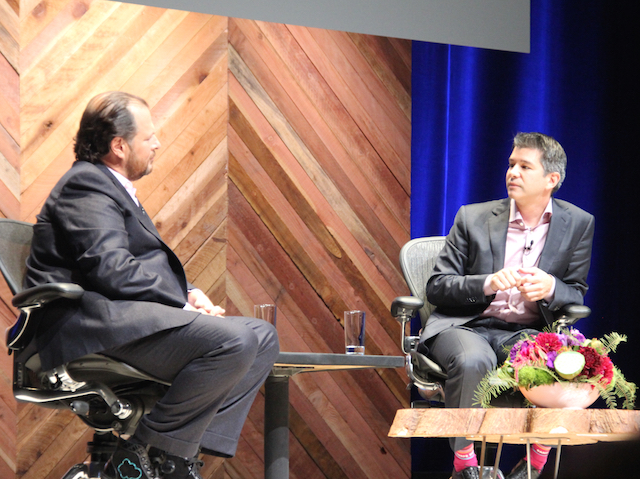
    “Taxi drivers are good people, they are just treated badly”, Uber founder Travis Kalanick told Salesforce CEO Marc Benioff at Dreamforce last week.

    Kalanick flagged how in most cities around the world the taxi industry is broken. Nowhere is that more true than in Australia and a piece I wrote for Business Spectator about the disruption to the nation’s taxi industry illustrates that well.

    The success of Uber in disrupting those markets – although it should be noted the company is far from becoming profitable – shows the real opportunities lie where existing markets are broken or distorted.

    If you’re benefiting from a broken market then this is a risk to your business. For outsiders, it’s an opportunity.

    Similar posts:

  • How design will change the world of business

    How design will change the world of business

    “I always believe small companies usually illustrate big shifts faster than larger companies. In many ways big companies are responding to the shifts being driven by smaller businesses,” says Andrew Anagnost, the Senior Vice President of Industry Strategy and Marketing at Autodesk.

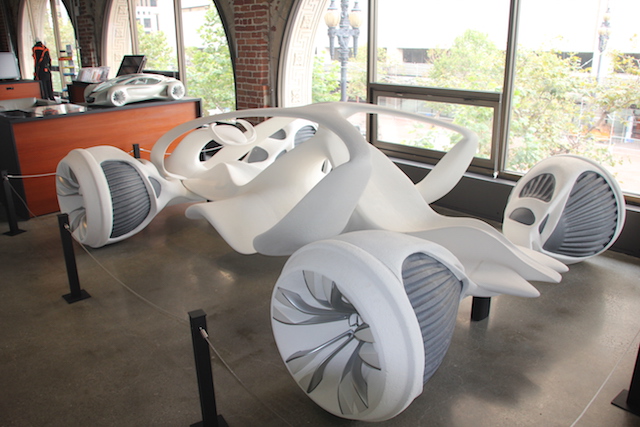
    Anagnost was talking the Dreamforce media contingent after a tour of his company’s San Francisco Gallery where possibilities of today’s design and manufacturing tools are displayed.

    Those possibilities are changing business, not just in design but across most industries as the means of financing and building new projects changes along with consumer demand as production methods change.

    Anagnost breaks these changes into four major trends – the way things are designed, how they are produced, the nature of demand in a world where things can personalised and the very notion of what a product is.

    “What people expect in from products today is very different.”

    A supercomputer at your fingertips

    “Every generation brings something new to design,” says Anagnost. “Imagine the generation that grew up with social media, online gaming, all the things that previous generations did not grow up with.”

    This generation will be more collaborative and the idea of working in fluid, unstructured groups where many of the members will never physically meet anywhere.

    Cloud computing is the other factor Anagnost sees as changing design as “it puts a supercomputer behind every screen”, which brings to the desktop great power in testing designs. “The designer gets a chance to explore options they couldn’t access before.”

    That supercomputer at your fingertips changes all businesses, giving them processing power to carry out complex analytical tasks and modelling in all industries.

    Financing the change

    Another change to the production process is how people are financing their products. Increasingly platforms like Kickstarter are creating new ways for entrepreneurs to raise funds and also to test the market for a product before investing money and time.

    “Before people would have to pitch their ideas to a larger manufacturer, an investor or a VC but now they can pitch it to anyone,” says Anagnost. “The means of financing products is now changing.”

    The new means of production

    ‘Fabless manufacturing’ promises to change manufacturing by reducing the need for massive factories as micr0-factories start to change the economics of making products. These miniaturised robot factories are easily configurable and can be located locally rather than across the country of oceans.

    Coupled with 3D printing, again it becomes cheaper and quicker to bring products to market and changes the dynamics of getting goods to market. “When it gets cheaper to deliver a complex product, the field gets levelled and more people can deliver innovative products to market,” says Anagnost.

    The other trend within manufacturing is prefabricated assembly. While nothing new, improved design tools and manufacturing methods are making it easier and more efficient to assemble things like buildings onsite, coupled with 3D printing this is going to see massive changes in sectors like the construction industry.

    Generational changes

    Changing manufacturing and designs creates changed consumer expectations, as design becomes more accessible and personalisations easier customers are increasingly going to want products that meet their specific tastes and needs.

    Another aspect to this is generational change, where younger consumers expect personalised products and don’t identify the same way with major brands as their grandparents and parents did.

    “We’re going to see a move from rampant consumerism to a more selective consumerism,” says Anagnost.

    This means markets are going to be far more volatile as the brand loyalty erodes in the face of a demanding customer. You’re only as good as the last conversation you had with your customer and if they aren’t happy they’ll go elsewhere.

    Connected devices

    The final factor Anagnost sees is the world of connected devices, increasingly consumers will demand products that have online functionality built in.

    Increasingly we’re seeing this with motor cars and in the near future we’ll be seeing devices as diverse as motorcycle helmets and light bulbs being shipped with networked capabilities.

    “Everything in your home is going to be connected in some way and people are going to have that expectation they will be,” says Anagnost. “Sensors are getting cheaper and cheaper and cheaper. There’s an assumption of connectivity.”

    What Anagnost and Autodesk are flagging is business is changing, barriers we thought were unsurmountable are increasingly falling. For every industry, easily accessible computing and manufacturing power is changing the competitive landscape.

    Paul travelled to San Francisco as guest of Salesforce.

    Similar posts:
  • Avoiding the next wave of tech carnage

    Avoiding the next wave of tech carnage

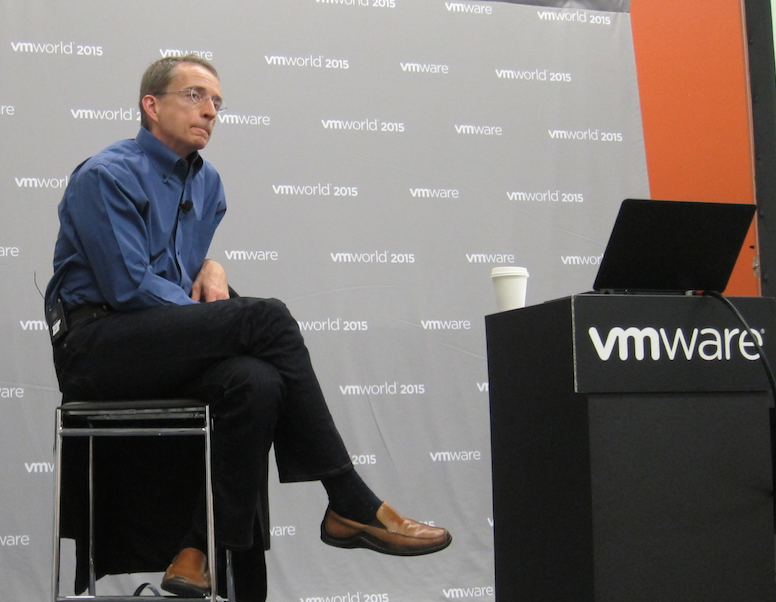
    “From the EMC boardroom you can see the carnage of the mini computer industry – Wang, DEC, Data General – you can see their buildings from the headquarters,” said VMWare’s CEO Pat Gelsinger during an interview this morning.

    Gelsinger’s point is well made, those companies were victims of the last major computing shift which saw the minicomputer fall out of favour and be replaced with workgroup servers largely running Windows.

    For VMWare, those Windows based servers were the basis of their successful virtualization product and the company was one of the winners of the shift to Personal Computers.

    Shifting to the cloud

    Now a shift to the cloud, something that Gelsinger sees as a bigger and more fundamental change than the one that dispatched companies like Wang, DEC and Data General to the deadpool in the 1990s, threatens to do the same to the companies that did well in the PC era.

    That shift is seeing VMWare repositioning their business to their “unified hybrid cloud”, Dell shifting away from being primarily a PC manufacturer and Microsoft rethinking its entire existence. All of these companies are deeply threatened by IT’s move to the cloud and mobile services.

    Watching for unicorpses

    It isn’t just today’s incumbents that are threatened by shifting markets, a few of the current crop of today’s billion dollar unicorns will almost certainly become ‘unicorpses’ warns Nick Bilton in Vanity Fair.

    That some of today’s seemingly untouchable tech startups may also join venerable older companies in the history books may surprise some but the risks are high, the shifts are great and the successful business strategies are not always obvious early in a technology shift.

    One clear point is that size is no barrier to eventual failure, as we see with once untouchable giants winding up after technology and markets move against them it’s only the fast moving and flexible thinking that will survive.

    Similar posts:

    • No Related Posts
  • The Age of Rattling the Cage

    The Age of Rattling the Cage

    “It’s no longer the big beating the small, it’s the fast beating the slow,” says Eric Pearson, CIO of the InterContinental Hotels Group.

    Pearson was quoted by VMWare CEO Pat Gelsinger in his five imperatives for digital business keynote at the VMWorld 2015 conference being held in San Francisco this week.

    The five are an interpretation of the trends in a radically changing business environment where the barriers to entry have fallen dramatically, industries are globalised and the time to market for new products has collapsed.

    Put together, Gelsinger believes established businesses have to be more nimble as market and industry forces are going to punish those who are too slow to adapt.

    Elephants must learn to dance

    Gelsinger’s initial point is the world of business is now asymmetric – incumbents have everything to lose in the face of new businesses where upstarts have nothing to lose.

    Part of that asymmetry comes from the world of shared resources, which gives startups and smaller businesses access to tools that were once only available to large organisations.

    An obvious example of this are the cloud computing services that is concentrating VMWare’s minds, however another good example of how shared resources will change industries is the self driving car where Gelsinger cites vehicle utilisation will go from 4% to 71%.

    Gelsinger points out using a car on a pay for use basis will change the structure of our cities which in turn changes the economics of living in suburbia and the business models built around it.

    Standardising the cloud

    Cloud computing is at the end of its formative, experimental phase and entering into a professional era where different types of services are going to have to work together.

    “We have the private cloud which is focused on IT as we know it today, pulling out costs, slow and complex applications but also has powerful governance and does what I need it to do while meeting compliance purposes,” said Gelsinger. “On the the other side we have the public cloud which is fast and is able to scale effectively but has weak governance.”

    In a perverse way, it’s Edward Snowden’s revelations that are driving many businesses to maintain their own private cloud networks due to concerns about foreign powers tapping their information flows and the sovereignty of data.

    The consequence of a range of different cloud environments mean they are all going to have to get along with open standards becoming more important as businesses ‘mix and match’ their requirements.

    Meeting the security challenge

    As the Snowden affair shows, IT Security is difficult, complex and messy and becomes more so as workers start using their mobile devices and data is pushed around the cloud.

    Gelsinger sees the online security sector as being the one of the biggest opportunities for startups and one of the fastest growing costs for business, “the only thing growing faster than the spend on security is the cost of security breaches.”

    While Gelisinger’s focus is on VMWare’s security proposition, the security mindset is going to have be adopted by all business people. As the Target and Ashley Madison breaches have shown, the damage that can be done by a security lapse can be crippling and is a tangible business risk that senior managements and boards need to be across.

    Proactive technology

    Artificial intelligence has been through a thirty year gestation and Gelsinger told of his early days as a computer engineer working on AI projects in the late 1980s. Those early days of AI were a failure as the results as the time didn’t live up to the hype.

    Gelsinger sees this as the next wave of computing as it moves from being reactive to proactive as systems become able to anticipate actions based on the data they are seeing.

    While this has major ramifications for the computer industry, it also promises to change management and the role of many professions.

    “This is going to change human experiences,” says Gelsinger however there will be challenges as businesses strike a balance between creepy versus convenience and invasive versus valuable.

    Welcome to the age of rattling the cage

    Half of the firms on today’s Tech 100 list will be gone within 10 years, was the warning in Gelsinger’s final point and he focused on the need for businesses large and small to break out in order to stay relevant.

    “Welcome to the age of rattling the cage,” stated Gelsinger. “A time when taking risk is the lowest risk.”

    Paul travelled to VMWorld 2015 in San Francisco as a guest of VMWare

    Similar posts:

    • No Related Posts
  • Dealing with an app driven world

    Dealing with an app driven world

    “It isn’t easy to create apps for the real world,” is the opening line of this morning’s VM World conference in San Francisco.

    That line encapsulates the challenge facing almost every company, not just tech companies like VMWare, in the face of shifting marketplaces and technologies.

    One of the biggest business shifts is the move to mobile technologies. This isn’t just changing marketing and user experiences but also changing companies’ operations as staff increasingly use their own smartphones and tablets to work.

    Managing a shifting market

    That shift though is not simple, as ZD Net reports Facebook’s move to ‘mobile first’ was a tough path in the words of the company’s senior engineer Adam Wolff.

    “I think everyone would say it was worth it, but it was extremely painful,” Wolff admitted, explaining each sub-team was building in their own ways because there was no one to crossover with necessary knowledge.

    Facebook has probably been the most successful company is dealing with the mobile shift and their difficulties despite their massive resources show just how difficult it is for companies to change not just their technology, but their business processes and in many cases the entire mindset of the organisation.

    Those pain points in transitioning between ways of doing business is where opportunities lie, for VMWare they are seeing IT departments struggling with the development and deployment of apps along with the security risks of staff bringing their own mobile devices.

    Happy coincidences

    For VMWare, this is a happy coincidence in that their main business of computer virtualisation is as much at risk from the shift to cloud computing and mobile applications as any other business. By offering the tools for companies to manage that shift, they can retain their place in the market.

    The threat though is this space has many other contenders – not least Facebook itself with its open source React platform the company developed out of its experiences in developing its mobile product.

    One of the strengths VMWare has is being an incumbent, which is why they are pushing their ‘hybrid cloud’ offerings where companies use both their own data centres along with the public cloud providers such as Amazon and Microsoft.

    Stuck with sunk costs

    For large corporates with huge sunk costs in their own infrastructure and those with security or operational reasons for keeping some of their functions in house that hybrid strategy makes sense as it’s unlikely any board or CIO is going to happily burn their existing systems and process down and go to a ‘pure cloud’ or mobile strategy.

    While catering to that market is lucrative for the moment, the longer term risk is that the next wave of large corporations – and today’s high growth businesses – are pure cloud companies.

    For the companies catering to the old ways of doing business, for the short term there’s profits to be made in the pain points from an evolving marketplace but in the long term it’s how well businesses are placed for the world the end of that transition that will guarantee their survival.

    The process facing software companies like VMWin dealing with as business shifts is a challenge faced by almost all industries, the question is how to adapt to a very changed way of working.

    Similar posts:

    • No Related Posts