Category: Disruption

  • Developing digital leadership

    Developing digital leadership

    Technology and talent are the biggest worries for CEOs today says Peter Sondergaard, Gartner’s Senior Vice President for Global Research, however those challenges are part of a much greater shift in business.

    In an interview at the Australian Gartner Symposium on Queensland’s Gold Coast, Sondergaard discussed how businesses and their senior management have limited time to adjust to a rapidly evolving marketplace.

    Sondergaard believes that companies have 24 months to face the changes which academic and futurist Andrew McAfee forecasts is going to overwhelm businesses and society in the near future.

    In this environment IT workers have a unique position in being responsible for implementing technologies within organisations, however according to Gartner’s research only 15% of CEOs see their tech teams as leading change within the organisation.

    “The transformation that a lot of people are grappling with is ‘how do I translate this into action in leaders?’” Sondergaard suggests. “Organisations have leaders in financial backgrounds and people who understand people management, leadership and customer facing activities.”

    “Businesses expect this in every senior leader hired in the organisation but somehow it’s okay to accept those people have their son or daughter do everything technology wise. In the future you can’t have that.”

    “Digital leadership is at par with all other assumed skills in what is a fully rounded business leader.”

    A generation change

    Sondergaard sees a generational change happening in senior management as the new guard are more comfortable with technology, having had to deal with the 1990s PC boom as well as the internet during their working lives.

    “The change generally happens when you switch CEO, it’s very funny to watch right now how new CEOs that come in, change the strategy completely and focus on digitalisation.”

    For many companies, this is a dramatic change in business practices and one that doesn’t come without resistance within the organisation, although the marketplace may force these reforms as margins fall.

    Changing focus as margins fall

    A problem facing managers that Sondergaard sees is the falling margins faced by businesses as new competitors unencumbered by legacy systems enter the marketplace.

    Most of these competitors bring the ‘startup ethos’ into their industries — with no fixed overheads the new entrants are far more flexible than the incumbent businesses.

    Stock markets are also making the problem worse with older businesses being held to different benchmarks than the new players.

    To illustrate this Sondergaard cites Amazon and IBM where are both staking their futures on cloud services that are barely profitable; for this IBM is punished by investors while Amazon continues to get stock market support.

    Owning the ethical risks

    Another challenge facing businesses in going digital are the ethical considerations, this is a complex and multifaceted area that is going to test managers throughout organisations as new technologies give rise to unforseen risks.

    “What does your brand want to stand for in a digital world?” Sondergaard asks, “I think we will need people who articulate the brand, and what we do from a technology perspective.”

    “Ethics in this is a very part of the user experience which becomes very complex very fast. If you don’t have someone who owns this from a co-ordination perspective I would say you get an element of risk that you don’t want.”

    For managers across all industries the challenge is to deal with the disruption that is happening now and the greater changes that are looming, Sondergaard believes this requires a ‘bimodal’ way of doing business that balances the needs of existing markets with the demands of a much more complex fast moving developing digital marketplace.

    This is a big task for managers and one that many will struggle with. Those who don’t succeed are going to struggle in a very turbulent business world.

    Similar posts:

    • No Related Posts
  • Lessons from the G20 leaders meeting

    Lessons from the G20 leaders meeting

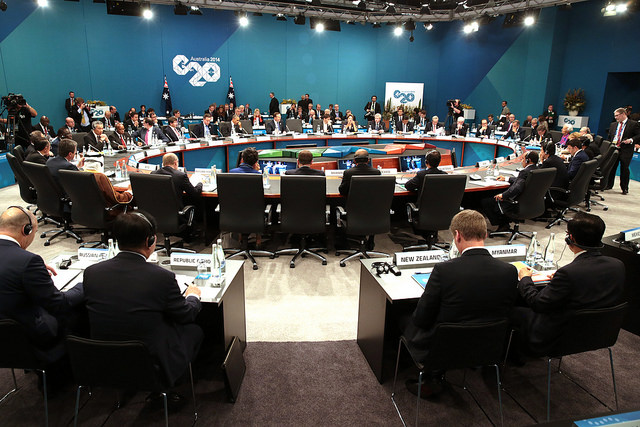
    This year’s G20 talkfest has come to an end with the usual communique of fine words.

    Apart from the discussion of climate change there’s little in the communique that wouldn’t have furrowed the brows of Margaret Thatcher or Ronald Regan thirty years ago with most of the pronouncement a being around opening markets, reducing unemployment and freeing capital.

    On the latter point, the call to reduce tax avoidance given this was an obvious consequence of the 1980s reforms would be met by with a rueful laugh from those responsible for the deregulation wave of the Reagan and Thatcher years given reducing taxes on corporations was one of the reasons for the ‘reforms’

    An aspect that would trouble Maggie’s and Ronnie’s ghosts would be the commitment to ‘address deflationary pressures’, something undreamt of in the 1980s, although a clear warning to today’s commentators and investors that Quantitative Easing is not going away any time soon.

    What today’s communique shows is the world’s leaders are still very wedded to the economic models of the Twentieth Century despite the massive demographic and technological developments changing our society.

    The real message from the G20 is don’t wait for your country’s leaders if you want progress; at best they probably won’t comprehend what you’re saying.

    Although if you can put your ideas in terms of creating growth or reducing youth unemployment then you might have a willing audience with your local minister, chancellor or President.

    Similar posts:

    • No Related Posts
  • Microsoft and the transition effect

    Microsoft and the transition effect

    So it turns out Microsoft’s river of gold with productivity software was a transition effect with the company now offering the product essentially free on iOS and Android devices.

    While the profits in that product line were nice while they lasted we may start seeing Microsoft’s revenues, which have stood up pretty well in a changing marketplace, start to decline rapidly.


    Similar posts:

  • Could Windows 10 be Microsoft’s last desktop operating system?

    Could Windows 10 be Microsoft’s last desktop operating system?

    On Tuesday Microsoft are expected to announce their new Windows 10 operating system at a media event in San Francisco.

    If the rumours are true, then the new system will be launched almost exactly two years after Windows 8 was released amid hopes that it would stem the PC industry’s decline.

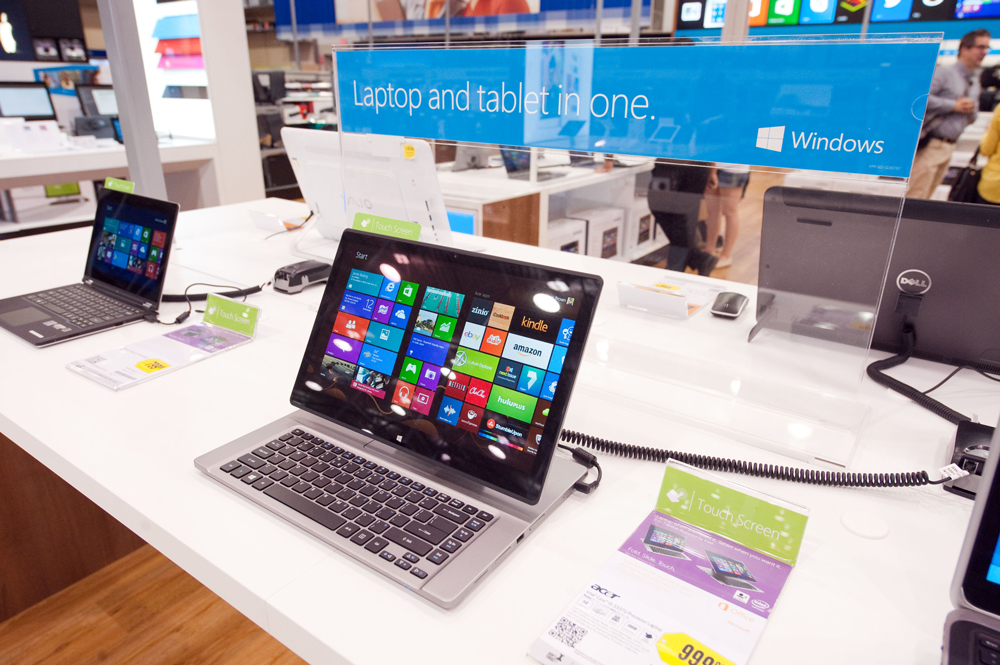
    Windows 8 didn’t deliver with most people being frustrated with the system’s inconsistent interface that tried to be unified desktop, laptop and tablet operating system which managed to be unsatisfactory on all of them.

    As a consequence, users avoided Windows 8 like the plague with industry analysts Netmarketshare claiming most of Microsoft’s customers are buying systems kitted out with Windows 7 or just sticking with decade old Windows XP systems.

    Courtesy of Netmarketshare http://www.netmarketshare.com
    Courtesy of Netmarketshare http://www.netmarketshare.com

    Making matters worse for Microsoft is the decline in personal computer sales in general with IDC estimating global shipments of both portable and desktop system will drop 3.8% in 2014.

    These declines are already well established in the trends being seen in Microsoft’s business with the company’s Windows division showing an accelerating decline in profit margins.

    Microsoft Windows division financial performance
    Microsoft Windows division financial performance ($ million)

    Should that decline continue with Windows 10, it may well be that Microsoft will have to consider the future of product.

    As it is, the market may be deciding for them as users increasingly switch to tablets and smartphones. We may also see a wave of cheap Chinese made laptops running versions of Google Chrome or other Linux based systems also threatening the existing PC sales base.

    Either way, a lot rides on what Microsoft announces in San Francisco this week. It could be the end of an era that defined the mass adoption of computers.

    Similar posts:

    • No Related Posts
  • The decline of Forbes magazine

    The decline of Forbes magazine

    A great piece by Michael Wolff in Town and Country describes how the Forbes family struggled with making their magazine work in the digital economy.

    For the Forbes family, it was always going to be hard stepping into the shoes of the late Malcolm after he unexpectedly passed away in 1990 and unfortunately for them that happened to coincide with the end of the great era of publishing wealth.

    Twenty five years later the family are largely removed from the publication which is a shadow of its former self with its best hope for survival lying with Asian investors who still see some value in the brand.

    What’s particularly poignant about Wolff’s story is the Forbes family did nothing wrong — they embraced the new platforms, experimented with digital and tried to find a way to make their business work in the online marketplace.

    As it turned out, the old advertising and publishing model was horribly and irredeemably broken.

    Forbes Magazine’s decline is an important tale for the whole publishing industry, for both the brash new entrants and for the struggling established players.


    Similar posts:

    • No Related Posts