Category: Disruption

  • A constancy of change

    A constancy of change

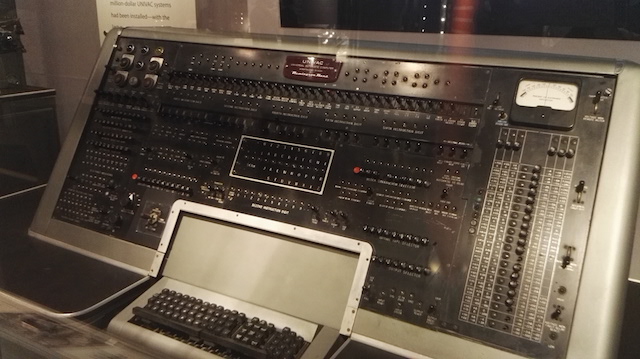
    One constant about the technology sector is change, and a visit to Silicon Valley’s Computer History Museum emphasises just how much the industry has changed over the years.

    Notable are all the gone and forgotten brands that were in their day giants of the industry along with the efforts by various countries, Britain in particular, to compete with the US in computing.

    But most striking are the old roles that rose and fell as technology evolved over the past century, from the Morse Code operators whose skills were essential for safe shipping and telegraph communications through to punch card operators and the ‘tape apes’ of the 1980s.

    Most of those roles rose, became lucrative and then disappeared as technology evolved, just as the loom weavers’ jobs did in the eighteenth century.

    Like the loom weavers and the companies that employed them, history and technology overtook them. Something that today’s business giants and high paid occupations need to keep in mind.

    No industry is static and few jobs are safe in today’s rapidly changing world. It’s why we need to be making the investments in the skills and technologies that will define the future economy.

    We can’t assume today’s jobs will be those of tomorrow.

    Similar posts:

    • No Related Posts
  • A lack of systems, process or even a working website

    A lack of systems, process or even a working website

    The first ever guest of AirBnB tells his story. At the time the site had no contact details and Amol Surve was desperate to attend the San Francisco’s Industrial Design Conference in 2007.

    He tracked down AirBnB co-founder Joe Gebbia to get the air mattress and the business was born.

    Which shows a good business idea doesn’t need all their processes and technology in order to prove it works. Something that anyone with a new business idea should consider.

    Similar posts:

    • No Related Posts
  • Confidence and open communications

    Confidence and open communications

    One of the big technology industry stories currently is the merger of Dell and data storage giant EMC, which at seventy billion dollars will be the biggest merger in the tech industry’s history.

    With fifty thousand employees managing such a change presents a challenge for EMC’s managers and something noticeable attending the company’s EMC World conference in Las Vegas this week is how upbeat almost all the staffers about the impending merger.

    In an interview with David Goulden, the CEO of EMC’s Infrastructure division, which is the company’s core business, I asked him how they were keeping staff morale up in the face of changes that will almost certainly cost jobs.

    “Change creates uncertainty,” says Goulden. “One thing I’ve learned from this is you cannot over-communicate and that’s true internally and it’s true with our customers. We’ve put an incredible amount of effort in communications so our teams are engaged to go and speak to their customers.”

    As change is now a constant in all industries Goulden’s lesson should be noted by all managers and business leaders – clear, honest and open communications with employees and customers is essential in keeping the trust of the markets and workforce.

    The old model of restricting information and hoping no-one finds out is increasingly harder to sustain and from a business point of view unprofitable in the medium term as well.

    Paul travelled to Las Vegas as a guest of EMC and Netsuite.

    Similar posts:

  • Politics enters the age of disruption

    Politics enters the age of disruption

    One of the key features of modern western nations is how stable politics is with very few major parties being less than fifty years old and many boasting a history lasting back a century or more.

    Now in the US and Australia we’re seeing the slow motion implosion of the established parties of the reactionary side of politics – it would be misleading to describe the schoolboy ideologies of most American Republicans or Australian Liberals as being ‘right wing’.

    Tony Wright in the London School of Economics blog asks What Comes After the Political Party?

    Wright’s view is political parties are doomed to extinction as their memberships dwindle and this is an opinion shared by many watching the declining participation in formal politics over the last fifty years.

    One result of that declining participation has been the steady increase in power of the machine apparatchiks who’ve increasingly replaced boots on the ground with corporate funding.

    The consequence of that increase in power has been a steady disconnect between the concerns of the electorate and the priorities of the party leadership.

    In the US that disconnect resulted in the Republicans blindsided by the rise of Donald Trump and the Australian Liberal Prime Minister increasingly looking like Grandpa Simpson as his party shuffles towards what increasingly looks to be a ballot box disaster.

    Both parties are likely to rip themselves apart as the contradictions of the modern reactionary movement – dismantling public services while increasing government powers – come home to roost with the ideologues and pragmatists within the organisation fighting bitterly.

    The truth is political parties are no more permanent than businesses, or indeed nations, and in a time of economic change it isn’t surprising old parties die and new ones are formed.

    While political parties won’t cease to exist, the new political parties that will rise from the wreckage of today’s will be different in both their philosophies, organisation and membership.

    Parties that were formed in the horse and carriage days or the early era of newspapers and radios are always going to find the internet era to be a challenge, that they are being run by men whose political theories haven’t moved for fifty years only guarantees their demise.

    In many ways, what’s changing politics is exactly what’s changing business. However the politicians and their supporter seems far more oblivious to change than their commercial counterparts.

    Similar posts:
  • Managing a shrinking company

    Managing a shrinking company

    It isn’t just software companies and telcos that are facing a changing, less profitable, world. As margins decline for their enterprise customers, equipment vendors are facing the squeeze.

    A good example of this is Sweden’s Ericsson which last week announced declining sales as China’s Huawei displaces them in market and their enterprise and telco customers tighten budgets in the face of declining margins.

    For Ericcson this means finding new opportunities but for them, like Cisco and Microsoft, most of the promising markets offer nowhere near the profits they have been used to in their traditional businesses.

    Managers in these industries face a difficult dilemma in explaining to shareholders their company needs to be smaller and less profitable than previously which is something few want to hear.

    Not to admit that painful reality risks killing the company as margins continue to shrinks, sales shrivel and desperate managers engage in increasingly desperate stunts in the hope on stumbling on another river of gold.

    It’s an ugly place to be for staff at these companies but it shows that fat profits can never be considered to be given in any industry.

    Similar posts:

    • No Related Posts