Category: economy

  • Does venture capital really matter?

    Does venture capital really matter?

    Around the world governments are trying to replicate the Silicon Valley startup model. But does that model really matter?

    On the Citylab website, Richard Florida looks at which cities are the leading centres for startup investment.

    Unsurprisingly eight of the top ten cities are in the United States with San Francisco and San Jose leading the pack. While London and Beijing make up the other two, the gap between the regions are striking with the Bay Area being home to over quarter of the world Venture Capital investment while the Chinese and London capitals com in at around two percent.

    global-startup-cities

    While these proportions are impressive, the numbers are not. The total VC investment identified by Florida in 2012 is $45 billion, according to the Boston Consulting Group there was $74 Trillion of funds under management in 2014.

    That makes the tech venture capital sector .06% of the global funds management industry.

    In the US alone over 2013 small businesses raised $518 billion in bank loans, more than ten times the global VC industry.

    What this scale shows is how small the tech startup sector really is compared to the broader economy and, more importantly, how the Venture Capital model perfected in the suburbs of Silicon Valley is only one of many ways to fund new businesses.

    Even in the current centre of the startup world, it’s estimated less than eight percent of San Francisco’s workforce are employed by the tech industry although that goes up to nearly a quarter in San Jose.

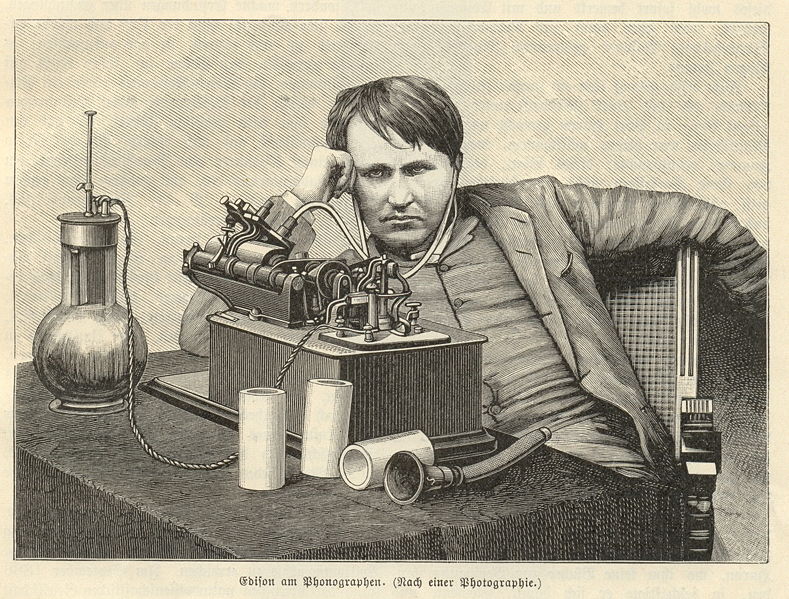
    None of this is to say the startups are not a good investment – Thomas Edison’s first company raised $300,000 in 1878, $12 million in today’s dollars, from New York investors including JP Morgan. The Edison Electric Light Company, while relatively modest went on to being one of the best investments of the 19th Century.

    That twelve million dollar investment looks like a bargain today and it’s highly likely we’ll see some of today’s startups having a similar impact on society to what Edison did 140 years ago.

    Edison’s success created jobs and wealth for New Jersey and New York which helped make the region one of the richest parts of the planet during the Twentieth Century and that opportunity today is what focuses governments when looking at encouraging today’s startups.

    So it’s understandable governments would want to encourage today’s Thomas Edisons (and Nikola Teslas) to set up in their cities. The trick is to find the funding models that work for tomorrow’s businesses, not what works for one select group today.

    While the Silicon Valley venture capital model receives the publicity today, it isn’t the model for funding most businesses. Founders, investors and governments have plenty of other options to explore.


    Similar posts:

  • Bringing the Internet to the masses

    Bringing the Internet to the masses

    For the developing world, broadband and mobile communications are helping

    In Myanmar, the opening of the economy has meant accessible telecommunications for the nation’s farmers reports The Atlantic.

    At the same time, Indian Railway’s Telecommunications arm RailTel is opening its fibre network to the public, starting with Wi-Fi at major stations.

    What is notable in both cases is the role of Facebook. In India, Facebook’s project to offer free broadband access across the nation is meeting some resistance and it’s probably no coincidence Indian Railway’s WiFi project is being run as partnership with Google.

    In Myanmar on the other hand, Facebook and Snapchat are the go to destination for rural communities, it will be interesting to watch how this plays out as farmers start to use the social media service for price discovery and finding new markets – as Tencent Chairman SY Lau last year claimed was happening with Chinese communities.

    One of the promises of making the Internet available to the general public was that it would enable the world to become connected, thirty years later we may be seeing the results.

    Similar posts:

  • Silicon Valley and the rise of Chinese innovation

    Silicon Valley and the rise of Chinese innovation

    Silicon Valley could be soon surpassed by China warns Uber’s Travis Kalanick.

    While sceptics could dismiss Kalanick’s claim as his simply sucking up to his hosts in Beijing where he made the comment, or put the statement down to a PR campaign for his company’s renewed push into China, there may be a kernel of truth.

    If for nothing else, the Chinese diaspora across the Pacific Rim is known for its entrepreneurial drive. From Bangkok to San Francisco and Sydney, Chinese communities have a reputation for being full of smart and hardworking business people.

    Added to the Chinese cultural aspect is history. Fifty years ago car makers in Detroit and motorbike manufacturers in Birmingham, England, scoffed at the idea that their Japanese competitors could overtake them.

    Within a quarter of a century they were proved wrong.

    Another concern for Silicon Valley is that it could be losing its edge. As veteran journalist Tom Foremski points out, increasingly workers in the Bay Area live in a privileged bubble.

    Foremski discusses how younger, creative and innovative workers are finding opportunities in cheaper and more diverse American cities like New York’s Brooklyn.

    America’s diversity, and depth of its economy, will continue to be a strength for the foreseeable future but Americans, particularly those in the Bay Area, shouldn’t be resting on its laurels.

    Travis Kalanick’s warning might be dramatic, but it isn’t beyond the realms of possibility.

    Similar posts:

  • Where the jobs will go

    Where the jobs will go

    That automation is having a profound impact on existing jobs is beginning to be appreciated by governments. A study by the New South Wales government’s Parliamentary research service examines what the effects will be on the Australian state’s economy.

    Like equivalent overseas studies, the report finds over half the state’s jobs – a total of 1.5 million positions – could be at risk from computerisation.

    An interesting aspect of this is the bulk of the impacts being felt in the mining, construction and logistics industries. While there’s no doubt those sectors will be hard hit, particularly for lower skilled workers, the assumption is higher level positions in management and supervisory roles won’t be as greatly affected.

    Examples of this include ‘professionals’ only being at a 4.6% risk of being displaced and ‘General Managers’ at 5.0%. This compares to labourers at 96.1% and 95.7% of ‘filing and registry clerks’ losing their jobs.

    While there’s no doubt the lesser skilled roles are at immediate risk, and have been for decades, the rise of artificial intelligence and business automation are increasingly going to put management roles at risk.

    Quibbles aside, the report is a good read on the impacts of automation and computerisation on what has been one of the western world’s more successful economies.

    The hollowing out process of Australia’s middle classes it describes show that phenomenon is not just confined to the United States and this probably creates the greatest challenge to politicians as populists seek to blame foreigners and minorities for much of the population’s declining fortunes.

    Almost every government in the world is facing these issues and the efforts of public servants and economists to accurately describe what’s happening has to be applauded and encouraged.

    For voters and workers, reading these reports to understand the forces changing their industries and communities is essential to making informed choices at the ballot box and the workplace.

    Similar posts:

  • Silicon Valleys of the Twentieth Century

    Silicon Valleys of the Twentieth Century

    The rise and fall of industrial hubs is a topic that fascinates this blog and the excellent BBC and US National Public Radio series Six Routes to a Richer World discusses how countries as disparate as Germany, Brazil, China and the United States are carving their own paths to prosperity in the 21st Century.

    In the US segment, the show looks at one of America’s industrial centres of last century – Dayton, Ohio.

    The home of the Wright Brothers, Dayton also saw the invention of the cash register, air conditioner and even the self starting motor. In the early part of the Twentieth Century it held the most patents per capita of any US city and workers flocked to the region for high paying manufacturing job.

    Manufacturing, and research, is largely gone from Dayton today and the question posed is could the successful cities of California’s Bay Area follow a similar path this Century.

    Whether Silicon Valley and San Francisco fade will be a matter of historical forces that are difficult to see right now, but the likelihood can’t be underestimated.

    Similar posts: