Category: economy

  • Malcolm Turnbull and the task of turning around Australia

    Malcolm Turnbull and the task of turning around Australia

    Watching from afar, the reaction to Malcolm Turnbull becoming Australia’s 29th Prime Minister has been remarkable as suddenly the nation seems to have collectively woken up to the fact they are fifteen years into a new century.

    In a few short weeks Australian public servants have started engaging in hackathons and business leaders whose idea of an investment was a property plan disguised as a casino have started raising VC funds.

    The question though for Australia is this too little and too late after three decades of concentrating on property speculation and betting on a never ending Chinese economic miracle?

    New leadership

    In Malcolm Turnbull – who only rejoined the Liberal Party in the early 2000s after careers as a journalist, barrister and banker – Australia for the first time in forty years doesn’t have a party apparatchik as Prime Minister.

    While this wasn’t a problem during the 1970s and 80s under Fraser and Hawke, by the 1990s the shrinking membership base of Australian political parties meant increasingly the ‘talent’ coming up the ranks was lacking perspective outside the narrow factional groupings most of them were beholden to.

    This became brutally apparent with the last three Prime Ministers who were fully hostage to their party factions. In Gillard and Abbott Australia had two party operatives who were no doubt talented in internal party manouvering but hopelessly out of their depths as government leaders – Abbott often seemed to be more interested in settling the battles of 1980s Sydney University student politics than governing the country.

    Describing Prime Minister Rudd would take a thesis in political psychology which is way beyond the scope, or interest, of this writer.

    The consequences of this were an Australian political leadership that was disinterested in the real economy beyond guaranteeing the social compact that property prices would double every decade and ensure their support in the key swing electorates of suburban Australia.

    An insular business community

    For the business community the insular focus of Australian society and its politicians worked well too. As the economy turned inwards in the 1990s under the Keating and Howard governments, so too did Australia’s conglomerates who realised clipping the ticket of a consumer economy was far easier than competing on global markets.

    The best example of this were Australia’s banks which essentially gave up on lending to business unless it was guaranteed by property. This graph from Macrobusiness illustrates just how the nation’s banks focused on property speculation.

    Australian bank lending, courtesy of Macrobusiness.
    Australian bank lending, courtesy of Macrobusiness.

    That focus on housing and consumer spending underpinned on rising property prices distorted the entire business sector and ingrained in the Australian psyche that the key to riches and prosperity was to get a relatively low skilled ‘safe job’ and borrow as much money as possible.

    A good example of this are the regular stories of sweet twenty something wunderkinds who have built multi million dollar property portfolios while working in pizza shops or as administrative assistants.

    Possibly the greatest damage Australia’s property obsession has been on the nation’s youth where the message has been ‘don’t gain a globally competitive skill set or education, just get an entry level job at the real estate agents and buy as much property as the bank will allow you.’

    Turnbull’s challenge

    Like Gough Whitlam, the last Prime Minister not a creature of their party factions, the reform challenge facing Turnbull is immense as 25 years of complacency have left Australia with an uncompetitive economy – as it had for the incoming Labor government of 1972 – with added complexity of having to maintain property prices to keep its economic miracle and social compact ticking over.

    The similarities to Whitlam are also striking in the support Turnbull has from the population. One of the striking things on returning to Australia after spending most of the last three months in the United States has been the sense of relief that the inept horror movie of the Abbott government (Attack of the Clueless Zombies) is over and a realisation that Australia has actually entered the 21st Century and not regressing back into the 19th.

    Agendas for reform

    Entering the 21st Century won’t be easy though for Australia. Completing the reforms of the education sector, started half heartedly by Gillard and then trashed by Abbott in settling the scores of his student politics days, is one major challenge along with reforming tax and social security systems that focuses on asset hoarding and speculation over productive investment.

    Possibly a greater challenge is to wean the Australia business sector off its ticket clipping mentality and rediscover its desire to compete globally. It may well be that encouraging the startup sector makes more sense in rebuilding the economy’s competitiveness as many of the nation’s insular conglomerates and their well fed executives are too used to milking the domestic consumer rather than taking on the world.

    The end of kitchen renovations

    The biggest challenge of all though will be to wean Australians off their property addiction, particularly those under 50 who have neglected their global skills as they focused on renovating their kitchens.

    Given the scope of these reforms, such an agenda will require a clear mandate from an electorate that has been complacently accepting guaranteed good times as long as refugees are turned back, the terrorists among us imprisoned and gay couples prevented from marrying for the last 25 years. Making the argument for change is probably going to be Malcolm Turnbull’s greatest task.

    For Australia the stakes are high. It’s not likely the 21st Century will be as kind to The Lucky Country as the Twentieth was.

    Similar posts:

  • Risking a digital recession

    Risking a digital recession

    Europe risks heading into a ‘digital recession’ warn Bhaskar Chakravorti and Ravi Shankar Chaturvedi in the Harvard Business Review.

    Chaturvedi and Chakravorti base their concerns on the Digital Innovation Index they created that looks at the sophistication and speed of digital change across fifty developed countries.

    Most Northern European countries, along with Japan and Australia, were advanced but their rate of adoption was falling risking their economies dropping behind the researchers found.

    W150210_CHAKRAVORTI_COUNTRIESBUILDINGDIGITAL1

    The solution offered by the authors was for the countries to encourage investment, immigration and exports.

    The only way they can jump-start their recovery is to follow what Stand Out countries do best: redouble on innovation and continue to seek markets beyond domestic borders. Stall Out countries are also aging. Attracting talented, young immigrants can help revive innovation quickly.

    A striking problem in Europe is the state of e-commerce across the continent where consumers prefer to buy from US based sites than from those of fellow EU countries.

    In many of the nations government Austerity policies have also hurt investment while risk averse cultures have discouraged innovation and new business formation.

    For Europe, the risks of being left behind are real and with an aging population a fall in living standards is a likely possibility. It would be a shame if the European Union experiment ends up failing due to a digital recession.


    Similar posts:

  • Riding the rails of the global economy

    Riding the rails of the global economy

    Irish economist David McWilliams reflects on how a train ride between Boston and New York illustrates how a lack of investment in the US and over capitalisation in China has affected the global economy.

    A lack of public investment is hurting the US in McWilliams view and that’s exacerbated by a reluctance of the private sector to commit to new productive assets and projects. Weak investment affects household wealth and savings, it also means the low interest rates are encouraging speculation rather than economic growth.

    Meanwhile in China, the nation’s massive expansion has created a global glut in manufacturing capacity. That makes business even more reluctant to invest in plant and equipment while creating risks for the commodities based economies like Russia, Brazil and Australia that feed that machine.

    One aspect that McWilliams overlooks is another shift in the global economy – the shift to smaller scale manufacturing and automation, “real investment tends to be in big machines that make big stuff,” he says.

    That investment in big machines may not be the economic driver they were half a century ago as building and maintaining the machines themselves are no longer labour intensive. Furthermore, the manufacturing of tomorrow may well be much more distributed and on a local, smaller scale.

    McWilliams’ points though are well made. We need to be looking at how to stimulate private investment in productive assets while looking at the public investments that will enhance our economies and improve our living standards.

    Similar posts:

  • China’s entrepreneurial push

    China’s entrepreneurial push

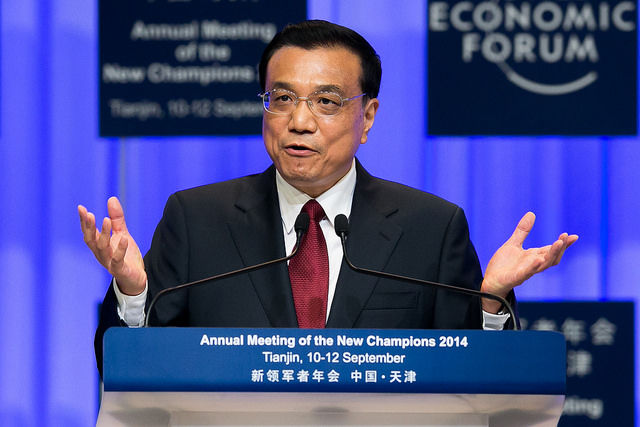
    Just as I was hitting ‘publish’ on the China goes on the tech offensive‘ post two days ago, Chinese Premier Li Keqiang was delivering a speech to the World Economic Forum on the nation’s economy.

    An English translation of Li’s speech is online and what’s particularly notable about it is the continual mention of “mass entrepreneurship and innovation” with the Premier pointing out over 10,000 new businesses are being registered every day in China.

    In parts of the speech, Li sounds like one of the small business evangelists proselytizing on why everyone should start their own venture and coupling entrepreneurship with social justice.

    “Mass entrepreneurship and innovation is effective in promoting social justice. As long as they are willing and capable, all people could establish themselves and lead a promising life through innovation and entrepreneurship. They could all have an equal chance for development and for moving up the social ladder, and could all enjoy a life of purpose and dignity.”

    Probably the biggest barrier for small businesses and startups in all countries is the access to capital, something that Li flags in his speech as being part of China’s opening up to foreign investment.

    Should Li and the Chinese leadership unleash the nation’s entrepreneurial spirits, it will see the country’s economy changed radically and that rebalancing towards domestic consumption accelerate.

    For the rest of the world worrying about China’s influence and economic might, they could be worrying about last year’s problems.

    Similar posts:

  • China goes on the tech offensive

    China goes on the tech offensive

    The most important economic relationship in today’s economy is that between China and the United States, despite bellicose chest thumping by both sides their wealth and well being of their industries is inextricably linked.

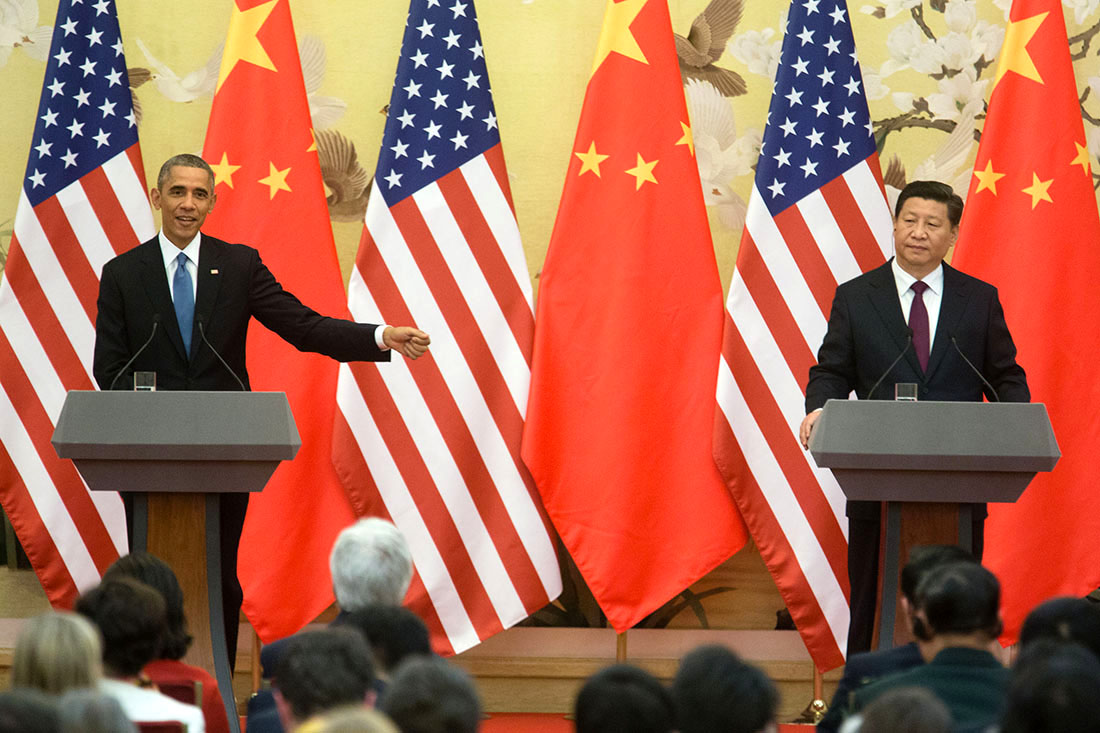
    Against the backdrop of that chest thumping and a slowing Chinese economy, the Chinese and US Presidents are due to meet in two weeks time where trade and security relations between the two countries are at the top of the agenda.

    China’s leaders though plan to emphasise their nation’s tech prowess and its importance to the US’s sector, something the New York Times reports has irritated the Obama administration.

    What would almost further irritate the US leadership is that US tech giants including Apple, Facebook, IBM, Google and Uber have been invited to attend a Chinese tech summit hosted by Microsoft and the PRC President will be dining with Bill Gates before flying to Washington to meet Obama.

    Redmond gets on board

    Microsoft’s role in the China Forum is interesting, the company is extending the hand of friendship not just to nations but also to companies that were fierce rivals in the past, just last week the company announced a partnership with VMWare despite deep rivalry in recent years and CEO Satya Nadella is due to appear at next week’s Salesforce conference.

    Coupled with Microsoft’s battle to keep offshore customers’ email records out of the reach of US legal jurisdiction, it’s clear Microsoft are playing a long global game with their business plans so the support of China’s initiatives isn’t surprising.

    Given China’s strength as an emerging tech powerhouse and its administration’s ambition to move the economy up the value chain, it’s also not a surprise that other US technology companies are reluctant to join the politicians’ games.

    Choosing Seattle

    The choice of Seattle is interesting as well, while the city is a major tech centre with companies like Amazon and Microsoft based there, it’s far more integrated with the Pacific Rim economies than San Francisco and Silicon Valley. Again this is a loud message to the US tech community.

    For China, the success of showing off their technological strengths is an important in sending a message to its East Asian neighbours and the US that the nation is diversifying and shouldn’t be underestimated, a process that Chinese Premier Li described as “a painful and treacherous process” at a World Economic Forum event in Dalian today.

    The meeting between Xi Jinping and Barack Obama in two weeks time, and the associated events in Seattle, could well prove to be the marker of where China moved into the next phase of its economic development and its relationship with the  United States.

    Similar posts: