Category: economy

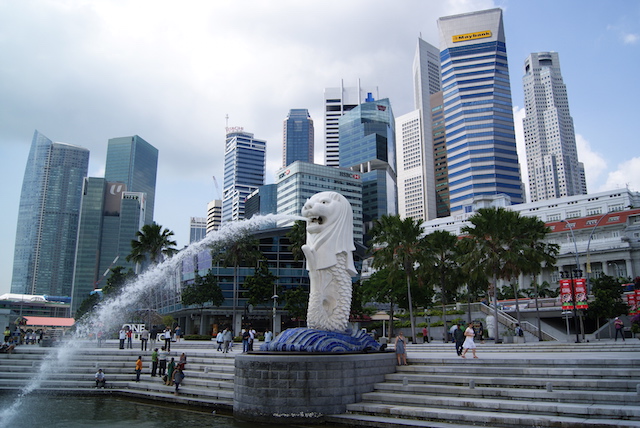
  • Why Singapore is building a connected city

    Why Singapore is building a connected city

    “What if we were to wire up every corner of Singapore?” Asked Steve Leonard, the Executive Deputy Chairman of Singapore’s Infocomm Development Authority, at the CommunicAsia 2013 Summit.

    Two years later that question has been answered as the island state has covered the entire island with a fibre network, putting the country on course to create what Leonard describes as a ‘sensor fabric network.’

    Speaking to Leonard ahead of his visit to Australia for the AIIA Internet of Things conference in Canberra later this month, it’s impressive what the IDA looks to do in building Singapore as a connected nation.

    “We think we have an opportunity to use some of the natural advantages Singapore has,” Leonard says. “In this case being relatively small and an island. The idea that constraints mean creativity.”

    One of the areas Leonard sees as an opportunity with the IoT is in the health care industry where chronic care care can be moved back into the community while hospitals and clinics can be used for acute patients.

    One of the challenges for every city rolling out an IoT infrastructure is the plethora of standards, “we’re trying to think about IEEE standards and we’re trying to think about interoperable as possible with technology as it evolves.”

    “Whether it’s East or West, Singapore wants to be a place where business can be done and people can be healthy,” says Leonard. “What we don’t want to do is develop a standard that might work for us but exclude us from something that originates in another part of the world. We want to be open to things that evolve.”

    Becoming a connected city is key to being a leader in a connected world, “we’re always making sure we seek to have more wireless access points.” Leonard says, “we also have one gig ninety-five percent fibre coverage across the island. We also want to enhance our capabilities through 4G and Wi-Fi.”

    “All of those things together in some sort of concert create that fabric that we’re working on.”

    Historically Singapore’s place in the world has revolved around being a trading hub which has led it to being one of the world’s biggest cargo shipping ports.

    With broadband internet access available pretty well throughout the island, it should open opportunities for entrepreneurs, businesses and government agencies to explore how ubiquitous internet creates opportunities.


    As the world becomes moves from physical goods to bytes, Singapore is looking to becoming as much a technological centre as a goods hub. For Steve Leonard and the IDA the task is to make sure the city takes its place in the connected economy.

    Similar posts:

  • Managing the great transition

    Managing the great transition

    At present the global economy is beset with low expectations; trade is at its lowest point in 20 years, many of the worlds economies are teetering on the edge of depression and investment is barely keeping ahead of depreciation.

    The world is slowing and The Great Transition report by Colonial First State Global Asset Management looks at the reasons and some of the effects of this change.

    Senior economic and market research analyst James White suggests in the report that the current state of affairs is a permanent shift as global productivity rises due to Chinese production and the widespread digitisation of most industries.

    Compounding the problem in White’s view is the traditional measures of economic growth understates the size of the service economy as between ten and twenty percent of transactions go through the ‘black economy’ in most countries.

    In looking at their own field, the Colonial First State researchers suggest that investment strategies are going to change as ‘capital light’ industries begin to dominate advanced economies.

    While White and his co-author Stephen Halmarick are optimistic about what the changes mean and suggest a focus on people and attracting global capital as the key to competing during the Great Transition, the challenge is on policy makers to increase human capital in their economies.

    The question though is what can individual countries do to be competitive in this context? While nations like Switzerland and Singapore can quickly develop pro-investment policies, it’s harder for larger and more diverse societies.

    Perhaps the services driven economic model is really only one for high wealth, small nations with well trained and skilled workforces? If that’s the case, then the Great Transition might be a tough time for many of the world’s developed economies.

    Similar posts:

  • Closing the video store

    Closing the video store

    The last video store in my neighbourhood is closing down. A few years ago there were six in the suburb.

    Last year the US Blockbuster chain closed down its disk rental business and now the same thing is happening in Australia as people move from playing DVDs to streaming or downloading from the internet.

    In a generation the video rental industry went from nothing to boom to nothing again; a classic case of a transition effect.

    The rise and fall of the video rental industry is a cautionary tale of how yesterday’s hot new industry can become a dinosaur within a couple of decades.

    Similar posts:

  • The Internet’s Pax Americana

    The Internet’s Pax Americana

    Tech journalist Kara Swisher has a twenty-five minute interview with President Obama on his relationship with the technology industry and Silicon Valley, it’s an interesting snapshot on how the United States sees its role as custodian of the internet.

    In talking about European agencies’ efforts to reign in the power of companies like Google the President is dismissive; “we have owned the Internet. Our companies have created it, expanded it, perfected it, in ways they can’t compete. And oftentimes what is portrayed as high-minded positions on issues sometimes is designed to carve out their commercial interests.”

    Obama is absolutely correct to say the Internet currently belongs to the United States, it was the US that developed the technologies and built the initial infrastructure for the global network in a similar way it did for the GPS system.

    The internet probably won’t remain the US’s sole domain as China, Indian, Russia and other powers find control of the global communication network resting with the US isn’t in their interests and develop work arounds or rival technologies.

    Just as Spain and then the English once dominated the world’s shipping and communications, it may well be the US’s dominance of the Internet is not permanent.

    Similar posts:

    • No Related Posts
  • Business in a time of falling technology costs

    Business in a time of falling technology costs

    Personal Computers cost one thousandth of what they did in 1980 reports Aki Ito in Bloomberg Business.

    For the computer industry that’s been both a blessing and curse; cheap systems have allowed computers to become pervasive but at the same time the collapsing prices have destroyed the business models of those who built their companies upon the industry economics on 1980 or 2000.

    Software has fallen a similar amount with computer programs now costing 7/1000ths of what they did 35 years ago. Again this has dramatically changed the structure of the industry with Google and Amazon taking over from Microsoft and Adobe.

    While the computer industry is the starkest example of the collapse in prices due to technological change, it’s not the only sector being affected – almost every industry is under similar pressures as margins get stripped away.

    Anywhere where middlemen are exploiting market inefficiencies are opportunities for new technologies to destroy the existing business models, Uber are a good example of this with the taxi industry.

    With technological change accelerating in all industries, no business or its managers can assume they are safe from shifting marketplaces or new, unexpected competitors.


    Similar posts: