Category: economy

  • Will mobile banking drive the developed world’s economies?

    Will mobile banking drive the developed world’s economies?

    Microsoft founder Bill Gates suggests mobile banking can revolutionise developing nation’s economies says in a guest post for online magazine The Verge.

    “People being able to participate on their phone, no matter where they live, even if they’re in a remote rural village in Tanzania or Kenya, they’ll be able to save small micro-payments,” Gates told The Verge during an interview in New York. “They can participate on the economy through their phone, but also in the fall when it’s time to pay the school fees, they’ve saved the money for the year. That’s transformative for their family.”

    Gates’ piece appeared at the same time French telco Orange announced a partnership with Ecobank to provide mobile payments in several African countries.

    Bringing banking to the masses through mobile phones is one example of how emerging markets can leapfrog the technological and institutional barriers that have given the western world a head start.

    For poor and remote communities, a combination of cheap photovoltaic (PV) cells and cellular base stations mean it’s possible to connect into the global economy without the need of massive government or corporate investment.

    As Gates points out, this has the potential to dramatically change the economies of many emerging markets.

    Similar posts:

  • You can’t wait for government to lead digital change

    You can’t wait for government to lead digital change

    Last week’s events in Canberra shows business can’t wait for the government to lead industry change. If you want to keep up with technology, you’re going to have to do it yourself.

    In the wake of the Global Financial Crisis many of my business clients were in trouble as banks tightened their lines of credit and consumers slammed their wallets shut. After a decade of running businesses, it was time to get a job.

    The job I found was with the small business division of the New South Wales Government’s then Department of State and Regional Development where I quickly discovered how many companies and ‘entrepreneurs’ came looking to the government for money and leadership.

    While there were some state government support programs available for exporting, high-tech and biotech businesses almost all of those approaching the Department were hopelessly unqualified for the assistance that was at best only involved marginal amounts of money.

    The toughest part of my job was gently turning those people away without upsetting them too much. Often I failed and part of the reason for that was that many of those believed the government would take leadership in a changing digital world and fund ideas that would help the state’s and nation’s competitiveness.

    I was reminded of my brief period as a public servant and the futile attempt for  with last week’s disasters for the Australian tech sector; the Prime Minister’s claim that social media is little more than digital graffiti and the still born announcement of a Chief Transformation Officer.

    Last week’s announcement of Chief Transformation Officer who happens to have no budget – the UK office the local initiative is based upon received more than a hundred million dollars in the Brits’ last budget –  is probably the best indication of how far behind the ball Australian governments, particularly the Federal level, are in dealing with a changing economy.

    A Chief Transformation, or Digital, Officer can be an important catalyst for change but to achieve that they have to have the support of the organisation’s leadership; if the CEO or minister isn’t on board then the CTO or CDO is doomed to irrelevance.

    The Prime Minister’s blithe dismissal of social media as being digital graffiti over the weekend shows just how little support an office charged with managing the Australian government’s transition to digital services will get from the executive. The sad thing is none of the likely alternatives – on either side of politics – to the current Prime Minister seem to be any more across the changes facing governments in a connected century.

    One good example of the profound changes we’re seeing is in agriculture; this feature on farming robots shows just how technology and automation is changing life on the land. These applications of robotics are going to affect every industry, including government.

    As we’ve discussed before, if you want digital leadership then you’re going to have to provide it yourself . If you’re going to wait for the government, then times are going to overtake you. How are you facing the changes to your business and marketplace?

    Similar posts:

  • We’re crazy, not stupid

    We’re crazy, not stupid

    “We’re crazy, not stupid” is how Jack Ma describes his Alibaba team in an interview at the World Economic Forum in Davos, Switzerland, yesterday.

    Much has been written about Jack Ma and the spectacular success of Alibaba and the WEF session with Charlie Rose is an opportunity for Ma to flesh out the story and destroy some of the myths.

    One of the fascinating anecdotes Ma tells is how US cherry growers are preselling their harvests to Chinese customers through Alibaba and cites various other primary producers doing similar campaigns as how American small businesses can sell into the PRC market.

    Ma’s interview is a fascinating snapshot of how global trade is going through a radical period of change, the shifting of China’s economy and where the future lies for many industries.

    Similar posts:

  • Connecting the village from outside the grid

    Connecting the village from outside the grid

    Villages and small towns in Mexico have a rough deal, the privatisations of government monopolies during the 1990s meant most of them were cut off from the telecommunications networks rolled out at the turn of the century.

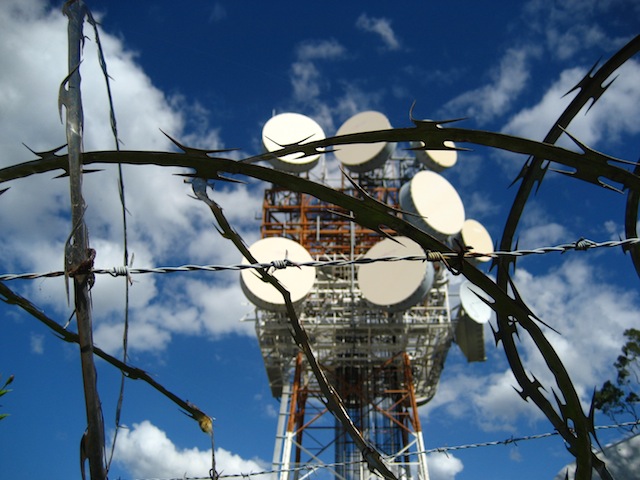
    It’s taken a while for engineers to find a way to figure out an open source alternative to cellular base stations but now they have and it promises to change the model of economic development in poor regions.

    Wired describes how community groups are bringing mobile communications to the poorer and more remote parts of Mexico.

    The rollout of Open BSC is an example of how small scale operations can compliment the larger commercial networks – while major operators like Telemex can ignore smaller communities that offer little if any return, local groups can setup their own not for profit services which give villages connectivity.

    A similar thing is developing with solar power, with PV cells becoming affordable communities which had little chance of being connected to their country’s national grid are now able  electricity.

    That poor or remote areas can now be connected to power and communications without massive subsidies or infrastructure investment is a radical change from the Twentieth Century model of economic development, these advantages change the game on many levels.

    Similar posts:

  • Imagining a world with fewer cars

    Imagining a world with fewer cars

    Last weekend Uber founder Travis Kalanick told a tech conference in Munich, Germany how his company wants to take 400,000 cars off Europe’s road by the end of the year.

    On Monday, the Australian Bureau of Statistics reported the nation’s car sales were at best flat, a trend that’s been apparent for two years and one being repeated around the world as younger adults turn away from automobiles.

    The technology that defined the Twentieth Century was the motor car; it reshaped our cities, changed our lifestyles and drove the consumer economy.

    Now that economy is changing and the motor car, and consumerism in general, is in decline.

    Which leads to the thought of what our communities will look like if the motor car isn’t the defining feature?

    A challenge for governments

    One obvious answer is we won’t need as many roads and carparks so governments will have to shift their priorities towards public transit and shared car services.

    Governments are also faced with voters wanting more services closer to centres as the 1950s model of dad driving an hour to work or the 1970s model of the family driving to the shopping mall are no longer valid. This has serious ramifications for communities were land use has been zoned based upon twentieth century assumptions, not to mention their taxation bases.

    That zoning problem has ramifications for property developers as well, it’s possible to argue this is already happening as pressures mount to turn over more inner city areas to high rise buildings.

    Redefining retail

    For retailers, it means the end of suburban big box stores and more focus on smaller stores with delivery services – a trend we’re already seeing in larger cities.

    The finance industry as well is affected by the shift away from personal ownership of cars as automobile loans and leases have been a lucrative business for the last fifty years. If people are no longer fussed about owning a car then then there’s little demand for easy payment plans.

    With the motor car not being as important to people, we start to see a society with very different economic underpinnings to that we became used to in the late Twentieth Century. How do you think our communities and businesses will look in a world without cars?

    Similar posts: