Category: economy

  • Rethinking the middle class

    Rethinking the middle class

    Technologist Jaron Lanier says the internet has destroyed the middle classes.

    He’s probably right, a similar process that put a class of mill workers out of a job in the Eighteenth Century is at work across many industries today.

    Those loom workers in 18th Century Nottingham were the middle class of the day – wages were good and work was plentiful. Then technology took their jobs.

    Modern technology has taken the global economy through three waves of structural change over the past thirty years, the first wave was manufacturing moving from the first world to emerging economies as global logistic chains became more efficient.

    The second wave, which we’re midway through at the moment, is moving service industry jobs and middleman roles onto the net which destroys the basis of many local businesses.

    Many local service businesses thrived because they were the only print shop, secretarial service or lawyer in their town or suburb. The net has destroyed that model of scarcity.

    The creative classes – people like writers, photographers and musicians – are suffering from the samee changed economics of scarcity.

    Until now, occupations like manual trades such a builders, truckdrivers and plumbers were thought to be immune from the changes that are affecting many service industries.

    The third wave of change lead by robotics and automation will hurt many of those fields that were assumed to be immune to technological forces.

    One good example are Australia’s legendary $200,000 mining truck drivers. Almost all their jobs will be automated by the end of the decade. The days of of relatively unskilled workers making huge sums in the mines has almost certainly come to an end.

    So where will the jobs come from to replace those occupations we are losing? Finance writer John Mauldin believes the jobs will come, we just can’t see them right now.

    He’s almost certainly right – to the displaced loom worker or stagecoach driver it would have been difficult to see where the next wave of jobs would come from, but they did.

    But maybe we also have to change the definition of what is middle class and accept the late 20th Century idea of a plasma TV in every room of a six bedroom, dual car garage house in the suburbs was an historical aberration.

    Just like the loom weavers of the 18th Century, it could well be the middle class incomes of the post World War II west were a passing phase.

    If so, businesses and politicians who cater to the whims and the prejudices of the late Twentieth Century middle classes will find they have to change their message.

    Similar posts:

  • Training for mediocrity

    Training for mediocrity

    In researching the tech angle of the 2013 Australian Federal budget for Technology Spectator last night one thing kept really bugging me – the government’s cap on tax deductible education expenses.

    The decision to cap self education deductions was made earlier in the year by Treasurer Wayne Swan.

    The Government values the investments people make in their own skills and recognises the benefits of a tax deduction for work related self-education expenses. However, under current arrangements these deductions are unlimited and provide an opportunity for people to enjoy significant private benefits at taxpayers’ expense.

    So the government is going to save $500 million dollars over the next few years by capping legitimate educational expenses on the grounds they were ‘unlimited’.

    We could ask why negative gearing continues to be unlimited where taxpayers claiming the expenses of property speculation cost the Federal government eight billion dollars last year.

    So Treasurer Wayne Swan says a salaried worker has effectively no limits on claiming losses from property speculation against their taxes but is subject to a ludicrously low limit for claiming education expenses.

    This one comparison – between negative gearing and self education expenses – shows the magic pudding fairyland that Australia’s political leaders live in and their cowardice.

    What’s bizarre about this policy is that most industries are undergoing major changes and almost every worker will have to reskill a number of times through their careers.

    Many of those workers will be able to get their courses and education expenses under the limit, many others won’t.

    As the New Australian points out, Wayne Swan – like most lifetime Australian political apparatchiks – has never to worry about reskilling as the party has nurtured and cared for him all his adult life.

    In the real world though, Australia’s economic future will depend on the workforce picking up the skills to operate in rapidly changing times.

    That Australia’s politicians and economic policies are focused on encouraging property speculation over skills only guarantees mediocrity.

    Although mediocrity might be the world that suits Wayne Swan, Tony Abbott and the rest of Australia’s political classes.

    Similar posts:

  • Can Australia continue the mining employment boom?

    Can Australia continue the mining employment boom?

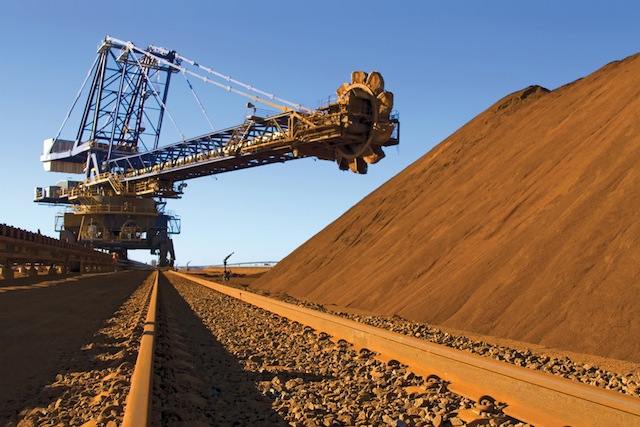
    The Prime Minister’s comments at the ADC China Forum last week raised an important question about Australia’s mining boom – can the industry sustain employment as the construction of mines, ports and railways are completed?

    After her keynote speech at the event’s gala dinner the Prime Minister was interviewed by Busines Spectator’s KGB – Alan Kohler, Robert Gottliebsen and Stephen Bartholomeusz – about the country’s relations with China.

    In that interview, the Prime Minister was upbeat about the continued employment bonanza from the resources boom.

    I think overwhelmingly the prospects are good for resources. There is nothing to fear here. The absolute peak of the price cycle has probably passed, but we will still be doing good business in resources. It will be supporting jobs.

    A few days earlier Fortescue Mining Group’s CEO, Nev Power, spoke to Alan Kohler on Inside Business.

    Nev was a little more circumspect about the prospects for continued booming employment in the mining sector.

    our capital expenditure program and expansion is coming to an end around mid-year. And then we’re into a very high volume phase and it’ll be a matter of driving the maximum efficiency out of the business through that phase.

    So even if the iron price and export volumes do hold up, it looks like the resources employment boom may be reaching its end as mining projects move from the labour intensive construction phase to being relatively hands off production mines.

    If Nev gets his way with ‘maximum inefficiencies there may be fewer jobs to go around.

    The Prime Minister – along with all of Australia’s political leaders – remains hopeful, as she said in her speech.

    So we are not, indeed we have never been, simply a quarry or a beach; ours is a diverse and sophisticated economy and a valued trading partner with the biggest global economies.

    As the expansion phase of the mining boom tails off, that economic diversity is going to be tested. Hopefully there is a Plan B.

    Similar posts:

  • There is no China Inc

    There is no China Inc

    “There is no China Inc” was the message from the first day of the Australian Davos Connection’s 2013 Future Summit in Melbourne last week.

    For 2013, the annual two day ADC Future Summit was themed “China – where to from here?” with both international and Australian speakers discussing the Peoples’ Republic of China’s future and it’s effects on the world, particularly Australia.

    Opening the speakers was Martin Jacques, Senior Visiting Research Fellow at the London School of Economics and Author of ‘When China Rules The World.’

    Martin Jacques has been on the wrong side of history before, having been the last editor of Marxism Today before its closure in 1991, giving his overview of China’s development an interesting flavour.

    Returning to the historical norm

    History has never seen a country so big grow, so fast in Jacques view. The US and British economic revolutions featured lower growth rates and much smaller populations compared to the modern Chinese experience.

    Jacques quotes leading Chinese economist Hu Angang’s belief that China is returning to its global position of two hundred years ago where the nation made up a third of the world’s global economy – double today’s share.

    The resilience of China’s society in Jacques’ view is driven by four factors; its two thousand year old culture, the legitimacy of its government, the competence of the civil service and its lack of desire to build colonies.

    Despite China’s historical reluctance to build overseas empires the nation’s rise is still going to dramatically change regional politics.

    Australia’s Challenge

    Jacques raises the question of Australia making the jump from being in the US political camp to engaging with China and America on an equal basis.

    “Australia has an important role to play in the region but only if it chooses to express its own views and interests,” says Jacques. The nation’s interests are not necessarily those of the United States.

    The US is uncomfortable with China’s rise and Jacques believes the Obama administration’s policies in the Pacific are destined to fail because the United State’s Asian Pivot is essentially a military response while the PRC’s rise is due to economic dynamism.

    Jacques main point was that the west misunderstands China by viewing the country as a nation-state when in fact it is a civilisation. This was a question that troubled the following panel.

    Culture or nation?

    Dr John Lee of the University of Sydney thought the idea of China as a civilisation would worry its neighbours were that view taken to the logical end point, “would that mean that China views the region in fundamentally hierarchical terms?”

    “Australia is in a strategic holding pattern,” says Lee. “Australia like every other country in the region is hedging closer to America and each other just in case China doesn’t turn out benign.”

    For Hugh White, Australian National University Professor of Strategic Studies, this insecurity surrounding China comes down to choices.

    “China wants to be healthy and strong,” says White. “To do so, China has to face choices, but so too does America.”

    “For Australia the choice is are we prepared to be a spectator in the process.”

    Maintaining growth

    How China can continue its economic dynamism was the biggest question facing the panel.

    Patrick Chovanec, Chief Global Strategist of Silvercrest Asset Management, thinks China cannot sustain its current level of economic growth and points out that prior to the Global Financial Crisis in 2008, China’s exports made up 8% of the country’s economy.

    With the collapse in international trade following the 2008 crisis, that proportion dropped to 2%.

    China made up that drop in demand by stimulating the economy and triggering the investment boom that sent global commodity prices – particularly iron ore and coal – soaring.

    This infrastructure splurge is what Chovanec sees as unsustainable, and he challenges the view that Chinese urbanisation will drive the economy and imports.

    “If you look around the world,” Chavonec says, “urbanisation has not driven economic growth.”

    The problem with China’s infrastructure funded growth model is that building rates have to grow to maintain growth rates – if you build 100 high rises this year, you have to build 108 next year just to maintain the 8% growth rates.

    Balancing sectional interests

    Shifting from an export to a consumption based economy means a different China. “it creates a different set of winners and losers,” says Chovanec.

    Balancing those interests of winners and losers is one of the key tasks for the Chinese leadership, “Various competing interests groups – the Party has to juggle the interests of those groups” says Linda Jackobson of the Lowy Institute for International Policy.

    “We shouldn’t talk about China if it’s ‘China Inc.’” Jackobson says, “I don’t think China has a grand strategic plan. It has strategic goals but not a grand strategy.”

    Jackobson sees there being three key objectives for the Chinese leadership; political stability, protecting territorial integrity and economic stability.

    The role of the Communist Party

    That political stability is an important factor when considering China’s leadership as stability is seen as maintaining the power of the Communist Party.

    “We tend to assume an identity between the current communist government and the people.” Says Chovanec, “raising this issue is forbidden in many forums.”

    Chovanec agrees with Jackobson that thinking about ‘China Inc’ and the assumption, or myth, of long term strategic thinking.

    “When we look at Chinese companies going abroad we talk about the long term game plan.” Chovanec points out, “in fact if you look at the haphazard movements of Chinese companies moving abroad it’s been in fits and starts.”

    The common factor from the first session’s speakers at the ADC’s China Forum was that the People’s Republic can’t be seen as a monolithic entity.

    Should we accept Jacques’ view that China is a civilization and not a nation state, then understanding the relationships that underpin the cultural identity are key to working with the PRC.

    On the other hand the panellists see China as a modern nation state with the government, like any other attempting to balance competing interests within society.

    Both are more nuanced view of Chinese politics and the nation’s economy than what’s presented by the media and politicians.

    Which was fitting as the Prime Minister gave the gala dinner keynote that evening which will be the subject of another post.

    Similar posts:

  • What is a fully informed market?

    What is a fully informed market?

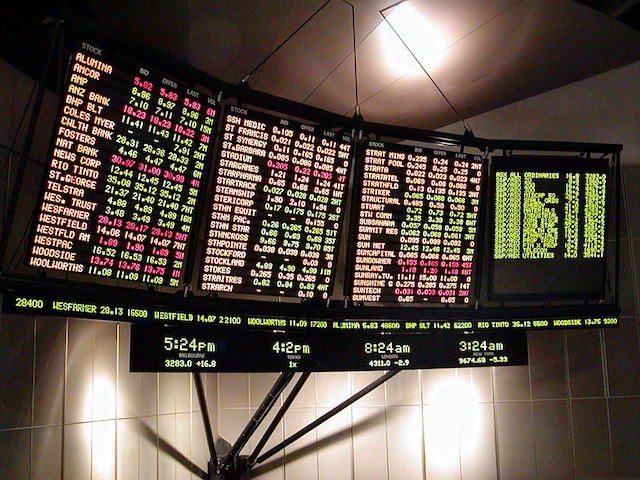
    Given the stock market movements following last week’s Associated Press Twitter Hack it may be time to reconsider the way exchanges and listed companies share and control information.

    One of fundamental principles of modern stock exchanges is that the market is fully informed – that everybody buying or selling security gets access to the same information at the same time.

    In an Australian context, this is covered by a term called ‘continuous disclosure’, should a company’s management become aware of any issue that could affect they must advise the market immediately.

    What’s interesting with this principle is the way that information needs to be made public, specifically clause 15.7 of the ASX listing rules.

    An entity must not release information that is for release to the market to any person until it has given the information to ASX and has received an acknowledgement that ASX has released the information to the market.

    This puts the Australian Securities Exchange, a private company with an almost monopoly position in the Australian investment community, in the position of being the ultimate gatekeeper of knowledge.

    While there’s good regulatory and probity reasons for having a central clearinghouse – that the clearinghouse itself has some serious conflicts of interest is another matter – one has to wonder how long its position can be retained in a world where information is moving fast.

    It may be however that we’re in a passing phase as the financial of the global economy has reached a stage where no stock exchange, futures market or clearinghouse can manage the data that’s flowing through it.

    Time will tell, but the markets themselves are finding other ways to inform themselves.

    Similar posts: