Category: economy

  • Australian Hubris in the Asian Century

    Australian Hubris in the Asian Century

    This post is one of the series of articles on the Australia in the Asian Century report.

    The release of the Australia in the Asian Century discussion paper today raises the question of where the country sees itself and where it is going. It lets us down on many levels.

    While there’s a lot more to discuss in the paper, which I’ll do over the next few days, there’s a few issues that come to mind on first reading.

    The reliance on mining

    A constant  in the discussion about Australia’s future is the continued mining boom. This was the underlying theme of Monday’s Mid-Year Economic Outlook and is also the case in the Asian Century paper. Here’s chart 4.4.2 from the document which shows the forecast makeup of Australia’s exports.

    Today mining exports are shown as being just over 50% of Australia’s trade with Asia and have mineral income growing to well over 60% of trade by 2025.

    What is frightening about this is the belief across Australia’s political and business leaders that the mining boom is here to stay and will continue to keep growing.

    Little risk analysis

    Also notable about the report is how little acknowledgement of risk there is in the document. Most of the risks are dismissed in six paragraphs in Chapter 4.4

    Geopolitical risk does get its own chapter, but even there most of the challenges are glossed over. Eventually most of the risks are dismissed with this line.

    None of these developments of themselves make major power conflict likely—in some important ways they will probably act as a constraint. All the major powers recognise how interdependent their economic interests are.

    This is reminiscent of the line used in the late 1980s – “no two countries with a McDonalds have ever gone to war against each other.” A glib nonsense which ceased to be true when NATO attacked Serbia in an effort to stop the massacres of the Yugoslavian disintegration.

    Trivialising the big risks

    Had anyone predicted in 1986 that within five years, there would be a bloody civil war in Yugoslavia, the Eastern Bloc collapse and the Russian Empire’s eagle replace the hammer and sickle on the Kremlin they would have been dismissed as fools.

    Yet that is exactly what happened.

    The risk of instability within the People’s Republic of China isn’t mentioned or even the effects of what a collapse of North Korea would mean to South Korea – another key Australian mineral market – both of which would have massive effects on Australia’s export markets over the next decade.

    While I’m certainly not forecasting the collapse of either the DPRK or the Communist Party of China in the near future, these are massive risks to any plan which purports to look at the next decade. Ignoring them or trivialising them does not help the paper’s credibility.

    Australian hubris

    Most notable in the white paper is the tone of Australian Exceptionalism through the commentary. In the Prime Minister’s speech she said “we are the nation that stared down the economic crisis.”

    Calling massive stimulus packages, reinflating the property market and guaranteeing bank liabilities is hardly ‘staring down’. Australia’s avoiding going to into recession after the 2008 crisis was due to the “go early, go hard” philosophy of pumping money into the economy which was learned by Australia’s bureaucrats in the 1990s recession.

    That policy worked to stave off recessions during the Asian currency crisis of 1998, the Long Term Credit Bank collapse and the post September 11 uncertainty. It worked on massive scale during the post-Lehmann Brothers collapse.

    Crediting Australia with some sort of miracle economy is hubris on a grand scale and hardly the basis for developing a sensible plan to guide us through the next decade.

    What is Australia’s competitive advantage?

    Essential to understanding where the nation can prosper from the rise of Asian economies is where our current strengths lie. Apart from empty phrases on “skilled workforces” and “new opportunities will emerge in manufacturing” there’s no explanation of exactly where Australia can profit from these.

    In fact most of the case studies refer to Australian companies outsourcing or Asian trading patterns that really don’t need any skilled or valued added contribution at all, a case in point is the story of ‘Hitesh’, one of India’s rising middle class.

    Hitesh, 31, is a stockbroker in a firm that he opened with his friend several years ago. He brings in an annual income of US$5,280, placing his family squarely in the middle of Ahmedabad’s middle class.

    Nowhere does the case study explain exactly what Australia can offer him – the air conditioners and cars certainly won’t be made or designed in Australia and his daughters’ educations in 2025 might well come through the internet from MIT or the London School of Economics instead of them flying to Melbourne to drive taxis and do barista courses in the hope of getting Australian permanent residency.

    In fact if anything, it’s difficult to see why an Asian company would choose to do business with an Australian stockbroker when they earn thirty to a hundred times more than Hitesh.

    1980s thinking

    Much of what is in the white paper is what we’ve heard before in the 1980s – back then it was Yuske in Nagoya who was going to buy our wine and come to the Gold Coast for holidays.

    There’s nothing in the projections we haven’t heard before, except today we’ve squandered two decades of opportunity by ramping up our property markets and building an unsustainable middle class welfare state.

    Sometime in the 1990s – possibly around the time of John Howard’s election – Australia turned inwards and insular. We had the opportunity  to position Australia as a credible mid-level power in the region but we chose instead to renovate our kitchens.

    That opportunity has been lost and repeating the mantras of the 1980s with the words ‘China’ and ‘Chinese’ substituted for ‘Japan’ and ‘Japanese’ won’t cut it.

    Australia in the Asian Century was an opportunity to show some vision and stake a claim on sharing some of the 21st Century’s riches. Instead the writers chose to give us platitudes underpinned by the certainties of a never ending economic boom.

    Similar posts:

  • Disrupting the education ripoff

    Disrupting the education ripoff

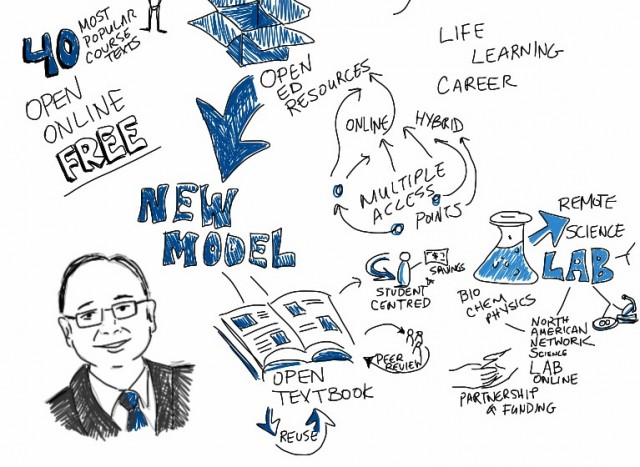
    British Columbia’s government has announced they are going to make most undergraduate textbooks free online or printed at low cost as part of their BC Campus program.

    One of the first lessons for university students is that they are going to be robbed at the campus bookshop – text books are one of the greatest rorts on the planet.

    This scam takes several forms with faculties stipulating the latest editions as course material through to individual professors having a nice little earner in demanding their, often poorly written and out-of-date, textbooks being essential reading for any unfortunate student taking their classes.

    Naturally all of these books are sold at eye wateringly high prices far in excess of what equivalent texts are selling for outside the university bookshop.

    Given all of this it’s no coincidence that the publishers who specialise in academic texts have been the least affected by the online models that have undermined the business models of the mainstream book sellers.

    Over the years there’s been a range of business ideas to setup exchanges to circumvent this legally sanctioned extortion racket and most have failed as the universities and faculty members have protected their cash cows with various tricks to prevent students from buying reasonably priced textbooks.

    That British Columbia’s government now sees that this is a barrier for cash strapped and debt ridden students is an encouraging sign and one that recognises the 1990s model of treating students – particularly international students – as easy money is over.

    For the Canadian and Australian education sectors which had come to depend upon an expensive “bums on seat” model of financing their faculties, the waves of change and competition is now threatening them.

    Probably the biggest threat to this model is from the top tier universities offering courses online. This is radically changing higher education as it’s making it easier for poorer people to access the best institutions.

    For the second rate institutions, this means they have to be providing real value for the fees they charge. A certificate purporting to be a degree is not going to be good enough.

    While it’s too early to call the end of the textbook ripoff – people don’t let juicy little rorts go easily – its days are numbered. Although we may find the old scams replaced by something DRM related.

    Image from Visual Notes of Honourable John Yap’s announcement at #opened12 / Giulia Forsythe / CC BY-NC-SA

    Similar posts:

  • Robert Kiyosaki and the end of the debt era

    Robert Kiyosaki and the end of the debt era

    Financial guru Robert Kiyosaki’s company going into bankruptcy last week marks the fitting end of the late 20th Century’s debt binge.

    The book which propelled Kiyosaki to the best seller list, Rich Dad, Poor Dad was the bible of the flipper generation – much of the advice revolved around the tactic of putting as little money as possible down on an appreciating appreciating asset and sell for more than you owe the bank.

    Advice like this was perfect for era of easy credit and cheap money and many of those who followed Kiyosaki’s advice, and that of many other get rich gurus, made money during the 80s, 90s and early 2000s.

    In 2008 that party stopped and despite record low rates it’s become much harder to make money through speculation and the few who do are only doing so because of government intervention, which in itself is ironic given many of these people are quick to spout Ayn Rand, free market beliefs.

    Kiyosaki’s company’s bankruptcy, while not directly due to failed property speculation, marks the end of an era. Hopefully it also marks an era where real investment and building productive businesses are the keys to wealth and fame.

    Similar posts:

  • What are businesses thinking about?

    What are businesses thinking about?

    Last night the Sydney Business Awards honoured the city’s best enterprises at a gala dinner where a whole group of great businesses were acknowledged for their great work.

    The awards were the result of a three month process where the public voted on several hundred businesses to determine ten finalists in each category. The finalists were then evaluated by judges for each category. I judged the Online Business group.

    The Events Agency who organized the awards today sent me a word cloud taken from the winners’ entry forms. This illustrates what the entrants were talking about in their submissions.

    A wordcloud of the Sydney Business Awards winners entries
    The word cloud of the Sydney Business Awards winners’ entries.

    Staff is the biggest issue for businesses, followed by the two instances of ‘increase’ caused by one having a capital and the other not. If we combined the two instances ‘increase’ would probably be the biggest word.

    Given training is one of the other big words we can see the real challenge is training up staff. Marketing and funding also figure prominently.

    While basic and from a very narrow survey base, that word cloud gives us some ideas of what worries business owners and a base to start answering those challenges.

    The word cloud also explains why education, training and industrial relations are such important issues to the business community which is something both politicians and the media should consider.

    Overall the quality of the businesses entered into this year’s awards was terrific. In the online section I really struggled to separate the great finalists and there was very little between Appliances Online who won the category and the two runners up.

    What’s also interesting is how many of the finalists in other categories had strong online presences, illustrating how the web is important for all businesses.

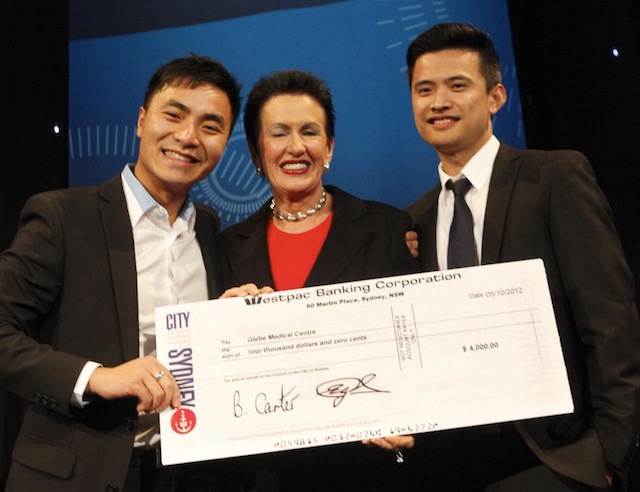
    Congratulations to all the entrants and particularly Climate Friendly who not only won the main Business Award but also the Sustainability and Environmental awards. Glebe Medical Centre was the winner of the Small Business Award and the Healthcare and Fitness category.

    For those who didn’t win this year, it’s worth entering next year as good businesses only get better with time. Hopefully we’ll see your business or vote next year.

    Similar posts:

  • The real e-myth

    The real e-myth

    The collective gnashing of cavity filled teeth over the demise of the Darrell Lea confectionery chain has given rise to some interesting commentary. If some pundits are to be believed, the lolly maker’s financial woes were due to the evil interwebs allowing Australians to buy choccies from cheap overseas suppliers.

    But if you were to cross the road from Darrell Lea’s flagship Sydney shop you’d be outside one of Apple’s iconic stores that are the most profitable retail outlets on the planet – US Apple stores are 17 times more profitable on a per square foot basis than the average American retailer.

    So retail can be successful. It just depends upon how it’s done and the internet has little to do with many of the retail failures we’re seeing at the moment.

    Darrell Lea being absorbed into the VIP Pet Foods empire has a lot of lessons about retail but they are more about service and the failure to move out of the Twentieth Century, particularly when new competitors like Haigh’s and multinationals like Lindt are entering the marketplace.

    Service is an integral part of this story. While the service at Darrell Lea stores wasn’t terrible it also wasn’t particularly notable and neither was the value of many of the products, leaving the customer underwhelmed.

    A similar story of poor service is behind the failure of the Allans Billy Hyde chains – the comments on the Smart Company story about the music stores’ collapse indicate how customers found service lacking while the prices and range were ordinary. There was no real reason to shop there.

    The business models of Darrell Lea and Allans Billy Hyde are locked into a 1980s way of doing business where one or two chains dominate a segment and attempt to charge duopoly prices while exercising their market power to screw suppliers.

    A duopoly model works for Woolworths and Coles simply because of their scale. If you’re a smaller chain selling non-essential, non-perishable goods then customers will either not buy them or find better deals and service offshore.

    Staff, of course, are a nuisance – after all they only serve customers and customers don’t matter when you have the market locked up – so staff are treated as a cost to be ruthlessly minimised while being paid the minimum that the well-paid management can get away with.

    That contempt for retail staff is exacerbated by management’s reluctance to train them, which locks the stores into a downward service spiral as knowledgeable and experienced shop assistants find a job where their skills are valued.

    Despite the scorn poured on Apple’s staff training policies, the core of their retail success is that you will get a passionate, knowledgeable person helping you at one of their stores while their competitors will leave you wandering the aisles unless they think there’s a fat commission to be had.

    This contempt for suppliers, staff and customers is the real malaise for Australian retail and it’s an opportunity for smart new entrants into the marketplace.

    While many of those new entrants might be online, the ecommerce side has little to do with the fundamental problems of lousy service and overpriced products.

    Interestingly, while Darrell Lea had an online strategy, the new owner doesn’t. Any customer visiting the VIP Pet Foods site has no chance of finding where they can buy the products, let alone order them through the website.

    While it would be nice to know where you can buy their products, the owners of VIP probably don’t care as their business model is based upon distributing their products to retailers and those stores can do their own advertising.

    So retail still matters and the high hopes we had in the late 1990s that ecommerce would drive the middle man out of business was just as wrong-headed as the old-school managements of our dying retailers.


    Similar posts: