Category: economy

  • The need for speed

    The need for speed

    I’m at the Kickstart Forum for IT journalists on the Gold Coast this weekend talking to various companies and technology thought leaders on the direction of the industry.

    For the forum’s opening keynote, opposition spokesperson and former Optus telecommunications executive Paul Fletcher described his concerns about the Australian government’s National Broadband Network.

    Many of Paul’s objections to the project are based on the failure of former attempts to build telecommunications networks – citing Aussat, the NextGen fibre network, OneTel and international disappointments like WorldCom and Global Crossing.

    The other main concern is that no-one will use it. He cites a Parliamentary committee that where eHealth providers said their service could be adequately provided by a 512Kbit connection, a tiny fraction of the 100Mbit speed promised by the NBN.

    Previous failures aren’t a good indicator of the success or otherwise of the NBN, but what’s more important is what a poor job industry’s doing in explaining how high speed Internet can help their businesses.

    The big challenge for NBN advocates who believe this project is the essential infrastructure of the 21st Century, is to articulate the benefits and potential. We’re not doing a very good job at the moment.

    What’s your view on how high speed Internet can help your business or community?

    Similar posts:

  • Is the problem in the cockpit?

    Is the problem in the cockpit?

    In the Daily Reckoning newsletter editor Callum Newman uses Malcolm Gladwell’s description of power relationships to draw a parallel between Korean pilots crashing planes into mountains and the economy, pointing out our politicians are like distracted, doomed aviators ignoring the obvious features they about to collide with.

    Is that fair though? In a plane the passengers are strapped in their seats and have to take their the pilots in trust, in real life we have control — all of our actions affect the vehicle that is our economy.

    Unlike a plane we can jump out and do our own thing, we can refuse to buy one good or service and we can set up a business for ourselves when we see a market that isn’t being serviced.

    Where the analogy does work though is our politicians – and many business leaders – aren’t paying attention to major demographic and economic shifts.

    The question is “why?” Most of these people aren’t stupid and they have access to better information than most of us, which is one of the reasons they are in power.

    Perhaps it’s because we don’t want to hear the truth; that our assumptions about what the state will provide and how our economy is developing are flawed.

    In many ways, particularly in a modern Western democracy, our politician are mirrors of ourselves. They tell is what they think we’d like to hear.

    The problem isn’t in the cockpit, it’s back at the boarding gate where we’re more worried whether we’ll get a packet of nuts than whether we should agree to embark on a rough journey to a destination we don’t expect.

    Similar posts:

  • Finance by the masses

    Finance by the masses

    “Crowd” is one of the hot terms of the moment – the idea that groups of connected, motivated people with the right incentives can deliver great value when their skills and talents are bought together.

    One of application of this idea is crowdfunding where businesses, artists, writer and movie producers can call  on the community to donate or invest small sums into a project in return for a benefit like a copy of the book or being an extra in the movie.

    The biggest success in this space is the New York based Kickstarter which was founded in 2008. Pozible, an Australian equivalent, that provides local creatives with the opportunity to raise funds without dealing with the hassles of US bank accounts or social security numbers.

    Both of these services make money from taking a commission on the money raised, for Pozible users this fee ranges from 5 to 7.5%.

    While the focus of Pozible and Kickstarter is on creative projects like books, music and movies, it’s interesting to consider how this model can work for other businesses.

    Perhaps an IT business can offer a free year of support or food delivery service free shipping in return for a donation. The possibilities are endless.

    It’s not without risks – there’s no doubt the regulators will at best be suspicious of fund raising through these services and anyone participating has to accept the risk of not getting any sort of return.

    Since the 2008 banking crisis, funding for small business has dried up around the world. Many viable enterprises found their lines of credit being withdrawn and some even went under as a result.

    With banks rationing small business credit, there’s a need – we could even argue an economic necessity – for alternative sources of capital. Crowdsourcing could be an option.

    Now the days of easy credit are over; businesses, banks, investors and governments have to adapt. Believing models and regulations that were designed when capital was cheap and abundant won’t work in a very changed economy.

    Crowdsourcing will be one of the issues confronting regulators, it’s going to be interesting to see how they deal with it.

    Similar posts:

  • Why Dick Smith is wrong about overseas buyers

    Why Dick Smith is wrong about overseas buyers

    Last week’s announcement that Woolworths will sell their Dick Smith chain of electronics stores wasn’t surprising and neither was the reaction of the chain’s founder to the idea of the business being sold to a foreign buyer.

    For all his legitimate concerns about Woolworth’s growth model, Dick Smith is wrong about the sale of the stores. It’s almost essential for Australian consumers and business that the chain is sold to a foreign retailer.

    When Dick sold his business to Woolworths in the early 1980s it was the beginning of a long consolidation process across Australian industry that now sees most business sectors dominated by duopolies or – at best – three or four incumbents.

    In retail, the Coles and Woolworths duopoly dominates groceries, liquor and petrol. The power of these companies was illustrated yesterday with Coles’ announcement of price cuts to various greengrocery lines.

    Having a new player enter the market is always an improvement; in neighbourhoods where foreign retailers like Costco and Aldi operate or where a keen, smaller operator decides to compete with the big boys the response is always better prices and service.

    More importantly bringing in overseas owners will bring in fresh thinking and new ideas. New blood in the retail sector may even stem the brain drain where many young, innovative future business leaders are forced overseas because of the limited opportunities in the incumbent duopolies.

    Where Dick is right is that the electronics retail business is dying as fat profits in the sector are a distant memory in what is now a tight margin, fast moving consumer goods industry. To make things worse, consumer electronics aren’t even fast moving in the post GFC economy.

    Adding to the retailer’s pain the collapse in margins has happened at the same time commercial rents have risen dramatically with Sydney now being cited alongside Hong Kong, London and New York as the world’s costliest shopping strips.

    While suburban shopping centres don’t have the same rents as the Pitt or Bourke Street Malls, they still have risen dramatically in the last decade, catching all retailers in a vice between rising costs and falling margins.

    In order to maintain profits, training and staff development have been slashed. Once up a time, a customer would go to a Dick Smith or Harvey Norman store to get informed advice on the best gadget, those days are also long gone as poorly trained staff fight to sell the products with the best commissions.

    Owners of the stores have made it harder to recruit and train motivated staff when employer consider hospitality and retail jobs to be temporary, low esteem positions with few prospects.

    This deskilling isn’t just an issue for the retail industry – it’s something we’ve seen across the Australian economy in the last thirty years. As training and skills development has been seen as an unnecessary business cost.

    Tourism Australia chairman Geoff Dixon’s recent comments about the Australian tourist industry having to accept being a high cost destination is a symptom of this disconnect. The local tourism industry has no chance of moving up the value chain when there is no service culture among staff and no long term management vision to develop one.

    It would be unfair to just pick on any one individual or business for these problems. We have a structural problem in the Australian economy that’s fuelled by entrenched beliefs and habits of a stagnant senior managerial class.

    We desperately need new people and ideas in Australian management to shake up the staid duopolies and oligopolies we’ve allowed to develop in the last three decades, that’s why Dick Smith is wrong to say a foreign owner for the electronics chain he founded would be bad for the country.

    Image courtesy of Icelandit on SXC.hu

    Similar posts:

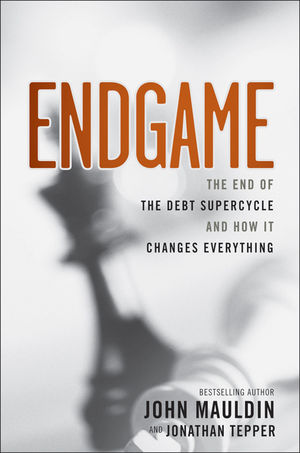
  • Book review: Endgame by John Mauldin

    Book review: Endgame by John Mauldin

    “There are no good choices – only bad ones” could sum up John Mauldin and Jonathan Tepper’s Endgame which looks at how our economies will evolve the end of the late 20th Century debt “supercycle” that has driven the world economy for the last fifty years.

    Endgame examines the choices that confront governments, societies, businesses and investors as the world economy adapts to the realities of the West’s aging populations and excessive debt levels.

    Much of Endgame relies on This Time Is Different by Carmen Reinhart and Kenneth Rogoff which the examined eight centuries of financial crises. While Reinhart’s and Rogoff’s conclusions are that speculative bubbles driven by debt almost always result in a banking crisis and painful economic restructure, each episode does have unique characteristics.

    In each case governments have three basic choices; reforming spending which is rare and maybe impossible given the debt levels in many nations, inflating debts away as Western governments have done since WWII or through outright defaults which have been associated with less developed nations.

    As we see with the convulsions the European Union is currently going through and the massive support given to banks around the world since the 2008 banking crisis, the default option is the one which governments will avoid at all costs.

    While the bulk of the book concentrates on the US, John does dedicate several chapters to the how the debt endgame will play out in other nations including Japan –“a bug in search of a windshield” – the UK, Eastern Europe and Australia, where he finds a massive property bubble that he believes could be the most spectacular endgame scenario of all.

    The clear lesson from Endgame is the post World War II social compact of working taxpayers supporting the aged, the sick and unemployed is over and was only propped up the illusion of wealth generated by loose credit and financial engineering throughout the 1980s, 90s and early 2000s.

    Some are hoping the Chinese economy can provide the global demand that was provided by US consumers. While Endgame doesn’t specifically look at this aspect, it’s unlikely China’s economy can do this.

    With consumers and governments now exhausted by debt and at the limits of what they can spend, the assumptions that have driven the economy along with our investment and consumption patterns of the last fifty years no hold true.

    Endgame is primarily a book for investors and John Mauldin’s emphasis is on where the safest investments will be in at the end of the debt supercycle. His view is it depends on whether governments choose to eliminate their national debts through deflation or inflation.

    For business owners, wage earners and retirees this is an important question too and Endgame describes what the consequences for everyone are under either scenario.

    The message of Endgame isn’t overwhelming negative; John Mauldin also looks at where the opportunities will lie after the credit endgame plays out. “We don’t know where the jobs will come from, but they will come” is another theme of the book.

    Whether you’re an investor or a business affected by the changing economy or building those businesses of the future, this is an important book for understanding the changing economic world in which we live.

    Similar posts: