Category: economy

  • Trust is the currency of the web

    Trust is the currency of the web

    On the Internet, nobody knows you’re a dog” says Peter Steiner’s famous cartoon. All of us who want to be taken seriously on the web have to prove we’re not dogs – or trolls, shills or just those who regurgitate cheap, nasty and unreliable content.

    This is particularly true when you want to be a trusted news source; your audience has to be assured an article’s facts are true and the conclusions can be relied upon. That assurance is found in references to source material, the writer’s identity and the basic facts for the reader to decide how accurate the story is.

    An article in the Sydney Morning Herald on Voice over IP security illustrates just how even mainstream, established media can get things wrong. This article tells us nothing; we don’t know who the writer is, it doesn’t link to source material and, unforgivably, the story leaves it to the reader to guess what the security problem was.

    Because of Fairfax’s silly and inconsistent rules on external links I normally don’t link to Fairfax news articles. A good example of this silliness is illustrated in the above article where the reader has to copy and paste into a web browser the bit.ly reference to MyNetFone’s security advice which the writer has managed to sneak into the copy.

    It would be nice to congratulate the writer on this little bit of subterfuge but the article doesn’t have a byline, the credit at the bottom simply says “Livewire” which probably refers to the long defunct IT section of The Age, the Sydney Morning Herald’s sister publication.

    That the article also refers to Bleeding Edge, a long running Age technology column by Charles Wright which was discontinued some time in early 2006 and which Charles later tried to morph Bleeding Edge into an independent blog. It’s not good enough that we have to guess who the writer is.

    Having a semi-anonymous writer, no byline and no links to supporting information might be all forgivable if the article actually told us what the problem had been with the phone account; did the evil Hong Based criminal mastermind hack the providers’ network, was it a security lapse on the writer’s network or had the user’s password been weak and compromised?

    I suspect it’s the latter, but like most things about this article the reader is forced to guess. If the reader doesn’t have some level of computer expertise they’d be totally lost.

    For organisations like Fairfax, the publishers of The Age and Sydney Morning Herald, the challenge in a society where the traditional newspaper model is rapidly dying is to build their online brand so they can bring advertisers across to it.

    The only way they will succeed in this difficult task is to be trusted as a source of reliable information, and right now poor editing coupled with silly policies such as the one on linking out to other trusted sites are damaging readers’ trust in their brand.

    Rather than sacking editors, publishers should be preserving them and making their online content more trustworthy than the bulk of the web with its dozens of content farms and millions of inconsistent blogs (like this one).

    It’s only by having high standards that today’s media empires will survive the changes the Internet has bought, going cheap and losing the trust and respect of the audience is not an option.


    Similar posts:

    • No Related Posts
  • Happy birthday, iPad

    Happy birthday, iPad

    Last week the iPad’s first birthday quietly passed, lost among the hoopla of the release of the tablet computing leader’s second version. It’s a difficult to think of another product that’s changed an industry so radically and so quickly.

    All of Apple’s successes in the last decade have been in areas with many already established players; the iMac entered a crowded PC market, the iPod was just another MP3 player and the iPhone plunged into a sector sated with hundreds of mobile devices.

    With each product Apple redefined their segment of the market place and established a secure, and profitable, niche.

    The iPad was somewhat different to the other products; with it Apple redefined the entire market and now leads the tablet computing sector. Yesterday industry analysts Gartner put out figures claiming Apple has over two-thirds of today’s market and will still hold half in 2015 despite the rise of the cheaper Google Android devices.

    Notable in Gartner’s predictions is the absence of Microsoft Windows based systems and that’s the clue for the iPad’s success as industries like healthcare, retail and logistics had been begging for affordable and usable tablet computers for a decade which the clunky Windows based systems had consistently failed to deliver.

    Another factor in Apple’s favour has been the rise of cloud computing, which has freed devices from relying on heavy and power hungry internal hard drives and made them more flexible. One of the most popular business iPad applications has been Evernote, a note taking program which has proved indispensable for business executives.

    Most of those executives work for corporations where the IT departments had blocked the introduction of cloud services and Apple products on compatibility and security grounds.

    Senior management’s adoption of Apple products and cloud services has broken down that enterprise barrier, which is one of the reasons why competing companies that made their fortunes selling desktop and server products are now desperately trying to find other selling points.

    In many ways, the adoption of Apple and the cloud is similar to how personal computers entered business. In the 1980’s computing departments resisted the introduction of PCs for almost the same reasons as IT managers today object to social media, cloud computing and Mac desktops in the office.

    The difference is the PC revolution was initially driven by the office accountants, sales teams and secretaries who found desktop applications like Lotus 1-2-3 and WordPerfect made their jobs more effective. This time, being different, it’s their managers driving the change.

    For smaller businesses and entrepreneurs Apple’s successes open a whole range of opportunities in the applications and services markets to support these devices.

    Those applications also help upstarts disrupt existing industries; the lower cost of entry is reducing barriers and speeding up lead times making slower incumbents more vulnerable to change.

    Disruption is probably the greatest lesson that Apple and Steve Jobs have taught us with the iPad, you can enter an already crowded market with a product different from the existing players and own a substantial part of it.

    All businesses, regardless of the sectors we work in, can learn from the iPad whether it’s how we can use tablets and the cloud in our operations or how we can apply Apple’s disruptive business model to secure a profitable industry niche. It’s a good time to be being open to new ideas.

    Similar posts:

    • No Related Posts
  • Planning for today

    Planning for today

    Last week the Communications Day Summit was told of the bizarre situation where owners corporations and building managers were actively preventing their properties from being connected to high speed Internet.

    This short sightedness shouldn’t be surprising to anyone who’s had to argue with architects about allowing sufficient data raisers in commercial buildings or has despaired at stingy developers condemning their projects’ future occupants to years of living in powerboard infested firetraps by only installing one or two power outlets per room – something that’s common in even high priced complexes.

    As well as being firetraps, these properties are limiting their potential future value as owners and tenants find it hard to connect the devices most businesses and family find are essential to modern living. This situation is going to get worse as we start to rely even more on the web and we find we our incomes and livelihoods are tied to the reliability and speed of our connections.

    This failure to plan for the connected economy by Australian businesses is a familiar story, last year one of the state governments asked the tech industry what they were planning around the high speed Internet access the National Broadband Network planned to deliver. The overwhelming response was “dunno, I guess we’ll wait and see.”

    Last week Geof Heydon of telecommunications company Alcatel Lucent told an almost identical story of cluelessness where one of the big four banks asked its suppliers how the NBN would affect the provision of their products.

    The frightening thing is the availability of reliable and fast Internet is already here for most of the population and yet the majority of the business community, not just the retailer sector, seems to be ignoring these fundamental changes to our marketplaces.

    Even if you don’t like the NBN, or last week’s news of cancelled tenders only confirms suspicions Canberra has their sums on the project hopelessly wrong, cancelling it is going to strand large chunks of regional and outer suburban Australia without access to the newer services.

    We all have to ensure our business plans have provision for the changes that are happening as our customers, staff and suppliers adopt high speed and mobile Internet. Failing to do so is going to leave your business or investment stranded, just a community without roads or high speed broadband would be.


    Similar posts:

    • No Related Posts
  • The rebirth of the middleman

    The rebirth of the middleman

    For many years, we believed the Internet would see the middleman’s demise. Just as it has with the newspaper and recording industries, we expected manufacturers, service providers and content creators would stop using intermediaries such as agents, brokers or retailers and move to set up their own online distribution channels.

    The new middlemen

    The rise of services like Groupon, along with booking platforms like Wotif and employment services like Seek, show just how wrong we were. What we’ve actually seen is a rise of new middlemen to replace those who have fallen away like telephone directories and record stores.

    If anything, we’ve seen even more powerful intermediaries develop like Google, Facebook, Apple and Amazon develop to replace the old gatekeepers.

    Why we need intermediaries

    Part of the reason for this is that none of us, even the biggest corporations, have all the skills to bring a product to market; retail itself is a tough business, marketing is hard work and distribution is easiest when you have economies of scale. Middlemen bring these and other skills required to get products into the marketplace.

    The danger with middlemen is they can dilute your brand. We see that with Groupon as businesses give their brand over to them with steep discounts on their products. As Esther Dyson points out at Salon, Groupon will eventually destroy many of their merchants.

    None of this is new as many brands who’ve found themselves hostage to single outlets have found. This isn’t a just a small business problem either as we see hotels and airlines try to break their dependency on travel websites whose readers mainly shop on price.

    The Internet’s price paradox

    Price is one of the big paradoxes we have on the net, we’ve largely trained customers to buy on price – or look for free – yet for the middlemen to make money, it’s essential there’s a decent profit in the chain. If a $50 product only has $10 margin to share across the supply chain, there’s not a lot in it for the various intermediaries.

    Right now, we’re seeing another paradox as the middlemen are keeping their profits while retailers and producers – such as the hairdresser, restaurants and personal trainers selling through group selling sites – are taking the pain and absorbing both cost increases and reduced income from retail price discounting.

    That’s not sustainable and it’s probably a transition effect as the technology changes distribution and marketing at the same time that the Western economies are moving from being driven by consumer debt.

    Are most of us really middlemen?

    We were wrong to predict the death of the middleman, they provide too many benefits and many of us are middlemen ourselves whether or not we’re prepared to admit. What does happen is the middleman’s role evolves as markets, technology and industries change.

    Regardless of whether we use, or are, middlemen it’s necessary to keep an eye on that evolution and make sure we aren’t caught out when the market tips and moves against us.

    Similar posts:

    • No Related Posts
  • The saddest sign you’ll ever see

    The saddest sign you’ll ever see

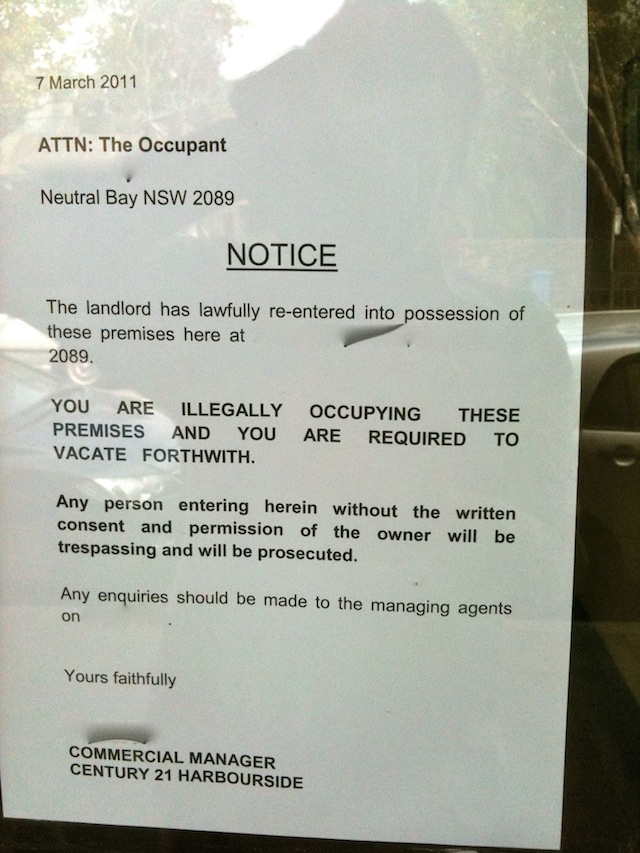
    The sign on an abandoned business announcing “Landlord taken possession” usually hides a pile of pain and distress.

    It’s not cheap or easy for a landlord to take possession of a business premises and for most to do so it’s usually the end of long period of unpaid bills and broken promises.

    Behind that sign is usually months, if not years, of stress and despair as a business owner has held onto a failing enterprise, bluffing their landlord, their suppliers, their staff, their own families and often themselves.

    Almost every one of those signs has a story of failed relationships, destroyed friendships and ruined marriages.

    Often they didn’t understand the cost of doing business and in many cases because they hadn’t consulted a bookkeeper or accountant earlier they didn’t understand their venture was always loss making despite what appeared to be a healthy cashflow.

    When the truth about the businesses becomes obvious, life for the honest owner of a failing enterprise tries to bluff themselves and those around them that things will be okay, that the dream is still alive.

    This is what worries me about many of the businesses that participate in group buying deals, they are desperate to keep their business afloat and believe the cashflow or publicity will save their failing venture. Even worse, many don’t understand how that “50% off” deal will affect their ability to pay staff and the landlord.

    Even where the failed proprietor has been one the “two percenters” – the 2% of our society that runs their affairs with no regard for the pain and suffering of those they hurt – many people, particularly the smaller suppliers and low paid workers, have taken a hit as bills went unpaid and promises were not kept.

    Most business owners though believe in their idea or vision and work long and hard in an attempt to achieve it. The majority of those who end up with the landlord taking possession are often those who ignored the signs and believed things would come good next season, next month or next week.

    I’m always saddened when I see a “landlord taken possession” sign like the one near me in the window of what was an Italian restaurant until recently. What’s the saddest business sign you see?

    Similar posts: