Category: education

  • Life in the intense French coding school

    Life in the intense French coding school

    In France they do things differently and a good example is Ecole 42, a privately run school set up by Xavier Niel, one of the country’s early internet pioneers.

    The French startup site Bonjour La French Tech describes Ecole 42s gruelling recruitment process where “out of 70 thousand original applicants, less than 1000 are chosen after a four-hour online test and month long trial period consisting of more than 100 work hours per week.”

    It may be the 100 work hours per week is a typo, or something was lost in translation, but Ecole 42s process marks a very different philosophy towards technology training to that in the Anglo countries where the opportunities in teenage years are more accessible.

    With the push to get coding courses into primary schools gathering speed, it’s interesting to see how an initiative like Ecole 42 will evolve. It’s hard though to think having a tiny technological elite would be helpful to a country’s industry or startup community.

    However it maybe that elite turn out to be critical in developing a wider French ecosystem over the long term.

    Certainly Niel’s efforts should be applauded, hopefully though those opportunities can be spread across the wider community..

    Similar posts:

    • No Related Posts
  • How the BBC is helping kids’ digital literacy through coding

    How the BBC is helping kids’ digital literacy through coding

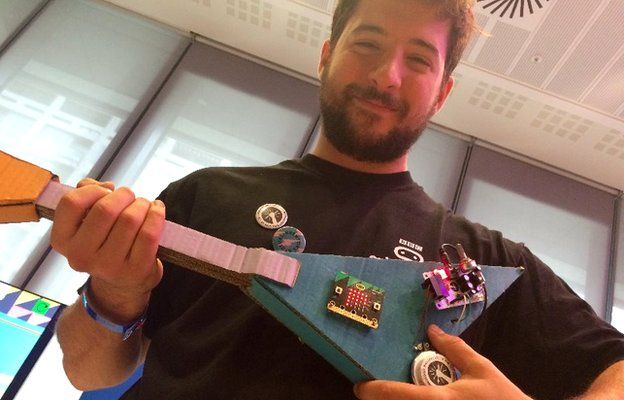
    British public broadcaster the BBC has released the final details of its BBC Micro Bit project, a micro computer initiative intended to help British kids learn to code.

    The device, a small computer similar to the Arduino or Raspberry Pi systems, is designed to help children understand programing and digital technologies.

    Around the world the push to include technology topics such as computer coding into education curriculums is gathering pace and advocates for these subjects point out the underlying aim is to help children develop the logical thinking that will be required by many jobs of the future.

    For the UK, the BBC Micro Bit may help their children compete. For all countries, figuring out the right skills to be taught in schools is going to be key for how nations fare in during the Twenty-First Century.

    Similar posts:

    • No Related Posts
  • The pulse that’s barely beating

    The pulse that’s barely beating

    Earlier this week Deloitte Access Economics released Australia’s Digital Pulse, an overview of how the nation is responding to the needs for the IT related jobs required in a changing global economy.

    Deloitte pointed out that most of the Australian economy’s IT jobs aren’t actually in the IT industry with less than half the sector’s employment being with technology companies and the majority of software writers and engineers employed by everything from finance companies to retailers.

    This ties in with results found by recruitment website Indeed.com whose Senior Vice President, Paul D’Arcy, visited Australia last month and pointed out globally three quarters work of software developers work for non-tech organisations an in the US that proportion drops to seven percent.

    As technology becomes more embedded in industries the need for workers who understand the tools becomes critical. This isn’t a new thing as we saw word processing and spreadsheet software enter workplaces twenty years ago which required typists, secretaries and accountants to become far more acquainted with the workings of personal computers than they otherwise would have cared to.

    Intriguingly in Australia during the twenty-five years that computers and the internet have taken over the workplace interest in IT careers and enrolments in computing subjects has risen and fallen.

    Between 2000 and 2008 the number of students doing IT related courses halved as Australian businesses cut back on tech spending, offshored their work and bought in an army of 457 visa workers to replace local workers.

    Coupled with an economy where renovating kitchens or driving mining trucks is better rewarded than most technical jobs, it wasn’t surprising that students chose not to study computer science related subjects. In the last few years undergraduate numbers have started to tick upwards as the resources boom has faded and coding has become cool due the successes of people like Facebook’s Mark Zuckerberg.

    Interestingly, despite the dearth of entrants into the sector over the last fifteen years, Deloitte found the overall Australian ICT labour market appears to be adequately supplied at present, however the expected increase in future demand for ICT workers means that skills shortages could constrain future economic activity.

    With many things Australia has been lucky for the last twenty years and our neglect of ICT training has been one of many fields we’ve been able to neglect. As we’re seeing with the internet of things, cloud computing and big data all becoming a common part of business the skills we’re going to need in our workers are going to change.

    The challenge for both companies and our education system is give today’s kids the skills they, and the nation, needs to be globally competitive. We may not stay so lucky over the next two decades.

    Similar posts:

  • Stemming the Innovation drought 

    Stemming the Innovation drought 

    When discussing how industries are changing, the constant question is ‘what will happen to today’s jobs?’

    Even in the Future Proofing Your Business webinar earlier this week this question was asked by a number of the small business owning listeners.

    That concern forms the basis of the “A smart move: Future-proofing Australia’s workforce by growing skills in science, technology, engineering and maths” report released by accounting firm PwC yesterday in Sydney.

    PwC’s report warns 44 per cent of current Australian jobs are at high risk of being affected by computerisation and technology over the next 20 years.

    The report highlights that Science, Technology, Engineering and Maths (STEM) subjects are critical in the jobs that are going to benefit, or be created, by that technological change.

    Finding the right courses

    Sadly for Australia, and most of the western world, STEM courses are deeply out of fashion with students preferring to study in business related courses such as accounting, commerce and law.

    As PwC flag, those industries are at risk with accounting at the top of the list for job losses.

    Australian-industries-expected-to-be-disrupted-pwc

    On the other hand, PwC forecasts professions in health, education, personal care and – worryingly – public relations will be in increased demand. Something that may underestimate the effects of technology on those industries.

    Competing with STEM

    PwC’s main contention is that economies which want to compete in the new economy are going to need more STEM graduates.

    The shift to STEM education is something the OECD highlighted in its recent report, OECD report How is the Global Talent Pool Changing?

    In their report the organisation forecast that the number of students studying around the world would increase from 130 million today to 300 million by  2030 with all of that growth being in Chinese and Indian STEM courses.

    Already that science and engineering emphasis is clear in today’s numbers.

    OECD-graduates-by-field-of-education

    To counter the drift away from STEM courses among students, PwC suggests a campaign to engage young people while they are still at junior school.

    The Australian conundrum

    Sadly, that’s unlikely to work in Australia given the nation’s economy is built upon property speculation driven by the wealth effect of rising real estate prices.

    Two nights before the PwC report one of the highest rating shows on Australian television came to its 2015 finale. The Block, which features couples renovating and flipping properties, finished its season the apartments being sold at auction at record prices and the contestants pocketing between 600 and 800,000 dollars for a few month’s work.

    For young Australians the message from their parents and society is clear; don’t innovate, don’t create, just buy as much property as you can afford.

    In the US on the other hand, the business heroes are the builders of new enterprises; people like Steve Jobs, Elon Musk, Bill Gates, Mark Zuckerberg and the founders of Google.

    Other countries like Israel, India and China, are aspiring to be the next generation of tech leaders. That’s what’s necessary to build a dynamic economy.

    Creating enduring jobs

    As the PwC report claims, “the jobs most likely to endure over the next couple of decades are ones that require high levels of social intelligence, technical ability and creative intelligence”

    Harnessing that combination of social, creative and technical intelligence is going to be one of the challenges for all economies in a decade of change.

    Getting the supply of STEM skills right will be essential for success for all countries at a time when digital technologies will drive most industries.

    Similar posts:

  • Los Angeles finds the limits on school computers

    Los Angeles finds the limits on school computers

    Two years ago the Los Angeles school board proudly announced a $1.3 billion project to roll out iPads in some of its more disadvantaged schools.

    Now the contract has collapsed and the school board wants the money back from Apple and its partner, education publisher Pearson.

    It seems the program’s big problem was the software with Pearson supplying a poor product that was unusable for students.

    What we may well be seeing though is the end of the obsession politicians and education bureaucrats have with technology, something that ran ahead of teachers’ skills to use the tools and the capabilities of those tools – as we see with Pearson.

    Perversely though this may be the time that education technology starts to flourish as the sector falls into what Gartner describes as the ‘pit of disillusionment.’

    Similar posts:

    • No Related Posts