Category: Future of Work

Posts relating to changing employment and the future of work

  • Where will the jobs come from? ABC Nightlife radio

    Where will the jobs come from? ABC Nightlife radio

    If you missed the program it’s available from the Soundcloud site.

    Paul Wallbank joins Tony Delroy on ABC Nightlife across Australia from 10pm Australian Eastern time on Thursday, November 27 to discuss how technology affects your business and life.

    Last week a US company showed off its robotic security guard, with the boast it costs less than half the wages of a human officer. It isn’t just security guards, baristas or taxi drivers, many knowledge based jobs — from call centre workers to lawyers — can be done by computer programs, or algorithms.

    Even the building industry isn’t immune from the robots as 3D printing moves into making houses by squeezing concrete out of computer controlled nozzles.

    In almost every occupation technology is changing the way we work and reducing the number of workers needed to do a job. So where next for employment in the Twenty-first Century?

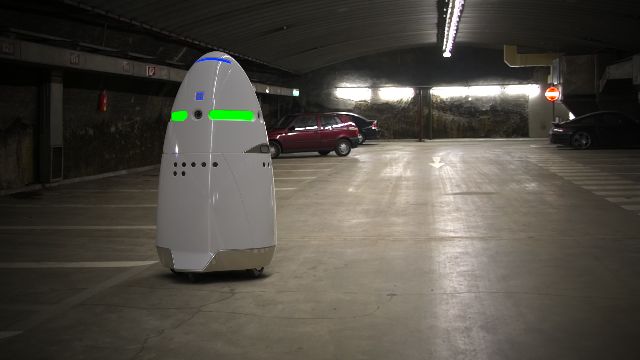
    Meet the K-5 robot security guard

    For this month’s Nightlife we’ll be discussing how the robots and algorithms are taking over the workplace and what this means for our communities and businesses.

    Join us

    Tune in on your local ABC radio station from 10pm Australian Eastern Summer time or listen online at www.abc.net.au/nightlife.

    We’d love to hear your views so join the conversation with your on-air questions, ideas or comments; phone in on 1300 800 222 within Australia or +61 2 8333 1000 from outside Australia.

    You can SMS Nightlife’s talkback on 19922702, or through twitter to @paulwallbank using the #abcnightlife hashtag or visit the Nightlife Facebook page.
    Similar posts:

  • The rise of the robots

    The rise of the robots

    One of the key themes of this site is how  industries and workplaces are changing, one good example of this is Knightscope’s K-5 robot, a refrigerator sized device that does many of the tasks currently done by human security guards.

    The K-5 comes with an impressive list of security features; live video,  facial recognition, behavioral analysis and a range of other tools to help organisations protect their premises.

    With an advertised running cost of $6.25 an hour, half the US mean average wage for security guards, the robots appear an attractive proposition although one suspects the limitations of the devices, not to mention the networking infrastructure involved, won’t make them feasible for most places in the near future.

    Despite its limitations, the K-5 shows the direction of robot technologies in replacing jobs that until recently were thought to be immune to automation. As the technologies inside the K-5 become smaller and lighter, future devices will become even more flexible and adaptable.

    Adding to the strengths of these autonomous devices is their constant connectivity, as the promotional video shows the robot uses cloud services to run its recognition and alarm services. Coupled with various sensors and beacons within a building, and these robot security guards become formidable devices.

    The applications for devices like the K-5 goes beyond patrolling shopping centres, car parks or industrial complexes; it’s not hard to see how similar devices can be deployed in applications like agriculture, mining or manufacturing for tasks where it would be expensive or dangerous to employ humans.

    What the K-5 illustrates Andrew McAfee’s warning of exponential technological change being about to engulf businesses, the employment implications of that should have community leaders thinking as well.

    For entrepreneurs, on the other hand, advances in robotics are another great opportunity.

    Similar posts:

  • Robochick takes on the penguins

    Robochick takes on the penguins

    An interesting little story about a robot penguin chick appeared on the I F***ing Love Science website a few days ago.

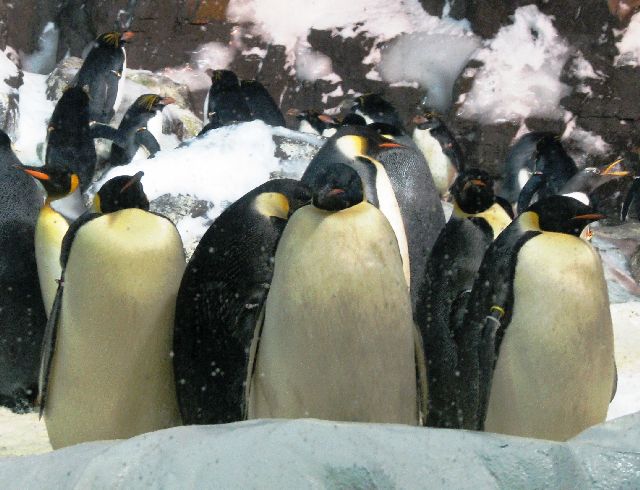
    French  researchers wanted to monitor penguin colonies in Antarctica, the problem traditionally has been that lumbering humans tend to distrupt the birds’ colonies. To overcome the problem the researchers designed a very basic dummy penguin chick which they could drive into the colonies.

    It worked very well with both the young birds and adults accepting the robot into their community which gave researchers great insights into the birds’ social structures.

    While it’s a cute example, the robot penguin shows just how many applications we’re going to see in the next few years for intelligent devices that can go into places that would be inaccessible for humans. For many industries this is going to dramtically change the way they work.

    Image courtesy of Alex Bruder through Free Images.

    Similar posts:

    • No Related Posts
  • Where will the jobs come from in the internet of things?

    Where will the jobs come from in the internet of things?

    One of the common worries about the internet of things and the automation of business processes is that many jobs are going to be lost as a consequence.

    This is a fair concern however we need to keep in perspective just how radically employment has changed in the last century.

    Concerns about technology displacing occupations is nothing new; in the eighteenth century the Luddite movement was a reaction to skilled workers being displaced by new innovations.

    In an interview with GE’s Chief Economist Marco Annunziata, published in Business Spectator, we covered this topic and Marco had a valid point that the bulk of the Western world’s workforce was employed in agriculture a hundred years ago.

    Today it’s less than two percent in most developed country as agriculture became heavily automated, yet most of those workers who would once have worked in the fields have productive jobs. “As an economist I look at this over a long term perspective and I’ve heard this concern about technology displacing jobs over and over again.”

    Annunziata sees new roles being created, among them what he calls ‘mechanical-digital engineers’ who understand both how the actual machines work as well as the data and the software used to run and monitor them.

    This isn’t to say there won’t be massive disruption – John Steinbeck’s Grapes of Wrath described the massive dislocation that happened in the United States with the first wave of agricultural mechanisation in the 1920s and the decline in rural communities is due directly to modern farms not needing the large workforces that sustained many country towns.

    We can’t see where the jobs of the future will be and just roles like as Search Engine Optimisation and ecommerce experts where unheard of twenty years ago, our kids will be working in occupations we haven’t contemplated.

    It’s up to us to give our kids the skills and flexibility of thinking that will let them find opportunities in a very different workplace.

    Similar posts: