Category: future

  • When autonomous vehicles and humans collide

    When autonomous vehicles and humans collide

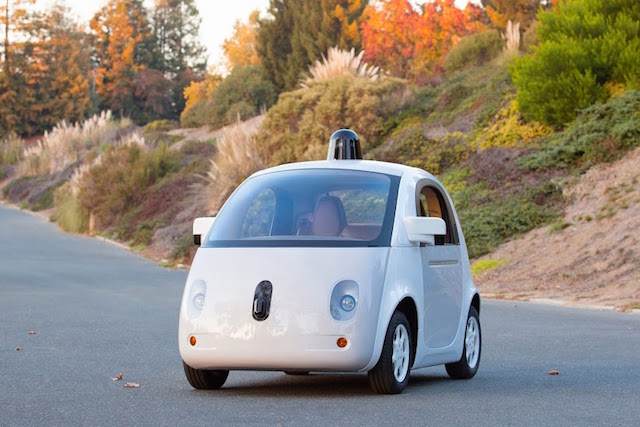
    With the rapid advances in driverless cars, it was only a matter of time before the question of what happens when people encounter them would be answered.

    It turns out not too well for the autonomous vehicles reports Bloomberg citing a study by the University of Michigan’s Transportation Research Institute that found driverless cars have accident rates double those of normal vehicles.

    As it turns out, those accidents are usually minor and are caused by humans colliding with the autonomous vehicles as the law abiding computers catch drivers unawares.

    That people aren’t very good at driving cars isn’t a surprise but now we’re seeing what happens when distracted, mistake prone humans encounter cautious and usually correct computers.

    We now have to start thinking about what happens when artificial intelligence encounters human frailty.

    Similar posts:

  • How banks will survive the fintech onslaught

    How banks will survive the fintech onslaught

    Earlier this week the Financial Times reported how the eleven biggest North American and European banks had shed 100,000 jobs this year, so it when I was asked to do a segment on the future of banking for radio station ABC666 in Canberra I was more than delighted.

    The ABC producer’s interest had been piqued by an Ovum research paper detailing the IT spending of banks and their increasing focus on security.

    Rethinking payments

    In Ovum’s view much of the banking industry’s security  comes from the diverse range of payment options coming onto the marketplace. Another factor in the increased spend are the US credit cards moving to contactless payments.

    Certainly the increased focus on payments security is being driven by the range of new devices with smartphones, wearable technologies and the Internet of Things opening up a whole new range of commercial channels. This is something driving the development of services like Apple’s and Google’s payment system and part of a wider battle over who controls those channels.

    Underpinning much of the security focus is the interest in blockchain technologies which move the authentication records off central ledgers – historically one of the core functions of banking – onto a distributed network of databases.

    Core challenges

    That shift in record keeping is just one of changes affected the banking industry’s core functions, crowd funding and peer to peer lending threaten to displace banks from being the main providers of business capital, one of the fundamental reasons for the banking sectors existence.

    It should be noted though the banks have largely stepped away from being the providers of small business capital over recent decades as the ill conceived ‘reforms’ of the 1980s and 90s saw the finance sector being more focused on housing lending and doing mega M&A deals with the big end of town.

    The Financial Times report notes a decline in M&A deals is one of the drivers for the staff lay offs at the major banks, it’s notable that technology is changing that business function as much of the due diligence can be better done by artificial intelligence and algorithms rather than highly paid corporate lawyers and bankers.

    Where have the bankers gone?

    As the banks lay off senior staff, it’s notable many are finding their way to fintech companies. The Wall Street Journal however describes the relationship between incumbent banks and their would be disrupters as far more complex than it seems.

    Increasingly banks are buying or taking stakes in promising startups along with establishing their own investment arms and running hackathons to identify potential disruptors. Many in the banking industry are quite aware of the changes happening.

    That the banks are adopting the new technologies and identifying the threats shouldn’t be surprising, over the past fifty years the sector has been adept at applying technology from batch processing on mainframe computers through to deploying Automatic Teller Machines and rolling out credit cards to improve their business operations. Banking is one sector that’s proved itself fast to identify and adopt technological changes.

    Are the banks going away?

    So with fintech startups snapping at their heels, is it likely today’s banks are heading for extinction? Probably not suggests the CEO of fintech startup Currency Cloud, Mike Laven who describes such talk as being part of the “Level 39 bubble”, referring to the financial services startup hub based in London’s Canary Wharf.

    Laven’s view is some banks will evolve while others won’t do so well and historically that’s what we’ve seen with other technological shifts – some of the incumbents adapt and reinvent themselves while others are not so adept and wither away.

    Some of the bigger threats to banking may be social and economic change. Today’s rising of interest rates by the US Federal Reserve may mark the end of the last decade’s ‘free money’ mentality that’s been so profitable for them in recent times. The end of the consumerist era also challenges those financial institutions basing their business models on a never ending growth of consumer spending and household debt.

    Almost certainly the banking industry is not going to vanish, however it is going to be a very different – most definitely a much leaner – beast in a few years time. What is certain though is the days of banks as we’ve known them in the second half of the Twentieth Century are undergoing dramatic change in the face of technological and social change.

    Similar posts:

  • The limits of today’s technologies – day two of Autodesk University

    The limits of today’s technologies – day two of Autodesk University

    The second day of Autodesk University 2015 in Las Vegas continued the focus on innovation and changing industries, the afternoon innovation session was particularly focused on some of the opportunities being realised in drones, pre-fabricated buildings and lampshades made out of fungus.

    Brooklyn based designer Danielle Trofe gave a great demonstration of how she’s using fungus to create a range of sustainable light shades. Interestingly in a conversation earlier in the day with Autodesk CTO Jeff Kowalski the topic of growing products out of Mycelium, the vegetative part of a fungus that Trofe uses, was discussed in terms of smart packaging and biodegradable products.

    Growing products out of organic material is one of the themes explored in Mercedes Benz’s Biome concept car which proposes to grow the chassis out of seeds. While realising that concept is some way off, Trofe’s Mush-Lume idea shows some products are already at that stage.

    Rethinking prefab buildings

    Following Trofe was Jos Mulkens, the CEO of Dutch building company Voorbij Prefab, who described how by using sophisticated design tools and 3D printing to make prefabricated building panels they had reduced to the time to fabricate elements from days to hours.

    Mulkens gave a good insight into how design and production workflows are being accelerated with modern technology, particularly in replacing manual form makers to make the moulds for the precast panels. Voobij Prefab are flagging a lot of disruption heading for the building industry.

    At one the media breakout sessions a group of senior Autodesk managers discussed the trends in design and materials engineering. This turned out to be an interesting session on the limits of current technologies.

    Composite technologies

    Max Moruzzi, Autodesk’s Principal Research Scientist, is a passionate believer in composite materials and the benefits they promise. However he conceded when challenged by his colleague Steve Hobbs, who joined Autodesk last year with the acquisition of  UK based Computer Aided Manufacturing company Delcam, about the structural properties of composites that we still have a lot to understand about how they behave and fail.

    Bringing a touch of English scepticism to the panel, Hobbs pointed out almost all metallic components made by 3D printing require some sort of mechanical, subtractive finishing such as milling or polishing.

    Hobbs went onto warn that we risk introducing a “hairball of complexity” into the design and manufacturing industries as people experiment with developing products with materials and techniques they don’t fully understand.

    All the panel, which also included Carl White – Autodesk’s senior director of marketing for advanced manufacturing – and Benjamin Schrauwen who leads the company’s Spark 3D printing division, agreed that applying current design and manufacturing methods need to be rethought in the light of new methods being developed.

    The limits of 3D printing

    It was notable in the panel Q&A around the revelation that 70% of 3D printing projects fail, the panel put this down to the relative immaturity of software and machinery along with the technologies currently being poorly understood. Hobbs observed that for GE to 3D print their jet engine parts they rebuild and reprogram the printers they buy to their own higher specifications.

    For the final session CEO Carl Bass and CTO Jeff Kowalski faced a Q&A from analysts and the media, that session was interesting in exploring some of the directions Autodesk sees industry and business heading and I’ll write more about that tomorrow.

    Overall, the Autodesk University has been an interesting insight into the future of design and manufacturing along with the effects this has on other industries. With these technologies at an early stage, it’s a field that is going to evolve rapidly.

    Paul Wallbank travelled to Autodesk University in Las Vegas as a guest of Autodesk.

    Similar posts:
    • No Related Posts
  • Learning from the workforce of the past

    Learning from the workforce of the past

    One of the constant questions posed to anyone reporting on the technologies changing the workforce is “where are the jobs coming from?”

    A paper by Deloitte UK economists Ian Stewart, Debapratim De and Alex Cole titled Technology and people: The great job-creating machine looks at how technological change has affected the British workforce over the past 170 years.

    While the study itself seems somewhat hard to get hold of, The Guardian earlier this week reported on what the economists found when they examined employment patterns through the rapidly changing economy of the last 150 years.

    One clear shift the collapse in manual jobs, particularly farm labourers whose numbers fell from a peak of 950,000 in 1881 – 7% of the workforce – to less than 50,000 or 0.02% in 2012.

    UK-agriculture-labour-employment

    The decline in the employment of farm labourers shouldn’t be surprising – in 1871 the proportion of the British workforce employed in agriculture was 15% while today it is less than 1%. A graph from the UK Census office illustrates that shift.

    UK-employment-infographic

    It’s notable comparing the UK to the US in this respect; at the beginning of the Twentieth Century nearly half the US workforce was still working in agriculture while the Britain had been a predominantly service economy for nearly fifty years.

    Even today nearly 3% of American workers are employed on farms, a number not seen in Britain since the mid 1930s.

    In both countries, the late Twentieth Century saw a shift to a service economy, something illustrated in the Deloitte survey by the rise of the British barman where the proportion of workers in the liquor industry tripled from 0.2% of the workforce between 1961 and today.

    UK-barstaff-workforce-proportion

    That British bar employment tripled in the post World War II years probably illustrates best the rise of the consumerist culture during the late 20th Century.

    What should be flagged is those transitions away from agriculture to consumerism weren’t painless, much of Britain’s economy was racked by recessions through the Twentieth Century and many of the nation’s regions were devastated by the shift away from manufacturing in the 1970s and 80s.

    In the US, the transition away from an agricultural economy in the 1920s was particularly painful, Steinbeck’s book the Grapes of Wrath tells of the human costs to families displaced from their mid-west farms during that time.

    That technological and economic factors have driven massive changes over the centuries isn’t new, but the fact the vast majority of today’s workforce are in jobs which couldn’t have been imagined a hundred years ago should encourage us about the prospects for the future workforce.

    However, assuming the future will look like today and that employment will be largely in consumer service industries may be as mistaken of the beliefs among 1960s policy makers that manufacturing would be the future.

    Even more pressing for today’s policy makers and leaders is to prepare for the pain of transition. If we are seeing a workforce shifting to new business models then there will be high community and personal costs. We need to be preparing for the pain of the shift as much as we anticipate the benefits.

    Similar posts:

  • Business and the workforce in an app driven world

    Business and the workforce in an app driven world

    One of the things we know about the future is the workplace will be very different. Just as the Personal Computer changed offices in the 1990s, the smartphone and tablet computer are changing today’s.

    Part of that change though is being driven by the change in generations. While this blog tries to avoid falling into the trap of generalising about different age cohorts – and contends the entire concept of baby boomers as an economic group is flawed – there are undoubtedly differences between the world of the PC generation of workers and that of the new mobile breed.

    The key difference is the idea that work devices are different to those at home. Those of us bought up with the idea that the office computers would be tightly locked workstations – in the 1990s we also had the quaint idea corporate desktops were generally more powerful than what we had at home – are now seeing that way of working being abandoned.

    For the next generation of office workers, accessing corporate resources through an app connected to a cloud service will be as normal as opening Windows NT to access the shared corporate drive was 15 years ago.

    Along with the technology and generational change driving businesses into the cloud-app computing world there’s also the needs of a much more fluid and mobile workforce. The shift to casualisation began well before PCs arrived on desktops but the process is accelerating as we see crowdsourcing and the ‘uberization’ of industries.

    Older workers will adapt as well, many came through the evolution of business computing from ‘green screen’ displays – if their businesses had any at all – through to the server based systems of recent years. For them the shift to smartphones might be troublesome for those with fading eyesight, but it won’t be the first change.

    For businesses this shift means they have to start planning for the mobile services that will change workforces and industries. The shift is already well underway – accounting software company Intuit estimates small businesses already use an average of 18 apps to run their business.

    We all have to start thinking about how these apps can be used to manage our staff and workforces.

    Similar posts: