Category: government

  • One step beyond

    One step beyond

    The catastrophe facing the economy from the necessary closing of industry in the face of the COVID-19 outbreak has dawned on the Australian government. But we have a long way to go.

    Prime Minister Scott Morrison’s belated and inadequate Jobs Keeper package announced today is the first step in addressing the greatest economic crisis facing Australia since Federation and this package will be almost be widened, simplified and bought forward well before payments are scheduled to kick in at the beginning of May.

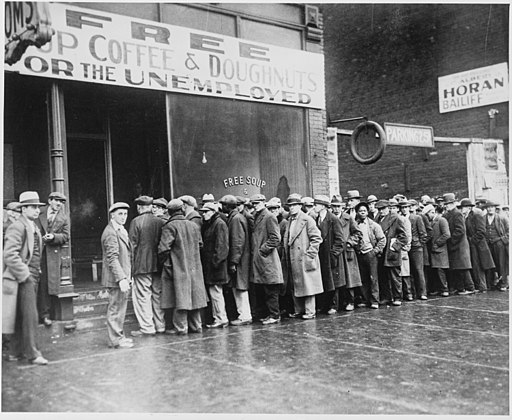
    In 2008, the aim of stimulus and support packages was to avoid the very situation we find ourselves in now — widespread business collapses and long unemployment queues. We’re one step beyond where governments were a decade ago.

    The size of the collapse should not be understated, looking at the composition of the Australian workforce, we can see exactly how great the damage has been over the past two weeks with two sectors – tourism and hospitality – taking the immediate hit

    Industry of employment (Division)Feb-19
    (‘000)
    Agriculture, Forestry and Fishing332
    Mining251.7
    Manufacturing872.5
    Electricity, Gas, Water and Waste Services147.6
    Construction1,153.90
    Wholesale Trade390.9
    Retail Trade1,284.70
    Accommodation and Food Services907.1
    Transport, Postal and Warehousing666.1
    Information Media and Telecommunications220.4
    Financial and Insurance Services445.5
    Rental, Hiring and Real Estate Services216.3
    Professional, Scientific and Technical Services1,115.30
    Administrative and Support Services414.1
    Public Administration and Safety858.5
    Education and Training1,032.40
    Health Care and Social Assistance1,702.70
    Arts and Recreation Services247.4
    Other Services515.7
    Total employed12,774.60

    Source: ABS, Labour force, detailed, quarterly, Feb 2019, cat. no. 6291.0.55.003 (Table 04)

    Given the widespread shut downs over the past three weeks, it would be conservative to estimate a million jobs have been lost across the Accommodation and Food Services, Retail Trade, and Arts and Recreation sectors.

    With the near shutting down of the Australian aviation industry and the laying off of nearly 30,000 workers by Qantas and Virgin, it would be conservative to say at least 20% of the Transport, Postal and Warehousing sector have lost their jobs as well, despite the demand on logistics chains as shoppers panic buy.

    Similar disasters are looming in other sectors including, perversely, Health Care and Social Assistance as areas like day care and private hospitals start to close.

    All of which makes the Federal Government’s dithering with support packages for industry, workers and small business more tragic. The delay in bringing in today’s package, at least a week late, has been a disaster for the economy.

    The idea payments won’t start until the first week in May is laughable, the drag on the economy, and the human tragedy of thousands of failed businesses in the meantime means it will almost certainly be bought forward with the 30% turnover fall requirement being dropped

    If it wasn’t obvious during the slow and muddled response to the bushfire crisis, it’s clear Australia’s leaders struggle with an emergency, and this one has a long way to go.

    With the economic crisis threatening to go a lot longer than the pandemic, there will be a lot more money spent and already we’re hearing the cries of ‘who will pay for this?’

    One lesson from the 2008 crisis was the cost of austerity to pay for the support and bail outs. Hopefully Australian politicians can learn from Europe’s mistakes and avoid Austerity although that will challenge the Liberal and Labor parties’ modern ideology.

    We have a long way to go on this.

    Similar posts:

    • No Related Posts
  • Appointing the wrong crew to your cargo cult

    Appointing the wrong crew to your cargo cult

    The government is hopeless says Mark Sowerby, the soon to retire Chief Entrepreneur of Queensland.

    Sowerby’s views are a long way from the heady days of a year ago when it was announced he would lead the state’s startup policies.

    The sorry tale is a classic tale of all parties not really understanding what they were getting into.

    In Mark’s case, he admits he had little of idea of how government operates;

    To be honest my experience with government has been limited and I’m going to limit it to zero after this job – but bloody hell does everyone get everything wrong.

    I came in with fresh eyes and lots of hope and I am just disgusted. It’s extraordinary to me how hard it is to get the simplest things done.

    Sowerby’s poor understanding of managing governments and stakeholders should have been a warning sign for Advance Queensland but they themselves really didn’t really know what they wanted, as the Entrepreneur In Chief job description says;

    He will act as the state’s startup ambassador working with local, national and international entrepreneurial communities to help develop and grow Queensland’s innovation ecosystem and attract investment.

    From that description it’s clear the Advance Queensland panel sees “the knowledge based jobs of the future” coming from Silicon Valley type tech startups.

    Thinking an official government entrepreneur with a funds management background will create a startup ecosystem is another example of cargo cult thinking from Australian governments so it’s not surprising the appointment failed.

    Despite his unsuccessful tenure, Sowerby should be an asset to the Queensland government in an advisory role given his proven skills, experience and networks. It’s a matter of putting the right people into the right roles – and understanding your own objectives.

    Similar posts:

  • Being an industrial revolutionary

    Being an industrial revolutionary

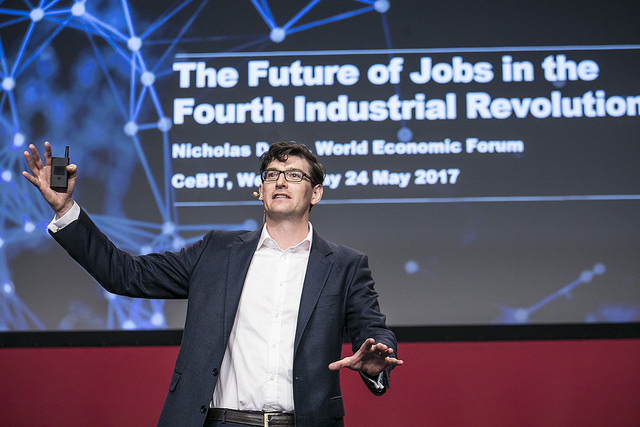
    “The future isn’t pre-determined, technology doesn’t come from some outside force. It’s created by us. Some people have more power than others in that system, such as the big tech entrepreneurs, but at the end it’s people and organisations that have the power.”

    Nicholas Davis, the World Economic Forum’s Head of Society and Innovation, was discussing at the recent Sydney CeBIT conference how we can take control of the digital economy and where workers fit into an increasingly automated world.

    Technology and online platforms aren’t neutral system, Davis observes. “It’s not just about how we use them, but the values that are designed into the systems, technology is not just a neutral thing. During a conversation like this if I put my iPhone between us, it’s proven that reduces our memory of that discussion and our sense of connection.”

    Politics and addiction

    “The purpose of the technology, the design of it, affects us in different ways.” Davis says, “if we design technologies for addiction, if we design business models that involve us being sucked into systems at the expense of other things in our lives, then that is a value choice that companies make and that we as users are trading off in our lives.”

    “In understanding that technology is not neutral then the question is how we, as revolutionaries have that political discussion? I don’t mean political like ‘Left’ and ‘Right’ but these are value decisions that we need to engage with.”

    “The difficulties about having discussions about technology is not getting sucked into a left-right divide and letting one group of people own innovation, but to say what do we want, How do we get there and how do we avoid the mistakes of previous industrial revolutions where the environment suffered, kids suffered and vulnerable populations suffered.”

    A change in thinking

    “One of the biggest problems is we don’t have regulatory or even democratic institutions where we can make collective decisions about technologies,” says Davis.

    “The average AI researcher, at the top of their game anywhere in the world, would only understand a small percentage of the AI space. So how do you expect a politician or a voter, to come to grips with it.”

    One of the key discussions missing in the public sphere is around automation and concepts like the Universal Basic Income, Davis believes. “We should have a serious chat about giving everyone the space to build up their skills.”

    In the development policy, Davis sees growing inequality and applying last century’s thinking to today’s challenges as among the biggest risks facing governments and communities.

    Rippling beyond business

    For business, the imperative is to recognise the effects of decisions on the wider community.

    “The big thing for business is understanding the technology decisions you make have a ripple effect beyond your company, you need to look forward to new ways of value adding.”

    Davis warns we are seeing a backlash against innovation and technology with concerns about privacy and security growing.

    “So much of the world is build on their use of data. Most companies and organisations don’t have good data hygiene or ontology to classify their information. People say data is their greatest assets – some say it’s the new oil – but it’s also their greatest liability. So understanding information security at the board level is critical.”

    The power of individuals

    For individuals, Davis believes the power lies with us in the choices we make as consumers.

    “Don’t underestimate your own power, but also don’t underestimate that more and more products around us are designed to influence our behaviour in ways we need to be aware of.”

    “In most cases, if the product is free then you and your data are the product, understand that and on what terms is important.”

    Conscious choices

    “Understand the externalities of these services as well. Appreciate the effects it has on your family, your mental health, on the ability to connect is important. Being able to make conscious choices about these things.”

    “Supporting open data standards and competition – not just accepting Android or Apple for instance – rather than allowing politicians and big business to fight over these things.”

    So in Davis’ view being an ‘industrial revolutionary’ in the digital era is a matter of being an informed, and empowered, consumer. Will that be enough?

    Similar posts:

  • Digital disruption and civil rights

    Digital disruption and civil rights

    Next Saturday, on the 21st of May, I’ll be sitting on a panel for the Talking Justice series on how digital disruption is impacting on journalism, individual rights and social justice. This is an early draft of what I plan to be saying about the topic.

    The series will be held at Bendigo’s Ulumbarra Theatre in regional Victoria, tickets are available from the Loddon Campaspe Community Law Centre website.

    In the middle of last year I stopped writing for The Australian after their budget for freelance tech journalists ran out. Over the previous two years the newspaper had been my main source of income.

    To be fair to The Australian’s management, this was not surprising as at the turn of the century the paper’s IT section was the bible of the nation’s technology industry, often running to 64 pages as standalone liftout. It was a true river of gold for News Limited that employed over a dozen staff and contributors.

    Now, on a good week there’s a couple of adverts in the single page section and it employs two and half full time equivalent staff.

    The decline of The Australian’s IT section is not in itself remarkable – almost every newspaper has the same story as advertisers have moved away. In the case of the Australian IT, the employment adverts that funded the section’s heyday long ago moved to dedicated online sites.

    How a million flowers didn’t bloom

    For the broader media – including most news websites – Google and Facebook’s dominance in online advertising has meant even the digital dimes have become scarcer. Many of the ‘born digital’ or ‘web native’ publications are just as cash starved as their incumbent competitors, albeit with far lower cost bases.

    The drying up of advertisers’ cash has left the media model in tatters and the early promise of the internet allowing millions of new media sites to bloom has long ago proved false leaving the world of journalism a hungry, desperate place.

    For cyber utopians like myself who believed the web would usher in a new era where power  could be held accountable through citizens’ websites, blogs and social social media accounts, that disappointment is even greater as the internet is seeing power further centralised with extensive data dossiers being collected on every individual.

    An example of just how comprehensively data is being collected and used is shown in this clip from the 2008 US Presidential election campaign.


    That description is almost innocent by today’s standards as there are many, many more data points with social media, connected devices and – most of all – our smartphones tracking every moment of our lives and activities.

    Imbalance of Power

    A good example of how data is being used against citizens is the recent Not My Debt debacle where the government and Centrelink misused information to harass social security recipients.

    Stung by the public outrage, the agency saw fit to leak a critic’s confidential personal data to a journalist, an action later justified by a departmental secretary as necessary to protect their organisation,. A view seemingly legitimised by both the Australian Federal Police and the responsible minister who both saw no legal or ethical problem with such behaviour.

    That a experienced and long serving journalist along with a metropolitan newspaper saw fit to publish that lady’s personal circumstances also tells us the mainstream media, struggling as it is with both money and ethics, may not necessarily the protector of our civil liberties.

    Rights and data brokers

    Governments are not the only risk to our civil liberties, our connected lives give businesses huge control over what we say and do as well.

    With the Internet of Things our cars, smoke alarms, electricity meters, even toasters and fridges are gathering information on everything we do and this information can be used in ways we don’t expect, from denying credit to identifying us as employment or credit risks.

    Added to this is the end of ownership, where a purchase is only a license to use a product and that right can be cut off at any time.

    In the US, farmers are downloading pirated Ukrainian firmware for their tractors so they can maintain them. In many countries, including Australia, even that may be illegal.

    Should a consumer find their product is remotely shut down, they may have few legal remedies as many agreement insist on compulsory, and expensive, private arbitration rather than using the courts or tribunals to settle disputes. The terms and conditions underpinning the software licenses are so restrictive that it’s almost impossible to hold any supplier to account.

    Ultimately to protect the general public from these corporate and government excesses, a strong media is required to publicise official malfeasance and equalise the power imbalance with the rich and powerful.

    Where will a strong media come from?

    Right now it’s hard to see where that strong media will come from with today’s broken advertising and revenue models. However it was equally hard a hundred years to see how people would make money from producing radio programs yet the broadcasting industry turned out to be one of the Twentieth Century’s most profitable.

    To the question of ‘is everyone now a journalist?’ the answer has to be ‘no’ – the risks and costs are too high for the ordinary person who has to worry about keeping their job in a world where timid managers, not just at Centrelink, are frightened of even the mildest criticism.

    Coupled with that are the high legal barriers, from defamation to confidentiality clauses the barriers to reporting on matters are steadily being increased and the costs of defending oneself from plaintiffs who’d rather not see stories written are punitive and beyond the means of all but the richest media organisations.

    Rethinking journalism

    It could well be that we’re returning to an earlier period of journalism where the trade was poorly paid and regarded, it was only during the post World War II years that the occupation became something that supported middle lifestyles.

    With the stakes so high in an increasingly data driven world, it’s essential we do define the role of journalists is in today’s world along with give citizens the technological and legal tools so we can hold the powerful to account in the connected and data rich 21st Century.

    Digital disruption has deeply affected the media and it is redefining our rights as corporations and governments use technology to amass more power. We as citizens, voters and consumers have to exercise what influences we can to ensure our rights in a digital word.

    Similar posts:

  • Labor’s pitch to repair Australia’s broken technology dreams

    Labor’s pitch to repair Australia’s broken technology dreams

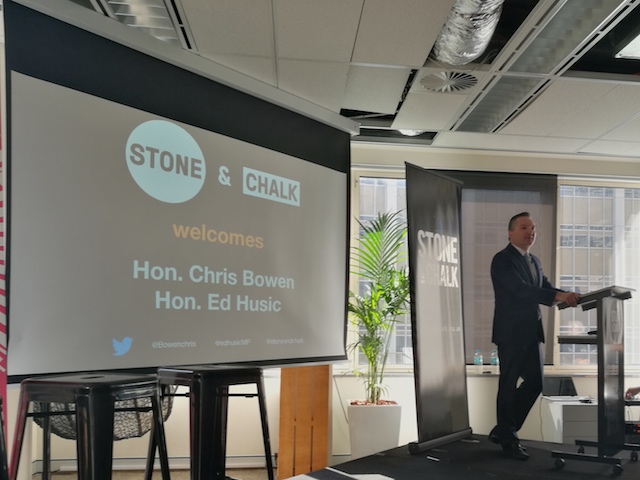
    “It’s like we lived through five minutes of innovation sunshine,” says Federal shadow treasurer Chris Bowen about the Australian government’s innovation policy.

    Bowen was appearing at the Future of Innovation panel at Sydney’s Stone and Chalk fintech hub with his colleague Ed Husic where laid out the Labor Party’s platform for the tech industry and the changing workforce.

    Both Husic and Bowen represent Western Sydney electorates which, along with outer suburban Melbourne, are key election battlegrounds and the districts dealing with most of Australia’s surging population growth.

    Uneven spoils

    As Bowen indicated in his speech, those regions haven’t shared in the country’s economic growth over the past ten years.

    Some parts of the Australian economy are doing well.  Other parts are doing it tough.

    Half of all the jobs created in Australia in the last decade have been created right where we are: in a two kilometre radius of the Sydney and Melbourne CBDs.

    The economy feels good from this vantage point.


    Not understanding the mismatch between different parts of the economy was one of the failures of the government’s 2015 Innovation Statement. The multi million dollar advertising campaign was full of fine buzzwords but none of the rhetoric resonated with the broader electorate, something not helped by the Prime Minister retreating from his policies at the first opportunity.

    Spreading the gains

    Bowen and Husic made a good case for their policies being focused on the wider population as a changing workforce is going to affect all parts of the economy.

    So I spend a lot of time travelling to and talking to people in regional economies.  It doesn’t feel as good there.

    Regional central and North Queensland. Tasmania. South Australia.

    Here, unemployment and youth unemployment are high and show no signs of budging.

    So Bowen’s commitment for his party to work on innovation, education and industry policies that help suburban and regional Australia – not just the leafy bits of upper middle class Sydney and Melbourne – is welcome and essential for the nation.

    Refreshingly Bowen also acknowledged many of the jobs that currently exist in suburban and regional Australia are very likely to be automated and that education, reskilling and investment are all critical factors in dealing with employment shifts.

    A familiar tale

    However we have heard this before, the Rudd Labor government came in with high hopes when it was elected in 2007 which it quickly dispelled and then compounded its errors with cancelling the COMET commercialisation program and making a mess of employee option schemes.

    Given this history of poorly conceived thought bubbles posing as policy, this writer asked (or rather begged) Bowen to consult with industry and the community before announcing major policy changes – something both parties have become notorious for.

    In answer to the comment about consulting with the electorate before substantive policy changes, Bowen suggested a Shorten ALP government will be requiring senior public servants to be more engaged with industry.

    Suggesting that senior public servants should engage with the community and industry is a good idea. That the idea is seen as revolutionary illustrates the problem found by former Digital Transformation Office boss Paul Shetler when he arrived in Australia with the country’s top bureaucrats being isolated and aloof from the citizens they deign to rule. This isolation is in itself a challenge facing Australian governments.

    Memories of earlier oppositions


    The Sydney tech community’s lauding Husic and Bowen bought back some memories. Fifteen years ago Australian technologists  were doing the same thing with another Labor shadow spokesperson, Kate Lundy. We ended up with factional warriors Stephen Conroy and Kim Carr when Labor finally won. While both were no doubt wonderful at delivering the numbers to party faction warlords their understanding of the changing economy was marginal at best.

    While the Rudd government at least paid lip service to the Twenty-First Century, unlike the Howard government which was firmly focused on taking Australia back to the 1950s – with some degree of success it should be said, the Labor Party did little apart from getting the National Broadband Network underway.

    In opposition, the Liberal Party too made similar noises however communications spokesperson Paul Fletcher, like Lundy, has been marginalised since winning power and Paul Keating’s description of Malcolm Turnbull as ‘Fizza’ has never seemed more apt since Malcolm became Prime Minister.

    For Australians hoping some of the Lucky Country’s luck would be applied to the nation’s tech sector, government policies from both parties have been a succession of broken dreams.

    Husic and Bowen are promising this time it will be different. Many of us hope it will be, it may be the last chance for Australia to have a fair economy fit for the 21st Century.

    Similar posts: