Category: government

  • Stumbing into recession

    Stumbing into recession

    The Committee for Economic Development Australia (CEDA) today released its 2012 Big Issues survey looking at the responses of 7000 business people on the issues confronting Australian industry in 2012.

    One of the notable results is that business people don’t care about government surpluses. A third are neutral on the question “do you believe maintaining a government surplus is important” while 35% disagree that it is a high priority.

    Q10

    Yet despite the electorate and business saying the deficit is not a priority, the politicians still obsess about maintaining their surplus.

    Now Australia’s mining boom has come to an end – along with the blue sky economic assumptions that underlie both sides of politics’ spending plans – governments are desperately trying to fudge the books and continue the pretense that their budgets are in the black.

    Driving this obsession with avoiding deficits is the religious belief among Australia’s political classes that Triple – A credit ratings from the discredited Wall Street ratings agencies is more important than educating the nation’s children, caring for the country’s sick or building the infrastructure to compete in the 21st Century.

    The real danger with this deficit obsession is that there is a very high possibility that state and Federal governments are going to tip Australia into a recession driven by European style austerity. Already we see this developing as various states start slipping backwards according to the ABS’ latest accounts.

    graph courtesy of Macrobusiness

    Another interesting result from the CEDA report is how business’ view the Australia in the Asian Century report with nearly 80% of respondents saying the issue is important or critical.

    It is questionable whether Australian business is prepared to face the realities of an Asian Century as David Llewellyn-Smith writes at the Macro Business Blog, Australia’s businesses are looking more at getting help from the government to cut domestic costs rather than sell into Asia. That inward focus of Australian business since the mid-1990s is the topic for another blog post.

    The sad thing is that the government aspects of Asian Century report is stillborn as surplus obsessed politicians carve into skills training and innovation programs in a vain attempt to balance the books while failing to reform the tax system or address the middle class welfare that’s squandered most of the returns from the last decade of prosperity.

    Australia’s politicians are very soon going to have to decide who they govern on behalf of, the corrupt and incomptent ratings agencies or the people who vote for them and pay the taxes which support them and their political parties. For some, this might be a tough choice.


    Similar posts:

  • How the film industry cons governments

    How the film industry cons governments

    “I would never make a movie where I didn’t get an incentive and I don’t ever intend to” states Michael Benaroya, producer of the movie Margin Call, in a New York Times story on movie studio subsidies.

    While we focus on the cost of subsidies to motor manufacturing, one sector that beats all others for playing governments for suckers is the global film industry.

    “Incentives” are a huge factor in determining where studios will film their latest blockbuster, Australia’s learning this the hard way as rent seekers looking for fat subsidies parade Hollywood stars in an effort to convince publicity hungry ministers that giving fat payments to the major production houses is good for jobs.

    The problem with this is that these susbidies aren’t that great for employment – Accompanying the New York Times’ video is a story on how Michigan’s dream of building a film industry has foundered.

    “Film is one of the few industries that’s really well subsidised and that’s a really attractive thing” Michael Benaroya says in the video.

    Before Michael even made the movie, he sold the rights to the New York production subsidies to investors. Who says financial engineering is the purview of Wall Street?

    The question for governments, taxpayers and those who want to build a sustainable movie industry in their city, state or country is do you want to attract “entrepreneurs” like Michael Benaroya who are shopping around the world for the best deal.

    New York might be the flavour today, but tomorrow it might be Sydney, Toronto or Prague. If the incentives aren’t fat enough then the movie productions may not come back for decades.

    In the meantime the crews, production assistants and catering companies who make up most of the employment on a major production move onto other jobs so the skills and industry infrastructure is lost.

    The biggest challenge is for governments, it’s estimated that New York state gives away over $400 million in subsidies and it’s difficult to see how that sort of expenditure can be justified as politicians face cuts to basic spending in today’s austere times.

    For the taxpayers, we need to be demanding fair value and real long term plans behind the subsidies doled out to the film, motor manufacturing and other industries.

    During the good times it was easy for opportunist politicians to dole out money to rent seekers for a media opportunity or to boost votes in a key electorate, but today that spending has to be strategic with real value and outcomes.

    As Michael Benroya shows, when an entire industry is based around government subsidies and incentives the leaders are those who know how to manage the bureaucracy and fill in the forms properly. Is that what we want our industries to become?

    If the answer is ‘yes’, then the next question is ‘can we afford it?’

    Similar posts:

  • What would you do if the computer screen went dark?

    What would you do if the computer screen went dark?

    What would you do if the computer went dark? originally appeared in Smart Company on November 29, 2012.

    One of the truisms of business is the more ways customers can pay; the more likely you are to make the sale.

    This is particularly true when something goes wrong – the customer hasn’t any cash, the till is jammed or the EFTPOS system is down.

    Exactly this happened to thousands of businesses across south-west Victoria last week when a fire burned down the Warrnambool telephone exchange.

    Unfortunately for the people and businesses of the surrounding region, much of the telephone, internet and Telstra’s mobile network runs through the burned out telephone exchange, sending the district back into the pre-telephone days.

    This presented real problems as customers couldn’t use EFTPOS or get cash out of ATMs, while businesses struggled to get payrolls done or place orders with suppliers who couldn’t comprehend that it wasn’t possible to place orders over the net or by fax.

    A hundred kilometres north of Warrnambool in the Grampians town of Dunkeld, a cafe worker told the ABC, “suppliers say ‘send a fax’ and you’re like ‘we can’t’ and they’re like ‘oh, we don’t want to handwrite it’.”

    Those suppliers are a good example of not having the systems or staff in place to deal with ‘out of the box’ situations.

    Unexpected events like the phone network being down for a week, major floods, devastating bushfires or zombie invasions will test businesses and it’s why having a real Business Continuity Plan (BCP) is important for business.

    A workable BCP is one that identifies all the critical failure points for the business such as not having the internet for a week, a flooded office or, as happened to one of my clients, their entire building collapsing into the construction site next door.

    The various state business agencies have guides on what to consider in a Business Continuity Plan including a good one from the South Australian government.

    Regardless of how comprehensive a plan your business has, the most important part is going to be your people. If your organisation is staffed or managed by people who like to say “computer says no,” then they are going to be particularly useless when the computer is stone dead.

    As the Warrnambool outage shows, unexpected business disruptions can come from anywhere, so flexible thinking and initiative is what matters in a crisis. It’s something worth thinking about with your staff and systems.

    Similar posts:

  • Tracks in the ether

    Tracks in the ether

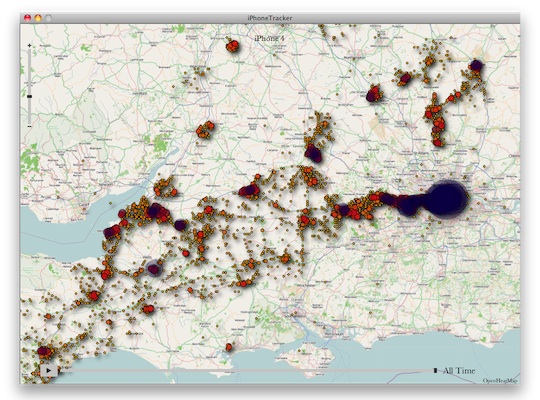
    Bureaucrats dream of tracking every person or asset under their purview and the rise of technologies like smartphones,  Global Positioning Systems (GPS) and Radio Frequency IDentity (RFID) chips are giving them more power than ever.

    Two stories in the last week illustrated how these technologies are being used by authorities to monitor people; a school district in the United States is fighting a student who refuses to wear an RFID enabled identity card and Saudi immigration authorities are now sending text messages to guardians of travellers, mainly women, leaving the country.

    In Saudi Arabia, the law prohibits minors and women from leaving the country without the permission of their adult male guardians. As the Riyadh Bureau website explains, to streamline the permission process Saudi authorities enabled online pre-registration for travellers so now male guardians can grant assent through a website rather than dealing with the immigration department’s paperwork every time their spouse or children wants to travel.

    When the spouse or child passes through immigration, the guardian receives an SMS message saying their ward is about to leave the country. One assumes the male can withdraw that approval on receipt of the text.

    The Saudi application is an interesting use of the web and smartphones to deliver government services and probably not what Western e-gov advocates are thinking of when they agitate for agencies to move more functions online.

    More ominous is the story from the US where Wired Magazine reports Andrea Hernandez, a Texan student, is fighting her local school over the use of RFID enabled identity cards that track pupils’ attendance.

    John Jay High School’s use of RFID tags is a classic case of bureaucrat convenience as electronic cards are far easier to manage and monitor than roll calls or sign-ins.

    Incidentally John Jay High School has over 200 CCTV cameras monitoring students’ movements, as district spokesman Pascual Gonzalez says, “the kids are used to being monitored.”

    The problem is that RFID raises a range of privacy and security issues which the bureaucrats either haven’t thought through or have decided don’t apply to their department.

    Notable among those issues is that “has a bar code associated with a student’s Social Security number”. It never ceases to amaze just how, despite decades of evidence, US agencies and businesses keep using an identifier that has proved totally unsuited for the purposes it was developed for.

    Probably the most worrying point from the Texan story is how school officials tried to suppress the story, offering Ms Hernandez’s father a compromise on the condition he “agree to stop criticizing the program and publicly support it.”

    That urge to control criticism and dissent is probably the thing all of us should worry about when governments and businesses have the ability to track our movements.

    In this respects, the Texas education officials are even more oppressive than Saudi anti-women laws. Something we should consider as more of our behaviour is tracked.

    Similar posts:

  • Australia in the Asian Century – Chapter 8: Building sustainable security in the region

    Australia in the Asian Century – Chapter 8: Building sustainable security in the region

    This post is one of the series of articles on the Australia in the Asian Century report.

    The eighth chapter of Australia in the Asian Century looks at the security picture of the region, this is one of the bigger chapters and like some of the others it’s as notable for what it leaves out as for what it says.

    National objective 20. Australian policies will contribute to Asia’s development as a region of sustainable security in which habits of cooperation are the norm.

    That’s nice, worthy and has been undoubtedly true for most previous Australian governments. Except of course when Australian Prime Ministers join the prevailing colonial power in wars like Iraq, Afghanistan, Malaya, Korea, Vietnam or kicking around the German territories in World War I.

    Chapter Eight partly dives into territory already covered in Chapter Three, this time though the analysis does discuss the United States’ role in more detail and makes the observation that US military spending dwarfs that of any other Asian nation – interestingly this is one of the few times Russia gets a mention in the entire report.

    Encouragingly, the paper doesn’t confine the concept of ‘security’ just to military matters and takes a broader view of issues such as guaranteeing access to resources, food and water. There is some discussion of climate change and on regional responses to natural disasters such as tsunamis and earthquakes.

    One notable omission is that of refugees. Given that most of the asylum seekers arriving by boat are Asian – currently coming from Afghanistan and Sri Lanka – and almost all pass through other Asian countries, it would be expected this issue would get some exploration. Sadly it doesn’t and once again skirting over an important issue detracts from the paper’s substance.

    As befits Australia’s most important relationships in Asia, there is a lot of discussion of the three way relationship between China, the United States and Australia with a detailed breakout box in section 8.4.

    The discussion on Australia’s relations between China and the US makes an interesting statement;

    In managing the intersections of Australia’s ties with the United States and China, we will need a clear sense of our national interests, a strong voice in both relationships and effective diplomacy.

    Undoubtedly this statement is true, however successive Australian governments have conflated the interests of the United States with being the same as Australia’s. In recent times Australian leaders have followed the US lead even when it has been clear American policy conflicts with Australia’s Chinese relations.

    Moving away from a reflex support of the United States is going to be one of the biggest challenges for Australian governments in the Asian Century and one hopes the process is as gradual and incident free as the white paper hopes.

    National objective 21.The region will be more sustainable and human security will be strengthened with the development of resilient markets for basic needs such as energy, food and water.

    National objective 21 is an interesting statement in itself – “resilient markets for basic needs such as energy, food and water” smacks of the 1980s privatisation and corporatism that has left Australia with duopoly industries and an excessive financialisation of those markets for basic needs.

    It may well turn out to be the case that Asian countries choose not to follow that path, particularly those like the Philippines and Indonesia who have experienced the effects of crony capitalism in recent history.

    Chapter 8 of Australia in the Asian Century finishes with a detailed look at the regional efforts aimed at building trust and co-operation on trans-national issues.  Much is made of various international groups such as the G20 and the UN.

    An interesting case study is that of the Nuclear Non Proliferation Treaty with an examination of Japan’s and Australia’s work in that field. Sadly this is another area that’s let down by the actions of current and previous Australian governments in selling uranium to India.

    The nuclear weapons stand off between India, Pakistan and China is another ‘elephant in the room’ issue that doesn’t really get the coverage it should in such a report.

    Chapter 8 of Australia in the Asian Century is a very optimistic section of the report however it does hint at the path Australia could follow to being a credible, medium sized economy and influencer in the region. However one has to consider the actions of Australian leaders when asking if the nation is really interested in taking that path.

    Similar posts: