Category: Innovation

  • What do we call the long term?

    What do we call the long term?

    Yesterday Optus launched their revamped business services under the banner of Optus Vision.

    As part of the launch, the telecommunications company released their Future Of Business report complied by Deloitte Access Economics.

    In discussing the details, economist Ric Simes of Deloitte Access made some observations on what drives businesses in adopting digital technologies. Ric broke it down into management time horizons.

    Short term: Economic uncertainty is no excuse for ignoring digital strategies.

    Medium term: Companies start using digital technologies for competitive advantages.

    Long term: Structural change disrupts industries.

    On asking Ric what his definitions of short, medium and long terms are, he said “1-2 years”, “3 to 5” and “beyond five years”.

    The interesting thing with this is that for most industries the long term has arrived, in fact it’s been with us for a decade. It’s just many managers and investors haven’t noticed.

    John Maynard Keynes once said, “in the long run we are all dead.”

    For some industries that long term disruption has happened and their business models have died – it’s just that managers haven’t noticed they are dead.

    Similar posts:

  • Now Facebook’s challenges really begin

    Now Facebook’s challenges really begin

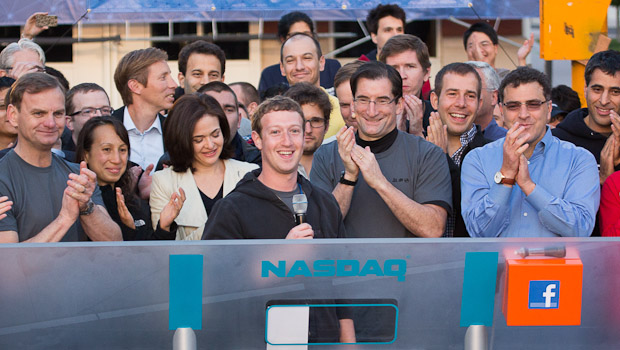
    The long awaited float yesterday of social media service Facebook was a triumph for the business’ founder Mark Zuckerberg, his management team and advisors.

    A market valuation of 100 billion dollars for a business started less than ten years ago is an impressive achievement and that sum now presents massive challenges for management who have to deliver on what investors believe the service is capable of.

    At US$38 a share, Facebook is valued at 76 times its projected 2012 earnings of 50 cents a share, and nearly twenty times its expected revenues of US$5 billion. This compares to Google which trades at less than 15 times its 2012 profit estimate and six times revenue.

    For Facebook to match Google’s value, the social media service is going to have to start making serious money beyond they can from charging egoists and corporations $2 a time for featured posts.

    Google’s success was in moving out of their walled garden, had Google focused on advertising just on their own search pages the company would be earning a fraction of the billions they now make every quarter.

    It’s difficult to see how Facebook can move off their platform into other sites and with users moving to mobile, the company will find itself even more constrained by Google and Apple who want to control access to their devices.

    A more obvious course for Facebook is to maximise income from the massive data base of likes, preferences, relationships and opinions they have amassed from their users. How they do this will probably be the biggest challenge to Facebook’s management.

    In monetizing their database, Facebook will push the limits of the law, tolerance of privacy advocates and possibly the patience of their user base. This is going to test a company that has in the past been slow to respond to public concerns.

    Another challenge is perception – with such a massive valuation, Facebook is going to attract critics regardless of what they do.

    A good example of this is the number of people criticising the float for not ‘popping’ on the stock market debut. At the end of the first day’s trading the stock had only gone up 0.6% and some in the media claimed this showed the IPO wasn’t the successful.

    The idea a successful IPO is one that soars on the first day of trading is a naive view from a 1980s mindset. The idea was born out of the privatisation of British and Australian utilities in the 1980s and 90s where taxpayers were seduced by the idea of “free money” in exchange for selling community assets cheaply.

    A ‘stag profit’ from a share that soars on its public float is theft from the existing shareholders and a transfer of wealth to insiders and their advisors.

    Silicon Valley venture capitalists and startup founders aren’t dumb and have never fallen for that trick – investors pay dearly for stock in their ventures.

    While no-one would call Mark Zuckerberg and his management team dumb they have a big job ahead of them finding revenue sources to justify the $100 billion market valuation. It’s going to be an interesting ride.

    Similar posts:

  • Grappling with the online news beast

    Grappling with the online news beast

    The head of Google News, Richard Gingras, last week discussed how the news industry is evolving at Harvard University’s Nieman Foundation.

    Much of Richard’s discussion centred around disruption – the newspaper industry was disrupted in the 1950s by television and by the 1980s most print markets had seen several mastheads reduced to one or two.

    The remaining outlets were able to book fat profits from their monopoly or duopoly position in display and classified advertising.

    By 2000, the web had killed that business model and the newspaper industry was in a decline that continues today as aggregator sites like Huffington Post steal page views and Google News further changes the distribution model.

    One of the problems for the news industry is how different the online mediums are from print, radio or television broadcast. The struggles of media startup The Global Mail is a good example of this.

    In the middle of last year news started trickling out that one of the Australian Broadcasting Corporations’s top journalists, Monica Attard, had left the broadcaster to set up The Global Mail, an online news site funded by Wotif founder Graeme Wood.

    The site launched on schedule in February 2012 and underwhelmed readers with pedestrian content and a confusing layout. By May, Monica Attard announced she was leaving the organisation she’d founded.

    Tim Burrowes of the media site Mumbrella examined why the Global Mail is struggling, his Nine problems stopping The Global Mail from getting an audience details how the site doesn’t use online media effectively.

    At heart is a fundamental mismatch between the methods of journalists raised in the “glory days” of print and broadcast journalism against those of the online world, not least the much harsher financial imperatives of those publishing on the web.

    One key problem it the TL;DR factor – Too Long; Didn’t Read. Where online readers tend to leave stories after around four hundred words.

    Richard Gringas is quoted as encountering this problem when he worked at online magazine, Salon.

    At Salon, articles were paginated, but only 27% of readers made it to the end of the four-page articles. Compared to competitors, Richard was told, this was a good benchmark. But with fresh eyes, he was astounded that a product was being produced with the knowledge that the vast majority of the audience would not consume the entire piece. Richard loves the long form, but if the objective is to convey information, we need to think about the right form for the right medium at the right time.

    So “long form” journalism has to be written the right way and it has to be backed up with good visual components and have “short form” versions suited to the more impatient readers who make up the bulk of the web audience.

    The New York Times made a step in this direction with their iEconomy series on how the US middle classes have been displaced with manufacturing’s move to China.

    An even better example of journalists using the web well is The Verge’s Scamworld where an online expose of Internet get rich quick schemes and the conmen behind them.

    Scamworld shows us what skilled journalists can do online. The amazing thing is the site’s new steam is tiny compared to those of established outlets like the New York Times, Guardian, Fairfax or those of News Corporation.

    This failure to execute by incumbent news organisations isn’t because they are lacking talent – every young, and not so young, journalist has been required to have multimedia skills and the ability to file stories in multiple formats for at least a decade.

    Old Media’s problems lies in the mindsets of senior journalists, editors and their managements who are locked into a 1950s way of thinking where fat advertising revenues funded the adventures and expense accounts of roving reporters who tough as nails editors occasionally bullied into filing stories.

    That model started to die in the 1980s and the Internet gave it the last rites.

    Richard Gringas’ discussion at Harvard shows news and journalism isn’t dead, but it is evolving. Just like many other disrupted industries, the news media has to adapt to a changed world.

    Similar posts:

  • Digital roadkill

    Digital roadkill

    Digital Roadkill first appeared in Smart Company on 10 May 2012

    Just over thirteen years a group of Silicon Valley technologists wrote The Cluetrain Manifesto detailing what they saw as being the new rules of business in a connected world.

    Cluetrain was mandatory reading when terms like “information superhighway” were fashionable and Yahoo! was the dominant web portal. It’s somewhat fallen out of fashion today.

    Like most manifestos Cluetrain was partially unreadable and heavy on dramatics but it did lay down the principles that are now largely accepted in both the online and mainstream business worlds.

    I was reminded of the Cluetrain Manifesto earlier this week at a suburban marketing event run by one of the country’s biggest media organisations. The lessons of the last thirteen years seemed to have passed by almost every business in the room.

    Most of these businesses were operating they way they did in the 1990s. While some of them had a website and a couple had Facebook pages, their businesses had barely changed in the last twenty years.

    These businesses are digital roadkill. Many of them have no idea what’s about to hit them as they sit paralysed wondering what the bright lights baring down on them are.

    In this respect they aren’t dissimilar to the big department stores or electrical chains that are working to a model that’s ticked along nicely for decades and don’t realise how the fundamentals of the economy have shifted in the last five years.

    Many of these small traders are still taking orders by fax and some of them still keep their cheque book ready to pay their suppliers bills. It’s that bad.

    The idea of selling over the net is completely beyond them, only big overseas companies dodging GST do that sort of thing.

    Even in the marketing field, these businesses have ignored the obvious for years with many still advertising in their local Yellow Pages and freebie community newspaper, despite barely making a sale from either in five years. But these channels worked for them once.

    Few of them have up to date websites, are doing the bare minimum search engine or mobile optimisation and almost every single one hasn’t bothered to claim their local business listings.

    To be fair to the little guys the host organisation was no better, this large media organisation has a good online product – they even own one of the major online local business listing services – but their sales people on the night didn’t mention it as they are too locked into selling their traditional local newspaper advertising products.

    At least that company is wealthy and has other profitable arms that can prop up its dying local newspaper arms which can at least appear profitable while there are costs to be stripped from the operation.

    Unlike those big media companies and retailers, the small local business doesn’t have big cash reserves or deep pocketed investors allowing them to survive for years in a declining market.

    These small businesses are just going to drag their owners into poverty.

    Not only have the old rules of business gone, but the value of businesses which choose to live in the past has evaporated. Few people are going to buy a business with an old, declining customer base.

    “Roadkill” is an apt term for a business that probably won’t be around in two years.

    Today the Cluetrain is big lumbering road train carrying ecommerce goods down the fast lane of the information superhighway with a driver that has no intention of stopping.

    Make sure your business isn’t the cute fluffy rodent sitting in its path.

    Similar posts:

    • No Related Posts
  • Bringing your own device and business change

    Bringing your own device and business change

    Two years ago I realised that the management trend of staff bringing their own computers to work – BYOD – was more than a fad when I noticed executives were bringing the then new iPads to meetings.

    Most of these executives worked in organisations where IT departments had waged war on employees connecting their own equipment to the corporate network, so this was a serious development in the computing world.

    In many ways employees had been bringing their own technology devices to work for years. It was, and still is, quite common to see public servants and those working for other bureaucratic organisations arriving at meetings with an underfeatured work supplied handset and their own smartphone.

    IT managers hated this as they saw those private devices as a security risk and another headache for their overworked staff to deal with.

    When the iPod was enthusiastically adopted by the executive suite, the game was over for those IT managers. Suddenly they had to deal with these devices and the issues involved.

    At a seminar run by systems integrator Logicalis earlier this week looked at some of the issues around BYOD for companies. What was striking in their presentations were the need for HR and legal departments to be part of the process for adopting this philosophy.

    The BYOD philosophy is a big jump for organisations as it means relaxing controls on employees and for many managers that is the biggest challenge.

    Part of that challenge is controlling the organisation’s data on devices that could be going anywhere and doing anything.

    While companies like Logicalis and Citrix address this with remote desktop applications that create a virtual Windows desktop on the employee’s device, networking giant Cisco offer their ISE devices to run “identity services” that set up rules controlling what staff can access and where they can access it from.

    Cisco Australia’s Chief Technology Officer Kevin Bloch gave a good round earlier this week up of where they see BYOD driving business. To Cisco, the move to mobile devices is irresistible as shown in their Global Mobile Data Traffic Update.

    Interesting both Kevin and the Logicalis speakers see BYOD as being part of the recruitment process. Increasingly younger workers expect they will be able to use their own devices rather than relying upon employer issued workstations and mobile phones.

    According to Kevin, Cisco’s research is finding many employees would trade salary for the right to bring their own device which is something that should grab the attention of budget constrained managers.

    This also ties into other employer trends such as Activity Based Workplaces where companies provide hot desks and staff are expected to store their items away at the end of each workday.

    Ross Miller of the GPT Group described how this is another trend driving the paperless office as staff using hot desks find packing away files and paperwork each day is an unnecessary hassle.

    What we’re seeing with businesses adopting BYOD policies is a big change in the way places operate and this has consequences for all divisions of an organisation from HR and legal through to marketing and corporate affairs. It’s a genuine game changer.

    How the BYOD philosophy is changing business is good example of technology driving our habits and work practices in ways we don’t always anticipate.

    One thing is for sure, the workplace of the future is far more autonomous and diverse than those we’ve been used to for the last hundred years, the businesses who don’t adapt are those being left behind.

    Similar posts: