Category: Internet

  • Google bets on artificial intelligence

    Google bets on artificial intelligence

    Breaking with the company’s tradition of the Sergi, Google’s CEO Sundar Pichai writes this year’s founders letter laying out how the search engine giant is focusing of artificial intelligence and the machine learning.

    Pichai’s view of the world seems to tie in very closely with founders Larry Page and Sergei Brin with him laying out a vision of making the internet and computers accessible to all.

    The challenge for Google is the shift away from personal computers, something that the company is struggling with and a factor that Pichai acknowledges.

    Today’s proliferation of “screens” goes well beyond phones, desktops, and tablets. Already, there are exciting developments as screens extend to your car, like Android Auto, or your wrist, like Android Wear. Virtual reality is also showing incredible promise—Google Cardboard has introduced more than 5 million people to the incredible, immersive and educational possibilities of VR.

    Whether Google can execute on that vision and manages to diversify its revenues away from depending almost exclusively upon web advertising will be what defines Pichai’s time as the company’s CEO. He has a challenging task ahead.

    Similar posts:

    • No Related Posts
  • Breaking the APIs

    Breaking the APIs

    One of the truisms of modern business is we live in an API economy where open Application Programming Interfaces allow software companies to connect their platforms that builds an ecosystem of developers and extends the functionality of their products.

    But what happens when an API shuts down or a company starts applying the web2.0 principles of draconian legal terms and conditions to its data feeds? Pinboard, “the social bookmarking application for introverts” is illustrating how serious legalese can be for developers.

    Maciej Cegowski, Pinboard’s founder, decided the terms and conditions imposed by popular automation site If That Then This (IFTTT) were too demanding and pulled his service from the platform.

    In a blog post he lays out exactly why, citing IFTTT’s demands for rights over his service along with the option of  the plaftorm being able to assign those rights to third parties.

    For developers, IFTTT’s terms are almost impossible as the platform strips them of their intellectual property rights and restrains their trade. It’s a classic case of legal over-reach which is all too common in the control obsessed tech industry.

    As we’re seeing software vendors releasing platforms to manage IoT devices through APIs and cloud services making their plethora of APIs a selling point, access to these becomes a serious matter for the software industry.

    There is a worrying aspect for users in this as well, as those relying on Pinboard services driven through IFTTT are now effectively stranded and have to look for another site that provides similar functions.

    While Pinboard is quite small, a larger service shutting down its APSs could have dramatic effects. This is even truer with Internet of Things devices that could use a service like IFTTT to run key functions.

    Designing devices and services to cater for the possibility an API or web service may become unavailable needs to be priority for IoT vendors while for developers and users, the risk a service may stop is something that should never be far from their minds and factored into the business and purchasing decisions they make.

    Similar posts:

    • No Related Posts
  • Amazon Web Services and the new rules of business

    Amazon Web Services and the new rules of business

    The one company that has driven both the adoption of cloud computing and the current tech startup mania is Amazon Web Services.

    Later this week AWS celebrates its tenth birthday and Werner Vogels, the company’s Chief Technical Officer, has listed the ten most important things he’s learned over the last decade.

    The article is a useful roadmap for almost any business, not just a tech organisation, particularly in the importance of building systems that can evolve and understanding that things will inevitably break.

    Importantly Vogels flags that encryption and security have to be built into technology, today they are key parts of a product and no longer features to be added later.

    Most contentious though is Vogels’ view that “APIs are forever”, that breaking a data connection causes so much trouble for customers that it’s best to leave them alone.

    Few companies are going to take that advice, particularly in a world where changing business needs mean APIs have to evolve.

    There’s also the real risk for businesses that their vendors will depreciate or abandon APIs leaving key operational functions stranded, this could cause major problems for organisations in a world that’s increasingly automated.

    Vogel’s commitment to maintaining APIs may well prove to be a competitive advantage for Amazon Web Services in their competition with Microsoft Azure, Google and an army of smaller vendors.

    Werner Vogel’s lessons are worth a read by all c-level executives as well as startup founders looking to build a long term venture, in many ways they could define the new rules of business.

    Similar posts:

  • When software ate the network

    When software ate the network

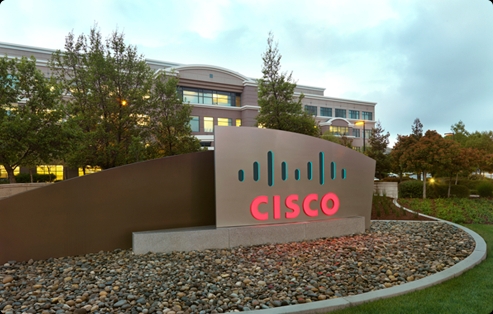
    I’m attending the Asia Pacific Cisco Live in Melbourne Australia this week which is starkley illustrating the shift in communications technologies and the business models around them.

    To kick off the press program Cisco made a joint announcement with Australian incumbent telco Telstra on the rollout of a smart software defined networking product.

    Software Defined Networking uses basic computer hardware, basically glorified personal computers, to do the jobs of the expensive routers, switches and network appliances that were insanely profitable for companies like Cisco a few years ago.

    It wasn’t so long ago when Cisco executives were taking technology journalists out to earnestly explain how Software Defined Networking (SDN) was feasible.

    Today, SDN is defining both the telco and communications industries as companies like Telstra look at bundling IT networking and software services into their offerings to prop up their falling margins. India’s Reliance Communications are a good example of how providers are trying to shift into new marketplaces.

    For telcos, communications vendors  and IT hardware sellers the changing technologies illustrate what Silicon Valley entrepreneur Marc Andreesen meant when he described how “software will eat the world.’

    Software is eating the IT hardware industry and telcos are seeing – hoping – it’s another lucrative opportunity. Businesses in other sectors should be thinking about how software is going to change their world.

    Paul travelled to Melbourne for Cisco Live as a guest of Cisco

    Similar posts:

    • No Related Posts
  • Telcos shifting up the stack

    Telcos shifting up the stack

    One of the Twentieth Century’s great rivers of gold was the telecommunications industry. As the world became connected, first by telegraph, then telephone and finally mobile networks, owning a telco licence became a path to riches.

    Late in the century, the mobile phone was a spectacularly profitable device for telcos in the 1990s as consumers flocked to buy them and pay dearly for services, particularly SMS which was practically free to provide.

    Just as the century was coming to a close things changed dramatically as the Internet became accessible to the general public and while data was still profitable, telco revenues started to fall dramatically. Then, early in the new century, the arrival of the smartphone disrupted the entire industry.

    Becoming a dumb pipe

    Twenty years later and the arrival of smartphones using data services has changed the economics of cellular networks, leaving the incumbents worried they are going to merely become ‘dumb pipes’ offering just a low margin utility.

    Around the world incumbent telcos and mobile network operators have responded by moving up the value chain into managed services and cloud computing and one particularly interesting company in this respect is India’s Reliance Telecom.

    Reliance has responded to the changes in its market, something made more problematic by India’s arcane and complex cellular licensing system, by strategically selling off various parts of its infrastructure and focusing on where it sees opportunity.

    At a lunch in Sydney yesterday CEO Bill Barney of Reliance’s global network division was showcasing their cloud services for Australian customers and showed how the quest for profits is moving telcos into areas like data centres and managed services.

    Emerging markets corridor

    Barney argues that Reliance’s network, which spans South Asia, the Middle East and into Eastern Europe, gives the company a strong position in the “emerging markets corridor”. He also boasts the product the company offers allows easier development of smart services.

    In this respect, the Reliance Global Cloud Exchange differs from similar plays like Telstra’s PacNet network across East Asia – which Barney previously headed – in that it offers services higher ‘up the stack’ making it easier for companies to deploy smart applications, something Barney sees as being particularly attractive to the media and financial industries.

    While Reliance’s claims are yet to be tested in the market, the company’s shift to higher level services illustrates a struggle facing all telecommunications operators. To do this, Reliance and Telstra look to global networks and data services, Singapore’s Singtel tries its hand at media content in a similar way to Britain’s BT and Vodafone makes a strong Internet of Things play.

    For each of these companies, diversifying into other fields makes sense however each strategy brings its own risks – in Reliance and Telstra’s cases this means competing with cloud services vendors like Amazon and Microsoft – that telcos haven’t been exposed to in their core markets.

    Those core markets though are being disrupted and will never be as profitable as they were twenty years ago. For the world’s telecommunications companies it’s a matter of diversify or shrink.

    Similar posts:

    • No Related Posts