
Category: Internet

  • Is the PC dead?

    Is the PC dead?

    The Personal Computer may not be dead, but Microsoft are still going to be challenged in a world where consumer and business buying behaviour has changed.

    Last week Frank X. Shaw, Vice President of Corporate Communications at Microsoft, pondered the question of whether the Personal Computer era is over

    Given the PCs importance to Microsoft’s business it wasn’t surprising that Frank decided it’s not, declaring the personal computer barely middle aged at 30 and ready to take up snowboarding.

    Leaving the image of using a Windows Vista equipped laptop as a snowboard aside, the question for many businesses and households is should they buy a personal computer, either as a desktop or portable, in an era where smartphones and tablet computers like the iPad are becoming common? This is even more pronounced given the low cost of ownership for a smartphone or tablet.

    The first thing is to consider is can the non-PC devices do what PC can?

    For most people the answer is “yes”, particularly given most users are accessing cloud based and social media platforms that run on any web browser. However many prefer to have the options to connect keyboards, printers and scanners, which is expensive and clunky with tablets and smartphones.

    While many users could do most of their tasks on a tablet or smart phone, many prefer the utility and expansion options of desktop and portable PCs not to mention using a keyboard and mouse, although the latter points may change as the current generations give way to workers and computer users more used to touch screens as an input device.

    The cost of ownership is always a killer and the traditional rule of thumb that the purchase price of computer only represents a third of its cost over the device’s life has become skewed as PC prices have dropped along with other costs like Internet access and expensive printer consumables have increased.

    For PCs, the problem is tablets and smartphones have far fewer of the ancillary costs like anti virus software and apps through iTunes, Android or Windows Marketplaces tend to be either free or substantially cheaper than their personal computer counterparts, which skews decisions towards buying a tablet.

    Those apps however tend to be far more lightweight than the equivalent PC counterparts and tablets or smartphones don’t have the editing capabilities found on personal computers.

    Probably the biggest win for PCs however is that smartphones and tablets are still designed to be tethered to a PC or laptop. While a user can get away with a mobile device that never connects to a computer, they’ll almost be certainly missing out on a lot of the device’s functionality.

    So the PC isn’t dead yet, its role in the home and office is evolving and this is recognised by most businesses and consumers as they tend to be buying them to complement desktop and laptop computers.

    For Microsoft this is not necessarily good news as the PC sales model is broken.

    Until the mid-2000s, most corporate and home users replaced their PCs every five years and this was reflected in Microsoft’s product roadmaps.

    The overdue arrival of Microsoft Vista in early 2007 changed this as not only was the product late, it was also bad and customers stayed away.

    As a result customers have now learned that they don’t have to upgrade every few years and today nearly half of Microsoft’s customers are still using Windows XP, a ten year old operating system.

    So for Microsoft, the good news is the PC is not dead in an era of cloud computing and social media, but making money out of it is becoming harder.
    Similar posts:

    • No Related Posts
  • What services does Google Plus really threaten?

    What services does Google Plus really threaten?

    Google+, the search engine giant’s latest attempt at competing with services like Facebook and Twitter, has seen 25 million people joining the service in the month since its launch at the end of June.

    Such a stellar growth rate – it took three years for Facebook to reach the same number of users – means it could be one of the most popular social media services ever. What does this new platform mean to business owners and start ups and how does it affect other platforms like Facebook, Twitter, Yammer and LinkedIn?

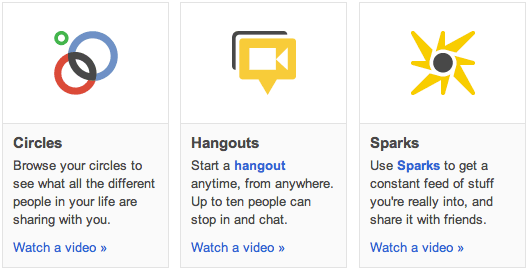
    Google+ differs from most social networks – particularly Facebook – in that you can divide your online connections into different groups called circles and restrict shared information to those segments.

    This addresses the biggest problem with social media; that what we share with our friends is not necessarily what we want our family or work colleagues to see, an issue identified last year by then Google designer Paul Adams, who has not co-incidentally since moved onto Facebook.

    Along with Circles, Google+ has a few other unique features such as Hangouts which allow impromptu video conferences and Sparks which are random popups of things you might be interested based upon your search history and posts.

    The collaboration aspect as the ability to create Circles and Hangouts for specific projects is one of Google+’s great strengths – and probably to be expected from an Engineering organisation like Google – which may make it an alternative to corporate social media services such as Yammer and possibly even LinkedIn groups.

    At the core of Google+ is the Google Profile which is shared with most Google services such as Gmail and Blogger which gives rise to quite a few privacy concerns as those you share with can get access to this information, although this is the same with most other social media services.

    Marketing is one area where businesses have focused on in the social media world and the lack of broader take up is one of Google+’s drawbacks as Facebook has a much bigger diverse spread of users and so marketing reach.

    At present the discussion of Google+ for marketing is moot as businesses aren’t allowed to create Google profiles which is another powerful advantage for Facebook.

    The question remains on how Google is going to integrate their other services, the obvious one is to incorporate Places in a similar way to Facebook so that businesses can create profiles that can then plug into local search.

    Coupling social media with local search along with Google’s Android mobile phone service pretty well touches all the bases of the SoLoMo revolution which is redefining the consumer world and is almost certainly part of the bigger game plan.

    Adwords will prove to be the greatest challenge, although we’re already seeing concerns being expressed about the potential for Google to misuse their databases and profiles of users and as social media tool plugged into profiles and personal search may be a bridge too far form some.

    Indeed there’s a question of how Google+ will affect other social media tools like LinkedIn and Twitter. Right now it’s difficult to see either being affected by the new service however we shouldn’t underestimate the size of Google’s war chest or how compelling a service that integrates email, search, local search and applications like documents will be.

    Another big advantage of Google+ is the lack of clutter as the game invites and people sending pictures of fluffy cats or their big night out aren‘t around – though this may change as the service moves from being used primarily by business geeks to the general public.

    Whether Google+ supplants Facebook or any of the other social media services remains to be seen as we’re only a few years into the decade where personalised services are changing how we use the web, it would be dangerous to make any bets on who will succeed.

    The stakes are quite high for Google with this product as the overwhelming amount of data at every Internet user’s fingertips is seeing people seeking out sources they trust for answers, recommendations and advice. The social aspect of the online world is going to define the web in this decade just as search did in the previous decade.

    For businesses, or anybody interested in social media who wants to experiment with the new service, it’s worthwhile having a play with the program to see if it works for you but abandoning Facebook, Twitter or even your own website for Google’s service is probably making too early a call at this stage.

    Anyway, the beauty of social media services are that you aren’t forced to use all or any and you may well find that other channels work better for your business regardless of Google’s success.

    Similar posts:

    • No Related Posts
  • So you want a freebie?

    So you want a freebie?

    It’s human nature to want something for free and in these days where consumers and businesses don’t expect to pay for information and skills it often doesn’t seem unreasonable to think contributors to your project – be it an event, publication or a start up business – wouldn’t be prepared to do help for free.

    That might be how it seems, but you’re asking someone to contribute their most valuable and scarce asset, their time. So what should you be doing to make it easier for someone to donate their time to your project?

    What’s in it for the giver?

    Your cause could be great or you could be offering some great exposure, either way you need to make the proposition compelling to those you want to do a freebie.

    Keep in mind if you’re an employee of a industry group, university or private business and you’re expecting others to donate their time for free. If your organisation is such a noble enterprise, why aren’t you and your managers donating time?

    Be prepared for rejection

    People have a right to value their time and skills and may be offended at a request for doing something gratis. Unfortunately that’s something you’ll have to deal with as the cost of asking for a free service.

    Just be thankful you aren’t asking author and scriptwriter Harlan Ellison for some work or permission to use some of his work.

    Tell the truth

    Respect those you’re asking to contribute by being up front about your event and the other speakers. It’s absolutely unforgivable to lie about your project when you expect people to donate their time and skills.

    Be discrete

    If someone agrees to participate for free, don’t blurt it to the entire world. That person has made a donation to your project and they deserve respect.

    For a professional, particularly speakers and writers, that lack of discretion could cost them money for future event fees and devalue their brand. Show respect.

    Don’t nickel and dime people

    Again, those who agree to do something for free deserve your respect. Don’t screw them around on parking fees, taxi, or trivial charges, they’ve done you a favour and the least you can do is make it easier for them to get there and home, even if you are too darned cheap to buy them lunch or dinner.

    Don’t get contractual

    Even with paid contributors or speakers things can go wrong as misunderstandings happen, people get sick and volcanos disrupt airline schedules. If something goes wrong, threatening a damages suit against someone who has done you a favour is a bad look.

    Expect to be stood up

    While most professionals will honour their obligations, paid assignments have to take priority. As a freeloader, you have to accept your project will not have the same priority as those the contributor will get paid for.

    Say thank you

    After the event, show some appreciation. It’s good manners to at least send a card and maybe a small gift. For many professional writers and speakers a written testimonial or a LinkedIn recommendation is a nice way of saying thank you.

    Should you be asking for a freebie?

    There’s no shortage of third rate events, webinars and magazines on this Earth you have to ask if you can’t afford to pay for talent, then is your project really adding value? The fact that attendees or customers won’t pay could be an indicator that you aren’t adding value.

    Similarly with the contributors, they may be free because they don’t add a great deal of value. You may want to consider a smaller project where you can pay your speakers, writers or other creatives for higher quality work.


    There’s many good reasons for organisers to run free events or participants to donate their time, probably more than the excuses not to do so. Unfortunately in the Internet age, free is being abused and many creatives aren’t getting paid for their time and skills

    For free to work, there has to be respect and some mutual obligation. Someone who does something for free to help your project deserves your respect and support.

    Similar posts:

    • No Related Posts
  • Why hide your address?

    There’s a lot of concern about businesses not having a website with estimates that between 40 and 60% of all enterprises simply don’t have a website and most aren’t using social media.

    Businesses who haven’t bothered setting up a site, or at least a free Facebook or Google Places listing are missing out on customers, but even many organisations with an online presence aren’t publicising them well.

    A recent walk down my local shopping strip went past nearly 200 businesses. Of them only four had a reference to their website or preferred social media platform.

    Even businesses do have a website didn’t choose to display them where customers or passers by could see them.

    Worse, some of the fast food chains that are running social media campaigns had no indication that checking in or liking could win a customer a deal which makes you wonder just how committed those business are to these channels.

    It could be that businesses are afraid that referring to their online presence will encourage customers to move away from their physical store, if that’s the case most business owners are wrong.

    Customers are expecting to find our websites even if they intend to visit our stores or hire us. Our sites – even if they are only a free page from Google or Facebook – should be telling propective customers who we are, what we do, why are we great and what hours we’re open.

    Just as time is money to the typical business person, shoppers want to make sure they are going to the right place for the right product and won’t be wasting their time if they show up on a Sunday afternoon or after 6pm.

    There’s no reason not to have your web page, social media addresses and other online contact details somewhere prominent where customers can see them so they can see how great you are. Should your competitors be telling their story, they are going to be getting the customers.

    In a noisy, busy world we need to telling our stories both online and offline, peoples’ attention and time is too scarce to let an opportunity go by.

    Similar posts:

    • No Related Posts
  • Google+ explained

    Google+ explained

    The latest shiny thing in the online world is Google+, the search engine monolith’s latest attempt at a social networking service. What does it mean to the average user?

    Google+ differs from most social networks – particularly Facebook – in that you can segment your online connections into different groups called circles so when sharing information such as comments, updates or photos you can choose to only let certain circles or individuals see those posts.

    This addresses the biggest problem with social media; that what we share with our family is not necessarily what we want our friends or work colleagues to see, an issue identified by then Google designer Paul Adams, who has since moved onto Facebook.

    At the core of Google+ is the Google Profile which is shared with most Google services such as Gmail and Blogger which gives rise to quite a few privacy concerns as those you share with can get access to this information, although this is the same with most other social media services.

    Google+ has quite a few interesting features such as Hangouts which allow impromptu video conferences and Sparks which are random popups of things you might be interested based upon your search history and posts.

    As a consumer product, Google+ doesn’t have the gaming and the social features that Facebook offers however that’s expected to change as the product develops.

    For businesses, Google+ is off limits. Right now it is only open to individuals although we can expect that will change as Google integrate the product with their small business Places platform along with adwords and their online application service.

    Right now Google+ is for the geeks and that’s why the tech media is talking about it. For the average home or business users it’s not quite ready to replace or complement Facebook or other social media services although it’s worth keeping an eye on to see how it evolves.

    The stakes are quite high for Google with this product as the overwhelming amount of data at every Internet user’s fingertips is seeing people seeking out sources they trust for answers, recommendations and advice. The social aspect of the online world is going to define the web in this decade just as search did in the previous decade.

    For this reason, Google are going to be working hard on making sure Google+ is part of the social web, for the average user we’ll be choosing the tools we trust. It remains to be seen if Google+ is one of those tools.

    Similar posts:

    • No Related Posts