Category: Internet

  • Alternatives to Internet Explorer

    Alternatives to Internet Explorer

    This week’s announcement of a serious security flaw in Internet Explorer should be a warning to anybody using Microsoft’s web browser that they should move to an alternative program.

    Internet Explorer, the web browser built into Windows, is particularly prone to security problems mainly because of the way Microsoft have integrated it into their operating system.

    So it has always been a good idea to use one of Internet Explorer’s competitors to avoid various security issues. Luckily there are plenty of options which are not only more secure but faster, more flexible and reliable.

    Mozilla Firefox

    The most popular alternative browser is Mozilla Firefox. You can download a free a copy from the Mozilla website. One of Firefox’s big attractions is the vast range of add-in applications that make it a very useful tool.

    Google Chrome

    Google’s web browser is gaining acceptance across the market. It’s fast but it does do things a bit differently from the others with a vary spartan layout. You can get this free from Google’s website. Like Firefox it has a wide range of plug ins.

    Opera

    One of the longest established alternative browsers, Opera tends to be the cutting edge browser, while it’s not for everyone it’s fast, stable and is also a free download.

    Apple Safari

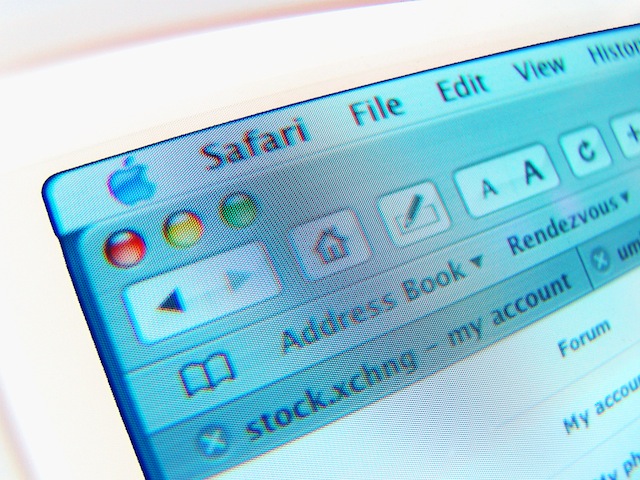
    If you use a Mac then the Safari browser is included with your system. Windows users can download a free version from Apple.

    Of the four, Mozilla Firefox is the most popular with Google Chrome gaining acceptance.

    All of these alternatives are perfectly good for general web browsing. It’s best to try each and use the one you find works best for you.

    Unfortunately you can’t completely get rid of Internet Explorer. Not only is it a integral part of Windows, but some web sites won’t work properly on anything else.

    Most notably for business users is the Outlook Web Access function, part of the Microsoft Exchange service, only works properly in Internet Explorer.

    While we can’t ditch Internet Explorer, we can be sparing in its use. Consider the options and choose what works best for you.

    Diversity is good in many fields. A variety of programs is good for your desktop.

    Similar posts:

    • No Related Posts
  • The local business revolution

    The local business revolution

    While the big retailers are moaning about lost offshore sales, local business is changing as customers go online and expect their local suppliers to do the same.

    The great thing is many of the local tools are free and easy to use. There’s no reason for any business not to be online and local right now.

    Join Paul Wallbank and Carol Duncan to discuss how local businesses can grab the opportunities in the connected economy on ABC 1233 Newcastle and Upper Hunter.

    If you’d like more information on how your business can use the local business directories, we describe them in our Why Online Listings Are An Essential Business Tool post and we can help you through our new Netsmarts service.

    You can listen in on air or stream the broadcast online. We love your comments and questions which you can call in on 1300 233 222.

    If you’re on Twitter you can also follow Carol at @carolduncan or Paul at @paulwallbank.

    Similar posts:

    • No Related Posts
  • Losing faith in the cloud

    Losing faith in the cloud

    Over the last few years, I’ve been a great believer in the benefits of cloud computing but events of the last month have shaken my faith in trusting data to another organisation’s servers.

    The most immediate challenge was a trivial, but irritating, crash last weekend when I lost my monthly client newsletter just before sending. The really frustrating thing was there was over a month’s worth of relevant, interesting web links for clients along with six hours lost work in writing the vanished work.

    While trivial, my little disappointment illustrates the fundamental problem we have with cloud computing – we can’t trust the businesses and governments  who control the net.

    Simply put, the Internet itself isn’t as trustworthy as we’d like.

    Egypt’s closing Internet links, Wikileaks being hounded off the net and the Queensland floods all illustrate this on a far bigger and more important level, we cannot take the cloud or Internet access for granted and when service is interrupted the failure is total.

    Natural disasters like the Queensland floods or the 2009 Victorian bushfires give rise to the trite response that “the Internet is designed to survive a nuclear war.” This is true, but view overlooks the Internet maintains service by finding a detour around the damaged areas

    Which is problematice if you find yourself in a distressed area and the Internet has routed itself around you and your modem, which is something we should keep in mind everytime someone suggests using social media tools for disaster management.

    It doesn’t take natural disaster for you to lose access to your data. The hounding of Wikileaks off the commercial, US operated parts of the web shows how much of the Internet is controlled by corporations enforcing spurious terms and conditions.

    You don’t have to be Julian Assange for this to happen to you, last year a Sydney Jeweller had her Facebook page shut down because her doll showed too much nipple while last week an English healthcare assistant had her account suspended because she had the same name as someone famous.

    Like Julian, both had their access frozen without notice and struggled to receive any sensible answer from their service provider. Unlike Julian, subsequent media embarrassment finally forced Facebook not only to acknowledge their customers’ concerns but also reinstated the services.

    Far more worrying are government controls. Until last month, most of us in Western democracies – this writer included – conveniently ignored how quickly telecommunications companies and Internet Service Providers will accede to the demands of governments.

    Both the Egyptian shutdown and Wikileaks reminded us how wrong we were. Governments of all persuasions can and will shut down Internet services to suit their domestic political agendas.

    Here in Australia there are proposals to filter the Internet or shut down accounts to protect us from what Canberra and various lobby groups deem to be copyright infringement, pornographic material or video games unsuitable for 14 year olds to play.

    Even without the more extreme proposals being introduced we’ve seen the websites of Queensland dentists and political satire sites being blocked or shut down on these grounds. In both  cases the actions were taken without the site owner’s knowledge.

    As our businesses and society in general becomes more dependent upon the Internet, we need to keep in mind there are risks which need to be managed. Cloud computing itself is a great business tool but we need to understand the risks and costs of depending upon other people.

    If you’re looking for cloud services, you’ll need a product that offers a backup to your systems. Business is built on trust and right now there isn’t a lot of it around in the online world.

    Similar posts:

    • No Related Posts
  • Protecting yourself on Facebook

    Protecting yourself on Facebook

    Social networks are great way of keeping in touch with friends, family and colleagues. With 500 million users, none is a more effective tool than Facebook.

    Keeping in touch with friends and relatives though does have a downside, sometimes you might give away more than you intend to. When you share with friends on a social service, everyone in your network can see what you are doing.

    To make things worse, many social media businesses will give away their customers’ private information to make a few dollars as the controversy over Facebook’s recent changes to their privacy settings and the company’s subsequent backdown shows .

    Because this information is valuable, organisations are prepared to pay for it and the bad guys are eager to trick it out of you. Given the risks of identity theft, stalkers or all manner of Internet crazies finding you online, it’s important to guard this information.

    Facebook don’t make it easy to protect yourself, but you can hide key information.

    Take off personal data
    The first, simple step to protecting yourself is to move as much data as possible off your profile – home address, phone number, relationships, sexual orientation, birth year  – are a few things that simply don’t need to be online. Take off everything that could potentially cause problems, you may need to use some judgement on what you’re comfortable sharing with your online contacts.

    Birthdays are a good example of where you should use that judgement. Facebook’s quite a good tool for reminding you of birthdays, but your birth date is also an important part of identity theft. If you do want to share a birthday, never put your birth year in – your relatives and friends have a good idea of how old you are – and you might want to consider putting the date a day or two earlier than the real day.

    To change your Facebook profile information, click on the Profile link on the right hand side of your Facebook home page, you can edit all your details from there as shown below. Remember to click Save Changes after making each change and move between the different categories to ensure you’re only sharing what you’ve comfortable with.

    Changing your Facebook profile informationSet your privacy
    Facebook makes assumptions about what you want to share with your network of friends. This is not always in your interests and you should regularly review what your settings are as Facebook have a habit of changing how the privacy settings work.

    To enter the privacy settings, click Account and Privacy Settings as shown below. Once you’re in the Privacy Settings, click on Custom option and Customise Settings. You can then set your details to only be accessible to you or your friends. The following example shows a recommended configuration which may be suitable for you.

    Facebook Privacy Settings

    Choose your friends
    Many people treat Facebook and other social media services as a competition to gain as many friends, connections or followers as possible. This isn’t the point and on Facebook in particular it opens you up to a number of risks.

    Once someone is your Facebook friend, they are privy to any information you choose to share and much of what your other friends post on your wall. The main risk is that new Internet is not quite as stable or honest as you thought. By accepting friend requests from people you don’t know you increase the risk of letting risky individuals into your life, your family and your group of friends.

    Another danger lies in the Facebook places feature which allows your friends to check you into locations. A malicious “friend” or a practical joke could see you being advertised as having checked into a place you really don’t want to be associated with.

    If you decide that is an acceptable risk, then revise the above recommendations on your profile information. If you are promiscuous in who you befriend online then be very careful about the information  shared with them.

    Be careful which applications can see you
    Facebook applications are one of the reasons for it’s success. These applications – or mini-programs – allow you to play games, enter competitions and sign up with other services quickly.

    The proposed change in January 2011 to the information Facebook gives out to application owners would have allowed a lot of your personal information to be shared with third party developers. As it is quite a few of these applications “scrape” information from the various services you subscribe to. A good example is with Twitter where private, non-public, messages can be seen by some of these services.

    You should only allow applications to use your Facebook connection details if you absolutely trust them; right now, there are few services people can or should trust.

    If you have been allowing Facebook to connect your subscriptions to other websites, then you may want to review who you’ve given trust to. To do this, click Account then select Privacy as shown above. In the Privacy page click Apps and Websites and the page shown below will appear. By clicking Edit Settings you can then delete applications or change what they are allowed to do on your profile.

    Facebook Privacy Settings

    Despite the risks of stalkers, identity theft and various privacy issues, Facebook is a valuable tool for millions of people who want to keep up to date with their friends, relatives and colleagues. By being sensible in choosing your online friends and what you share with them, it is a great website for keeping in touch with people you might otherwise lose track of.

    Similar posts:
    • No Related Posts
  • Trusting the web

    Trusting the web

    The US court orders demanding Twitter and others hand over Wikileaks related information may have killed the cloud computing trend.

    Paul Carr in Techcrunch raised his concerns about how this has affected his views on storing his personal life and details online. He’s not alone.

    Cloud computing relies on trust and confidence; for us to use it we have to trust our data is safe, secure and confidential. That many of us are even suspicious that Google and Amazon have quietly handed over the Wikileaks details shows how that trust has been eroded.

    The behaviour of the US cloud providers shows most will buckle under the slightest political and government pressure, let alone a letter from the FBI of which the New York Times claims over 50,000 are sent each year.

    That tens of thousands of these orders are made each year in the US alone – and we should have no doubt that governments in other countries are just as eager to seize online details – shows how insecure our information is in the hands of third party providers.

    This is more than just activists who have upset the US government; in the event of a trade dispute, spurious copyright claim or a simple case of political malice or opportunism a businesses’ service could be shut down, often without any warning, due process or appeal.

    Which is exactly what Amazon and various other cloud service providers did to Wikileaks.

    Cloud services offers great business advantages, particularly to small and startup enterprises. But the Wikileaks shutdown scandal shows the managements of many cloud computing providers are untrustworthy cowards.

    For many businesses it will still be worthwhile sticking with cloud services for the convenience, cost and scale however it’s also important to keep in mind these providers cannot be trusted and a backup plan has to be available should they fail.

    The data we keep online has to be considered as well, it appears we cannot trust cloud services with our critical business and personal information so we need to be discriminating about exactly what we put online, this includes social media services like Facebook and Twitter.

    Cloud service providers have to prove they deserve our trust, right now it’s difficult to see how they can regain it.

    Similar posts:

    • No Related Posts