Category: Investment

  • Can Warren Buffett save local news?

    Can Warren Buffett save local news?

    Warren Buffett’s purchase of local newspaper chain General Media Publications last week raised eyebrows and the question about the future of local newspapers.

    Local news has bucked the trend of the big four gatekeepers taking over – most of us expected Google and Facebook with their local business listings, search and community functions to take over the market just as the web has stolen the income streams of the bigger metropolitan mastheads.

    What’s more, us digerati believed social media services like Facebook and Twitter would give us most of the information about what is happening in our communities and make the role of the local newspaper redundant.

    This hasn’t happened and there’s several reasons for this – a key one is current web services are great at connecting disparate communities but don’t do a good job of connecting local groups.

    A bigger failure is both Google and Facebook blew the opportunity to dominate local news.

    Basically, local news isn’t sexy, it’s much more of an ego stroke to be treated like a rock star at a conference or to negotiate a billion dollar purchase of a social media application.

    Late nights reporting goings on at the local council or chamber of commerce isn’t sexy. So Facebook and Google’s executive focused on the shiny things.

    That failure to execute by the big players has largely left the market to the incumbents and their income is largely untouched – Media General’s income is largely static, unlike the declines being seen by big city mastheads.

    A similar phenomenon is at work in other markets, in Australia Fairfax’s regional newspaper division is far more profitable than any other sector while competitor APN makes a good return from their publishing activities in smaller communities.

    Interestingly almost all of the local news incumbents are saddled with debts or poorly thought out ventures that absorb the profits coming in from their core operations.

    Part of the profitability is because local newspapers are established brands. Locals know they will get news about their community that is immediately relevant to them.

    For local businesses, they still have to advertise in the local press as that’s where their market is. Local customers might be reading about Federal politics, Kim Kardashian or Occupy Wall Street on the web, but they are still turning to the district news to find out what’s going on in their immediate community.

    How this pans out for Warren Buffett is going to be interesting, Berkshire Hathaway tends to run a lean management philosophy in its businesses and this might be one of the saving attributes for their local media investments.

    Stripping out the million dollar men who infest the top levels of the newspaper industry and investing in content – both online and in print – may well be the key to success of the local news industry.

    Key to the local news success will be energising the advertising sales teams – there’s little point in skilling up journalists in new technologies or getting editors to “think digital” if the salespeople are stuck in the mentality of display print ads being the only thing that matters. This is the same challenge metro newspapers face.

    Strong local media matters in both country and suburban communities. It’s essential to the spirit of the local town and a healthy local media is always a feature of a prosperous community.

    One of the promises of the Internet is that local groups could seize back the news about their towns and suburbs, this doesn’t appear to be happening. Maybe it’s going to take Warren Buffett to fix it.


    Similar posts:

  • What do we call the long term?

    What do we call the long term?

    Yesterday Optus launched their revamped business services under the banner of Optus Vision.

    As part of the launch, the telecommunications company released their Future Of Business report complied by Deloitte Access Economics.

    In discussing the details, economist Ric Simes of Deloitte Access made some observations on what drives businesses in adopting digital technologies. Ric broke it down into management time horizons.

    Short term: Economic uncertainty is no excuse for ignoring digital strategies.

    Medium term: Companies start using digital technologies for competitive advantages.

    Long term: Structural change disrupts industries.

    On asking Ric what his definitions of short, medium and long terms are, he said “1-2 years”, “3 to 5” and “beyond five years”.

    The interesting thing with this is that for most industries the long term has arrived, in fact it’s been with us for a decade. It’s just many managers and investors haven’t noticed.

    John Maynard Keynes once said, “in the long run we are all dead.”

    For some industries that long term disruption has happened and their business models have died – it’s just that managers haven’t noticed they are dead.

    Similar posts:

  • Does Facebook’s float mark social media’s peak?

    Does Facebook’s float mark social media’s peak?

    After its successful float on Friday, social media giant Facebook’s stock is now 18% down on the IPO price and there are claims some investors were aware of revised analyst expectations shortly before shares went on sale.

    Facebook’s share price isn’t being helped by large advertisers, most notably General Motors, publicly expressing their dissatisfaction.

    In SmartCompany’s survey on business tech use, one statistic that stood out was that less than 30% of businesses were happy with their returns on social media.

    Facebook can’t even win in the courts with a Californian magistrate throwing out the social media platform’s trademark case against a Norwegian pornography site.

    It’s been clear for some time that the tech industry has been in an investment bubble and social media services have at been the centre of that hype .

    The huge expectations of Facebook’s float value has been one of the drivers of Silicon Valley’s investment boom – a dangerous feedback loop in itself.

    So now Facebook’s share price is in decline and angry investors are asking “why” and demanding answers from advisors and banks.

    The real question though is does Facebook’s float mark the peak of the current tech boom in the same way AOL’s merger with Time Warner in January 2000 marked the peak of the original dot com mania?

    One of the great similarities with the original dot com mania is the businesses’ failure to make money from their services – today’s Pintrest and Twitter have that much in common with the great Dot Com boom debacles of Pets.com and Boo.

    The biggest problem with the social media services is most of them are advertising dependent. As we see from General Motors’ dissatisfaction and that of the businesses in the Smart Company survey, most businesses aren’t happy with the performance of social media platforms.

    Getting the advertising, or other revenue streams, right is key to the survival of these services. Google cracked this after the original dot com boom and are now one of the most successful companies ever.

    The companies that figure out the revenue models for social media, or online news, will be the next Google’s and Facebook could well be the business that cracks the code for social media.

    For the social media industry overall, it appears the sector is now at what Gartner calls the “Peak of Inflated Expectations” on their hype cycle.

    The next stage from the peak is the tumble into the “trough of disillusionment” and that appears to be where Facebook is heading.

    As Gartner points out, that trough is also where good, stable businesses are built. While the sector or technology is scorned, those who survived the tumble out of fashion are able to consolidate and learn from the harsh lessons they’ve received.

    Eventually the market rediscovers the technology or industry and eventually becomes accepted as a mature part of business or as Gartner put it, they enter the “plateau of productivity.”

    This is exactly the process Amazon went through during the dark days of 2002 and 2003 after the tech wreck which today finds them as one of the Internet’s giants.

    Whether Facebook can emulate Amazon or Google is for history to judge, but social media’s falling out of favour is not a bad thing, the wreckage of the current tech mania will see much stronger and viable social media businesses that will deliver real value to industry and society.

    In the wreck of the dot com boom we saw HTML “coders” reduced from driving Porsches to driving buses, the same thing will probably happen to many of today’s social media experts. That in itself is not a bad thing.

    Similar posts:

  • Now Facebook’s challenges really begin

    Now Facebook’s challenges really begin

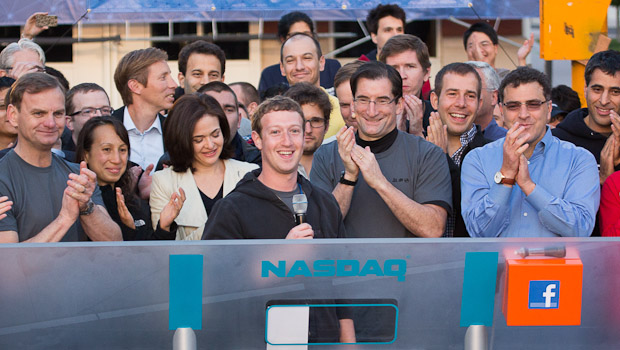
    The long awaited float yesterday of social media service Facebook was a triumph for the business’ founder Mark Zuckerberg, his management team and advisors.

    A market valuation of 100 billion dollars for a business started less than ten years ago is an impressive achievement and that sum now presents massive challenges for management who have to deliver on what investors believe the service is capable of.

    At US$38 a share, Facebook is valued at 76 times its projected 2012 earnings of 50 cents a share, and nearly twenty times its expected revenues of US$5 billion. This compares to Google which trades at less than 15 times its 2012 profit estimate and six times revenue.

    For Facebook to match Google’s value, the social media service is going to have to start making serious money beyond they can from charging egoists and corporations $2 a time for featured posts.

    Google’s success was in moving out of their walled garden, had Google focused on advertising just on their own search pages the company would be earning a fraction of the billions they now make every quarter.

    It’s difficult to see how Facebook can move off their platform into other sites and with users moving to mobile, the company will find itself even more constrained by Google and Apple who want to control access to their devices.

    A more obvious course for Facebook is to maximise income from the massive data base of likes, preferences, relationships and opinions they have amassed from their users. How they do this will probably be the biggest challenge to Facebook’s management.

    In monetizing their database, Facebook will push the limits of the law, tolerance of privacy advocates and possibly the patience of their user base. This is going to test a company that has in the past been slow to respond to public concerns.

    Another challenge is perception – with such a massive valuation, Facebook is going to attract critics regardless of what they do.

    A good example of this is the number of people criticising the float for not ‘popping’ on the stock market debut. At the end of the first day’s trading the stock had only gone up 0.6% and some in the media claimed this showed the IPO wasn’t the successful.

    The idea a successful IPO is one that soars on the first day of trading is a naive view from a 1980s mindset. The idea was born out of the privatisation of British and Australian utilities in the 1980s and 90s where taxpayers were seduced by the idea of “free money” in exchange for selling community assets cheaply.

    A ‘stag profit’ from a share that soars on its public float is theft from the existing shareholders and a transfer of wealth to insiders and their advisors.

    Silicon Valley venture capitalists and startup founders aren’t dumb and have never fallen for that trick – investors pay dearly for stock in their ventures.

    While no-one would call Mark Zuckerberg and his management team dumb they have a big job ahead of them finding revenue sources to justify the $100 billion market valuation. It’s going to be an interesting ride.

    Similar posts:

  • No exit

    No exit

    The men’s hairdresser down the road from me has hung up his scissors after twenty-four years.

    The sign on his shop window apologizes and the shop itself is up for lease. Shortly there won’t be any evidence a long standing local business was once there.

    Roy had no exit from his business and he sell the operation as a going concern.

    For Roy his retirement will be funded solely out of his savings. If he’s lucky he’ll have saved enough of his income from the business for a comfortable retirement – unfortunately many small business owners they’ll eke out the rest of their lives on the pension.

    Even for those who have planned for an exit, many of their plans have fallen over in the aftermath of the 2008 financial crisis.

    It’s always been questionable whether Gen X and Y entrepreneurs could afford to pay the sums for the affluent retirement of Baby Boomer business owners but now the post 2008 contraction in lending means it’s even less likely retiring business owners like Roy will find someone to buy their businesses.

    While the focus is on twenty something app developers selling their businesses for a billion dollars, the truth is that wealth for most business owners lies in the local newsagent, hairdresser or coffee shop owner being able to sell their operation for a reasonable return.

    For many baby boomer business owners it’s going to mean working more years than they intended and sharply reduced retirement expectations.

    Property values too are difficult. Many boomer businesses had the sensible model of buying the property their business occupies as a retirement nest egg.

    Again those properties are too expensive for the new generation and the deleveraging economy means the outlook for property values isn’t good.

    On every level, things are going to be tough for those wanting to sell businesses over the next decade.

    Those who do get good prices for their businesses are going to be those doing something exceptional to gain attention with income and profits that make them stand out from the cloud.

    Just being the best hairdresser in the neighbourhood or having a popular cafe isn’t going to be enough.

    Hopefully Roy The Barber managed to stash away enough for a well deserved comfortable retirement.

    Similar posts: