Category: Investment

  • What Chinese investors are looking for in tech companies

    What Chinese investors are looking for in tech companies

    What does one of the biggest Chinese backed investment funds look for in prospective companies? During their recent visit to Sydney China Rock Capital Management’s Venture Capital‘s Toby Zhang and Matt Lee spoke about the company’s investment philosophy.

    “In general we invest in very early stage investments – we focus on seed to Series A,” says Zhang, one of the company’s partners. “At these stage of development we’re looking at a combination of talent, technology and market.”

    “We like to bring these early technology companies to the markets like China and west coast US where we’re familiar, a lot of the companies partner with us because we can help overseas.”

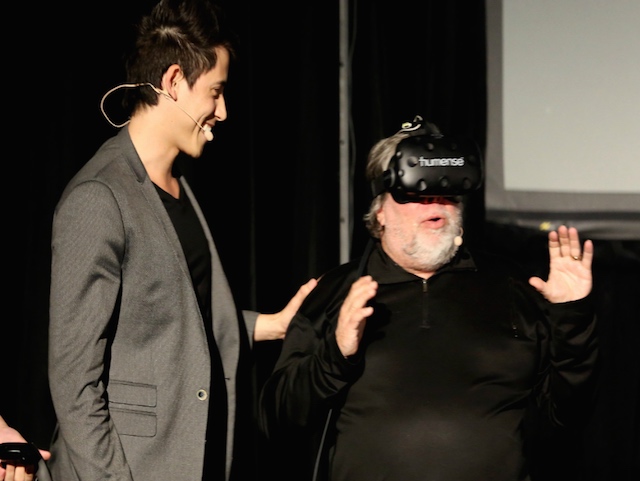
    Zhang and Lee were in Sydney for the announcement of their investment into a local VR video capture company, Humense, the fund’s first foray into Australia.

    “When we first started CRCM we only invested in Chinese internet companies,” explained Zhang. “While we’re based in Silicon Valley we were looking at what’s going on in mainland China. We’ve launched three additional funds, all three of these are early stage and cross border. We not only invest in China but also in the US, Israel and now in Australia.

    Understanding the founders

    “We spend more than fifty percent of our time understanding the entrepreneurs and who’s behind the company. When we form a financial partnership it’s kind of like a marriage where getting a divorce is really difficult so you have to really understand the entrepreneurs.”

    “Secondly we look for businesses which can easily pivot if they have to. A good example is a company we invested in recently called Music.ly. We were a fifth stage investor in Music.ly while they still  in Shanghai, we saw entrepreneurs who we knew from their previous jobs so we knew how talented they were and we were prepared to back them.”

    “More importantly though was their business’ focus on social media particularly with the age group that the existing platforms were losing traction with.”

    “Finally with technology we’re looking for companies that can create barriers early that allows them to outcompete their competitors.”

    Humense’s volumetric capture relies on an array of cheap, commercially available cameras to collect the images, something that appeals to Zhang’s investment philosophy.

    Opportunities for Virtual Reality

    “We spent a lot of time looking at the VR space, particularly volumetric capture,” says Matt Lee who originally hails from Sydney. “we felt in Australia with the background of special effects and animation so we felt there was a strong talent base we could leverage.”

    Toby Zhang sees the fund making more investments into the augmented and virtual reality sectors. “We think AR/VR is a global tech movement,” he says. “Although historically we’ve been mostly investing in Silicon Valley and China, we have been constantly looking for opportunities to get to know start-ups, entrepreneurs, and investors from all around the world.”

    It’s notable the Chinese backed fund is now looking around the world for investment opportunities and focusing on VR and AR technologies.

    That strategy makes sense as the barriers to entry fall and the tech industry’s focus moves beyond Silicon Valley and into new markets. Where the US investment funds go will be the big pointer of future opportunities.

    Similar posts:

  • Data and the modern movie producer

    Data and the modern movie producer

    Dealing with the massive wave of data flowing into businesses will be one of the defining management issues of the next decade. One company that is already dealing with this is New Zealand’s Weta Digital.

    Wellington based Weta that’s best known for its work on Lord of the Rings and is part owned by director Peter Jackson employs 1400 staff for its movie special effects work and has won five visual effects Academy Awards over its 23 years of operations.

    Kathy Gruzas, WETA Digital’s CIO, spoke to Decoding the new Economy at the Oracle OpenWorld forum in San Francisco this week about some of the challenges in dealing with the massive amount of data generated by the movie effects industry.

    “We have some very heavy loads.” Kathy states. “We push our systems to the limit.”

    Applying powerful systems

    One challenge is the sheer computing power required, ‘the render frame processes one frame per server until you have four seconds of footage. Sometimes that takes over night or even longer and for that we use a lot of storage,” Kathy says. “The render farm being six thousand servers will write 60 to 100 terabytes of data a day and read a quarter to half a petabyte each day.”

    “We need systems that will be very large to handle the volume of data we generate but also be very quick to handle those read and writes.”

    “One render could use a thousand computers, sometimes more, and all of those will be reading and writing against the same block of storage so we have our own software layer that directs those loads but we try to minimise the load on our storage but we have the worst work load you can imagine with lots of servers, lots of small reads and writes and many of them random and concurrent with pockets of hot files.”

    Despite the automation, the business is still extremely capital intensive. “In visual effects you probably need at least three hundred artists to work on one film, it’s a very labour intensive process to do the artistry and much like a production line.”

    Going mobile

    The nature of modern movie production means the effects teams are now part of the shoot which adds another level of complexity for Weta. “Although we are visual effects which is largely post-production we do go out with crews when they’re shooting the movie so we can do reference photography,” says Kathy.

    “We do 3D scans so if we need to do something digitally and we do motion and facial capture as well,” she says. “There are 240 muscles that we tweak individually to get the expression. That’s a huge amount of data to capture.”

    To do this, Weta created their own ‘road case’ that contains everything they need to grab the shots and store the data they need, “you can’t ask the director retake the shot because we missed something.”

    Into the forest

    “We have to take the case into the forest and into the rain and everywhere. It’s good having that roadcase that has storage, networking and servers in it.” The case, which was self assembled by Weta’s team is “probably the most travelled Oracle system on the planet,” laughs Kathy with “lots of data capture and sub-rendering.”

    Weta’s story illustrates just how managing data is becoming a critical issue for companies. While movie special effects is very much a specialised field that’s far ahead of the curve in its technology use than most businesses, they do show the importance of managing and securing their data.

    For other businesses, lessons from Weta is understanding your company’s – including staff and customers’ – needs then investing in the right tools to deliver is essential.

    One important difference between technology intensive businesses like Weta and most other organisations is the New Zealand company is doing most of its processing and storage in house. Those without the same needs will almost certainly be shifting these tasks onto the cloud.

    Similar posts:

    • No Related Posts
  • Seeking salvation in the cloud

    Seeking salvation in the cloud

    Oracle CEO Mark Hurd’s keynote at the company’s Open World conference in San Francisco yesterday illustrated a problem facing businesses around the world and its effects on enterprise software vendors like the one he heads.

    “Standard and Poor’s top five hundred companies’ revenue growth is at one percent, their earnings growth is five percent.” “It means what? Expenses are going down.”

    “This is the problem that the CEO has,” he says. “Why is it hard to grow revenue. All your investors want you to grow earnings and deliver growth. They have little patience for any long story about why it’s so hard.”

    “They don’t care about any issues you may have. Grow earnings, grow cash flow, grow stock price. That’s it.”

    Growing in a slow market

    As a result of that the easiest way to grow earnings is to grow revenues but when global GDP and markets are flat, the only way to grow is to gain market share, Hurd says. “We have to know the customer better, we have to do a better job of marketing and we have to do a better job of aligning our goods and services to what our customers want. We have to improve our products and processes.”

    That imperative for companies to cut their operating costs has had a brutal effect on enterprise IT budgets, “over the past five years, the growth in enterprise IT has been flat.” Hurd says, “the growth in spending has been basically zero.”

    Customers drive the market

    Like many things in the tech industry, the sector’s growth focus has shifted to consumers, “consumer spending on IT has almost quadrupled in the past decade. So while companies are sort of flat, consumers have been spending like crazy.” Hurd observes, “consumers are more sophisticated, more capable, more knowledgeable and expect better services than ever before.”

    “Your customer experience is not being defined by your competitors but by technology fuelled consumers. For instance, AirBnB may be defining customer experience for the hospitality industry.”

    “People are using a lot of social technologies in their personal lives,” “we expect ease of use, simplicity, clean interfaces are now things we expect in the enterprise side.”

    Crimping innovation

    In the enterprise IT sector, Hurd believes the flat market means many companies catering to the corporate market are skimping on Research and Development which in turn is crimping innovation, a factor compounded by cloud providers taking an increasingly larger share of the market.

    This is underscored by cloud leader Amazon Web Services spending over ten billion dollars a year on R&D. Hurd’s boast that Oracle is spending half of that shows how the legacy players are struggling.

    What stands out in Hurd’s keynote is how legacy providers see cloud computing as their salvation. However Amazon’s dominance in that space is a major obstacle for them.

    For consumers, big and small, the shift to the cloud has been a good thing in shaking up the existing industry and making new technologies more accessible to smaller customers. For existing businesses like Oracle, there’s a challenge in adapting to a lower margin, commoditized and quickly changing market.

    A bigger question though facing all large corporations, not just software companies, is this new normal of low economic growth. Succeeding in that environment is going require a completely different management and investor mind set to that of the last seventy years.

    Similar posts:

    • No Related Posts
  • Freeing business investment

    Freeing business investment

    What would happen if the world’s richest people invested in startup businesses? Bloomberg Business ran an interesting, if flawed, thought experiment looking at how many nascent companies each country’s richest individuals could invest in.

    It’s surprising how low those numbers are and, if anything, the result underscore how the 1980s and 90s banking sector ‘reforms’ caused the world’s financial system to pivot from its historical purpose of funding commercial enterprises into speculation, rent seeking and manipulating markets.

    Apart from a smattering of venture capital not much has replaced the banks in funding the SME and entrepreneurial sectors, if anything it has been those ultra high net wealth individuals who have been financing the investment funds providing capital to entrepreneurs.

    How the finance industry evolves in the face of the fintech boom and a world that’s slowly becoming less indulgent of the industry’s greed will be one of the defining things of next decade’s business environment. For the small business and startup sectors getting the funding right will also be a key factor.

    The biggest question though is job creation, being able to fund new and innovative investments will be one a critical concern for societies dealing with the effects of an increasingly automated economy.

    Similar posts:

  • Lessons from the CIA investment fund

    Lessons from the CIA investment fund

    One of the little discussed reasons for the US tech industry’s success is the role of military and intelligence spending by the government. Not only are various agencies funding research and enthusiastically buy technology, they are also being strategic investors in many companies.

    In Sydney last week Dawn Meyerriecks, the CIA’s Deputy Director for Science and Technology, gave an interesting insight into the agency’s investment philosophies at the SINET61 conference.

    The conference was aimed at drumming up interest in the technology security industry along with showcasing the connections between Australia’s Data61 venture and the US based Security Innovation Network (SINET).

    SINET itself is closely linked to the United States’ security agencies with chairman and founder Robert Rodriguez being a former US Secret Service agent prior to his move into security consulting, venture capitalism and network-building.

    Compounding the organisation’s spook credentials are its support from the US Department of Homeland Security along with the UK’s Government Communications Headquarters (GCHQ), so it was barely surprising the Australian conference was able to attract a senior Central Intelligence Agency officer.

    Investing in flat times

    “Flat is the new up,” says  Meyerriecks in describing the current investment climate of thin returns. In that environment, fund managers are looking for good investments and the imprimatur of the CIA’s investment arm, In-Q-Tel, is proving to be a good indicator that a business is likely to realise good returns.

    “If you can predict a market – and we are good predictors of markets – then the return on investment is huge,” she says.

    “In-Q-Tel really leverages capital funding for good ideas. We get a twelve for one return, for every dollar we put in it’s matched by twelve dollars in venture capital in emerging technologies.”

    Attracting investors

    For the companies In-Q-Tel invests in along with those that supply technology to the organization, the CIA encourages them to seek private sector investors.

    “What we’re telling our supply chains is you go ahead and tap into the capital markets,” Meyerriecks says. “If you can turn that into a commercially viable product then will will ride the way with the rest of the industry because it’s good for us, it’s good for the country and it’s good for the planet.”

    Adding to the CIA’s attractions as a startup investor are the opportunities for lucrative acquisition exits for the founders, she believes. “Not only are we using that venture capital approach for emerging technologies but our big suppliers are sitting on a ton of cash.”

    Diversity as an asset

    Another lesson that Meyerriecks believes will help the planet, and the tech industry, is diversity. “Globalisation has show isolationism doesn’t work,” she says.

    “Back in the day when I was a young engineer the best way to make sure your system was resilient was to harden its perimeters. the best ways to be ‘cyber resilient in the old days was by drawing the barriers to keep the bad guys out.”

    “The best way to be cyber-resilient in the old days was to draw big boundaries around yourself to keep the bad guys out. The latest studies look at other things because you want to be resilient, you want high availability.”

    Now, system diversity is seen as an asset.“Biologically the three factors that contribute to resilience are the ability to adapt, the ability to recovery and diversity,”  Meyerriecks says. “We look to deliver high availability among components that may not themselves have high reliability.”

    The future of investment

    “I think we’ll see commercialisation still driving investment for applied R&D in particular,”Meyerriecks said in a later panel on where the agency is looking at putting its money.

    “The big game changers will be around the edge, taking SDN (Software Defined Networking) to its logical extreme giving everyone their own personal networks, not just in data centres but at the edge of the network.”

    “I think there’s lots of things that the commercial industrialisation of the technology and physical system are going to force us to grapple with on many levels.”

    Risks in managing identity

    An interesting aspect of Meyerriecks’ talks at SINET61 was her take on some of the technology issues facing consumers and citizens, particularly in the idea for individuals having their own personalised network.

    “This opens up a whole range of things, ” she suggests. “Do I eventually not just be an IMSI or EIMI (the mobile telephone identifiers) but do I become an advertising node, does that become my unique ID? Do I a become a gaming avatar?”

    “Then we get into the whole Big Data area. Computational anonymity is a phrase we use. At some point people start saying ‘this is crossing the line’ – it crosses the ‘ooooh’ factor.”

    Changing Cybersecurity

    “I think the definition of cybersecurity will be expanded to much more beyond wheat we’ve classically thought about in the past.”

    Meyerriecks’ presentation and later panel appearance was a fascinating glimpse into the commercial imperatives of the United States’ intelligence community along with flagging some of the areas which concern its members as citizens and technology users.

    The US security community’s role in the development of the nation’s tech sector shouldn’t be understated and Meyerriecks’ observation that private sector investors tend to follow the CIA’s investment path underscores their continued critical role.

    Similar posts: