Category: Investment

  • Milking the dead cow

    Milking the dead cow

    Many big Australian businesses seem untouchable as they dominate their markets to degree almost unknown in most other developed countries. As the story of Sensis shows, Australia’s big duopolies may not be as strong as they appear.

    The last few months have been tough for Sensis; revenues last year fell nearly 25%, the once strong business was folded into the latest incarnation of Telstra Digital Media and now the CEO Bruce Akhurst has departed after seven years.

    What could have been a dynamic business is now shriveling away, what went wrong?

    Milking the revenue cow

    Bruce did a good job of keeping revenue coming in during a period that the then owners, the Federal government, wanted to maximise the book value of Telstra before its sale.

    Year upon year Sensis could be relied upon to squeeze more money out of the businesses advertising in it.

    Management were focused on extracting revenue from the existing client base rather than responding to the obvious threat from online search.

    Expensive distractions

    When senior management decided to respond to the online world, they were sucked into unnecessary and expensive distractions; the most notable being the 2005 launch of Sensis Search where the then Telstra CEO – the disastrous Sol Trujillo – famously sneered “Google Schmoogle”.

    Three years and hundreds of millions of dollars later, Sensis admitted defeat. By then the small business advertisers who were the life blood of the directory market had woken up to the reality their customers weren’t using the Yellow Pages anymore. Sensis had missed the boat.

    Clunky processes

    Whenever I spoke to small businesses about Sensis through the 2000s there was the same complaint, “I don’t have time to deal with their sales people, just let me tick a box on a web page or send a fax!”

    Purchasing space was difficult for customers, their 1950s Willy Loman sales model should have been automated in the 1990s and never was.

    Instead Sensis was locked into a high cost sales model and added friction for advertisers which they shouldn’t need, not only were they expensive but they actually made it difficult for their customers to place orders.

    Should Sensis have been sold?

    At its peak in 2005, Sensis was valued at between 8 and 10 billion dollars as a stand alone company.

    Many, including myself, believe that breaking Sensis away would have been the best result given Telstra were at the time focused on protecting their fixed line copper wire monopoly and the directories business was not getting the management attention or capital investment it needed.

    History shows though that we might be wrong.

    Commander Communications was spun off from Telstra in 2000 and like Sensis had inherited an almost monopoly position in the small business communications market.

    By 2007 Commander was out of business thanks to a combination of incompetence, management greed and an inability to recognise the changing communications marketplace.

    The Australian disease

    Commander’s biggest problem was it saw its customers as cash cows, just as Sensis did. This exposes a much deeper problem in Australian industry and management culture.

    Over the last thirty years Australian government policies have seen duopolies develop in almost every key sector of the economy.

    All of these duopolies share the same “customer as a milk cow” philosophy which, along with the rampaging Australian dollar, has dragged Australia into being a high cost economy.

    The banking industry, while not a duopoly for the moment, is an even more debilitating example of the cash cow syndrome where small business has been crippled by excessive interest rates and fees – particularly since the 2008 crisis.

    Sensis’ demise is systemic of a culture that fixates on extracting maximum revenue from customers; concepts like innovation, R&D or adapting to market trends don’t have a role in this mentality.

    Milking cows is a fine business, but sometimes you have to think about the health of the herd.

    Similar posts:

  • Investing in the future

    Investing in the future

    UK supermarket chain Tesco announced it intends to create 20,ooo new job over the next two years through “significant investment in customer service, refreshing existing stores and opening new ones”.

    That word – investment – is the key to business growth. Not whining about the internet stealing jobs or begging the government to bail out failed industries and their managements.

    Investment is more than just buying a shiny new machine, it’s also research, development, training and educating a business’ management, staff, suppliers and customers.

    Too many businesses and governments are locked into the the 1980s mindset that investments, along with things like customer service, are a cost that that has to be driven down.

    Driving down costs was profitable for many managers through the 1990s and early 2000s, in fact we could argue this was one of the big drivers of corporate profits and productivity through that period.

    While some of those costs were undoubtedly unnecessary and deserved, it’s now clear that many governments and businesses ran down investment as well.

    Today we’re seeing the results of that; crumbling infrastructure, skills shortages and businesses that can’t compete in a changing global economy.

    What we invest in our businesses – be it time or money is essential to its long term success. Only the biggest companies in the most protected industries can survive for a while without investment.

    Similar posts:

    • No Related Posts
  • Is the problem in the cockpit?

    Is the problem in the cockpit?

    In the Daily Reckoning newsletter editor Callum Newman uses Malcolm Gladwell’s description of power relationships to draw a parallel between Korean pilots crashing planes into mountains and the economy, pointing out our politicians are like distracted, doomed aviators ignoring the obvious features they about to collide with.

    Is that fair though? In a plane the passengers are strapped in their seats and have to take their the pilots in trust, in real life we have control — all of our actions affect the vehicle that is our economy.

    Unlike a plane we can jump out and do our own thing, we can refuse to buy one good or service and we can set up a business for ourselves when we see a market that isn’t being serviced.

    Where the analogy does work though is our politicians – and many business leaders – aren’t paying attention to major demographic and economic shifts.

    The question is “why?” Most of these people aren’t stupid and they have access to better information than most of us, which is one of the reasons they are in power.

    Perhaps it’s because we don’t want to hear the truth; that our assumptions about what the state will provide and how our economy is developing are flawed.

    In many ways, particularly in a modern Western democracy, our politician are mirrors of ourselves. They tell is what they think we’d like to hear.

    The problem isn’t in the cockpit, it’s back at the boarding gate where we’re more worried whether we’ll get a packet of nuts than whether we should agree to embark on a rough journey to a destination we don’t expect.

    Similar posts:

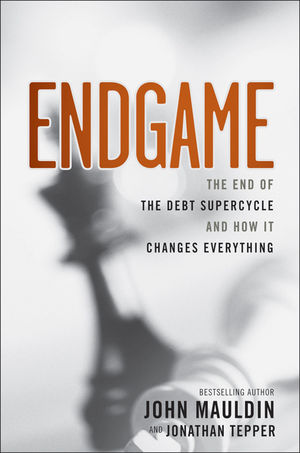
  • Book review: Endgame by John Mauldin

    Book review: Endgame by John Mauldin

    “There are no good choices – only bad ones” could sum up John Mauldin and Jonathan Tepper’s Endgame which looks at how our economies will evolve the end of the late 20th Century debt “supercycle” that has driven the world economy for the last fifty years.

    Endgame examines the choices that confront governments, societies, businesses and investors as the world economy adapts to the realities of the West’s aging populations and excessive debt levels.

    Much of Endgame relies on This Time Is Different by Carmen Reinhart and Kenneth Rogoff which the examined eight centuries of financial crises. While Reinhart’s and Rogoff’s conclusions are that speculative bubbles driven by debt almost always result in a banking crisis and painful economic restructure, each episode does have unique characteristics.

    In each case governments have three basic choices; reforming spending which is rare and maybe impossible given the debt levels in many nations, inflating debts away as Western governments have done since WWII or through outright defaults which have been associated with less developed nations.

    As we see with the convulsions the European Union is currently going through and the massive support given to banks around the world since the 2008 banking crisis, the default option is the one which governments will avoid at all costs.

    While the bulk of the book concentrates on the US, John does dedicate several chapters to the how the debt endgame will play out in other nations including Japan –“a bug in search of a windshield” – the UK, Eastern Europe and Australia, where he finds a massive property bubble that he believes could be the most spectacular endgame scenario of all.

    The clear lesson from Endgame is the post World War II social compact of working taxpayers supporting the aged, the sick and unemployed is over and was only propped up the illusion of wealth generated by loose credit and financial engineering throughout the 1980s, 90s and early 2000s.

    Some are hoping the Chinese economy can provide the global demand that was provided by US consumers. While Endgame doesn’t specifically look at this aspect, it’s unlikely China’s economy can do this.

    With consumers and governments now exhausted by debt and at the limits of what they can spend, the assumptions that have driven the economy along with our investment and consumption patterns of the last fifty years no hold true.

    Endgame is primarily a book for investors and John Mauldin’s emphasis is on where the safest investments will be in at the end of the debt supercycle. His view is it depends on whether governments choose to eliminate their national debts through deflation or inflation.

    For business owners, wage earners and retirees this is an important question too and Endgame describes what the consequences for everyone are under either scenario.

    The message of Endgame isn’t overwhelming negative; John Mauldin also looks at where the opportunities will lie after the credit endgame plays out. “We don’t know where the jobs will come from, but they will come” is another theme of the book.

    Whether you’re an investor or a business affected by the changing economy or building those businesses of the future, this is an important book for understanding the changing economic world in which we live.

    Similar posts:

  • The year of the cloud

    The year of the cloud

    This post originally appeared in Smart Company on December 23, 2011.

    I was asked last week to join Stilgherrian and Jeff Waugh on ZDNet’s Patch Monday reviewing the year that was in technology. One of the things that came out of the session was much of what happened in the tech world over the last year was really a continuation of 2010’s trends.

    That’s certainly true and the biggest buzzword in business tech for the last two years has been “the cloud”.

    Over the last year we’ve seen a lot more providers getting on the cloud bandwagon with Microsoft responding to the Google Docs threat with their Office 365 product, MYOB launching Live Accounts, to respond to threats like Xero Accounting Software and Saasu and a whole range of vendors proclaiming they are ditching the desktop and moving onto the web.

    Despite the hype businesses are slow to respond as they evaluate the various risks with moving to web-based services. Partly this is due to suspicion of the more outrageous claims such as “saving 80% of your costs by going onto the cloud” that have been peddled by some vendors.

    A lot of that suspicion is fair enough, too. Many business owners – along with CEOs and government ministers – have been burned over the years by IT salespeople claiming big savings available if the gadget or software of the day is purchased.

    Unlike corporate leaders and government minsters, the managers and owners of smaller businesses tend to learn from their mistakes and so they are waiting to see if the cloud services really deliver.

    Eventually businesses will move a lot of their computing applications to the cloud as the cost-benefit equation is better for most services than running it in your own office as it eliminates the overheads of buying computer hardware and hiring some geeks to look after the things.

    Given the real advantages of cloud services – not just in terms of cost savings but also in business flexibility, productivity, security and reliability – it’s worthwhile using the quiet January period to have a look at where your organisation can benefit from moving online.

    Some of the other buzzwords like social media, collaboration and site optimisation are worth having a look at too. The holidays are an opportunity to see where these can be used better in your business.

    One thing is for sure – next year you’ll be hearing more about cloud computing as vendors are gearing up for some big marketing campaigns next year. So knowing what you want for your business may well pay dividends.

    Similar posts: