This is an interesting, and somewhat provocative, idea. While there’s no doubt ubiquitous internet is an essential service in an advanced economy and increasingly critical to most industries, calling it a basic human right is a big call.
Perhaps we need to consider there is a kind of technological order of services, something similar to Maslow’s Hierarchy of needs.
In the tech sector the most basic is electricity as without power all this technology is useless.
Sitting above this are the core infrastructure like the cables, ducts, telegraph poles and subsea cables.
Then perhaps there is the internet itself including the routers, switches and base stations which keep the internet running.
Above those are the connected devices — the smartphones, the robot mining equipment and the internet fridge.
Processing all the data these devices generate is the job of the data centres and cloud computing services which make the internet of everything work.
So perhaps to describe broadband as a fundamental human right is overstating things when a large proportion of humanity doesn’t have access to reliable electricity or drinking water.
What’s interesting watching John Chambers talk is how passionate he is about the Internet of Everything, so much so he’s betting the company on it.
It’s understandable that John Chambers and Cisco would consider broadband internet to be one of life’s essentials as it is critical for the company’s growth and survival but for humanity we should remember that some technologies and services are more essential than others.
Today was the opening of Cisco System’s Internet of Things conference in Barcelona, Spain and in the morning sessions there was constant question of what will be the killer app for this range of technologies.
A killer app is the application that drives adoption of a new technology – for the Personal Computer, it was spreadsheet programs that made systems attractive to company accountants and from there the PC made its way into the workplace.
Right now, you’d have to say parking systems are the great hope for the industry and this makes sense in that it’s an easy to explain to the general public and it helps solve an ongoing problem for local governments.
But does the Internet of Everything really need a killer app?
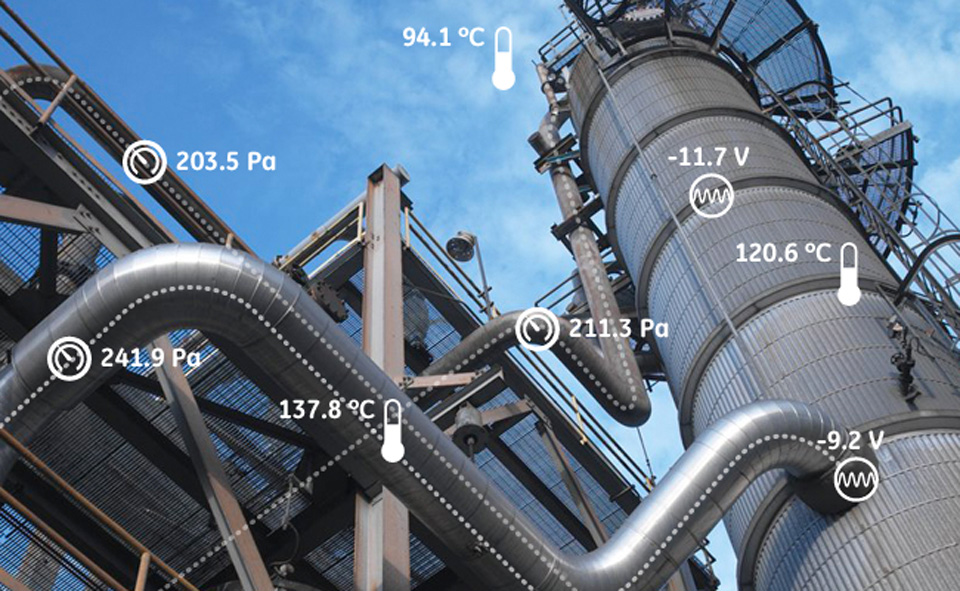
The Internet of everything is the coming together of various different technologies — cheap processors, pervasive internet, cloud computing and big data are all reasons why the concept has taken off.
In fact, many of the applications aren’t new, telemetry systems have been around since the early days of networks and even parking technologies like number plate recognition and space meters have become common over the last decade.
Across industries like logistics, mining and agriculture the Internet of Things or Machine to Machine (M2M) communications has been steadily growing with each new generation of connected equipment.
The difference with the next wave of technology is that devices are smarter and able to talk to each other which is where companies like Cisco see the opportunity of tapping into what they believe will be a 14 trillion dollar market by the end of the decade.
What concerns many in the industry is the risk of the technologies become proprietary islands where each major company has its own standards that don’t talk to the others.
The risk of vendor lock in is probably greater than the search for a killer app, indeed there’s no particular reason why anyone should be waiting for a compelling application to come along.
Instead of waiting for a killer app it’s probably better for industries to find their own uses for these technologies and steadily implement them.
While Cisco are almost certainly right about the impact of the Internet of Everything, it’s one of these pervasive technologies that changes everything in ways that aren’t immediately apparent like the motor car or the internet itself.
“I’d rather eat a bullet than do a Kickstarter campaign again,” says Moore’s Cloud founder Mark Pesce in the latest Decoding The New Economy video when asked about crowdfunding his project.
Moore’s cloud is an internet of things company that focuses on lighting, “we think it’s interesting and something that expresses emotion” Mark says.
With their first project, Moore’s Cloud looked to raise $700,000 to build their first project but fell well short of their target.
Falling short lead to Mark and his team executing a classic business pivot from a static lights to Holiday, a system of intelligent fairy lights.
“We took exactly the same technology and put it into a different form factor,” said Mark. “It’s as if we took the light and unwound it.”
The failure of the Kickstarter campaign gave the Moore’s Cloud founders an education on how crowdfunding works.
Customer focused from day one
An important aspect of crowdfunding is it’s very customer focused. From day one of the campaign, the venture has to devote resources on relations with those who’ve pledged a contribution.
Most startups don’t have those resources, or the time and skills, to deal with those relations.
“People say it’s a better way of getting investors. I would have to say ‘it’s not better, it’s different.’” Mark says about crowdfunding.
The psychology of investors
One of the differences is the psychology of investors. Mark was urged by the CEO of Indiegogo, Slava Rubin, to set a low target as participants like to back successful campaigns.
“There’s a whole bunch of psychology I didn’t understand going in,” says Mark. “If we’d had a goal of $200,000 we probably would have filled it in the first two weeks.”
“Once a campaign is fully funded, it tends to get overfunded.”
A truism of business is that banks will only lend to you when you don’t need the money and it strangely appears the same thing applies to crowdfunding.
We’re in the early days of crowdfunding and there’s more to be learned about the way it works and for which ventures the fund raising technique works best.
The experience of campaigns like Moore’s Cloud are part of how we’ll discover the nuances of crowdfunding and the psychology of the crowds that contribute.
One of the most profitable areas for many companies has been in fixing broken products, now the internet of everything promises to put an end to that business model.
‘Break-fix’ has always been a good profit earner with business ranging from construction companies to washing machine manufacturers making good money from fixing failed products.
Speaking at a lunch in Sydney earlier today GE’s CEO of Global Growth and Operations, John Rice, described how the Internet of Everything is changing in the industrial landscape.
One of the big business changes Rice sees is in the ‘break-fix’ model of many industrial suppliers.
“We grew up in companies with a break fix mentality,” Rice says. “We sold you equipment and if it broke, you paid us more money to come and fix it.”
“Your dilemma was our profit opportunity,” Rice pointed out. Now, he says engineering industry shares risks with their customers and the break-fix business is no longer the profit centre it was.
Goodbye to the TV mechanic
This is true in many other industries as products become both more reliable and less economical to repair – the local TV repairman has largely vanished and the backyard computer support businesses are going the same way.
For many businesses, this means a change to how they service their customers and the nature of their operations. For many, it means close monitoring of their products will be essential to manage risk.
Rice also flagged how grid computing will improve the reliability of equipment and networks citing how giant wind turbine talk to each other.
“Every wind turbine has an anemometer on top that’s used to judge wind speed and direction,” says Rice. “If you had a problem with the anemometer the wind turbine shut down until someone could come out – maybe a week later – to climb to the top of the turbine, diagnose the problem and start the thing back up.”
“Today the technology is such that the wind turbines talk to each other so if you’re in a wind field of thirty turbines you don’t rely on one anemometer,” points out Rice. “This is a very simple example of machine to machine interface.”
Wind turbines and the road toll
Rice’s example of wind turbines talking to each other is similar to Cisco’s scenario of using the internet of everything to reduce the road toll where cars communicate with road signs, traffic lights and each other to monitor conditions on the highway ahead.
Those machines talking together also give early warnings of problems which reduces downtime and risk for industrial users, it also means less money for businesses who’ve made money from those problems.
Microsoft’s latest version of their Surface tablet computer is the company’s first attempt at executing Steve Ballmer’s device and services strategy. If the company succeeds, there are some interesting implications for the tablet computer market.
Currently Microsoft is on a worldwide PR campaign to promote their latest range of Surface tablet computers. Last week during the Sydney leg of their tour I had the opportunity for a hands on demonstration of the new devices with Jack Cowett of the product’s marketing team.
The Surface itself is an interesting device with some major upgrades and changes as Microsoft begins to understand the tablet market with the device having more memory, better processors and battery life – although the lack of a cellular version is going to hinder its adoption by the consumer and small business markets.
Devices and services
It’s in the device’s integration with Microsoft’s cloud and communication services where the long term vision, and real story behind the Surface lies.
Most obvious is the bundling of services with purchasers of a Microsoft Surface 2 or Surface Pro getting 200Gb of Sky Drive storage and a year’s free international calls included with the device.
It’s an early taste of how Microsoft can combine services and devices that leverage off their existing position in the marketplace.
While these incentives may not be enough to convince customers that the Windows systems are a better buy than Android or Apple devices, integrating these cloud services makes the computers more powerful devices.
Keyboards as blades
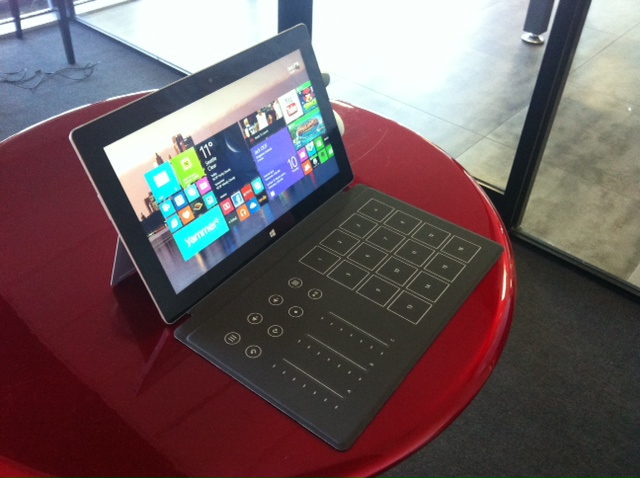
Equally interesting with the Surface, is Microsoft’s devices play with the range of Surface covers that the company is informally calling ‘blades’ – an unfortunate choice of name which will confuse conversations with many IT managers.
Blade covers for Microsoft surface tablets
These covers dispense with the usual keyboard electronic layout with an underlying layout featuring a 1024 sensor pad that give the covers more potential than just being keyboards.
As part of the Microsoft marketing push to show this aspect off, the company has released a blade cover with a sound mixer layout and seeded the devices with various DJs under the banner of the Remix Project.
While the blade covers have applications as sound mixers and keyboards, the number and flexible nature of the 1080 built in sensors will see their application in other areas.
Should third party developers be able to develop their own skins for Surface blade covers then Microsoft may have a killer industrial device that plugs into existing Windows based networks.
Added to Microsoft’s opportunity is the possibility of plugging Surface devices into the internet of everything giving business users direct access to the machines in their organisation.
Should Microsoft be able to capture a slice of these markets, it may well be a pointer for the company’s future in a post-PC world.
Regardless of how well Microsoft do with the internet of everything, the latest range of Surface tablets and accessories shows how the company is executing its strategy of becoming a devices and services company.