Category: new media

  • Customer lock in as a business asset

    Customer lock in as a business asset

    US booksellers Barnes and Noble has been struggling for years and things aren’t getting better reports the New York Times.

    An important part of the New York Times story is the quote from a Forrester industry analyst,

    “The problem is not whether or not the Nook is good,” said James L. McQuivey, a media analyst for Forrester Research. “What matters is whether you are locked into a Kindle library or an iTunes library or a Nook library. In the end, who holds the content that you value?”

    Locking in customers lies at the heart of the Kindle and iTunes business model. Once users have a substantial investment in their book or music collections on one platform it’s unlikely they will go elsewhere as the costs, and risks, of moving are too great.

    This doesn’t always end well for the customer and it gives online businesses great power which they often misuse.

    Every online business tries to lock their customers into their ecosystem – Google, Amazon, Facebook and Apple are the most successful but every single social media and cloud service tries to make it hard for users take their business elsewhere.

    In some respects this is no different to the phone company or bank which have historically tried to lock customers into their services, but the online social media, cloud computing and e-commerce platforms make a much more ambitious grab for their users’ data and assets like music and book collections.

    The New York Times article illustrates just how critical that user lock in is to the success of online businesses. The question for us as consumers is how much we want to be locked inside the web’s walled gardens.

    Similar posts:

  • Big data, mobile apps and smarter logistics – why Avis is buying Zipcar

    Big data, mobile apps and smarter logistics – why Avis is buying Zipcar

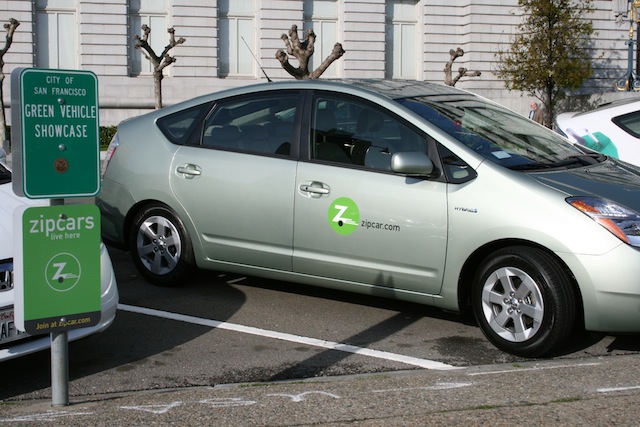
    With no bad press over New Year’s Eve it looks like hire car service Uber avoided the surge pricing traps of 2011 and the good news continues for the online booking industry with the news that Avis is buying car sharing service Zipcar.

    Assuming the acquisition isn’t another example of the greater fool investment model, Avis’ purchase of Zipcar makes good sense in expanding the hire car giant’s footprint into the share car business.

    Regrettably Avis use the 1980s term “synergies” four times in their media release but it does seem the businesses are a good fit both in fleet sharing and improving both company’s services.

    Zipcar’s technology is another asset which Avis can use,  with the car sharing service’s ability to track vehicle locations meaning better fleet management for the hire car business.

    Car sharing logistics

    The logistics angle of car share services is something that’s been highlighted by Uber’s CEO Travis Kalanick at various times, most recently at the service’s Sydney launch last November.

    Another aspect of the car sharing and hire car booking services is their Big Data advantages which the online startups bring.

    Historically, car hire companies have been reasonably good at gathering data on their customers with loyalty schemes, direct mailing and plugging into airline frequent flier programs. However they have been left behind by the Big Data boom in recent years.

    Companies like Zipcar, Uber and taxi hailing apps like GoCatch have big data in their DNA, having been founded in the era of cloud computing and social media they have access to more information and a better ability to use the knowledge they gather.

    Predicting the price surges

    At Uber’s Sydney launch Kalanick described how Uber’s traffic volumes increase in San Francisco when the Giants win a game, the interesting thing is that the surge happens three hours before the match starts.

    Insights like the traffic patterns around football games and holidays are gold to a high inventory business like hire car services. They are also important to the entire logistics industry.

    This latter point is probably the most overlooked part of all with the current rush into social and mobile based apps – the market intelligence that these services gather.

    While it’s tempting to dismiss that market intelligence as just monitoring who likes cats or cheeseburgers, the application of that data is transforming supermarkets, airlines and even concert venues.

    Avis seem to have understood that it will be fascinating to see how they will use Zipcar’s data and whether their competitors will figure out the importance of what these services offer.

    Similar posts:

  • The Lives they Loved – Another future for journalism?

    The Lives they Loved – Another future for journalism?

    The New York Times’ wrap up of the year’s obituaries may give us an idea of one of the many futures for journalism.

    It’s easy to fall into the trap of thinking that obituaries are just dry recantations of the lives of dead white men and they often are – particularly when about celebrities or undistinguished politicians and businessmen.

    Good obituaries though are masterpieces and those of society’s genuine unsung heroes are moving and educational. A well written obit of an obscure but deserving person is usually a rewarding read.

    As part of the their summation of 2012, The New York Times has taken their obituaries one step further by asking readers to submit photos and stories of their loved ones who’ve passed away during the year.

    The Lives They Loved is the result, a wonderful collection of touching photographs and stories of parents, partners, children and friends who have passed away in the last year.

    User Generated Content – UGC – is one of the foundation stones of new media. The idea is the audience themselves provide the content which frees services like Facebook, YouTube or I Can Haz Cheeseburger from the costs and irritations of actually creating things that people are interested in.

    The New York Times project may well show that traditional news channels with their dedicated audiences and relevance to communities may do UGC as well as any hot new Silicon Valley startup.

    While User Generated Content isn’t the future of journalism, it almost certainly will be one of the them. Whether it turns out that old media use it better than the newer upstarts remains to be seen.

    Similar posts:

  • Yelp’s problem with activists

    Yelp’s problem with activists

    It’s been a bad couple of years for James Knight, a dentist in Fort Dodge, Iowa.

    First his wife found some text messages he’d exchanged with Melissa, his attractive assistant who’d been with his practice for ten years.

    Then James’ spouse demands Melissa is fired.

    James then has what was no doubt a difficult conversation with Melissa’s husband explaining why she’s been sacked.

    Then Melissa sues him for discrimination. He wins the case.

    Melissa appeals to the state’s Supreme Court and loses there as well however the case now has national attention.

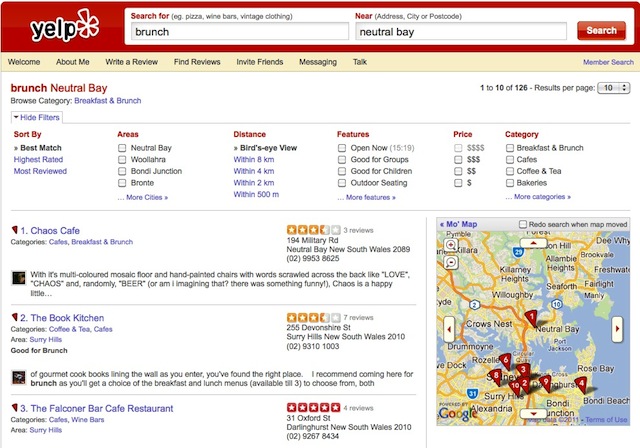
    This attracts the ire of the Internet mob, who start posting bad reviews about James on Yelp despite most of them not even living in Fort Dodge, let alone using his service.

    For Yelp, the rabble descending on James Knight’s review page is as much their problem as it is his.

    Yelp is one of the leading customer review sites which are changing the way small business operates and getting “smashed on Yelp” isn’t good for one’s reputation.

    Recently a builder also attracted the ire of the online lynch mob when he threatened to sue a customer over a poor Yelp review.

    As consequence, his Yelp page was overwhelmed with negative reviews by people who’d never used his business. The service had to delete 65 of those reviews which clearly had nothing to do with the quality of service the builder provided.

    The problem for Yelp, an other online review sites like Tripadvisor, is that for their sites to be trusted the reviews have to be reasonably accurate – self righteous internet mob skewing results is going to damage the service’s credibility as much as the targeted businesses.

    What this means for Yelp is that the low cost online business model doesn’t work, for the site to be relevant and credible there has to be administrators checking reviews and dealing with these situations.

    There’s also a lesson for all of us using the web – mindlessly joining online lynch mobs creates more damage than it fixes.

    Picking on a mid-Western dentist because he appears to be a pussy whipped jerk isn’t really solving humanity’s problems – we can all find causes that are a better use of our time.

    Similar posts:

  • Poor journalism and social media

    Poor journalism and social media

    Brother’s plea shows up online failings crows the Sydney Morning Herald over social media’s role in misidentifying the perpetrator of the Sandy Hook school shooting.

    The problem for the SMH is that social media wasn’t responsible for the story. As the Washington Post reported, CNN and various other outlets misidentified the shooter as his brother who had to take to social media to correct the record.

    For the mainstream media, the Sandy Hook shooting was not their finest hour; not only did they misidentify Ryan Lanza as the shooter, but they mistakenly reported his mother had worked at the school. When the Daily Mail does a better analysis of the story than many outlets, you know something is wrong.

    Something is certainly wrong at Fairfax as the cutting of resources results in the Sydney Morning Herald being three days behind the story and factually wrong on key aspects – not to mention adding a smug headline that is embarrassingly incorrect.

    While the writer of the SMH article should be held to account for sloppy work and poor research, the real responsibility for this embarrassment lies with the paper’s editors and management who should be ensuring what appears under the masthead is accurate and reliable.

    Both The Age and Sydney Morning Herald are essential to the fabric of their respective cities, this story is a good example of the important role the SMH has in shining light on the arcane dealings of the city’s business community. Fairfax can, and should, do far better than a poor, badly researched story on social media.

    Ironically, the mis-identification story quotes media academic Julie Posetti as saying “anyone with an internet connection could now contribute to and comment on the breaking news cycle without going through the filters of the traditional media.”

    At Fairfax, those filters are broken with the breathing space from selling its New Zealand digital operation, the company’s management has an opportunity to fix their credibility problem and focus on its core business.

    Similar posts: