“We treated Bitcoin as a tech story but now it’s become a much more serious economic story,” said a radio show compere earlier today when discussing the digital currency.
One of the great frustrations of any technologist is the pigeon holing of tech stories – the real news is somewhere else while tech and science stories are treated as oddities, usually falling into a ‘mad professor’, ‘the internet ate my granny’ or ‘look at this cool gadget’ type pieces.
Defining the world we live in
In reality, technology defines the world in which we live. It’s tech that means you have running water in the morning, food in the supermarket and the electricity or gas to cook it with.
Many of us work in jobs that were unknown a hundred years ago and even in long established roles like farming technology has changed the workplace unrecognisably.
Even if you’re a blacksmith, coach carriage driver or papyrus paper maker untouched by the last century’s developments, all of those roles came about because of earlier advances in technology.
The modern hubris
Right now we seem to be falling for the hubris that we are exceptional – the first generation ever to have our lives changed by technology.
If technological change is the measure of a great generation then that title belongs to our great grandparents.
Those born at the beginning of last century in what we now call the developed world saw the rollout of mains electricity, telephones, the motor car, penicillin and the end of childhood mortality.
For those born in the 1890s who survived childhood, then two world wars, the Spanish Flu outbreak and the Great Depression, many lived to see a man walk on the moon. Something beyond imagination at the time of their birth.
It’s something we need to keep in perspective when we talk about today’s technological advances.
Which brings us back to ‘it’s only a tech story’ – it may well be that technology and science are discounted today because we now take the complex systems that underpin our comfortable first world lifestyles for granted.
In which case we should be paying more attention to those tech stories, as they are showing where future prosperity will come from.
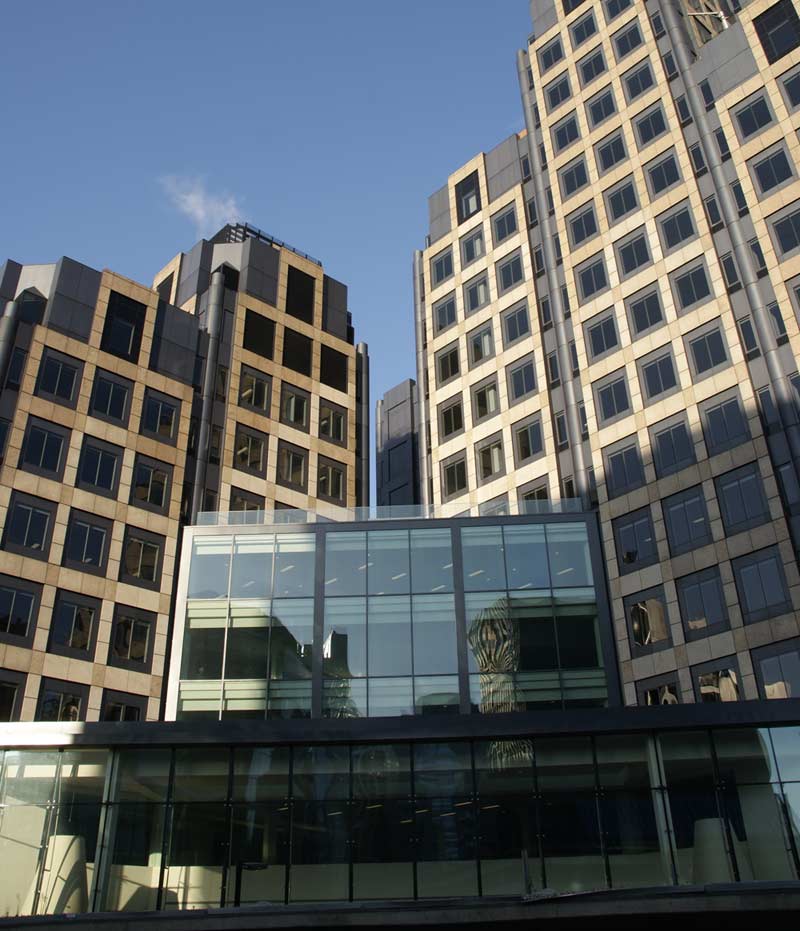
“You have to understand Paul that we are building a structure designed to last twenty-five years,” sneered the consulting engineer as we sat in a site meeting on a high rise construction site just inside the City of London.
I sighed deeply and let the matter of cladding fire protection water tanks slide and pondered nearby St Paul’s Cathedral, wondering what Christoper Wren would have thought about the mediocre architecture being thrown up around his masterpiece.
The consulting engineer was a suitable person to build mediocre buildings, he and his firm were only on the project by virtue of the property developer being from the same masonic temple and the calibre of their shoddy and visionless work reflected their suitability for the project.
Apart from the pedestrian architecture and engineering, the lack of foresight extended through poor design right through to not allowing enough for future expansion of the building’s communications – by the early 1990s it had already become apparent modern office towers were going to need plenty of space for network cables and the lack of which probably contributed to the structure being totally refurbished in the mid 2000s.
That day was the beginning of the end of my engineering career as I found I didn’t much care for being patronized by mediocrities all too often encountered in the building industry in the mid 1990s.
At the time most of the architecture in London was pedestrian and bland late Twentieth Century mirror glass. The real tragedy being that modern construction techniques give architects and builders possibilities that Wren couldn’t have dreamed of.
Mediocrities patronizing those who don’t share their narrow, bland look on life will always be with us, thankfully we don’t have to accept them in our lives.
If we want to build great things that push the boundaries or change the world, then those grey mediocrities have no role in our lives.
Where that consulting engineer and his masonic friends are today, I have no idea but it’s not likely they built any of the iconic buildings that now dot London’s skyline.
One of the notable aspects of modern corporations is the inability of executives to identify failure.
A good example of this is the Australian department store industry. Like most Aussie industries it’s dominated by two major players, Myer and David Jones, both of whom have struggled with the realities of modern retailing.
This week illustrates both companies’ state of executive denial, yesterday Myer’s CEO Bernie Brookes blamed falling profits and escalating costs on the GST and labour rates – the idea that management should take some of the blame for increased overheads didn’t seem to occur to Bernie.
One telling comment of Brookes’ are his comments about productivity and global competitiveness.
“The sector would benefit from reform to help drive productivity and become more competitive in an increasingly global marketplace,” said Brookes.
At the same time Bernie Brooks was bemoaning the state of the world, David Jones CEO Paul Zahra was opening a new small format store and – like all champions of free enterprise – blamed the government for slow sales.
David Jones’ new store is interesting in itself, notably this comment in the Sydney Morning Herald story;
Mr Zahra said the store had been especially catered to the wealthy demographics of the Malvern area with a focus on high margin items.
“Higher margin categories are what we have focused on and low margin categories are available in store but in the online system so we can get it shipped directly to people’s homes.
“And we get a better gross profit per square metre as a result.”
Welcome to the Twenty-First Century, Mr Zahra.
Both Zahra and Brookes’ statements show they learn nothing from failure, indeed they don’t even seem to acknowledge they have failed.
It’s understandable in modern corporate life not to acknowledge failure, in the alpha-male environment of the executive suite admitting failure is a form of professional suicide.
However not learning from mistakes is a recipe for making more errors – “those who fail to learn from history are condemned to repeat it.”
And that’s exactly what the hapless Myer and David Jones shareholders are condemned to, as are all the other businesses whose management doesn’t see its failures.
If an era’s architecture tells us about the times, what do today’s houses tell us about modern society and values?
On Sydney’s North Shore lies a collection of old army bases, from the 1980s onwards the military started moving out and some of the land was handed over as national parks, other parts were converted into office parks or cafes while the disused married quarters were sold off to private home builders.
The old stores and administrative buildings have been adapted into artists’ studios and elegant, if expensive, offices. Overall, that’s been a success which has created quite a thriving businesses and creative community.
old army store converted into an art gallery
Many of the colonial officers’ and NCO’s quarters, impressive sandstone and wood structures, have become offices, restaurants or function centres. Although some are still looking for a purpose.
Old Colonial Military residence
What happened to the functional three bedroom 1960s and 70s brick veneer homes that housed a generation of army brats is less encouraging and tells us much about the times in which we live.
A few of the old post World War II homes remain for Navy families in the still operating, and expanding, HMAS Penguin and these show us the houses that once lined Middle Head Road in Mosman.
1960s Mosman military homeAnother old Mosman military family home
These are perfect examples of the functional family homes that covered Australian suburbia during the 1960s and 70s. While nothing exciting or particularly pretty, they were adequate for their task as baby boomers built their families in the post war prosperity.
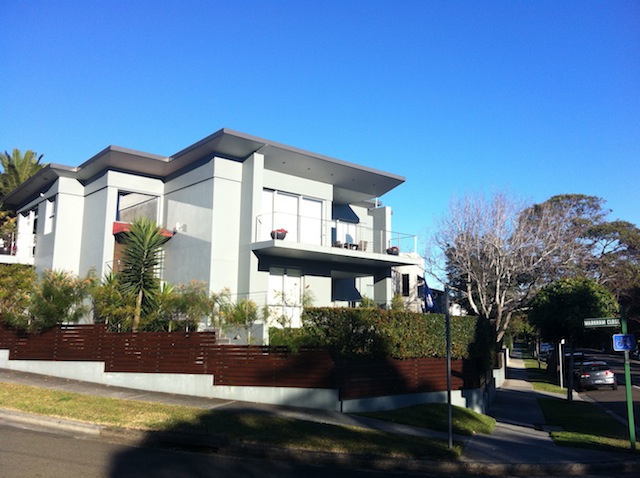
When they were sold by the Federal government most those modest family homes on Middle Head were bulldozed to make way for the grey behemoths of the 21st Century.
New grey mosman mansion
Like the Mc Mansions that crowd today’s suburbia, these feature four, five or even six bedrooms with on-suites, multicar garages and games rooms. Just as every child today has to win a prize, every room has to have a plasma TV.
These monuments to the modern consumerist economy triumphantly march along a road that once featured modest homes with gardens, trees and lawns.
Line of grey mosman mansions
In many ways these modern buildings represent the ethos of our time – grey, non-descript, poorly built, overcapitalised and dependent on cheap, never ending debt.
A striking aspect about them is their hostility to the pleasant surroundings and the 1930s mansions that make up most of the street. With their battleship grey, security features and blocky air raid shelter lines they look much more like some sinister military installations than the red brick army homes they replaced.
What’s also notable about these new buildings is many are empty. Some of them are being refurbished, only a few years after being built, and many are undergoing substantial repairs – a testament to how Australian building standards have declined in the past two decades.
Strolling along Mosman’s Middle Head Road its hard not to imagine that if Dorothea Mackellar were writing her iconic My Country poem today, she would have included the lines;
I love a sunburnt country
a land of capital gains
The tragedy for Australia is those old three bedroom houses could have been used by a visionary government to help low income families in Sydney’s increasingly unaffordable suburbs.
There was little chance those modest housing blocks would become anything more than expensive, over capitalised gin palaces for bankers and the city’s well connected business elite who are never slow to see a coal mine or old military property going cheap.
Architecture tells us a lot about our times and the abandoned Middle Harbour army base is a good commentary on the phases of Australian development through the twentieth Century and the beginning of this century.
The houses also tell how Australians see speculating on overcapitalised property as a safer investment than building the technologies and businesses necessary to prosper in this century. How that will turn out remains to be seen.
What will be interesting is how our great-grandchildren see us and our legacy when they look upon the grey, hostile buildings we built to celebrate our good fortune in the early 21st Century.
Cisco gave a media and analyst briefing earlier today on the Internet of everything looking at how various technologies can help with tasks ranging from reducing traffic accidents to improving productivity which I’ll write up later.
One of the analyst’s questions though is worth pondering – “what happens when the power goes out?”
For most of the industrial processes discussed by Cisco and the panellists, this would be a hassle but most of the systems would, or should, be designed to fall back to a default position should the power fail.
On a much bigger scale though this is something we don’t really think through.
In modern Western societyour affluent lifestyle is based upon complex supply chains that get the food to our supermarkets, fuel to our petrol pumps, water to our taps and electricity to our homes.
Those chains are far more fragile than we think and few of us give any thought to how we’d survive if the power was off for more than a few hours or if the shop didn’t have any milk and bread for days.
It’s one of the fascinating thing with the end of the world movies. When the meteorite hits or aliens take over then our power and food supplies probably have only 72 hours before they dry up.
After that, you’ve probably got more to worry about your neighbours trying to steal your hoard than being ripped to pieces by zombies.
Most of us probably wouldn’t cope without the safe, comfortable certainties which we’ve become used to.
One thing is for sure — if the power does fail, then most of us will have more to worry about than whether our smartphones are working or whether our geolocating, internet connected fridge is tweeting our wine consumption.