Category: rants

  • Can Sydney become a smart city?

    Can Sydney become a smart city?

    How does a city become smart? That seems to be the question of the moment as countries and cities around the world try to figure out how to catch a little bit of Silicon Valley’s magic.

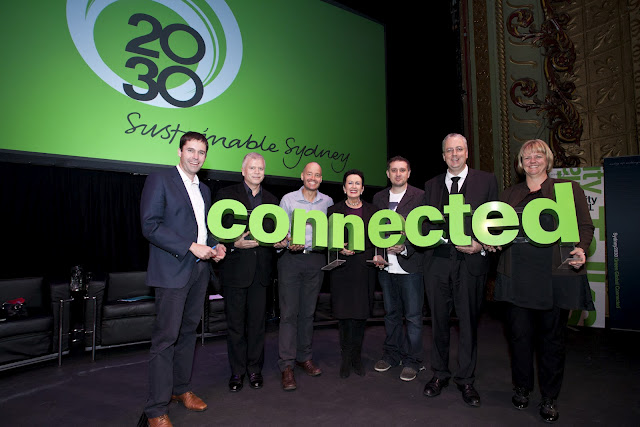
    As part of the 2012 City Talks series, the City of Sydney hosted a discussion on how the city can become a smart city;

    Sydney is bursting with talented, creative and forward-thinking people. How can we harness the energy of government, education, businesses, media, and creative thinkers to create space for innovation?

    While it’s questionable that a “creative space for innovation” is a worthy objective – albeit laden with buzzwords – it’s certainly true that Sydney, along with other Australian cities, has the components to be a entrepreneurial centre, the question is how does the city harness the various talents across the different sector.

    Working to advantages

    Rather than aping Silicon Valley, New York or Ireland all cities should be exploiting their natural advantages. Fast Company Magazine recently looked at how Oklahoma City has advantages over its bigger cousins in New York and California.

    For Sydney, and Melbourne, those strengths include an educated, multi-cultural workforce with first world legal systems in a similar time zone to the world’s major growth markets.

    One of the tragedies in Australia’s marketing over the last twenty five years has been the failure to mention the ethnic diversity of the nation. This is huge competitive advantage that is barely being discussed.

    What can governments do?

    At the Sydney City Talks event, Lord Mayor Clover Moore said that creating a smart city requires “the same incentive to be given to innovators and creatives as is given to property investors and mining companies.”

    That change requires state and Federal governments to change laws and businesses, particularly banks, to pick up on those price and policy signals.

    Education too needs reform although this needs real consultation or we’ll end falling for short term fads or copying the damaging anti-teacher jihad that has infected the US.

    A welcome change for many Australian innovators would be changes in government procurement policies as currently all levels of government prefer to deal with the local offices of large multinationals. As the Queensland Health Department debacle shows, these organisations are often less competent than local providers.

    Making those changes though will require major reforms to policies and laws, something that neither major Australian political party at any level has the courage or vision to do.

    That the NSW Digital Action Plan is now in its thirty-first draft speaks volumes about the inertia among the city’s, state’s and country’s political and business leaders.

    Ditch the Silicon

    Probably the first failure of imagination is the “silicon” tag – US entrepreneur Brad Feld skewers this nicely in his blog post on The Tragedy Of Calling Things Silicon.

    Sydney has already has a group called “Silicon Beach” which has spread out to Melbourne and the Gold Coast and it’s interesting that both Google Australia’s CEO and Engineering head want to co-opt the name.

    On of the suggestions was “Silicon Banana” a tag which brings to mind the phrase “kill me now please?” to anyone already uncomfortable with the ‘Silicon’ label.

    The “Silicon Banana” idea comes from the curved shape of Sydney’s ‘digital heartland’ which curves from Darling Island to the west of the city and curves around the edge of the city centre through Surry Hills across to the film and television facilities at Fox Studios.

    Describing Sydney’s centre of innovation as lying within the ‘banana’ illustrates the lack of thinking outside the current app and web mania. It also neglects the bulk of Sydney, particularly those parts of the Western Suburbs where languages such as Mandarin, Cantonese, Korean, Vietnamese, Arabic or Hindi are spoken.

    Once again we neglect those assets because they aren’t white, Anglo or living in the prettier parts of the city.

    Does it have to be Sydney?

    We should keep in mind that the Silicon Valleys of the past haven’t been the biggest cities – Silicon Valley itself is barely a city and San Francisco is not one of the US’ biggest cities.

    It’s quite possible that an Australian centre of innovation could be any one of dozens of smaller towns such as Geelong, Wagga or Cairns.

    The problem in Australia is, once again, property prices. Compared to the US or Europe, housing and office rents aren’t substantially cheaper outside the big cities unless you’re prepared to move to seriously blighted parts of the country.

    Spinning the wheels

    Probably the most disappointing thing of the ‘smart city’ discussion is just how bogged down we’ve become – there was little in the City Talk that wasn’t being spoken about five, or even ten, years ago. Things have not moved on.

    Creating a smart city isn’t about picking winners among industries, suburbs or groups. To really be smart we have to give the opportunities for clever people to succeed.

    Simply jumping onto today’s technology fad or mindlessly aping Silicon Valley is to squander our advantages and not learn from the mistakes of others.

    The real worry though is just how little progress is being made in seizing today’s opportunities. It doesn’t bode well for tomorrow’s.


    Similar posts:

  • Feeling the currents

    Feeling the currents

    Internet and marketing everyman Seth Godin makes an interesting point on his blog post Silencing The Bell Doesn’t Put Out The Fire.

    Seth’s point is that satisfying vocal complainers doesn’t address underlying problems in the business and cites the Dell Hell saga of Jeff Jarvis as an example of where load complaints were a symptom of a much deeper issue within the business.

    For Dell, this had been the choice to focus on the low value, high volume market segments. To compete there it meant cheap components and selling to comparatively uneducated, price sensitive consumers.

    Compounding that decision was Dell’s decision to partly address the inevitable cost pressures they had put themselves under by outsourcing their support lines to truly dire, lowest price providers.

    As a consequence of abandoning its service culture, Dell rapidly gained a reputation as being unreliable and unhelpful. One only has to look at the Dell Hell comments on Jeff’s original posts to see how damaged Dell’s name was.

    I encountered Dell’s shocking support during that period first hand in PC Rescue, one customer asked me to troubleshoot her Dell PDA after their support line had reduced her to tears.

    Very quickly I discovered why, the installation software supplied by Dell didn’t work properly – testing was obviously another victim of budget cuts – and the tech support people were working with an early version.

    We managed to fix the problem without the “help” of Dell’s helpdesk and the client swore never again to buy Dell. She’s now a happy Apple customer who is a happy to pay a slightly higher sticker price for a better product and service.

    The real concern was that during this period Dell’s management were oblivious to the problems they were suffering in the marketplace, they were meeting their KPIs and appeared to be growing sales while the business itself was about to go over a cliff.

    Dell’s management could have recognised this had they chosen to, the company had plenty of market intelligence, customers surveys and their support logs to tell them they had a problem. It wasn’t in their interests to do so.

    Today every business has those tools to monitor what customers are saying about them. Google Alerts, Facebook and – if you’re in hospitality – Tripadvisor, Yelp or Eatability.

    With social media it’s easy for the bad message to get out; it’s also easy for management or owners to watch out for problems.

    Dell only survived the Dell Hell experience because they were big and well capitalised, no smaller business could have survived similar damage done to their reputation.

    Smaller businesses don’t have the luxury of ignoring their customers until the screams become too loud.

    Similar posts:

  • Giving a damn

    Giving a damn

    Twenty years ago a lady unexpectedly passed away leaving her estate to her infant daughter. Included in the estate was a modest apartment in Sydney’s inner western suburbs.

    For years, the unit sat on a local real estate manager’s books quietly gathering rental income and growing in value during Sydney’s great property boom.

    Eventually the owner of the real estate agency tracked down the infant, now grown up and living in Boston. He’d hired lawyers and private detectives to track her down.

    Most of us would have taken the easy course and flicked the property to the public trustee where the property would have quietly languished for years in the tender care of the dusty, but expensive, bureaucrats.

    A few criminally minded ones would have sold the property and pocketed the cash, confident that no-one would ever know or care.

    But Chris Wilkins decided to do the right thing and found the owner, doing anything else would have been a “heartless alternative.”

    Having a heart and giving a damn is what matters.

    Whether its in our work, how we deal with other people or the change we make to our society. This is what matters – big bonuses, a flash car, a ministerial position or invites to “insider” conferences are just trinkets for the egos of vain little people.

    In an era where shareholder value, triple A credit ratings, executive remuneration and personal entitlements seem to stand above everything else, it’s good to be reminded that most people are doing the right thing by others.

    At the end of our lives, we’re judged by our actions. What will you be proud to be judged by?

    Similar posts:

  • Duly diligent

    Duly diligent

    “Who would have thought our CEO didn’t have the qualifications we thought he had?” wonders the Yahoo! board.

    “It seems we forgot to count the number of beds!” whines the cleaning contractor when challenged about a filthy hospital.

    “We had no idea these people were corrupt,” growls the politician and former trade union official when confronted with proof its factional friends were misusing expenses.

    An interesting phenomenon in the rise of the managerial classes over the last thirty years has been the group’s refusal to take responsibility for their failures.

    Instead we see boards, investors, managers and politicians duck responsibilities that a reasonable observer would have thought is the reason for their healthy salaries, bonuses and perks.

    One of the many conceits of 1980s thinking is the ideology of “personal responsibility” – to low paid workers and those at the bottom of society this mantra is applied ruthlessly.

    The call centre worker who makes a mistake gets counselled or fired while the aboriginal kid who steals a can of coke is denied bail and goes to jail.

    Let’s not mention the fines and sanctions that befall a small business owner who is too slow in submitting paperwork or forgets to pay one of the countless fees that make up today’s hidden taxation.

    In boardrooms and Parliaments those doing the wrong thing rarely face any accountability; politicians caught misclaiming expenses are allowed to pay it back at their convenience while senior executives and captains of industry with a track record of mistakes continue to be employed in positions way beyond their abilities.

    One exception to the that rule is former Tyco Chief Executive Dennis Kozlowski and his cohorts who looted their company through the 1990s. Eventually their excesses became so great that the CEO and his cronies ended up being jailed.

    Not that this has rattled some of his cronies sense of entitlement. Former CFO Mark Swartz is suing the company for $60 million in retirement benefits and other monies.

    I have a personal connection with Messrs Swartz and Kozlowski – I worked for their company in the mid 1990s and lasted nine months in a culture of cronyism and rorts where middle management enthusiastically aped the excesses of their senior executives.

    One can argue I didn’t carry out my due diligence – a little bit of digging and more detailed asking around would have revealed Tyco’s institutionalised corruption and cronyism at the time.

    I paid for this oversight by having my contract terminated in a public and humiliating way which drove me to set up my own business.

    While working for companies like Tyco I saw them drive smaller businesses into the ground through slow, or non payment, of invoices. Strangely they always seemed to pay the corporate hospitality bills on time.

    The weakness in today’s corporatist economy is that boards like that at Yahoo!, executives like Tyco’s in the 1990s and many of our business and political leaders have a sense of entitlement way beyond the value they add to their business, community or society.

    Worse, the main lesson of 2008’s financial crisis is that massive government spending will protect these peoples’ bonuses and privileges regardless of their actions.

    As investors, employees, suppliers and voters we have to do our due diligence on these people and organisations. We have the tools today to check the track record of those who want our vote, skills or products.

    In today’s economy, we can’t afford to squander money or time on those who demand fat fees and salaries without delivering value.

    At the cash register and ballot box, it’s time to do our due diligence.

    Similar posts:

  • Depreciating the future

    Depreciating the future

    When I wrote my first book back in 1998, one of the things my editor and I did was look at the cost of buying and maintaining technology.

    Regardless of how we chopped the costs up, it came up consistently that the purchase cost of a personal computer was around a third of the Total Cost of Ownership (TCO).

    The TCO concept is something forgotten by people – be it a minister announcing a billion dollar purchase of jet fighters, a CEO boasting how he’s opened a hundred new outlets this year, or a family buying an investment property.

    It was bought sharply into focus for me when one of my kids claimed he couldn’t use his government provided school laptop because the IT guy didn’t have the repair software to fix a problem.

    Despite millions being spent on providing these computers, little has been allocated to maintaining them.

    This is typical of the public education sector, early in the adventure of building a computer support business I learned that services to schools and universities were fraught with difficulties as many would infrequently receive a fixed amount for capital expenditure but nothing for ongoing maintenance. You see this in the conditions of buildings on many campuses.

    Forgetting operating and support costs is something we all fall for.

    Strangely motor vehicles are the only area we consistently factor in maintenance and running costs, probably because we get the fuel price shoved in our face every time we take the car for a drive.

    While computers are becoming disposable items just like fridges and TVs were maintenance isn’t so much an issue given most last five to ten years before needing expensive repairs, its still true for many capital items.

    There’s another aspect to forgetting costs – depreciation.

    Depreciation allows us to factor in the declining value of our business assets yet I keep meeting people who treat depreciation as income or even an asset in itself. This is particularly true among real estate investors who prefer to buy newly built apartments for the higher depreciation deductions they can claim against tax.

    Bizarre stuff and true bubble thinking where people think operating losses will be offset in the medium term by capital gains.

    One of the aspects of 1980s thinking is that business costs like training and maintenance can be palmed off elsewhere or infinitely deferred. That isn’t the case.

    In society and business, we’re seeing the effects of pretending these costs don’t exist. Somewhere in there lies opportunity.

    Similar posts: