Category: rants

  • Cargo cults and your business

    Cargo cults and your business

    “We need an interest rate cut” thunders the business media.

    “Give us GST relief” plea the big retailers.

    “China will boom forever” assert the government economists.

    “Big corporations will buy us out for a billion dollars” pray the hot new start ups.

    “I’ll win the lottery this week” thinks the overworked cleaner.

    We’re all waiting for the big saviour that’s going to rescue us, our business or the economy.

    It could be a big win, a big client or a big government spending program to rescue us.

    Sadly, should we lucky enough for that saviour to arrive, it may not turn out to be all we expected.

    There’s many lottery winners who curse their win while many disaffected founders who watch their startup baby fade away neglectful new owners.

    For a lumbering department store, tax changes will do little to save them from market changes their managements are incapable of comprehending.

    Interest rate cuts are great for business when customers are prepared to take on more debt but in a period where consumers are deleveraging a rates cut will do little to stimulate demand.

    The clamour for interest rate cuts are a classic case of 1980s thinking; what worked in 1982, 1992 or 2002 isn’t going to work the same way in 2012.

    What’s more, the Zero Interest Rate Policies – ZIRP – of the United States and Japan are a vain attempt to recapitalise zombie banks saddled with overvalued assets rather than an effort to help the wider economy.

    China is more complex and there’s no doubt the country and its people are becoming wealthier and there are great opportunities.

    The worry is most of what we read today could have been the wishful thinking written about Japan thirty years ago. Lazily selling commodities to the Chinese while they create the real value is not a path to long term prosperity.

    In business we have a choice, we can pray for luck or we can make our own luck.

    Some choose to join the cargo cult and pray, or demand, that someone else does something. Others get out and do it.

    John Frum gravesite image by Tim Ross through Wikimedia Commons

    Similar posts:

  • Taking care of our own

    Taking care of our own

    “The council ought to do something” growled a friend who’d been stuck in a peak hour traffic jam.

    That innocuous comment illustrates the fundamental challenge facing the developed world’s politicians – that we expect our governments to fix every problem we encounter.

    In the case of the local traffic jam, the cars creating gridlock are parents driving their children to two nearby large private schools.

    Despite the problem being caused by the choices of individuals – those decisions to send their kids to those schools and to drive them there – our modern mindset is “the government aught to do something” rather than suggesting people should be making other choices.

    Socialising the costs of our private decisions is one of the core beliefs of the 1980s mindset.

    Eventually though the money had to run out as we started to expect governments to solve every problem.

    We’re seeing the effects of this in the United States where local governments are now having pull up black top roads, close schools and renege on retirement funds as those costs become too great.

    As a society we have to accept there are limits to what governments can do for us.

    Increasingly as the world economy deleverages, tax revenues fall and the truth that a benign government can’t fulfill our every need starts to dawn on the populace, we’ll realise that expecting politicians and public servants to save us is a vain hope as they simply don’t have the resources.

    Bruce Springsteen puts this well in his song “We Take Care Of Our Own.”

    The truth today is the cargo cult mentality of waiting for governments or cashed up foreigners to come and save us is over.

    We’re going to have to rely more on our own businesses, families and communities to support us in times of need.

    The existing institutions of the corporate welfare state are beginning to collapse under the weight of their own contradictions.

    Joe Hockey knows this, but as a paid-up agent of the establishment he doesn’t dare nominate the massive cuts to middle class welfare and big business subsidies that are necessary to reform those institutions.

    Waiting for the council to fix the local roundabout is nice but it doesn’t address the bigger problems.

    It’s up to us to build the new institutions around our local communities and families. This is not a bad thing.

    Similar posts:

  • David Jones’ wasted decade

    David Jones’ wasted decade

    In 2001 Australian retailer David Jones shut down their website.

    Back then, the future was clear; profits were in financial services and certainly not in online sales or investing in improved stores and service.

    Today the company released their strategic review that looks forward to financial years 2013 and beyond. You can downloaded it from David Jones’ investor website.

    On Page 13, they show just how far David Jones has fallen behind their international competitors. Less that 1% of DJ’s sales are online compared to 4.5% of the UK’s House Of Fraser and 13% of John Lewis.

    Australian executives claim they are in a global market for their talents which is why they deserve world standard remuneration. David Jones’ results show how hollow that mantra is.

    The problems start with the board, five of the eight current David Jones directors were with the company when that decision was made in 2001.

    None of them have been held to account.

    David Jones illustrates the weakness in Australia’s business sector – largely unaccountable boards answering only to institutional investors who themselves have grown fat and lazy on clipping the compulsory superannuation ticket.

    One hopes the some of the competitors who are displacing flaccid incumbents like David Jones are based in Australia or the locals may soon find that many of these sectors, not just in retail, will go offshore to better run companies.

    Similar posts:

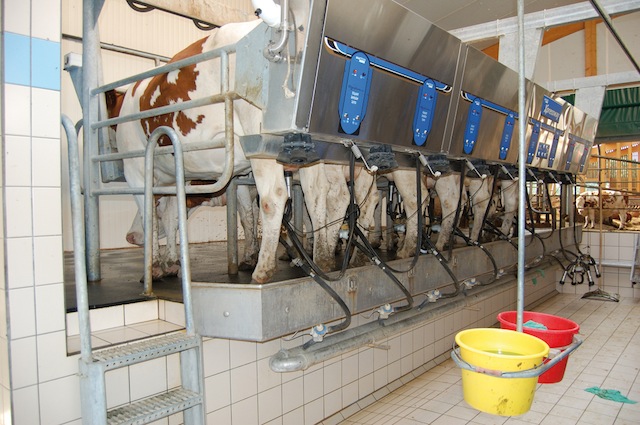
  • Milking the dead cow

    Milking the dead cow

    Many big Australian businesses seem untouchable as they dominate their markets to degree almost unknown in most other developed countries. As the story of Sensis shows, Australia’s big duopolies may not be as strong as they appear.

    The last few months have been tough for Sensis; revenues last year fell nearly 25%, the once strong business was folded into the latest incarnation of Telstra Digital Media and now the CEO Bruce Akhurst has departed after seven years.

    What could have been a dynamic business is now shriveling away, what went wrong?

    Milking the revenue cow

    Bruce did a good job of keeping revenue coming in during a period that the then owners, the Federal government, wanted to maximise the book value of Telstra before its sale.

    Year upon year Sensis could be relied upon to squeeze more money out of the businesses advertising in it.

    Management were focused on extracting revenue from the existing client base rather than responding to the obvious threat from online search.

    Expensive distractions

    When senior management decided to respond to the online world, they were sucked into unnecessary and expensive distractions; the most notable being the 2005 launch of Sensis Search where the then Telstra CEO – the disastrous Sol Trujillo – famously sneered “Google Schmoogle”.

    Three years and hundreds of millions of dollars later, Sensis admitted defeat. By then the small business advertisers who were the life blood of the directory market had woken up to the reality their customers weren’t using the Yellow Pages anymore. Sensis had missed the boat.

    Clunky processes

    Whenever I spoke to small businesses about Sensis through the 2000s there was the same complaint, “I don’t have time to deal with their sales people, just let me tick a box on a web page or send a fax!”

    Purchasing space was difficult for customers, their 1950s Willy Loman sales model should have been automated in the 1990s and never was.

    Instead Sensis was locked into a high cost sales model and added friction for advertisers which they shouldn’t need, not only were they expensive but they actually made it difficult for their customers to place orders.

    Should Sensis have been sold?

    At its peak in 2005, Sensis was valued at between 8 and 10 billion dollars as a stand alone company.

    Many, including myself, believe that breaking Sensis away would have been the best result given Telstra were at the time focused on protecting their fixed line copper wire monopoly and the directories business was not getting the management attention or capital investment it needed.

    History shows though that we might be wrong.

    Commander Communications was spun off from Telstra in 2000 and like Sensis had inherited an almost monopoly position in the small business communications market.

    By 2007 Commander was out of business thanks to a combination of incompetence, management greed and an inability to recognise the changing communications marketplace.

    The Australian disease

    Commander’s biggest problem was it saw its customers as cash cows, just as Sensis did. This exposes a much deeper problem in Australian industry and management culture.

    Over the last thirty years Australian government policies have seen duopolies develop in almost every key sector of the economy.

    All of these duopolies share the same “customer as a milk cow” philosophy which, along with the rampaging Australian dollar, has dragged Australia into being a high cost economy.

    The banking industry, while not a duopoly for the moment, is an even more debilitating example of the cash cow syndrome where small business has been crippled by excessive interest rates and fees – particularly since the 2008 crisis.

    Sensis’ demise is systemic of a culture that fixates on extracting maximum revenue from customers; concepts like innovation, R&D or adapting to market trends don’t have a role in this mentality.

    Milking cows is a fine business, but sometimes you have to think about the health of the herd.

    Similar posts:

  • Does small business need government support?

    Does small business need government support?

    The New South Wales State Government’s decision to axe their long standing small business programs raises the question of whether small businesses need government support at all.

    Last week’s announcement the NSW Government are abandoning their business education programs and replacing them with a previously announced network of local business advisors shows where small business lies in the state’s list of priorities.

    Taken at face value, the changes appear to be moving back to the face-to-face business advice model of a decade or so ago that was common before the winding back of small business programs and local enterprise centres by then Federal Liberal and state Labor governments under John Howard and Bob Carr.

    On closer examination, it’s a cut to business support and an effective withdrawal of NSW government assistance to small business. The remaining services will be outsourced to the same local business centres that have been starved of funds for over a decade.

    A concern with the individual advisors will be how many businesses they can reach, according to the NSW Trade & Investment annual report 2010-11 the axed events had an audience numbering over 5,000. It’s difficult to see how the advisor network will match that and makes one wonder how the more important events couldn’t have been streamed or podcast across the Internet.

    Putting aside the pros and cons of this restructure, the bigger question is should small business expect any government support at all?

    The record of Australian government support for industry is not good. We only have to look at repeated visits to the trough by what remains of the Australian car making industry, the bipartisan debacle of assistance to the renewal energy sector or the support given by the Keating Labor government to Kodak to see how well schemes have worked out.

    Most of Australia’s economic success stories have happened despite, not because of, government’s pouring money into industries. For example, the first five years of the current mining boom was completely missed by the political classes along with the Canberra press gallery and the media economic commentators.

    This is where small business steps in – rather than relying on access to the ministerial suite to protect their industries, the little guys and the startups compete on price, service and innovation. Aspects that organisations in protected industries or those dependent on taxpayer largess struggle with.

    Indeed many small business owners and entrepreneurs struck out on their own because they felt stifled by bureaucracy. So offering them programs wrapped up in paperwork is counter intuitive.

    Where the government can help is with keeping busy business owners up to date with new developments in business, markets and technology which was exactly what the events programs like Small Business September and Micro Business Week did.

    It’s difficult to see how the individual business advisors employed by local Business Enterprise Centres will keep up with their clients up with changes regardless of how skilled or well intentioned they are.

    All of the changes are justified by the report from the Small Business Commissioner’s listening tour. Apparently she was told businesses didn’t want events like Small Business Septtember

    I certainly didn’t hear any complaints at the breakfast fourm I attended at the Northern Beaches, most of the concerns seemed to be from cafe owners arguing about council outdoor seating permits. If the commish wants to get involved with that nest of vipers, I wish her the best of luck.

    Overall, small business can’t expect much from government; particularly in the modern corporatist society where Big Government does Big Deal with Big Unions and Big Business while Big Media selectively reports what suits it.

    Probably the best thing for small business is stay nimble and avoid being stepped on the Big Dinosaurs as they dance obliviously to the major changes that are happening in the world around us.

    Big dinosaurs look after their own, don’t expect them to give you anything except a big shower of dung.

    Disclaimer: I’ve been hired by Trade & Investment to host various events on the now axed programs and worked for 19 months at what was then the Department of State and Regional Development. I wish all of those former colleagues who now find their positions abolished the best of luck in finding another role.

    Similar posts: