Category: social media

  • Twitter’s curse of management

    Twitter’s curse of management

    Today Twitter celebrates the tenth anniversary of hashtags.

    What’s notable about the story is how Twitter’s management thought hashtags were a ‘nerdy idea’

    Twitter has been consistent in ignoring its user community despite every successful feature of the service coming from the platform’s grass roots.

    It’s hard not to think Twitter’s greatest barrier to success is its leadership.


    Similar posts:

    • No Related Posts
  • Re-opening the comment section

    Re-opening the comment section

    The New York Times yesterday announced they will be abolishing their Public Editor role while opening up more of their articles to readers’ comments, a big shift in trends over the past decade.

    One of the internet’s broken promises was how allowing the audience to comment would usher in a new era of accountability and democracy.

    Sadly, it became apparent giving readers carte blanche opened a sewer of abuse, misinformation and libel. Faced with a whole range of risks, not to mention the psychological damage faced by staff members trying to engage with the public, most media organisations chose to be selective about the articles they opened comments on.

    Now the New York Times proposes to re-open most of their articles to readers’ comments.

    We are dramatically expanding our commenting platform. Currently, we open only 10 percent of our articles to reader comments. Soon, we will open up most of our articles to reader comments. This expansion, made possible by a collaboration with Google, marks a sea change in our ability to serve our readers, to hear from them, and to respond to them.

    That the NYT is teaming with Google to enable readers’ comments is interesting – will the search engine giant be applying AI to the moderation or is this another attempt to pump life into their failed social media and identity service? It remains to be seen.

    Also what remains to be seen is if removing the Public Editor role affects journalism standards at the Times. The position at the newspaper was established in the wake of the Jayson Blair scandal to oversee the organisation’s output and hold editors and journalists accountable for oversights.

    In the era of social media and an empowered readership, the New York Times’ publisher Arthur Sulzberger now believes the Public Editor role is redundant.

    The public editor position, created in the aftermath of a grave journalistic scandal, played a crucial part in rebuilding our readers’ trusts by acting as our in-house watchdog. We welcomed that criticism, even when it stung. But today, our followers on social media and our readers across the internet have come together to collectively serve as a modern watchdog, more vigilant and forceful than one person could ever be. Our responsibility is to empower all of those watchdogs, and to listen to them, rather than to channel their voice through a single office.

    So the comments section now becomes part of the editorial process, it will be an interesting experiment.

    In some respects, the New York Times’ embrace of social media feedback is a reflection of what many other organisations have done in other industries with ‘social listening’.

    The theory is paying attention to what customers say online gives management immediate feedback, however practice has shown most organisations lack the internal communications systems to take advantage of this. It also appears most executives care little about what the public thinks of them which negates the ‘people power’ aspect of social listening.

    If the Times can get this right, it will make the media outlet more responsive and effective. However history isn’t on their side.

    Similar posts:

    • No Related Posts
  • Being an industrial revolutionary

    Being an industrial revolutionary

    “The future isn’t pre-determined, technology doesn’t come from some outside force. It’s created by us. Some people have more power than others in that system, such as the big tech entrepreneurs, but at the end it’s people and organisations that have the power.”

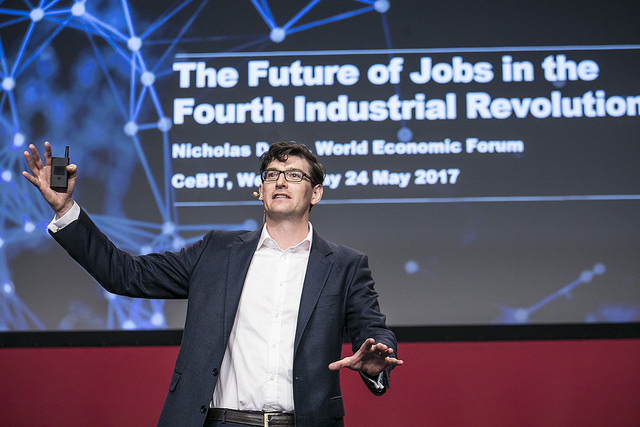
    Nicholas Davis, the World Economic Forum’s Head of Society and Innovation, was discussing at the recent Sydney CeBIT conference how we can take control of the digital economy and where workers fit into an increasingly automated world.

    Technology and online platforms aren’t neutral system, Davis observes. “It’s not just about how we use them, but the values that are designed into the systems, technology is not just a neutral thing. During a conversation like this if I put my iPhone between us, it’s proven that reduces our memory of that discussion and our sense of connection.”

    Politics and addiction

    “The purpose of the technology, the design of it, affects us in different ways.” Davis says, “if we design technologies for addiction, if we design business models that involve us being sucked into systems at the expense of other things in our lives, then that is a value choice that companies make and that we as users are trading off in our lives.”

    “In understanding that technology is not neutral then the question is how we, as revolutionaries have that political discussion? I don’t mean political like ‘Left’ and ‘Right’ but these are value decisions that we need to engage with.”

    “The difficulties about having discussions about technology is not getting sucked into a left-right divide and letting one group of people own innovation, but to say what do we want, How do we get there and how do we avoid the mistakes of previous industrial revolutions where the environment suffered, kids suffered and vulnerable populations suffered.”

    A change in thinking

    “One of the biggest problems is we don’t have regulatory or even democratic institutions where we can make collective decisions about technologies,” says Davis.

    “The average AI researcher, at the top of their game anywhere in the world, would only understand a small percentage of the AI space. So how do you expect a politician or a voter, to come to grips with it.”

    One of the key discussions missing in the public sphere is around automation and concepts like the Universal Basic Income, Davis believes. “We should have a serious chat about giving everyone the space to build up their skills.”

    In the development policy, Davis sees growing inequality and applying last century’s thinking to today’s challenges as among the biggest risks facing governments and communities.

    Rippling beyond business

    For business, the imperative is to recognise the effects of decisions on the wider community.

    “The big thing for business is understanding the technology decisions you make have a ripple effect beyond your company, you need to look forward to new ways of value adding.”

    Davis warns we are seeing a backlash against innovation and technology with concerns about privacy and security growing.

    “So much of the world is build on their use of data. Most companies and organisations don’t have good data hygiene or ontology to classify their information. People say data is their greatest assets – some say it’s the new oil – but it’s also their greatest liability. So understanding information security at the board level is critical.”

    The power of individuals

    For individuals, Davis believes the power lies with us in the choices we make as consumers.

    “Don’t underestimate your own power, but also don’t underestimate that more and more products around us are designed to influence our behaviour in ways we need to be aware of.”

    “In most cases, if the product is free then you and your data are the product, understand that and on what terms is important.”

    Conscious choices

    “Understand the externalities of these services as well. Appreciate the effects it has on your family, your mental health, on the ability to connect is important. Being able to make conscious choices about these things.”

    “Supporting open data standards and competition – not just accepting Android or Apple for instance – rather than allowing politicians and big business to fight over these things.”

    So in Davis’ view being an ‘industrial revolutionary’ in the digital era is a matter of being an informed, and empowered, consumer. Will that be enough?

    Similar posts:

  • Keeping the cyber utopian dream alive

    Keeping the cyber utopian dream alive

    “I stand before you as a failure,” was how I opened my presentation at the Talking Justice conference last weekend. “If I were giving this talk ten or fifteen years ago, I’d have described how the web and social media were going to usher in a new era of democracy and accountability.”

    “Like most of the cyber utopians, I was very, very wrong.”

    Basically we were wrong because we didn’t see how the internet would concentrate rather than diffuse power or the extent of how new gatekeepers and monopolies would be replaced the old ones.

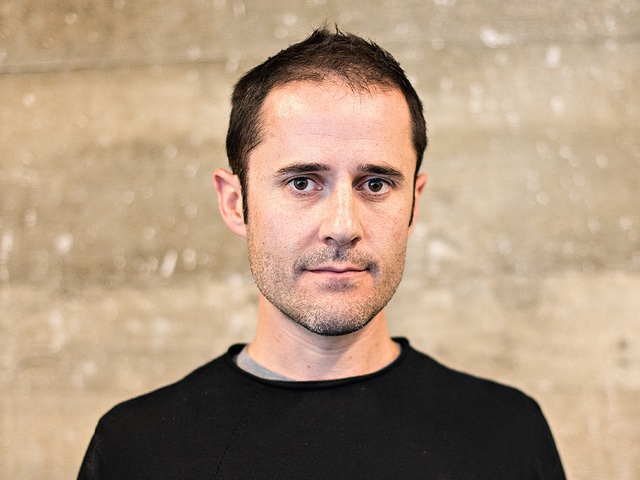
    My friends and I were not alone, in a somewhat rambling interview with the New York Times Twitter co-founder Evan Williams describes how “the internet is broken” and how he thought the messaging service could make the world better.

    “I thought once everybody could speak freely and exchange information and ideas, the world is automatically going to be a better place,” Mr. Williams says. “I was wrong about that.”

    Instead Twitter has become home to trolls, harassment and misinformation, something that saddens Williams and most of us who thought the web would bring about a more open and fair society.

    Hope isn’t completely gone though, we are still in the early days of social media and the internet so the current trends may only be a transition effect as audiences, markets, regulators and the community get to grips with the new medium.

    There’s also Amara’s law which states we overestimate the effect of a technology in the short run and underestimate the effect in the long run.

    So it’s best to be a pessimistic optimist where one accepts in the short run things are dire but over time things will turn out well.

    We can only hope.

    Similar posts:

  • Tinny vapid crap – last week’s links

    Tinny vapid crap – last week’s links

    Last week was an interesting time with an appearance before a Senate Committee and a trip to regional Victoria to talk about the media and social justice.

    While busy, there was time to read some fascinating articles ranging from Elton’s John’s views on modern pop music, software lawsuits and early losses in the war on ‘fake news’ through to how the shiny new Apple campus boast almost everything for employees except a childcare centre.

    Parents need not apply

    Apple’s new 5 billion dollar campus is the realisation of Steve Jobs’ final vision. It boasts a hundred thousand square foot gym and an attention to detail that extends to the sand used to make the windows.

    But it doesn’t have a day care centre, which gives a pretty clear message to aspiring employees – if you don’t have a stay at home spouse, something pretty rare in the hyper expensive Silicon Valley, then don’t bother applying.

    Thanks a latte

    Meanwhile in Australia, the government financed National Broadband Network is spending half a million dollars a year on maintaining its staff coffee machines.

    While the money is small change in a project recent estimates put at costing $56 billion, it is emblematic of how far from its original purpose the vision has drifted.

    Facebook Fails to Tackle ‘Fake News’

    The social media’s attempts to tackle ‘Fake News’ are failing dismally reports The Guardian as reactionary groups gleefully reshare and publicise anything flagged as such.

    While it’s early days, this isn’t a good start for Facebook although it also illustrates how powerful filter bubbles are and the lengths people will go to spread their ideologies.

    The lawyers always win

    Lasts week’s ransomware scares will trigger lawsuits says Reuters, quoting several legal experts.

    Unsurprisingly, it won’t be Microsoft who’ll be the target given their almost bulletproof terms and conditions but businesses who didn’t patch their systems could be liable.

    Fox News’ founder passes

    Roger Ailes, the founder of Fox News and one time Nixon adviser, passes a few months after being ousted from the network he created.

    Ailes personified the tabloidisation of the media as Rupert Murdoch applied the model which had worked so well for him at The Sun in the UK to newspapers and television in the United States.

    Many blame the internet for the click bait, sensational model of modern news reporting but the pattern was well established by the time the World Wide Web came along in the mid 1990s.

    Tinny, vapid crap

    Elton John weighs in on the state of pop music.


    Similar posts: