Category: social media

  • News organisations and social media copyright truths

    News organisations and social media copyright truths

    One of the long running scandals of modern journalism is how media organisations have misused social media.

    Haitian photographer Daniel Moran’s victory over Agence France Press and Getty Images is a reminder to journalists and media organisations that when something is posted to social media it doesn’t mean it’s free to use.

    Since the rise of social media sites it’s become common for journalists to grab images or videos from them to illustrate stories. At best, the media organisations have credited the sites they’ve stolen the content to allay copyright concerns.

    The problem is media companies and journalists don’t have the right to do that; users don’t give away their rights when they post to Twitter or Facebook — they grant a license to the company to use those that content as they wish.

    If a photographer, writer, computer programmer or musician wants to give away their work for free then there’s a range of ways they can do it and many are happy to make their efforts available to the community without charge. It just happens posting to a social media site isn’t one of those ways.

    Hopefully journalists and media organisations will learn a lesson from Daniel Moran’s case, social media doesn’t mean open slather.

    Similar posts:

    • No Related Posts
  • Building business communities

    Building business communities

    Industrial designers and engineers are probably the last thing most of us think of when discussing online communities.

    Last week two very different events illustrated just how successful businesses benefit from building communities around their products and services.

    Over lunch at a nice restaurant overlooking Sydney Harbour Dassault Systemes launched their their latest Solidworks 3D design software where they described the two million members of their global user community as being key competitive advantage in the industrial design market.

    In the business sector, having that ecosystem of users is the key success as shown by businesses ranging from AutoCAD to Photoshop. Almost every industry has some software package that dominates the sector because ‘everyone uses it’.

    Building social media communities

    At the other end of the scale earlier in the day PayPal Australia launched their latest Driving Business Online campaign showcasing online commerce tools for the small to medium business sector.

    One of the companies they profiled was Brisbane fashion company Black Milk Clothing, a Brisbane based business that has grown from a startup to employing 150 staff in four years entirely through its 560,000 strong Facebook community and 655,000 Instagram followers.

    While there’s risks with relying on social media platforms as a primary marketing channel, Black Milk is a good example of what a retail business can do with building an online community.

    Older examples

    None of this is really new, Apple are probably the best example of a tech community with millions of adoring fans prepared to queue around the block for the latest iPhone.

    Microsoft’s continued profitability despite being in a declining market comes from its army of developers, system admins and IT support services who are deeply committed to the company’s products.

    At it’s most basic, every business needs a core of dedicated customers, committed staff and enthusiastic evangelists — with today’s tools companies like Black Milk are able to build a global brand.

    Not every business can build a global brand out of their communities of enthusiastic customers and dedicated employees but the goodwill in those groups are quite possibly the biggest asset any organisation has.

    With today’s online collaborative tools and social media services there’s no excuse for a business not be nurturing and growing their communities.

    Similar posts:

  • Privacy’s still beating heart and the social media challenge

    Privacy’s still beating heart and the social media challenge

    “I’m not a very public person,” twenty-two year old Walter Woodman tells the New Yorker in How A Relationship Dies on Facebook.

    One of the assumptions of the social media industry is that digital natives, those born after 1990, have little if any expectations of privacy. The New Yorker story challenges that idea.

    Much of the New Yorker’s background is taken from the Pew Centre’s May 2013 report Teens, Social Media and Privacy which interviewed 802 US teens and their parents to identify young adults’ attitudes towards privacy.

    As the Pew Centre’s Mary Madden wrote in a follow up post to that report, US teenagers aren’t about to about to abandon Facebook yet but they are concerned about privacy and the work involved in managing an online persona.

    While some of our teen focus group participants reported positive feelings about their use of Facebook, many spoke negatively about an increasing adult presence, the high stakes of managing self-presentation on the site, the burden of negative social interactions (“drama”), or feeling overwhelmed by friends who share too much.

    This suggests a far more mature, and complex, understanding of privacy by teenagers than many of the social media boosters assumed when declaring that privacy is irrelevant in the Facebook era.

    Like their parents, teenagers and young adults know there are consequences for sharing too much online which challenges the social media platforms that have built their businesses around users spilling everything about themselves into the big data pot.

    It turns out digital natives are just as conscious of the risks as their parents, although how they handle it may manifest in different ways, and the assumptions of many social media businesses aren’t quite as robust as they appeared not so long ago.

    Similar posts:

    • No Related Posts
  • Bringing social networking to life

    Bringing social networking to life

    One of the highlights of the 2013 Australian Microsoft TechEd was a startup panel featuring local startups CoOpRating, Project Tripod and Nubis.

    All three startups are interesting projects and Nubis in particular illustrated how various internet and smartphone technologies which are coming together.

    Nubis is an Augmented Reality platform that projects social media onto the viewer of a smartphone’s camera. By pointing the camera at someone, the idea is a user can bring up details about a person.

    “We’re bringing social networking to life,” says founder Uzi Bar-On.

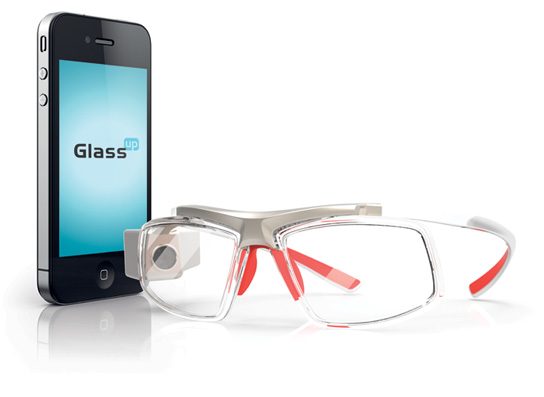
    As part of their Alphega project, Nubis has teamed with Glass Up, an Italian startup attempting to create a Google Glass competitor, the aim is to create a wearable computer that feeds social media information to the wearer.

    While it’s not clear what the benefits will be of that – or whether Glass Up, Nubis or Alphega will be successful – the project is interesting as it brings together Augmented Reality, geolocation, wearable technologies and social media.

    Over the next few years we’ll be seeing more products like Alphega tying together different technologies and using the Internet of Everything to talk to each other.

    It’s these sort of projects that will show us how our businesses and lives are going to change over the next decade as smart people figure out the ways to mash together these technologies.

    Paul travelled to Microsoft TechEd 2013 courtesy of Microsoft Australia

    Similar posts:

  • Understanding the social media whispers

    Understanding the social media whispers

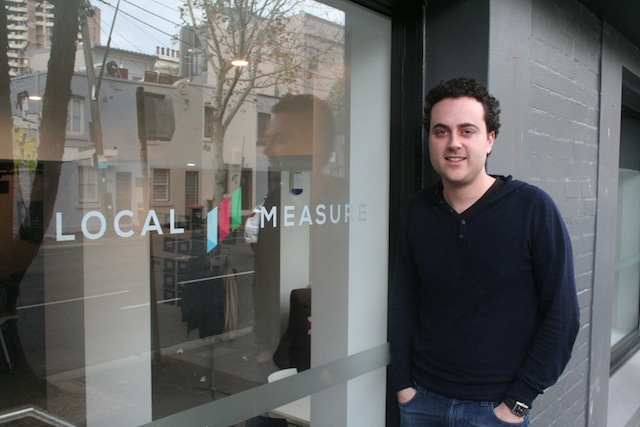
    What do you do when paying customers tell you they would rather your product be different to what you were offering? This is the predicament that faced Jonathan Barouch when he discovered the real market for his Roamz service was in social media business intelligence.

    How Jonathan dealt with this was the classic business pivot, where the original idea of Roamz evolved into Local Measure.

    Originally Roamz was set up to consolidate social services like Twitter, Foursquare and Facebook. If you wanted to find a restaurant, bar or hotel in your neighbourhood, Roamz would pick the most relevant reviews from the various services to show you what was in your neighbourhood.

    The idea for Roamz came from when Jonathan was looking for places to take his new baby, jugging several different location services to find local cafes, shops or playground is hard work when you have a little one to deal with.

    A notable feature of Roamz was the use of geotags to determine relevance. Even if the social media user doesn’t mention the business, Roamz would use the attached location information to determine what outlet was being discussed.

    Enter Local Measure

    While Roamz was doing well it wasn’t making money and, in Jonathan’s words, it was a “slower burn, longer term play”. On the other hand businesses were telling him and his sales team that they would pay immediately to use the service to monitor what people were saying about them on social media.

    “People said, ‘hey this is cool, we want to pay for this.” Jonathan said of the decision to pivot Roamz into Local Measure.

    “I want to say it was a really difficult decision but it wasn’t because we had people saying ‘we want to pay you if you continue with this product.’”

    Local Measure is built on the Roamz platform but instead of helping consumers find local venues, the service now gives businesses a tool to monitor what people are saying about them on social media services.

    The difference with the larger social media monitoring tools like Radian6 is Local Measure gives an intimate view of individual posts and users. The idea being a business can directly monitor what people are saying are saying about a store or a product.

    For dispersed companies, particularly franchise chains and service businesses, it gives local managers and franchisees the ability to know what’s happening with their outlet rather than having to rely on a social media team at head office.

    The most immediate benefit of Local Measure is in identifying loyal users and influencers. Managers can see who is tweeting, checking in or updating their status in their store.

    Armed with that intelligence, the local store owner, franchisee or manager can engage with the shop’s most enthusiastic customers.

    Customer service is one of the big undervalued areas of social media and Jonathan believes Local Measure can help businesses improve how they help customers.

    “It makes invisible customers visibile to management,” says Jonathan.

    An example Jonathan gives is of a cinema where the concession’s frozen drink machine wasn’t set currently. While the staff were oblivious to the issue, customers were complaining on various social media channels. Once the theatre manager saw the feedback he was able to quickly fix the problem.

    Employee behaviour online is also an important concern for modern managers, if employees are posting inappropriate material on social media then the risks to a business are substantial.

    “From an operational point perspective we’ve picked up really weird and wonderful things that the business doesn’t know,” says Jonathon. “Staff putting things in the public domain that is really damaging to brands.”

    “We’ve had two or three cases of behaviour that you shudder at. I’ve been presenting and it has popped up and the clients have said ‘delete that, we don’t want that up’ and I say ‘that’s the whole point – it’s out there.’”

    That’s a lesson that Domino’s Pizza learned in the US when staff posted YouTube videos of each other putting toppings up their noses. Once unruly employees post these things, it’s hard work undoing the brand damage and for smaller businesses or franchise outlets the bad publicity could be fatal.

    Local Measure is a good example of a business pivot, it’s also shows how concepts like Big Data, social media and geolocation come together to help businesses.

    Being able to listen to customers also shows how marketing and customer service are merging in an age where the punters are no longer happy to be seen and not heard.

    It’s the business who grab tools like Local Measure who are going to be the success stories of the next decade, the older businesses who ignore the changes in customer service, marketing and communications are going to be a memory.

    Similar posts: