Category: social media

  • Ransomware and innovation – links of the week

    Ransomware and innovation – links of the week

    Last week finished with a big bang as the Wannacry ransomware attack spread around the world with a curious twist which led one New York Times columnist to suggest software companies need to take more responsibility on security.

    In the meantime the world goes on companies still struggling with the definition of innovation and Facebook crushing anyone who dares to try out-innovating them.

    On a lighter note, Cary Grant spend much of his Hollywood years on LSD but it all turned out well and VentureBeat asks do humans have a role in a world run by Artificial Intelligence?

    The future of humans

    Is there a future for humans in a world run by artificial intelligence controlled robots? Venture Beat staged a panel in New Orleans that looks at where we fit into the automated world.

    Ultimately the panel concluded, it’s up to us to make some serious choices. Something we shouldn’t leave to engineers.

    The ethics of driverless cars

    Autonomous vehicles should give priority to occupant over passers by in the case of an emergency suggests a Mercedes Benz engineer.

    Christoph von Hugo, Mercedes’s manager of driver assistance systems, probably hasn’t helped the development of autonomous vehicles with his comments but the ethics of driverless vehicles is a discussion we should be having.

    Defining innovation

    Innovation is very simple, it’s about trying new ideas says Pete Williams, Deloitte Australia’s chief edge officer.

    “You need ideas, they need to be new, new for you. If everyone in the world is doing something and you haven’t done it and you do it for the first time, you’re innovating. You’ve got to try stuff. Not just have new ideas, you’ve got to try stuff. Innovation is something you do,” he said.

    Rethinking public transport

    British transport app Citymapper is to launch its own ‘popup’ bus service in London with the promise of a modern and user friendly operation. An interesting twist for a software service.

    “There will be a large screen that shows riders where they are in real time, and what’s coming up on the route — similar to how its smartphone app works. And they also have USB charging ports.”

    Snapchat feels the market chill

    One the darling unicorns of the tech industry, Snap, reported its first results as a listed company and the results were not good as Facebook’s shameless copying of the service’s features takes its toll.

    Sadly Facebook seems to be following the Amazon playbook of crushing upcoming competitors that refuse to be bought out. This is a part of a broader problem with modern American capitalism.

    What is Wannacry

    Security researcher par excellence, Troy Hunt, gives a full run down on the Wannacry ransomware and how to combat it.

    Towards the end of his article he has a list of eight actions computer users – from major organisations to households can do to protect their systems. Depressingly these are exactly what the computer tech support industry has been telling people to do for the past twenty years.

    Wannacry’s accidental hero

    An anonymous British IT security researcher realised the malware has a ‘kill switch’ – so he activated it. He does have an important message for computer users though.

    “This is not over. The attackers will realise how we stopped it, they’ll change the code and then they’ll start again. Enable windows update, update and then reboot.”

    An age of insecure machines

    One of things that might bring down an AI controlled world is insecure machines as Wannacry shows. In the New York Times technology commentator Zeynep Tufekci suggests we can’t stop the wave of attacks taking advantage of systems running out of date software and vendors need to take responsibility.

    “It is time to consider whether the current regulatory setup, which allows all software vendors to externalize the costs of all defects and problems to their customers with zero liability, needs re-examination.”

    100 trips in tinseltown

    Cary Grant got through his Hollywood years by microdosing on LSD claims a new documentary. When he retired from the movies he quit the speed and lived happily every after.

    Interestingly, microdosing is one of the strategies used by today’s Silicon Valley workers to get by in their stressful and demanding roles. Some things never change.

    Earworm of the week

    Similar posts:

  • Freelancer and the sugar daddy problem

    Freelancer and the sugar daddy problem

    Last week Facebook’s Mark Zuckerberg announced the social media platform will be hiring three thousand content moderators following a string of shocking incidents on the company’s live streaming service.

    Facebook were the most successful of the generation of businesses promising algorithms and the user community – coupled with common sense – would act as gatekeepers.

    That was handy for their business models, as the reduced administration costs would mean a much more scalable and profitable business.

    Managing users’ sins

    Along with Google, AirBnB and Uber, Facebook found that relying on users’ feedback and their own algorithms wasn’t enough to cover the myriad of sins humans commit or one in a million edge cases which occur a thousand times a day when you have a billion daily users.

    Even the biggest of the web2.0 companies, Google, found their core business being shaken as the limits of algorithmic advertising were explored and advertisers didn’t like where their brands were appearing.

    Most striking was AirBnB who quickly found ignoring aggrieved landlords didn’t work when you’re a billion dollar company. Uber, Facebook and Google have similarly found the “we’re just an agnostic distribution platform” doesn’t fly when you’re boasting millions of users.

    Freelancer and the sugar daddies

    Which brings us to Freelancer, the labour sites were always problematic in this space as services are rife with ripoffs, misunderstandings and inexperienced operators – on both the seller and buyer side.

    Another problem though which seems to be appearing is the advertising of adult services on this site, such as this advert which appears to be either an advert for a sugar daddy or a webcam performer – the mangled English makes it hard to tell.

    Bizarrely a Freelancer administrator has removed some of the advert’s content but has left the post itself up.

    Clicking on the related links brings up a whole range of strange projects including someone who needs a photoshop expert to insert an individual into sex photographs.

    Holding the service harmless

    It’s hard to say whether these posts comply with Freelancer’s Terms and Conditions as they are the usual vaguely written screeds seeking to shift all responsibility away from the company which have become the norm with online services.

    The reputational risk to Freelancer though is real, as company listed on the Australian Stock Exchange it has public investor base and, given its competitive market, it has to appear respectable to user – becoming a Tindr for adult performers – is probably not where organisation would like to be positioned.

    Hitting the profit margin

    Ultimately though Freelancer’s problem in this space is the same as most online platform services, the promise of negligible administrative costs is an illusion as managing a large user base brings up legal, regulatory, reputational and even political risks as Facebook is finding.

    Like many of the early promises of the internet, the idea of a hands off platform where users do the work while owners sit back and pocket profits has gone. Where there’s people and edge cases, there’s risk and those profits may not be as great as they appear.

    Similar posts:

  • Trusting the web

    Trusting the web

    Following last week’s US election attention has fallen onto the role of Facebook in influencing public opinion and the role of rumours and fake news.

    The CEO of Facebook, Mark Zuckerberg, says claims that his company’s news feed influenced the US election are nonsense but, as Zeynep Tufekci the New York Times writes, the platform has shown in its own experiments that the service does influence voters.

    Sadly misinformation is now the norm on the web given anyone can start a blog and post ridiculous and outlandish claims. If that misinformation fits a group’s beliefs, then it may be shared millions of times as people share it across social media services, particularly Facebook.

    Facebook’s filter bubbles exacerbates that problem as each person’s news feed is determined by what the company’s algorithm thinks the user will ‘like’ rather than something that will inform or enlighten them.

    Those ‘filter bubbles’ tend to reinforce our existing biases or prejudices and when fake news sites are injected into our feeds Facebook becomes a powerful way of confirming our beliefs, something made worse by friends gleefully posting fake quotes or false news that happens to fit their world views. If you click ‘Like’, you’ll then get more of them.

    Over time, Facebook risks becoming irrelevant if the news being fed from the site becomes perceived as being unreliable

    For Facebook, and for other algorithm driven services like Google, the risks in fake news don’t just lie in a loss of credibility, there’s also the risk of regulatory problems when news manipulation starts affecting markets, commercial interests or threatens established power bases.

    The fake news problem is something that affects the entire web and its users, for Facebook and Google it is becoming a serious issue.

    Similar posts:

    • No Related Posts
  • Facebook’s challenge in executing for the enterprise

    Facebook’s challenge in executing for the enterprise

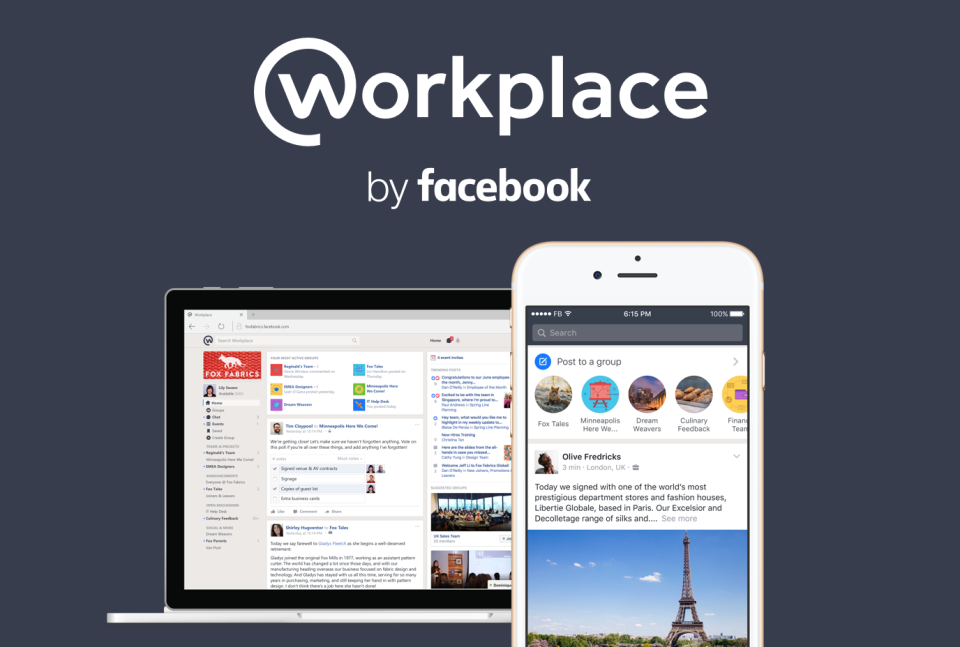
    Workplaces by Facebook was is the social media giant’s enterprise collaboration service it hopes will put the company into the enterprise space.

    Like many similar products, the service is aimed at improving collaboration in the workplace. As the media release gushes, “the new global and mobile workplace isn’t about closed-door meetings or keeping people separated by title, department or geography. Organizations are stronger and more productive when everyone comes together.”

    On first impressions, Facebook should score some successes with the service however it’s success is far from guaranteed. As we’ve seen with other major company’s attempts to open new products, being the deepest pocketed player doesn’t automatically ensure a successful product.

    The Google example

    A common assumption when a behemoth enters a martketplace is will simply smother smaller competitors by virtue of its size.

    History shows this not always the case, Facebook itself thrived despite the huge threat posed by Google+, indeed Google is probably the best example of a large corporation that struggles outside its core business.

    Part of the reason for the idea of big companies easily squashing the little folk being a fallacy is that the smaller companies are more focused on their problem – for a corporation the division is one part of a broader operation run by managers, not owners.

    In such a marketplace, execution and management focus matter so Facebook’s success will depend as much on executive buy-in as the resources thrown at the product.

    Cost and complexity

    A notable thing about Workplaces by Facebook is its partner network, led by Deloitte. This is not a good sign.

    The need to have consulting partners – particularly huge and expensive companies like Deloitte – is not an encouraging sign for the nascent service and may be a barrier towards adoption.

    A separate issue in Deloitte’s involvement is how cloud services, which we include Workplaces by Facebook, are buddying up with the major consulting firms with everyone from Huawei to Oracle entering arrangements. While this might help partners squeeze a few more pennies out of their hapless clients, it’s doesn’t seem to be in the vendors’ or customers’ interests.

    Trust

    What happens to users’ data is a perennial problem for Facebook and it’s notable this issue isn’t mentioned in the announcement.

    Facebook’s success shows consumers are relaxed about how the company uses data but that attitude may not be shared by managers and business owners.

    The proprietor of one reasonable sized startup said, “I have a slight concern about giving Facebook any access to my company information. Whilst it has been fine from a personal perspective I feel the trust level is not strong enough to warrant handing over access to, effectively, everything.”

    Overcoming that objection may be one of the biggest challenges for Facebook being accepted as an enterprise tool.

    Becoming an enterprise service

    Facebook’s push into the enterprise isn’t surprising and indicates that as the company matures, something more than the advertising funded consumer market is needed to drive its growth.

    That consumer background is a strength for Facebook as the consumerization of enterprise software is an established trend. Having an interface and tools that are familiar to most staff is very attractive to managers looking at introducing new platforms with the shallowest possible learning curves.

    However the ultimate question is what need does Workplaces by Facebook address? There’s no shortage of collaboration platforms that offer most of the futures offered by the platform.

    If Workplaces by Facebook does address a genuine need in enterprise workplaces and the company’s management can maintain its focus on the product then the service may be a success. That isn’t a given though.

    Similar posts:

    • No Related Posts
  • Facebook proves a false saviour for advertisers and publishers

    Facebook proves a false saviour for advertisers and publishers

    The advertising industry is in trouble, as consumers’ eyeballs move from broadcast mediums to online services, the wildly successful Twentieth Century business model that drove the radio and television industries is dying.

    One of the biggest hopes for advertisers, and publishers, was social media would be the salvation of their mass market model. Facebook continues to prove it isn’t the messiah with the Wall Street Journal reporting video viewing figures have been inflated for the past two years.

    Coupled with the recently announced shift away from publishers Facebook is increasingly showing any hopes of replicating the broadcast media model on social platforms is doomed.

    So it isn’t surprising advertisers are angry at Facebook for mis-stating its figures although a cynic would suggest those inflated statistics helped drive its video service over competitors like YouTube at a critical time.

    Whether Facebook’s actions were deliberate or otherwise, the service’s misleading behaviour only underscores how publishers and advertisers are struggling to find ways to translate their business model to an online world.

    Similar posts:

    • No Related Posts