Category: society

  • When history bites

    When history bites

    In a strange way Peter Watson, the Australian Labor Party election candidate disendorsed and expelled for his homophobic views, is a trend setter for his generation.

    Mr Watson was caught out by the unsavoury views he’d posted on Facebook and other online forums. That he defended what he had written “when I was like 14, 15 years old, so we’re talking about four, five years ago” made matters worse.

    Our digital footprints – material about us on the web or in social media sites – sometimes show we’ve strayed into places we’d rather admit to.

    There’s plenty of others who have posted things that will bite them later when they apply of jobs or seek political office.

    It will be interesting to see how society and the media adapt to our histories and the dumb stuff we did as teenagers being freely available, Mr Watson is an early casualty of that adjustment process.

    One of the more disturbing aspects of the Peter Watson case is his political party’s failure to do the most basic of checks on their candidate’s background. Something that again illustrates just how out of touch the nation’s political structures are with modern society.

    When we talk about disruption, we often focus on the jobs, business and social aspects of that change. One thing we often forget is that social upheaval directly affects political parties.

    Political parties who fail to adapt to the needs of their society become irrelevant and fail.

    So maybe Peter Watson has, through sheer dumb luck, found himself on the right side of history in being expelled from a political party that doesn’t know how to use Google search.

    Similar posts:

  • Tracking the troll

    Tracking the troll

    A BBC journalist hunted down a Facebook troll notorious for posting offensive messages on memorial sites.

    He turns out to be sad, bitter and inconsequential man. But we knew that he would be.

    What’s sadder is the troll’s view that “he’s done nothing illegal” and so that makes it acceptable.

    The idea that offensive, immoral, destructive or unethical behaviour is okay as long as the perpetrator believes it’s “legal” is a rot in the heart of our society.

    It’s not just Facebook trolling layabouts living on a Welsh housing estate that have this view – it is shared by many of our business, political and community leaders, it’s tolerated and even encouraged in our political parties, boardrooms and clubs.

    We have a long road ahead to fix this.

    Similar posts:

  • Is Twitter’s censorship a good thing?

    Is Twitter’s censorship a good thing?

    Since Twitter announced they were going to start blocking messages on a country by country basis if required by the laws of that land they have received a lot of criticism.

    Most of this criticism of Twitter revolves around the belief that every message should only edited or deleted by the person who posted the tweet.

    Anything else a breach of free speech and a threat to the underlying principles of the internet.

    That utopian view of the Internet doesn’t translate into real life; the online world is as subject to laws as any other part of life and social media companies have to comply with the same laws as newspaper organisations or fast food chains.

    Regardless of what you think of those laws – and in many countries they certainly are unreasonable and oppressive – they do matter.

    Were Twitter not to comply then the entire service would be at least blocked in those countries and, should an action be enforced in a US court, then the tweet removed anyway for every user around the world.

    By introducing country specific blocking, the service can let the rest of the world see a tweet that would otherwise be lost and in countries with restrictive or authoritarian laws, local people can still use the service.

    A particularly clever way of dealing with removal requests is to note that the specific message has been blocked in a country. This adds a level of transparency and accountability to the actions of courts and governments that want to close the service.

    We can see that being particularly effective in jurisdictions like the UK where British judges have been quick to apply “superinjunctions” preventing the merest mention of something by anybody.

    Should Britain’s overeager judges start demanding Twitter block tweets, those in the UK will quickly realise something is amiss. The effect will probably be to increase the interest in the blocked tweets that can be seen anywhere around the world.

    Despite the utopian view that transparency and openess will solve the world’s problems, we don’t live in that world right now and people can – rightly or wrongly – ask that false, defamatory and damaging posts on the Internet can be removed.

    Interestingly Google this morning announced they will be introducing a similar system to deal with country specific problems on their blogger platform.

    Twitter’s handled this in the best way possible, in many ways this could be a step forward for social media and the Internet in general.

    Similar posts:

  • Misunderstanding Chinese growth

    Misunderstanding Chinese growth

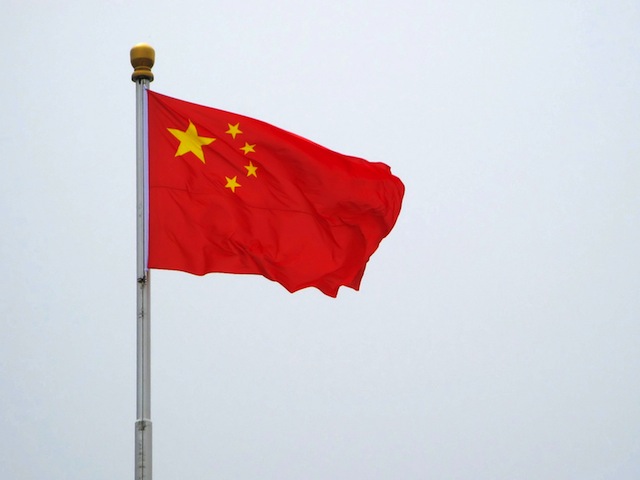
    When I first visited China in the late 1980s, I was amused at all the adverts for Rolex watches and Luis Vuitton handbags lining Shanghai’s Bund and the streets of Guanzhou; “how many Chinese can afford these goods?” I asked.

    The response was usually along the lines of there are a billion Chinese and if only one percent can afford these products then that’s a huge market.

    Over the years since we’ve seen consumer brands pour into China only to find the markets for Western style consumer goods aren’t what they expected. Many have left with their tails between their legs.

    The New York Times looked at this in their weekend story “Come On China, Buy our Stuff.”

    What many misunderstand is that while there are some millions of well heeled Chinese who can afford a Rolex, the vast majority simply cannot afford a Western style consumer lifestyle.

    The average Chinese income in 2010 was $4,270 per person according to the World Bank. For the United States, average income was over ten times China’s at $47,000. The average across the Europe Union is just over $32,000. India’s was only $1,330.

    So any business selling into the PRC expecting to find a consumer society like those of Northern Europe, Japan, the United States or Australia’s is in for a disappointing experience. Chinese households have neither the income or access to the credit lines that drove the Western consumerist societies over the last thirty years.

    For economists hoping that Chinese and Indian workers can pick up the world economy’s slack by becoming consumers on a level similar to European and US workers, they are deluded; this is at least a generation away.

    According to the Nation Master web site, the US had a similar average income to what China’s current levels in 1900. While there are clearly some differences in measures, we can say today’s Chinese workers are – in wealth terms – around a century behind their US colleagues.

    It may take a century for Chinese workers to catch up with Europe and North America, but it won’t happen as quickly as businesses and economists hope.

    Those hoping China will take up the slack left from the excesses of the 20th Century credit boom are going to have to look for a plan B. It may be up to the rest of us to find what’s going to drive the world economy for the next twenty years.

    Similar posts:

  • Book review: The Information Diet

    Book review: The Information Diet

    We all know a diet of fast food can cause obesity, but can consuming junk information damage our mental fitness and critical faculties?

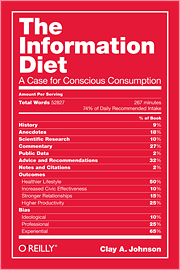
    In The Information Diet, Clay A. Johnson builds the case for being more selective in what we read, watch and listen to. In it, Clay describes how we have reached the stage of intellectual obesity, what constitutes a poor diet and suggests strategies to improve the quality of the information we consume.

    The Information Diet is based upon a simple premise, that just as balanced food diet is important for physical health so too is a diverse intake of news and information necessary for a healthy understanding of the world.

    Clay A. Johnson came to this view after seeing a protestor holding up a placard reading “Keep your government hands off my Medicare.” Could an unbalanced information diet cause a kind of intellectual obesity that warps otherwise intelligent peoples’ perspectives?

    The analogy is well explored by Clay as he looks at how we can go about creating a form of “infoveganism” that favours selecting information that comes as close from the source as possible

    Just as fast food replaces fibre and nutrients with fat, sugars and salt to appeal to our tastes, media organisations process information to appeal to our own perceived biases and beliefs.

    Clay doesn’t just accuse the right wing of politics in this – he is as scathing of those who consider the DailyKos, Huffington Post or Keith Olbermann as their primary sources as those who do likewise with Fox News or Bill O’Reilly.

    The rise of opinion driven media – something that pre-dates the web – has been because the industrial production of processed information is quicker and more profitable that the higher cost, slower alternatives; which is the same reason for the rise of the fast food industry.

    For society, this has meant our political discourse has become flabbier as voters base decisions and opinions upon information that has had the facts and reality processed out of it in an attempt to attract eyeballs and paying advertisers.

    In many ways, Clay has identified the fundamental problem facing mass media today; as the advertising driven model requires viewers’ and readers’ attention, producers and editors are forced to become more sensationalist and selective. This in turn is damaging the credibility of these outlets.

    Unspoken in Clay’s book is the challenge for traditional media –their processing of information has long since stopped adding value and now strips out the useful data, at best dumbing down the news into a “he said, she said” argument and at worse deliberately distorting events to attract an audience.

    While traditional media is suffering from its own “filter failure”, the new media information empires of Google, Facebook, Apple and Amazon are developing even stronger feedback loops as our own friends on social media filter the news rather than a newsroom editor or producer.

    As our primary sources of information have become more filtered and processed, societal and political structures have themselves become flabby and obese. Clay describes how the skills required to be elected in such a system almost certainly exclude those best suited to lead a diverse democracy and economy.

    Clay’s strategies for improving the quality of the information we consume are basic, obvious and clever. The book is a valuable look at how we can equip ourselves to deal with the flood of data we call have to deal with every day.

    Probably the most important message from The Information Diet is that we need to identify our biases, challenge our beliefs and look outside the boxes we’ve chosen for ourselves. Doing that will help us deal with the opportunities of the 21st Century.

    Clay A. Johnson’s The Information Diet is published by O’Reilly. A complimentary copy was provided as part of the publisher’s blogger review program.

    Similar posts: