
Category: society

  • The entrepreneur’s biological clock

    The entrepreneur’s biological clock

    In backpacker circles, when you turn thirty people ask “what’s wrong this guy? What you can get away with in your twenties, you can’t get away once you’ve passed the big “three-oh”. It’s not dissimilar to the “biological clock” many women in their thirties confront as they perceive their days of easily having children are coming to an end.

    A similar phenomenon exists in the business world, both for employees and business owners, that there are age limits on what someone can easily do. Like the backpackers, it’s more a perception than a reality.

    Once upon a time you were past it at fifty years old. Through the 1980s, 90s and the early part of this century that “past it” age contracted, along with the deskilling of the workforce, to 45, then 40 then 35.

    In the eyes of many in the corporate world today should you not have an established corporate career path by your mid-thirties then you are well “past it” and destined for a middling career and income.

    With entrepreneurs a similar quandary exists, once over forty there’s a feeling that the aspiring business owner should just stick to buying the local doughnut or lawn mowing franchise. Startup land is no country for old men.

    The underlying cause of  this view is the belief every successful business founder is rich beyond their dreams by thirty – Bill Gates and Mark Zuckerberg come to mind – that’s clearly silly given most businesses never come close to the successes of Microsoft or Facebook  but it’s a persistent one nevertheless.

    When the entrepreneur turns thirty, things begin to get tricky; sleeping on a friends sofa, working eighteen hour days and living on instant noodles isn’t an option when you have kids, partners and mortgages. At the same time, family, friends and potential employers start to ask “if this guy’s so good, how come he isn’t a millionaire?”

    To make things more difficult, risk adverse peers start bragging about how their safe, well paid job is allowing them to buy second homes or go on holidays most business owners can’t contemplate.

    Probably the hardest thing though is that the doors of the corporate world start slamming shut; for a 40 year old entrepreneur who has been running their own businesses for 15 years, it’s difficult to get a job in the business world and any position available won’t recognise the skills developed in running your own enterprise.

    Similarly, the warning to anyone with a decent corporate career who chooses to leave their safe office job to run their own business is usually “how can you risk throwing all of this away?”

    Risk is the difference between the ages; once you’re over 40 with there being little prospect of a plan B involving returning to a nice corporate position, then the cost of failure is a lot higher.

    In some ways this can be better; an individual staring down the prospect of a long, poverty stricken retirement has a very good incentive to get their business right and doesn’t have time to waste on speculative or “me-too” projects.

    The idea there’s an age limit to launching new, innovative businesses and products is silly, but it’s a persistent one nevertheless. The great thing though with being your own boss is you don’t have to pay attention to other people’s dumb ideas and this one is a dumb as it gets.
    Similar posts:

    • No Related Posts
  • Misunderstanding risk

    Misunderstanding risk

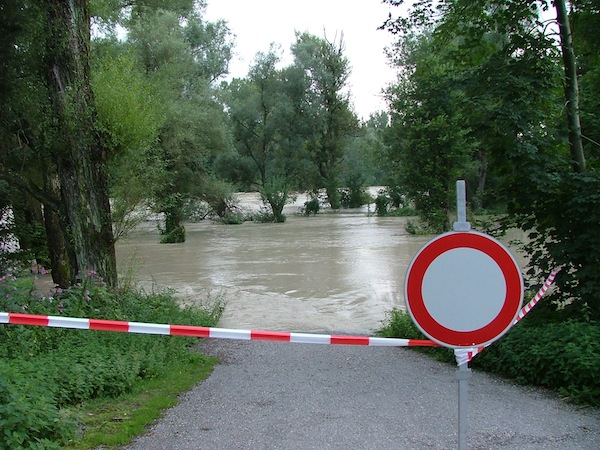
    During the recent snowstorms that affected Europe and North America, the summer floods that struck Australia were almost unnoticed except for those living in the inundated areas.

    The authorities wisely advised people, particularly tourists on their summer holidays, to avoid the affected areas.

    A friend of mine decided to ignore those warnings and take his family on a drive through those backroads despite multiple flood warnings and evacuations. In disregarding the risks, he’s not alone in Western society.

    Living the risk-free life

    In the Western world we believe we’ve engineered risk out of our society, that we can make investments without risk, that we can build houses in fire, flood or earthquake prone areas without risk, that we plan a holiday without the risk of snowstorms, volcanoes or accidents disrupting our  trips.

    As a society we believe the government will bail us because we’re good people and life, and fate, is always kind to good people.

    When things do wrong, our mobile phones will work, our emergency services will come promptly and the government will quickly shelter and support us until the insurance company comes good on the damage.

    Though it’s not just natural calamities where we believe this. It’s evident with people who quit their cubicles to find new enlightenment and riches as entrepreneurs.

    Most of them misunderstand the risk-reward ratio that for every wildly successful new business founder, there are dozens who blow their money chasing the dream and hundreds of us that would have been better off working for a salary.

    Finance markets and risk

    The subprime crisis is another good example; millions were lulled into buying property on the promise that real estate values never fell and that their no cash down, defray your payments for years deal was bullet proof. These folk did not understand, or were equipped to understand, that real estate prices could fall.

    During the subprime boom, the lenders thought they’d engineered out risk – Collateral Debt Obligations, default swaps and securitisation meant risk was a thing of the past – and they were proved wrong.

    Indeed, the most frightening thing is our banks today believe they are still bullet proof and their profits and executive bonuses are risk free as governments will bail them out at the slightest hint of trouble. When the history of The Great Recession is written, and we are still in the early chapters, the guaranteeing of our “too big to fail” banks may prove to be the biggest mistake of our generation.

    Because we believe there are no costs and little genuine threats to our lives, income or savings we don’t understand risks and therefore miscalculate them. If we think someone will be there to catch us, we’ll head up that flooded road, build that house in an earthquake zone or invest in that Ponzi scheme.

    We have to understand there are risks and there are limits our governments and societies have in responding when things go wrong. If it’s clear we don’t understand those risks, then it’s probably best not to take them in the first place.

    Endnote: My friend and his family made it back from the floods, although he ended up taking the family on four hour detour through some areas that sensible people would have avoided. Hopefully he’s learned a lesson about evaluating risks and won’t be taking his family into disaster areas again.

    AB6N9E4DEW64

    Similar posts:

  • The polite victory

    I’ve discussed before how manners matter online. A bizarre exchange illustrates this and how you can lose an argument by being rude online.

    The exchange started with a New York Times article on the Qantas A380 emergency in Singapore. The final paragraph in the piece claimed the airliner’s Cockpit Voice Recorder (CVR) didn’t work properly;

    “Even the cockpit voice recorder did not work right, according to a report by Australian investigators. It failed to halt when the plane landed, and because it operated in a two-hour loop, the critical periods were recorded over.”

    That nugget of information lead me to tweet out the following;

    A few hours later, the following tweets appear;

    On protesting I wasn’t posting “deliberate & malicious misinformation”, I’m then told I’m a liar;

    From there conversation doesn’t go far and I end up blocking the guy so I can no longer see his twitter posts.

    The funny thing is the gentleman is correct in saying the A380’s CVR worked properly, as the Australian Transport Safety Board states on their website;

    “The cockpit voice recorder was transported to the ATSB’s technical facilities in Canberra, Australia for download and analysis. Over 2 hours of cockpit audio was recovered. However, due to the failure of the No 1 engine to shutdown in Singapore, and therefore continuing power supply to the recorder, the audio at the time of the engine failure well over 2 hours before the No 1 engine could be shut down, was overwritten. That said, elements of the available audio are expected to be of assistance to the investigation.”

    QF32’s Cockpit Voice Recorder didn’t fail, it’s designed to turn off when the engines shut down and as the crew couldn’t turn one of the engines off the CVR kept going and ultimately overwrote the critical parts of the flight. Which isn’t the fault of the recorder at all.

    I was wrong.

    Now, had the gentleman suggested something along the lines of “Paul, you’re misinformed. CVR worked fine. Read the ATSB report” I’d have read the correct report, apologised and moved on. However this gentleman chose to be rude and aggressive.

    Thankfully the worst that can happen online is a flurry of rude words followed by one or both of the people blocking the other, in the real world behaving like this – say by barrelling up to someone in a bar and calling them liar – probably isn’t going to work out as well.

    Which shows how in the online world, just as in the real, offline community, manners do matter.

    Choose your words before disagreeing with someone, just as being aggressive at the school hall isn’t going to work out well, it probably won’t online either.

    Similar posts:

    • No Related Posts
  • The end of the troll

    The end of the troll

    Australian union leader Paul Howes today claimed in Sydney’s Daily Telegraph that New Media is denigrating politicians. His point being anonymous users on newspaper websites (such as the one he writes for) and online services like Twitter encourage abuse and slander which is degenerating politics and media discussion.

    The rough and tumble of the Internet was raised during the Canberra Media140 conference last September where conversation turned around Liberal politician Joe Hockey’s comment that anonymous, banal tweets was causing him to lose faith in online services like Twitter.

    Media140 provided more discussion about anonymity when The Australian decided to out the anonymous blogger Grogs Gamut, aka Greg Jericho. Greg wasn’t being abusive however his commentary had clearly found its way under the skin of some members of the Canberra political classes.

    But does anonymity matter?  We are kidding ourselves if we believe we are truly anonymous on the Internet. Few of us have the skills or diligence to fully hide our tracks from people we offend or upset.

    Anonymity also discredits much of a person’s statements – as both Paul and Joe have pointed out, if you aren’t prepared to put your name to your views then there is a good argument that your opinions are really worthless.

    However that argument ignores the power imbalance between the ordinary citizen who may find their career at risk by stating their views, as Greg Jericho found, and politicians and those working for political parties or allied organisations, like Joe and Paul who are protected by powerful and often tribally loyal party structures, PR machines and compliant journalists.

    Probably the part that’s most disingenuous though about Paul Howes’ article is that anonymous Internet commenters are dragging politicians down. Sadly our politicians did that job themselves long before social media or web2.0 based websites came on the scene.

    Today’s politicians are only reaping what they have sown themselves. Paul and Joe’s mentors – people like Graham Richardson, John Howard and Bob Carr – went out of their way to pander to and encourage the shrill, anonymous harridans of talkback radio.

    Unfortunately for today’s politicians, the Internet doesn’t have the same gatekeepers in the form of friendly announcers, producers and editors to save them from the public’s genuine, unfiltered opinions.

    The fact many of those anonymous comments – whether online or in more traditional media channels – may be true is another thing to consider; that people genuinely believe these politicians are doing the wrong thing. Rightly or wrongly, is that the fault of the Internet, or the fault of those politicians and their advisors who claim to have wonderful communication skills?

    Internet anonymity is not perfect, and often not right, but the privilege of being able to make an anonymous statement is a fundamental part of a working democracy.

    It’s not surprising our current generation of spin-doctored, on-message politicians feel threatened by a medium they struggle to understand or control, but that isn’t the fault of the anonymous online troll who could turn out to be what ultimately saves our democracy.

    Similar posts:

  • Learning from the past

    Today being Remembrance Day, the anniversary of the First World War’s end, it’s fitting to not just to remember those who fell in that costly war but also learn the lessons from the mistakes that ended up wasting so many lives.

    Undoubtedly the biggest tragedy of the war was the sheer cost in soldiers’ lives which was due to the commanding generals’ refusal to accept the era of the cavalryman was over as the machine gun, supported by heavy artillery and the airplane, became the main battlefield weapon.

    This wilful blindness to technology is even more galling when one considers the machine gun was an invention of the US civil war fifty years earlier and had been extensively used by the European powers in conquering and subduing native populations in their colonies.

    Those commanders such as Haig, Gough, Ludendorff and Kaiser Whilhelm — the “donkeys leading lions” — ignored the technological changes that had changed their industry.

    Worse, they wouldn’t listen; Haig rarely visited the front or spoke to his junior officers and men and the Kaiser was forced to abdicate and live out his days in exile because he ignored the discontent in his own country.

    In times of great change, we need to listen, learn and adapt. As we saw in the 1914-18 war, the costs of not doing so can be great.

    Similar posts:

    • No Related Posts