Category: society

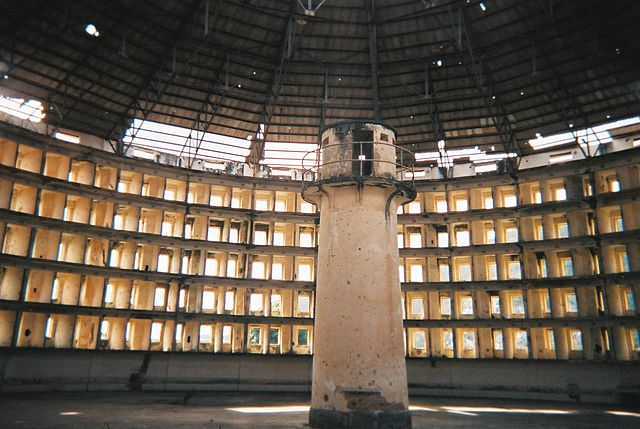
  • The new Pantopticon

    The new Pantopticon

    There’s a rule in broadcasting that any microphone should be treated as loaded. Regardless of whether you think it’s on or not, you shouldn’t say anything untoward near a microphone that you wouldn’t want to go to air.

    It’s a lesson many politicians have learned, sometimes to their great embarrassment and sometimes with potentially catastrophic consequences.

    Today, in an age where almost everyone has a recording device in their pocket, we all have to be careful. The travails of an Australian Rugby League player, photographed by a friend doing something obscene while drunk on an end of season party, illustrates just how pervasive this surveillance can be.

    In one respect this is good, as we saw with the Qantas A380 mishap in Singapore, a connected public allows the truth to get out despite the hysterical headlines of the media and the spin obsessed control of modern governments or big business. The fact almost everyone has a camera makes officials more accountable for their actions.

    But there is a darker side, this constant monitoring can also be tool for conformity. Should you decide to dissent from the corporate, government or society norm, there is now plenty of material to discredit you – be it a drunken stunt with a dog, a silly Facebook post when you were 17 or a photo of you picking your nose while waiting at a traffic light.

    There’s no shortage of ‘concerned citizens’ who will photograph or record us carrying out actions they believe don’t conform with their ideas what is normal and acceptable.

    Our definition of ‘normal and acceptable’ is becoming more narrowed as well, as a myriad of communications channels allows us to watch only what fits into our view of the world and the rise of social media that lets us filter out those voices we don’t like.

    It’s going to be interesting to see how the connected society develops over the next few year, will we become more insular and conformist or will we use these tools to broaden our horizons?

    Similar posts:

    • No Related Posts
  • The beast in the machine: Protecting your online profile

    The beast in the machine: Protecting your online profile

    Every village has an idiot and there’s a particular brand of idiot who’s attracted to the perceived anonymity of the Internet.

    Being big communities, online networking sites like Facebook and MySpace combine the problem of having a lot of idiots who think they can’t be held responsible for what they do in cyberspace.

    Last week we saw this with the shameful behaviour on Facebook where posters defaced memorial pages to a murdered girl. That disgraceful episode shows why it’s important to take precautions against idiots online. Here’s some ideas on protecting your online profile;

    Take responsibility

    You are responsible for what you post so if you create a Facebook fan page, LinkedIn group or blog then you need to maintain it, particularly the comments. If the posters become unwieldy then you need to moderate them or turn off visitor comments. Remember too that you are responsible for comments you make and the messages left on your site.

    Be careful with joining groups

    In life you are judged by the company you keep and the same applies online. If you join a group full of idiots you’ll be identified as one of them. Worse, those fools will be attracted to people they consider to be like minded. Think twice before accepting invitations.

    Choose friends wisely

    It’s tempting with Internet networking sites to try and get as many friends as possible. That misses the point of these tools and it increases the likelihood idiots will become part of your circle. Only allow people you know to connect. Using Facebook for family and friends while referring business colleagues to LinkedIn is a common way of separate work and social life online.

    Avoid strangers

    We tell our kids not to accept lollies from strangers yet many otherwise sensible adults link up with people they don’t know. Avoid doing this unless you are absolutely sure of who they are. The famous cartoon of “on the Internet nobody knows you’re dog” is true of thieves, stalkers and all manner of knaves.

    Hide your details

    Don’t go overboard spilling out your personal life to strangers. The more details you give out, the easier it is for troublemakers to find you or steal your identity. Keep the musings about your cats and your children to your close friends.

    Used well, Internet networking tools are a fantastic feature of the Internet which can enrich your life and the lives of those around you. however all tools can be misused so be aware of the risks of these tools and act responsibly.

    Remember if things get uncomfortable you can hit the delete button and turn the computer off. It’s best to do that at the first sign of trouble.

    Similar posts:

  • The real digital divide

    The real digital divide

    The real digital divide isn’t between the young and the old; it’s between those who are prepared to explore new technologies and those who hide from change.

    We’re often told that there’s a divide between the “digital natives”, those who grown up with computers, and the “digital immigrants”, those who’ve had to learn about computers.

    In reality this isn’t true, the real digital divide is about being prepared to learn and explore the possibilities being opened up every day by the Internet and computers.

    I was reminded of this shortly before Christmas when talking to a group of forty year old business owners who dismissed Internet tools like Twitter and LinkedIn out of hand – “a waste of time” “just for kids” and “I tried and received Chinese spam” being a few of the objections.

    The contrast is the Australian Seniors Computer Clubs Association who prove you’re only as young as the computers you tinker with. These seniors, some of whom were retired well before computers became commonplace, are prepared to explore and discover possibilities that change their lives and the lives those around them.

    The forty somethings all had successful businesses and they were the first to admit mobile phones, email and websites had changed the way they work. Yet nearly half of them didn’t have a website for their own business; a statistic consistent with business surveys that find almost 50% of small enterprises don’t have a website.

    In many respects these businesses and their owners are reminiscent of the handloom weavers of the early 19th Century. At first technology worked in their favour and pushed wages up but as industrialisation continued they found their skills redundant and incomes falling. Eventually their trades and businesses disappeared; which is what will happen to complacent companies and industries in today’s industrial revolution.

    A similar thing is happening to society and individuals. While you won’t disappear if you aren’t using the net, those who won’t will find it harder to do pay bills, communicate and simply get things done. Eventually they’ll find themselves marginalised as not being connected will make it harder for family and friends to keep in touch.

    All of this is unnecessary, it’s just a matter of being prepared to try and to give something a go. The real digital divide is between those who choose to give things a go and those who don’t.

    Similar posts: