This is a handy checklist when looking at the claims of any business – big or small, tech startup or something more conventional.
Pre-booking of contract revenues in particular is one of my favourites and it’s something we’re going to see more of as the subscription economy becomes more widespread.
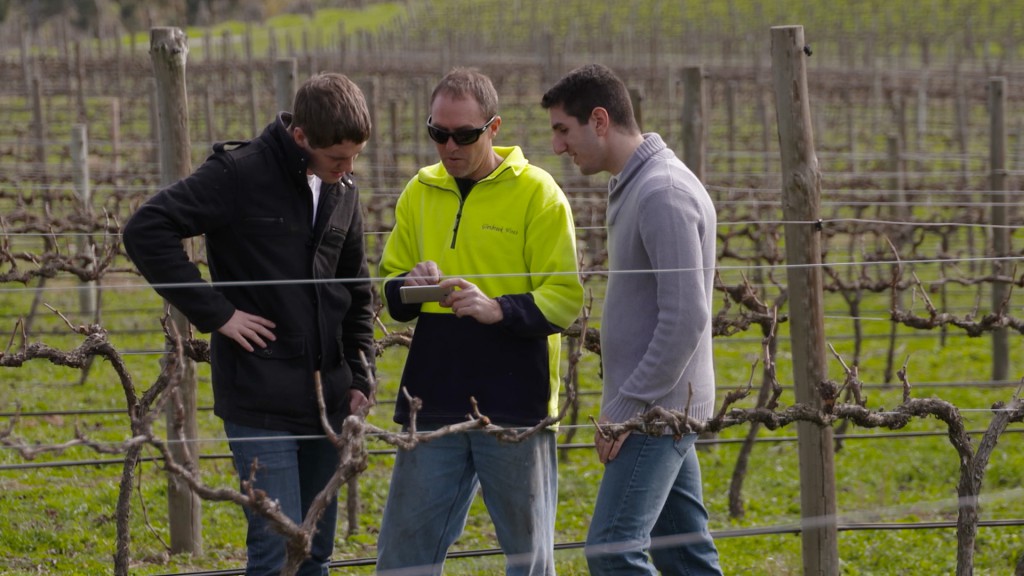
As we gather more data, the opportunities to apply it become wider. A good example of this is Seer Insights, a South Australian company started by pair of university students that calculates the likely grape yields for vineyards.
Seer Insights’ product Grapebrain is made up of two components, a mobile app that the farmer uses to count the grape clusters on the vines and then a cloud service that analyses the data and produces web based reports for the farmers.
The current methods are notoriously unreliable with Seer Insights estimating mistakes cost the Australian viticulture industry $200 million a year as harvests are miscalculated resulting in either rotting fruit or wasted contractor fees.
Born in an elevator
Seer’s founders, Harry Lucas and Liam Ellul, started the business after a chance meeting on their university campus. “We started off doing this after being stuck in a lift together,” remembers Liam. “Originally we were looking at the hyper-spectrum imaging for broadacre farming but when we started looking at the problems we ended up talking to wine organisations about this.”
“The technology predicts how many grapes will be coming off the vineyards at the end of the season to enable people to sort out their finances,” Harry says. “The growth process grapes go through is difficult to model so we use machine learning to do that.”
For both the founders having an off the shelf product, in this case Microsoft’s machine learning tools, to run the data analysis made it relatively easy to launch the product.
As a winner of Microsoft’s Tech eChallenge, the startup has won a trip to the United States as well as being profiled by the company as a machine learning case study.
Over time as these tools become more accessible to small companies we’ll see more businesses accessing machine learning services to enhance their operations.
As companies face the waves of data flowing into their businesses over the next decade, it will be those who manage it well and gather valuable insights from their information that will be the winners.
With the Visa investment it now means two of the world’s three major credit card companies are investors in Stripe, the other being American Express, and this shows the incumbent players are acutely aware of the changes happening in the payments world.
That credit card companies are investing in the businesses that threaten to disrupt their industry indicates the incumbents’ savvy management; while there are cultural and ethical barriers in trying to undercut the existing profitable products, having a stake in the new competitors gives companies like Visa and AmEx to remain relevant in a post credit card world.
For Stripe, investment from what could have been their major competitors not only takes some of the pressure off the the business but also opens opportunities for technology sharing and access to bigger markets.
Probably the most important thing for Strip with the Amex and Visa investments is they legitimise the business and the entire payments startup sector. It’s an important vote of confidence in the technologies and market.
For the Collison twins it also helps build better businesses, as John told Decoding the New Economy two years ago, “if we just building a business to take transactions from PayPal and get them onto Stripe, that’s not that interesting. What is interesting is if we can create new types of transactions that would not have existed otherwise.”
“By providing better infrastructure for anyone to build a global business. That will change the kind of things people will build.”
Now more people will be looking at what they can build on these payment platforms.
Are today’s entrepreneurs just rich kids? “When basic needs are met, it’s easier to be creative; when you know you have a safety net, you are more willing to take risks,” writes Aimee Groth in Quartz.
Groth makes an important point about today’s cult of the entrepreneur, that many are rich white kids from privileged backgrounds.
Indeed, it’s striking when interviewing them how many of today’s entrepreneurs come from banking or management consulting backgrounds, which explains why so many of the business ideas revolve around fixing upper middle class problems such as food delivery services or hire cars.
What’s also intriguing is how the definition of an entrepreneur has changed. Just over a generation ago it was more commonly associated with the entertainment industry, someone like a concert promoter, band manager or even circus proprietor.
The 19th Century definition of ‘entrepreneur’ is probably closer to the current meaning where it was applied to the budding railway and steel tycoons building their empires.
Many of the 19th Century entrepreneurs turned out to be either hopeless romantics or charlatans and no doubt many of today’s ‘unicorns’ will prove to be similar. In some respects things never change.
So far HeadStart has attracted around $US 438 million in funds and now Alibaba founder Jack Ma says he wanted to set up a $300 million fund to support Taiwanese entrepreneurs.
While the Reuters piece focuses on the ecosystem built around fading smartphone maker HTC and the major computer chip fabricators, Taiwan’s strength may well lie in its small business roots as much of the island’s industrial strength has been built, like Japan’s, on its army of small family firms supplying the larger companies.
That Taiwan needs to diversify its economy is a warning to other less advanced economies that depending on a narrow band of exports leaves a nation open to external risks. It might be time for others to be looking at how to encourage their entrepreneurs.