Category: startups

  • Seizing the agricultural technology opportunity

    Seizing the agricultural technology opportunity

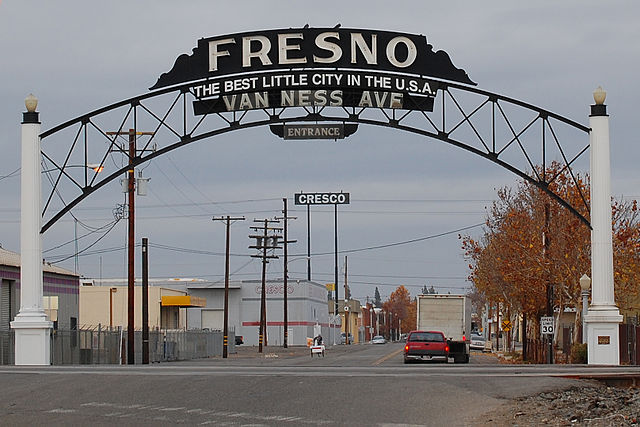
    Does the real opportunity for tech entrepreneurs lie in the agriculture sector? An article by James Fallows looking at Fresno’s startup community for the Atlantic Magazine suggests that might be the case.

    Fresno, in California’s agricultural Central Valley, doesn’t have the glamor of the global startup centres but offers a focus on neglected sectors as Fallows quotes Jake Soberal of Bitwise Industries.

    “My guess is that 5 to 10 percent of the tech need of the farming industry is now being met,” Fallows quotes Soberal as saying. “You could build a technology industry in Fresno based on that alone, not to mention the worldwide need in agriculture.”

    While there isn’t a great need for another coffee app, pizza delivery service or online store, there are far more opportunities in other sectors to address unmet needs.

    This is probably where the opportunity lies for cities like Fresno that are trying to create their own mini Silicon Valley – build a technology sector to address the needs of your existing industrial base.

    In agriculture there’s a plethora of Internet of Things, Big Data, analytics and other technological applications that addresses issues in the industry. Farming is not the only sector which presents these opportunities.

    Fresno’s ambitions aren’t unique but as Fallows points out this is not a zero sum game and there’s no reason why dozens of cities shouldn’t be able to build their own niches with new technologies.

    Picture of Fresno from David Jordan via WikiPedia

    Similar posts:

  • Copying the Silicon Valley Bubble

    Copying the Silicon Valley Bubble

    Staying private sucks if you’re a tech company writes Felix Salmon in Fusion magazine.

    If you’re giving away stock in lieu of wages to employees or taking early stage funding for equity, then listing, or selling to a larger business, makes sense as staff and investors need to see a return. It’s the unspoken truth of the Silicon Valley funding model.

    The Silicon Valley model though doesn’t come without risks, investor Mark Cuban warns a valuation bubble greater than that of the Dot Com Boom has developed as angel investors and early stage venture capital firms have thrown money at startups after Facebook’s massive buyouts of Instagram and WhatsApp.

    While Silicon Valley and the US tech market might have plenty of opportunities for buyouts and IPOs, most other places around the world don’t have the deep financial markets and the cashed up software companies to make similar exits possible for local startup businesses.

    Again that difficulty in successfully funding exits shows that simply trying to copy the US tech industry model is probably not going to work for most places tying to building their own Silicon Valleys, although it seems China is about to try.

    The other message is that the IPO or buyout route is not necessarily the right path for every business, as Salmon says: “Maybe the best solution is not to take any outside funding at all, and not to try to grow too fast.”

    “Some family companies have been around for hundreds of years: if you own your own business, and you don’t get greedy, you can build a very pleasant life for yourself. You just won’t end up on any list of young billionaires.”

    Similar posts:

  • Can the tech industry’s unicorns escape extinction?

    Can the tech industry’s unicorns escape extinction?

    “Today we have herds of unicorns,” Fortune Magazine quotes Jason Green, a partner at venture capital firm Emergence Capital Partners, in its story about startups that have achieved billion dollar capitalisations.

    When the ‘unicorn’ label was coined by Aileen Lee in November 2013 it was to highlight the rarity of the beasts – on 39 existed at the time.

    Today, just on a year later, there are eighty unicorns and the growth doesn’t seem to be slowing as more companies are raising funds or looking at trade sales or IPOs that will value their business at over a billion dollars.

    Betting on the unicorns

    Some of the business on the Fortune 80 unicorns list – like Elon Musk’s SpaceX and medical testing venture Theranos – are big, brave bets on future technologies which could prove incredibly profitable if successful. These are to today’s market was Google was at the turn of the Century.

    Others, such as Xiaomi, Meituan and Flipkart, are betting on massive growth in emerging markets which China’s AliBaba has shown to be huge opportunity.

    Some are already profitable and showing great potential to deliver the multibillion dollar valuations; companies like data analytics firm Palantir, developer tools vendor Atlassian and Uber are in this camp.

    Many though are platform based, transaction plays that hope to clip the tickets on fields such as rental accommodation, payment systems and e-commerce. Some will be insanely successful but most have a distinct whiff of irrational exuberance about them.

    Frothy exuberance

    Driving that irrational exuberance is the money tsunami which has overwhelmed the financial sector since the Global Financial Crisis. As Quantitive Easing has fattened the banks’ and corporate America’s coffers, managers have sought to get their lazy dollars doing some work and the startup sector is an attractive, and sexy, place.

    That influx of money has in turn has driven a spiral; as companies like Facebook have found themselves cashed up, they’ve bought more companies – Instagram and WhatsApp are the best examples of this – which in turn has increased valuations and expectations across the board.

    Some of the risks in this current mania are obvious, but the question of survival when your business is valued so high becomes a pressing issue as Twitter have found with the company flailing around looking for a revenue stream to justify its fifty billion dollar valuation.

    Probably the best, or worst example, of struggling to justify massive valuations is found in one of the original unicorns; Google and its YouTube division.

    Monetizing YouTube

    Right now YouTube is trying to screw musicians with onerous terms in return for, in the case of most artists, will be a pittance. It’s necessary for YouTube to do this so the service can capture as much value as possible to justify the rates of return demanded from its management, particularly as it’s appearing the online display advertising market is beginning to plateau.

    That dash to generate revenue may become more common when investor finance starts to dry up; faced with the need to generate cashflow and satisfy the needs of impatient investors who’ve been denied a profitable exit, many of today’s unicorns could find themselves in a difficult position in a tighter VC climate.

    Unicorns were once mythical creatures; now they’re real, at least in Silicon Valley, they’re going to have to learn how to fight for survival.

    Similar posts:
  • Daily links – the future of Google, Silicon Valley’s name and how startups die

    Daily links – the future of Google, Silicon Valley’s name and how startups die

    On many measures Google are in trouble, but one analyst thinks we’re panicking and his view is the lead of today’s links of the day. We also look at how the name ‘Silicon Valley’ came about, why solar power is getting cheaper and how some startups die.

    Does Google’s future lie in R&D?

    “Google is down but it’s not out” is the warning of this analyst’s report on the company’s earnings and strategy. Interestingly Google outspends Apple by $4bn a year on research and development, but both of them are dwarfed by Microsoft’s spending, which indicates R&D investment doesn’t guarantee success.

    The origins of the name ‘Silicon Valley’

    Last Sunday marked the 44th anniversary of the first time the label ‘Silicon Valley’ appeared in print. The US Computer History Museum looks at how the name came about and no-one will be surprised it was a marketing person who coined it.

    Why does solar power keep getting cheaper

    A few years ago putting solar cells on a building was expensive, now in many parts of the world the price of PV panels is becoming competitive with mains power. Vox Magazine looks at the factors driving the price drops and finds that economies of scale are now the main factor affecting the falling cost of installed solar power systems.

    RIP Urbanspoon

    One of the earliest food review platforms was Urbanspoon which was founded on the basis it would only grow as a bootstrapped company. In 2009 the founders sold out to a larger company who have now sold it onto an Indian business who is going to shut the name down.

    Startups who’ve fallen off the map

    Business Insider lists 17 formerly hot businesses who’ve fallen out of the public view this year, while some of them haven’t disappeared, it’s a list that reminds us that most new businesses, particularly tech startups, fail.

    Similar posts:

    • No Related Posts
  • A non toxic form of midlife crisis — Audible CEO and founder Don Katz

    A non toxic form of midlife crisis — Audible CEO and founder Don Katz

    “I had what my wife describes as non toxic form of midlife crisis,” says Don Katz of Audible, the company he founded in 1994 and remains CEO of today. In an interview with Decoding The New Economy, Katz describes a startup journey that covers all the bases.

    As Rolling Stone’s European correspondent Katz was engaged to write a book in the early 1990s about how digital technologies were changing music and what he realised was the industry was about to go through a fundamental change.

    “I had a wonderful career as a writer, I was a long form magazine writer in the glory days of ten thousand word articles,” Katz says of his life in journalism. A book commission lead him to research the future of digital distribution of written works.

    Survival in the digital economy

    One of the driving ideas was how creators can sustain themselves in the digital economy, “my content was already being ripped off on the Unix internet and I thought ‘how will the profession creative class sustain themselves if there’s no ability to control the distribution?’”

    Having founded Audible in 1995 at a time when few people were downloading or even using the net, Katz was in the box seat of the first tech boom and subsequent tech wreck in 2001.

    At the peak of the dot com boom  Audible was floated on the NASDAQ stock market, “In 1999 good companies that were leading categories went public and got massive amounts of free capital.” Katz recalls, “It was one of those weird moments, there were 1500 publicly listed internet companies at the beginning of 2000 and there were 140 by 2003.”

    Surviving the dot com bust

    Katz puts the company’s survival during that period to a conservative attitude towards capital and the alliances he had created with the industry’s major players — at one stage Microsoft held a 37% share in the company and Katz was one of Steve Jobs’ confidants during the early development of the iPod.

    Eventually one of those alliances became critical when Katz became bored with running a listed company, “it was an amazing adventure being a public company CEO for nine and a half years. It was very exciting and an honour to serve shareholders.”

    Katz’s patience ran out with being a public company CEO when automated trading came to dominate the daily operations of management, “suddenly you had this metaphysical sense of ‘who are you working for if someone wants volatility?’ That suddenly got old.”

    Audible already had a relationship with Amazon who had taken five percent of the business in 2000  in return for bundling audio book links on the ecommerce giant’s book pages. Katz also found Amazon founder Jeff Bezo’s long term view towards investment and returns a much more satisfying business model than the day to day grind of meeting short term shareholder demands.

    In early 2008 Amazon bought Audible for $300 million and retained Katz as the company’s CEO.

    Building new startups

    For new startups, Katz advises “make an absolutely fearless inventory of what you know is true about this idea and what you’re good at and what you’re not good at.”

    “You need to have people you can trust and believe in. Beyond that, be very sober about business models that are sustainable. There’s a lot mistakes that people make where you’re solving a problem in a piece of a value chain that isn’t sustainable. It’s easy to get confused about who the customer is.”

    “Figure out who the real customer is. Sometime people overplay the fact that the customer is the capital, the capital will come if people have the innovation and the passion.”

    Similar posts:

    • No Related Posts