Category: startups

  • Partying like it’s 1999 as investors pour into delivery services

    Partying like it’s 1999 as investors pour into delivery services

    At the peak of the dotcom mania in 1998 delivery services were all the go, those days are back reports Claire Cain Miller in the New York Times.

    “We’re really well funded, so that is not something we’re as worried about,” Aditya Shah, Instacart’s general manager says. “Growth is the most important factor.”

    This is the classic Silicon Valley Greater Fool model, where the aim is to get as many customers as possible to make the business attractive to a cashed up large corporation.

    It might work, but the odds of being an Amazon or Salesforce – both companies have barely made a profit in the decade and a half they’ve been running – is unlikely.

    One of the big problems is that delivery doesn’t scale, the ‘last mile’ problem of getting the goods to the customer remains the most complex and expensive part of the process.

    Drones may solve the labour cost problem and sophisticated algorithms from companies like Uber may make the process more efficient but it’s unlikely an ad-hoc delivery service can ever scale to the degree these entrepreneurs project, unlike the post office and courier services where the system is built around predictable delivery routines.

    Uber is the company that validated the model of today’s delivery startups, as Miller mentions;

    “Meanwhile, venture capitalists joke that every other entrepreneur they meet pitches an “Uber for X,” bringing goods and services on demand: laundry (Washio), ice cream (Ice Cream Life), marijuana (Eaze) and so on.”

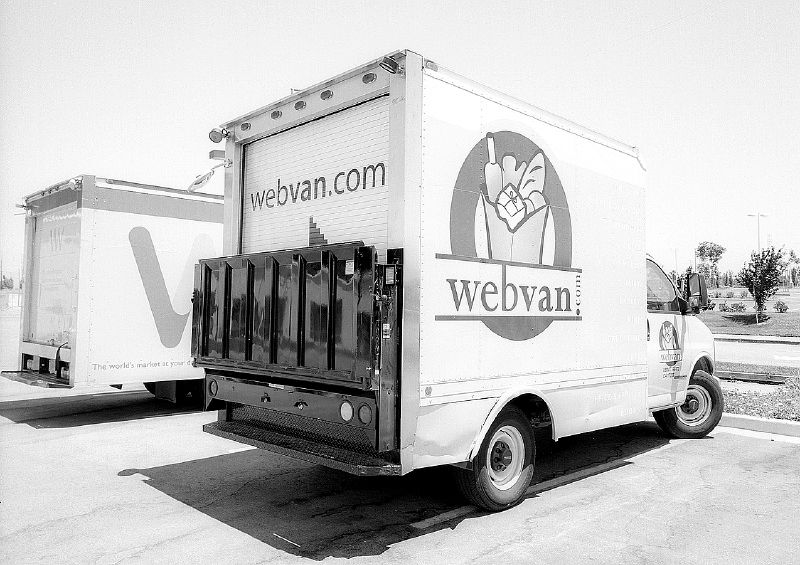
    It’s hard to see how the current craze of delivery startups will end any better than the Webvans and dozens of other services that soared and crashed in the late 1990s, however business models are changing and it may be one of these will find the formula that works in the new economy.


    Similar posts:

  • Uber looks to sending taxis and lyft ride sharing service to the deadpool

    Uber looks to sending taxis and lyft ride sharing service to the deadpool

    In its latest move to reinvent the taxi industry, Uber has launched a new service caused Uberpool reports Techcrunch.

    Uberpool allows customers to split fares with other passengers, making the service cheaper. This threatens both taxis and and ride sharing services like Lyft.

    It also shows what deep pockets can buy, with plenty of venture capital funding Uber can afford to experiment with these services. Those resources makes it hard to compete against Uber.

    For Lyft and many of the other hire car startups, Uber is doing everything it can to drive their businesses into the deadpool.

    Similar posts:

  • Los Angeles joins the startup boom

    Los Angeles joins the startup boom

    According to the website CB Direct, LA has joined the startup boom with funding tripling in the last five years.

    It seems there’s plenty of money to go around as this current startup boom ripples around the world.

    Los Angeles image by Todd Jones through Wikipedia

    Similar posts:

    • No Related Posts
  • Rent doesn’t matter to startups

    Rent doesn’t matter to startups

    Following yesterday’s post about the factors behind cities like New York, London and San Francisco becoming startup hubs, a friend asked “let me gues — cheap rents?”

    In truth it’s the opposite; none of the cities cited as startup centres are cheap places to live or work and London is usually towards the top of the most expensive places on the planet.

    That rents aren’t a huge factor is possibly because the typical tech startup is a lean operation with a small team crammed into a crowded location.

    One suspects though there are limits to how much a business conserving its cash will pay — you don’t see many startups based in A-grade locations alongside big law firms and banks — and this may be the weaknesses of these big cities.

    Certainly in London’s Silicon Alley the complaint is the days of cheap rent are long gone and newer startups have to base themselves in other locations across the city.

    Overall, rents are important but they aren’t the critical factor in developing a tech sector hub. Whether that remains the case depends upon how the industry develops.

    Similar posts: