
Category: Telecoms

  • Telcos shifting up the stack

    Telcos shifting up the stack

    One of the Twentieth Century’s great rivers of gold was the telecommunications industry. As the world became connected, first by telegraph, then telephone and finally mobile networks, owning a telco licence became a path to riches.

    Late in the century, the mobile phone was a spectacularly profitable device for telcos in the 1990s as consumers flocked to buy them and pay dearly for services, particularly SMS which was practically free to provide.

    Just as the century was coming to a close things changed dramatically as the Internet became accessible to the general public and while data was still profitable, telco revenues started to fall dramatically. Then, early in the new century, the arrival of the smartphone disrupted the entire industry.

    Becoming a dumb pipe

    Twenty years later and the arrival of smartphones using data services has changed the economics of cellular networks, leaving the incumbents worried they are going to merely become ‘dumb pipes’ offering just a low margin utility.

    Around the world incumbent telcos and mobile network operators have responded by moving up the value chain into managed services and cloud computing and one particularly interesting company in this respect is India’s Reliance Telecom.

    Reliance has responded to the changes in its market, something made more problematic by India’s arcane and complex cellular licensing system, by strategically selling off various parts of its infrastructure and focusing on where it sees opportunity.

    At a lunch in Sydney yesterday CEO Bill Barney of Reliance’s global network division was showcasing their cloud services for Australian customers and showed how the quest for profits is moving telcos into areas like data centres and managed services.

    Emerging markets corridor

    Barney argues that Reliance’s network, which spans South Asia, the Middle East and into Eastern Europe, gives the company a strong position in the “emerging markets corridor”. He also boasts the product the company offers allows easier development of smart services.

    In this respect, the Reliance Global Cloud Exchange differs from similar plays like Telstra’s PacNet network across East Asia – which Barney previously headed – in that it offers services higher ‘up the stack’ making it easier for companies to deploy smart applications, something Barney sees as being particularly attractive to the media and financial industries.

    While Reliance’s claims are yet to be tested in the market, the company’s shift to higher level services illustrates a struggle facing all telecommunications operators. To do this, Reliance and Telstra look to global networks and data services, Singapore’s Singtel tries its hand at media content in a similar way to Britain’s BT and Vodafone makes a strong Internet of Things play.

    For each of these companies, diversifying into other fields makes sense however each strategy brings its own risks – in Reliance and Telstra’s cases this means competing with cloud services vendors like Amazon and Microsoft – that telcos haven’t been exposed to in their core markets.

    Those core markets though are being disrupted and will never be as profitable as they were twenty years ago. For the world’s telecommunications companies it’s a matter of diversify or shrink.

    Similar posts:

    • No Related Posts
  • Meshing together an alternative internet

    Meshing together an alternative internet

    Can groups and communities build their own internet connected networks? The Mother Jones website describes how in Athens some neighbourhoods are doing exactly that.

    Many of the new communications applications are enabling adhoc networks between smartphones and other devices. In times of civil emergencies and natural disasters, those networks may well turn out to be more reliable than the telecommunications networks.

    With the various mesh technologies available, we’re seeing another way people can go ‘off the grid’ which will change many of the existing business models of many industries and possibly empower communities in unexpected ways.

    Similar posts:

    • No Related Posts
  • Links of the day – redesigning the car and South China Mall.

    Links of the day – redesigning the car and South China Mall.

    The CES extravaganza continues in Las Vegas with a wave of announcement, most of which I’m ignoring, however the motor industry continues to show off new developments with Mercedes displaying their vision of how a driverless car will look.

    Other interesting links today include an analysis of the ill fated South China Mall’s flaws and how Amazon is reorganising its R&D efforts after the failure of the Amazon Fire.

    Mercedes redesigns the car

    A little while back I suggested that we could do better in redesigning the driverless carMercedes have gone ahead and done it.

    Mercedes’ redesign of the driverless car indicates just what can be done when we rethink what passengers will need in the vehicles of the future.

    Ford recalls a vehicle for a UI upgrade

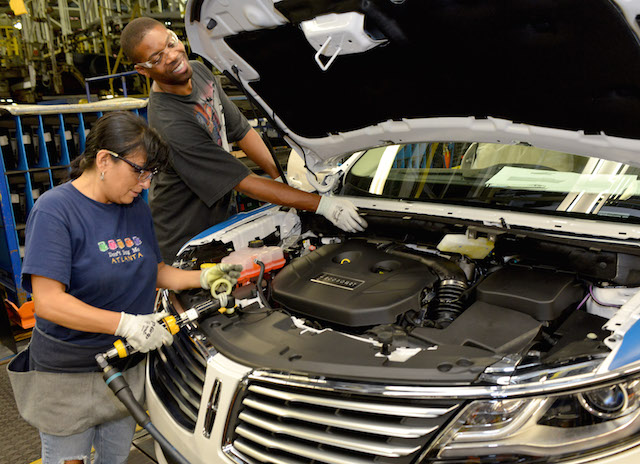
    Ford has recalled its Lincoln MKC SUV models for a software upgrade after discovering drivers were shutting down the cars by accident.

    What’s notable with this story is how software changes are now one of the main reasons for recalling vehicles and how design flaws in an automobile’s computer programs are relatively quickly discovered and resolved.

    We will probably find in the near future car manufacturers will carry out the upgrades remotely rather than ask owners to bring their vehicles into dealerships.

    A long running security flaw is exposed

    In August 2013 a security researcher warned UK online greeting card vendor Moonpig that its system exposed up to six million users’ account and financial details. Until Monday the company had ignored him. This is a tale of classic management disregard for customer security and one area where business culture needs to dramatically change.

    Rumours of an AOL – Verizon merger

    It’s a speculative story but if a merger between US telco Verizon and former internet giant AOL goes ahead it may mark another wave of telcos moving into content services, although it’s hard not to think that Verizon could spend its money more wisely.

    After a flop, Amazon restructures its R&D

    The Amazon Fire was by all measures a miserable flop as a smartphone however it seems the company learned some important lessons from the device’s market failures. Instead of abandoning its research efforts, the online behemoth is increasing it’s R&D budget and reorganising its development division.

    Design fails of the South China Mall

    South China Mall just south of Guangzhou has been the poster child of Chinese malinvestment during the nation’s current boom. In a blog post from 2011, a shopping mall expert visits the development and points out the major design faults in the complex which may well have doomed the project from the beginning.

    Similar posts:

    • No Related Posts
  • Towards the future mobile network

    Towards the future mobile network

    What will the next generation of smartphones look like? Earlier this week the GSM Association released their roadmap for the future 5G network standard, the next generation of mobile communications that will start appearing towards the end of this decade.

    The GSMA is the peak global telco industry body which includes amongst its membership most of the world’s telephone companies and the vendors who manufacture the network equipment, so the organisation’s view is a good representation of the industry’s long term vision.

    Much of the future standard is actually an amalgam of existing technology and concepts such as heterogeneous networks where phones and mobile internet of things devices can switch from the phone network to private WiFi systems without users noticing the handover.

    The GSMA sees eight main areas for the 5G standards;

    • data rates of 1Gbps down
    • latency of less than one millisecond
    • network densification in determining base station locations
    • improving coverage
    • making networks more availabile
    • reducing operating costs
    • increasing the field life of devices.

    That latter point is particularly pertinent as battery life remains a major concern for smartphone users and getting power to internet of things devices is one of the greatest barriers to adoption.

    With the 5G standard not expected before the end of the decade, it’s hard to imagine how much technology may have changed in that time, something the GSMA acknowledges; “Because 5G is at an early stage there may be many use cases that will emerge over the coming years that we cannot anticipate today.”

    The report though does try to anticipate some of the applications we may see the 5G standard driving such as autonomous vehicles, cloud based offices and augmented reality technologies. All of these though are advancing rapidly under the existing fixed line, 3G and 4G telco networks.

    For the moment rolling out the 4G standard remains the industry’s main game with the existing technology only making up five percent of the world’s mobile connections at present. This is the area the GSMA sees as being the big opportunity over the rest of the decade.

    In another report the GSMA claims the 4G rollout in Europe, currently at less than 10% of connections but expected to be over half by 2020, will drive economic growth on the continent.

    The mobile industry is playing a central role in supporting economic activity and recovery in the region, contributing 3.1 per cent to Europe’s gross domestic product (GDP) in 2013, equivalent to EUR433 billion4, including EUR105 billion generated directly by mobile operators. By 2020, it is estimated that the industry will generate a total economic value of EUR492 billion.

    There’s no doubt telecommunications networks are to the 21st Century what the highways were to the Twentieth and the railways to the nineteenth. As with the construction of previous century’s networks one of the big challenges will be raising the capital to build the systems and making wise investment choices.

    For the developing world raising the capital required for those networks might be the hardest task of all, however for those countries and regions not making the investments may leave them further behind the western nations than they are today.

    Ultimately what eventually is included in the 5G standard will reflect many of the political and economic realities of the next five years; no international standard is free from political or commercial influences during its drafting. The job for the standards bodies is not to get left too far behind market or technological advances.

    In describing a vision for the sector’s future the GSMA 5G report lays out many of the opportunities and challenges facing the telecommunications industry over the rest of the decade. With these technologies becoming the centre of our working and home lives, what happens won’t just determine what smartphone we own in 2020 but the shape of our societies.


    Similar posts:

    • No Related Posts
  • Diffusing business risk on the cloud

    Diffusing business risk on the cloud

    Today I was at a media lunch hosted by IP telephony company Nexon to promote their new cloud based unified communications service.

    One aspect of the Nexon Absolute service is the company offers a Service Level Agreement (SLA) for customers, while I’m always suspicious of SLAs they are essential in making business clients comfortable with buying cloud services.

    For Nexon, those SLAs are huge risk as they are reselling other company’s products. If Microsoft and Telstra fail to deliver, then it’s Nexon who carries the can with their customers.

    While Nexon undoubtedly has their own SLAs with their suppliers, a major outage will see the company carrying the bulk of the refunds or rebates to their customers.

    Essentially Microsoft and Telstra have outsourced much of their business, continuity and even reputational risk to Nexon and their other resellers.

    For a reseller, even a substantial one like Nexon, that’s a risk they can’t control — what’s more, the finger pointing between suppliers in the event of a major outage could take years to resolve.

    All of this suits major suppliers fine as it shifts risk and work from their businesses.

    The IT and telco reseller game is not an easy one as margins fall and risks increase, one has to applaud the courage of the investors and entrepreneurs who want to play it.

    Similar posts: